
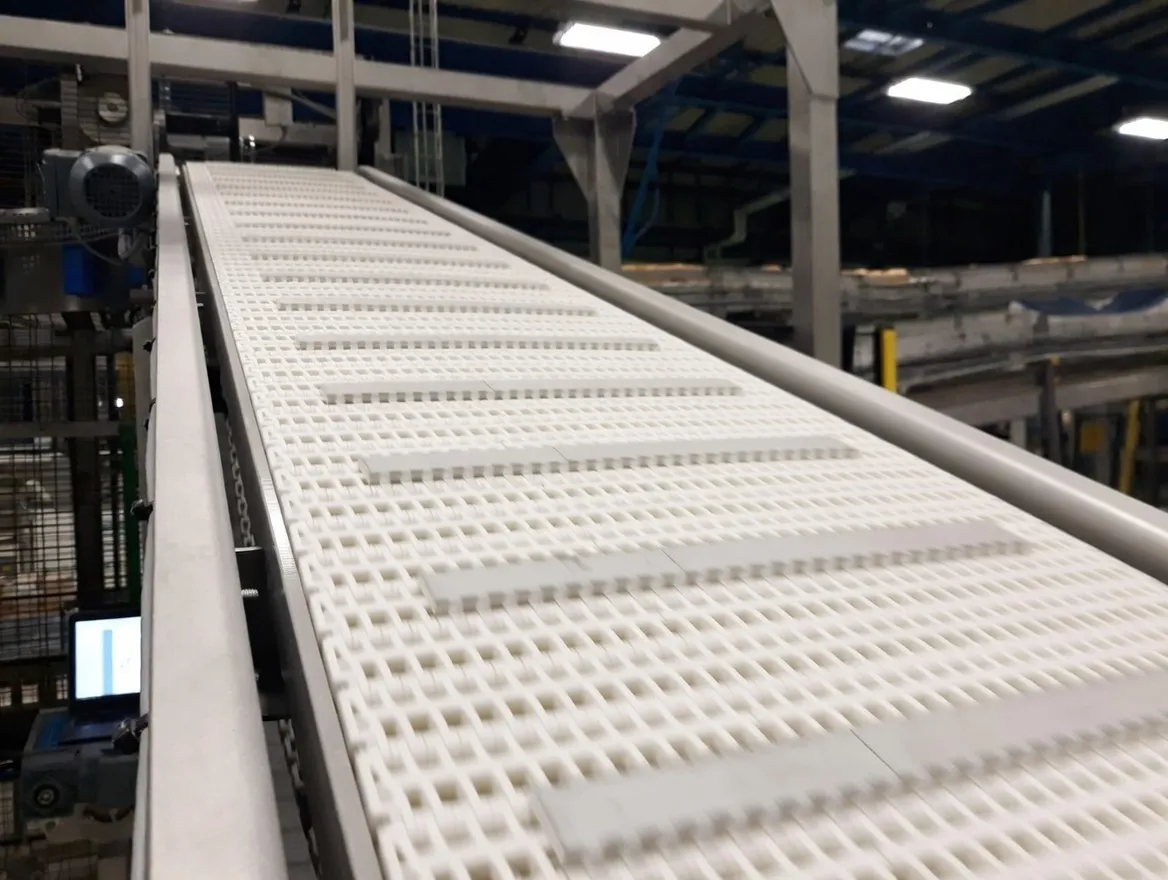
 In the conveyor systems that keep UK manufacturing moving — whether on a biscuit line in Birmingham, a logistics hub in Sheffield, or a bottling plant in Leeds — the relationship between sprocket drive and plastic modular belt is one of the most quietly critical engineering interfaces in the whole plant. When that interface is correctly aligned, the belt tracks smoothly, wear is minimal, and throughput is predictable. When it drifts out of true, the consequences escalate rapidly: edge cracking, premature module failure, belt walk, and in worst cases, catastrophic unplanned downtime that can cost a facility thousands of pounds per hour. The frustrating reality is that many alignment failures are not the result of poor initial commissioning — they develop gradually over weeks or months as thermal cycling, load variation, and normal component wear slowly shift the geometry of the system. Understanding the mechanics of how sprocket-to-belt misalignment occurs, how to diagnose it early, and how to execute a lasting fix is therefore not a niche technical skill; it is core operational knowledge for anyone responsible for plastic modular belt conveyors in a UK industrial setting.
How the Sprocket-to-Belt Interface Actually Works
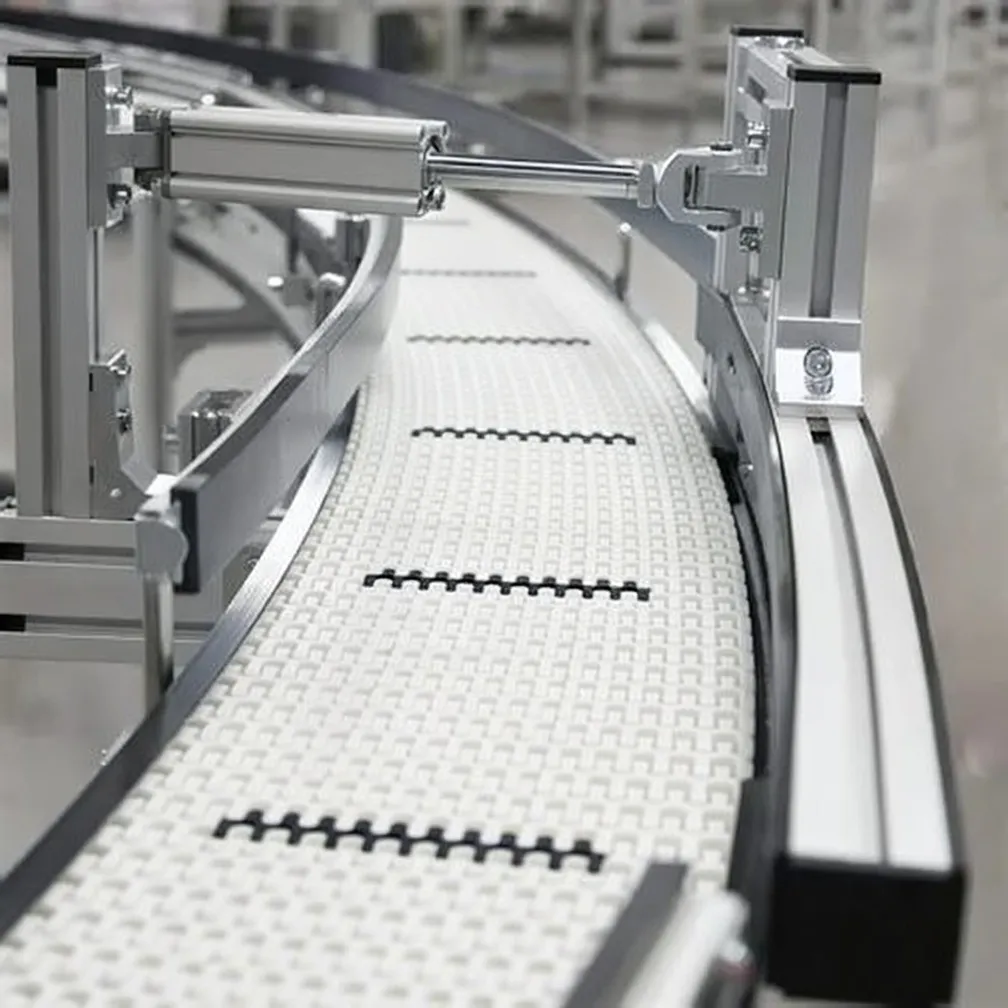 A plastic modular belt operates on a fundamentally different engagement principle compared to a traditional flat or fabric belt. Rather than relying on friction against a drum, the plastic modular belt is positively driven: each module features a series of precisely moulded drive pockets or rod apertures along its underside, and the sprocket teeth engage directly into these features as the belt passes over the drive shaft. This positive drive relationship means that pitch accuracy — the exact spacing of drive features on the belt relative to the tooth pitch of the sprocket — is the single most critical geometric parameter in the entire system. If pitch correspondence is maintained within tolerance across the full width of the shaft, the belt advances evenly and without lateral stress. If pitch is disrupted by wear, contamination, incorrect module installation, or a mismatched replacement sprocket, the entire dynamic loading pattern of the system changes, and alignment problems follow almost inevitably.
The lateral position of each sprocket on the shaft determines where the belt tracks. On a correctly set up conveyor, sprockets are spaced so that their combined engagement with the belt applies a uniform lateral force distribution — neither pulling the belt to the operator side nor to the drive side, but holding it centred on the carrying surface. Every sprocket must also sit perfectly perpendicular to the shaft centreline and at the correct rotational phase relative to its neighbours. Even a fraction of a degree of angular error, if present across multiple sprockets, produces a cumulative twist force that migrates the belt across the frame during operation. These are not theoretical edge cases: they represent the most common categories of alignment fault observed during conveyor maintenance inspections at UK manufacturing sites, and they are almost always correctable without the need for full belt replacement if addressed before secondary damage accumulates.
Common Alignment Problems in Plastic Modular Belt Conveyors
Belt Walk (Lateral Migration)
Belt walk is the most commonly reported symptom at UK facilities and manifests as a gradual — or sometimes rapid — migration of the belt toward one side of the conveyor frame. The root causes are varied but consistently traceable. A shaft that is not perpendicular to the belt travel direction — even by half a degree — creates a bias force that relentlessly pushes the belt sideways. Unequal tension between the two sides of the return loop, often caused by asymmetric loading or a partly seized take-up bearing, produces the same result. Where sprockets have been replaced piecemeal over the life of the system, subtle differences in tooth profile geometry between old and new units generate uneven lateral grip that compounds any existing angular error. In food processing plants around Leeds and Wakefield, where wet sanitation cycles are routine, corrosion at shaft bearing seats can cause the shaft to shift fractionally off its intended position, introducing lateral bias that was never present when the conveyor was new. All of these causes are identifiable and reversible — but only if the diagnosis is methodical rather than reactive.
Sprocket Tooth Jump and Skip-Pitch
Skip-pitch events — where the sprocket tooth fails to seat correctly in the belt drive pocket and rides over the top of the module junction — are often the first sign of a developing pitch mismatch between belt and sprocket. They manifest audibly as a regular clicking or snapping sound from the drive end, and visually as a rhythmic jerk in belt speed that is particularly noticeable on shorter conveyor lengths. The root causes include elongation of the belt pitch due to heat exposure or sustained overload, wear of the sprocket tooth profile, and accumulation of product debris in the drive pockets that prevents full tooth engagement. In automotive component logistics operations around Coventry and the West Midlands, where belt temperatures can swing considerably between shift start-up and full production, thermal expansion of longer belt circuits is a documented contributor to periodic pitch mismatch that appears only under certain temperature conditions and disappears once steady-state operating temperature is reached. Identifying this cause requires temperature-correlated observation rather than static inspection.
Uneven Module Wear Across Belt Width
When the belt exhibits a pattern of accelerated wear on one side relative to the other, the underlying issue is almost always a combination of lateral loading bias and imperfect sprocket alignment working together. The modules on the high-wear side are experiencing greater contact pressure against the sprocket teeth, and possibly against the frame side guide or wear strip, than those in the centre or on the opposite edge. Over time, this differential wear changes the geometry of the belt modules themselves, creating a permanent distortion that makes future alignment even more difficult. This failure mode is particularly common in pharmaceutical and beverage packaging lines around Manchester where side-loaded accumulation is built into the conveyor design — the belt must accommodate lateral product forces in addition to the longitudinal drive load, and if the sprocket array is not precisely calibrated to compensate, module wear accelerates dramatically on the accumulation side. Catching this pattern early through routine visual inspection saves not just the cost of belt replacement but also the more difficult and expensive process of resetting a conveyor frame that has been progressively distorted by asymmetric loading.
Belt Camber and Curved Tracking on Straight Conveyors
A belt that tracks in a visible arc across a straight conveyor frame — rather than running in a true straight line from tail to head — exhibits what engineers call camber. This is distinct from simple belt walk in that the belt path is curved rather than merely offset, and it indicates a twist or cumulative angular error built into the belt structure itself, often due to incorrect module assembly or joining rod misalignment during installation or repair. It can also result from a shaft that has been deflected under load — a problem particularly relevant to wider conveyors, where the central section of a long drive shaft may sag fractionally under the torque and radial loading of multiple sprockets. In heavy distribution centres around Sheffield and Rotherham, where belt widths of 1000mm and above are common and throughput loads are substantial, shaft deflection camber is a realistic operational concern that requires either shaft uprating or the addition of intermediate support bearings to resolve durably.
Heavy Duty Grid Straight Run Conveyor Belt
Engineered for demanding UK industrial environments where alignment integrity and load capacity are non-negotiable. The open grid construction minimises debris accumulation in drive pockets — one of the leading contributors to skip-pitch events — while the reinforced hinge rod system delivers exceptional dimensional stability across wide operating temperature ranges.
Diagnostic Approach: Finding the True Source of Misalignment
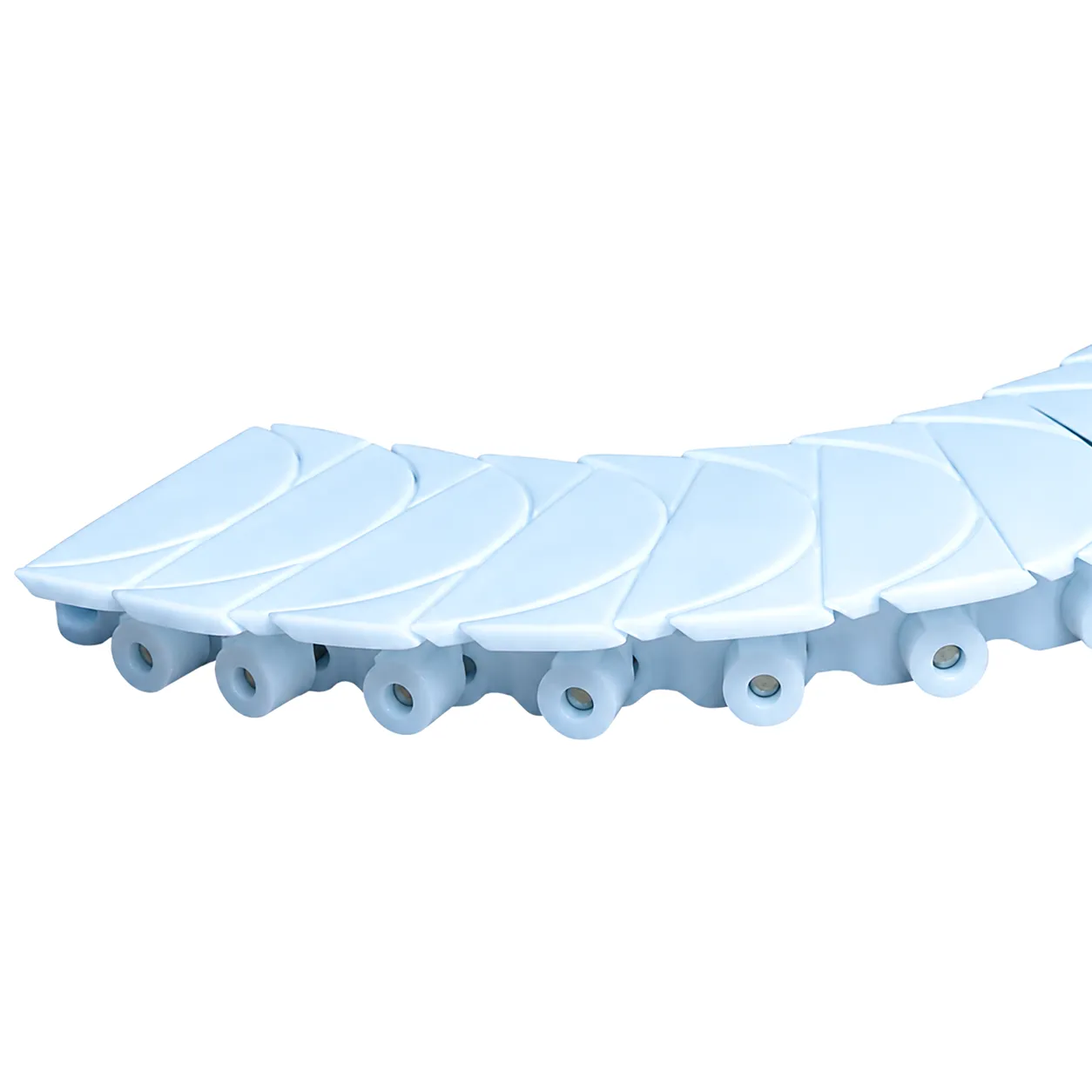 Effective alignment diagnostics follow a structured sequence from the gross geometry level down to the fine detail level. Beginning at the gross level means physically verifying the squareness of the entire conveyor frame before touching a single sprocket or bearing. Frame racking — a parallelogram distortion of the frame where one end is displaced laterally relative to the other — is surprisingly common in long-service conveyors, particularly those that have been relocated or modified, and it cannot be corrected by sprocket adjustment alone. A precision laser level or taut string line across the full frame length, measured at both the upper and lower strand levels, takes less than twenty minutes and eliminates one of the most persistent sources of diagnostic confusion.
Once the frame is confirmed square, shaft parallelism is the next verification point. The drive shaft and tail shaft must be parallel to each other within a tolerance that tightens as belt width increases — as a general rule, deviation should not exceed 0.5mm per 300mm of shaft length. Measurement requires either a precision trammel gauge, a digital protractor with long reference bars, or in larger installations, a laser shaft alignment tool. Any shaft position error found at this stage must be corrected by adjustment of the bearing housings before proceeding to sprocket-level work, since sprocket adjustments cannot compensate for a fundamentally non-parallel shaft geometry.
With the frame and shafts confirmed in alignment, individual sprocket position and condition can be assessed. Check each sprocket for correct lateral positioning against the belt width markings or reference gauges supplied by the belt manufacturer. Verify that each sprocket key and keyway is fully engaged and that there is no axial float. Inspect drive pocket engagement under slow manual rotation: every pocket should receive the sprocket tooth at the same angular position, with tooth entry smooth and without hesitation. Any pocket that shows different engagement timing indicates either a worn tooth, a contaminated pocket, or a pitch error in that region of the belt. Photograph and record all findings before making adjustments, as the pattern of faults often tells a more useful story than any individual measurement in isolation.
Plastic Modular Belt and Sprocket: Key Technical Alignment Parameters
| Παράμετρος | Τυπικό εύρος | Tolerance / Notes |
|---|---|---|
| Belt Pitch (Standard) | 25.4 mm, 38.1 mm, 50.8 mm | Must match sprocket tooth pitch exactly; +/-0.1 mm |
| Shaft Parallelism Tolerance | Max 0.5 mm / 300 mm shaft length | Tighter tolerance required for widths >800 mm |
| Sprocket Lateral Spacing Accuracy | +/- 0.5 mm from design centreline | Cumulative error across all sprockets must not exceed 1 mm |
| Belt Operating Temperature (PP) | -10 °C έως +110 °C | Thermal expansion 0.12 mm/m/°C; must be compensated in take-up design |
| Belt Operating Temperature (POM) | -40 °C έως +90 °C | Preferred for cold-chain and refrigeration; lower friction coefficient |
| Sprocket Material | Acetal (POM), UHMWPE, Nylon, Stainless 316 | Food-contact grades require FDA/EC 1935/2004 compliance |
| Drive Shaft Deflection Limit | Max L/1000 under full load | Exceeding this causes progressive camber development |
| Recommended Belt Tension (return) | 50 – 200 N/m width (depends on incline) | Asymmetric tension is a primary cause of belt walk |
| Drive Pocket Depth (typical) | 8 – 18 mm (pitch dependent) | Worn pocket depth exceeding 15% of nominal triggers replacement |
| Typical Service Life (PP, standard duty) | 3 – 7 years | Alignment maintenance extends life by 30–50% |
Step-by-Step Alignment Correction Procedures
Begin every alignment session by confirming the frame is level and square. Use a precision digital level to check the cross-frame level at four points — two near the head shaft and two near the tail. If the frame is installed on adjustable feet, this is a five-minute task. If the frame is welded to structure, shimming may be required. Document the as-found condition and the corrected condition. A frame that requires repeated re-levelling between service intervals has a structural issue that warrants investigation — in older industrial premises in the North of England, particularly in facilities that have experienced ground movement, frame settlement is a realistic cause of recurring alignment drift.
With the frame confirmed, proceed to the drive shaft. Measure the shaft position at both bearing housings against the frame reference rail, ensuring equal standoff distances on both sides. If the housings are adjustable in both horizontal and vertical planes — which is recommended practice for any new conveyor installation — use a precision shaft alignment tool to set the shaft centreline to the design specification. On retrofitted systems where adjustment is limited, document the deviation and compensate at the sprocket level if the error is within the compensable range. Remember that on a plastic modular belt conveyor, unlike a V-belt system, there is no angular compensation available at the belt — the sprocket must do all the work of distributing lateral force evenly.
Using the belt manufacturer’s sprocket layout drawing as the primary reference — not the previous sprocket positions, which may themselves be the source of the problem — position each sprocket according to the specified centreline dimensions. Use a reference straight edge along the shaft to verify that all sprocket hub faces are co-planar within tolerance. Tighten each sprocket’s shaft key and locking arrangement to the specified torque. On keyed shafts, apply a verified torque to the set screws or clamping bolts in a consistent sequence to avoid imposing angular error during tightening. For taper-lock style sprocket hubs, ensure the taper seats fully before final torquing — an incompletely seated taper will migrate axially under load and undo the lateral positioning work.
Thread the belt onto the conveyor at zero tension and confirm that each drive pocket engages its corresponding sprocket tooth without forcing. At this stage, any skip or mismatch between drive pocket and tooth indicates either a pitch error in the belt or a positioning error in the sprocket that must be resolved before the belt is tensioned. Once all sprockets show clean engagement under the empty belt, apply tension via the tail shaft take-up — in equal increments on both sides, measuring the take-up displacement at each step to ensure symmetry. Run the conveyor under no load at low speed for a minimum of five minutes, observing belt tracking continuously. Any walk that develops within this period requires further shaft or sprocket adjustment before the installation is cleared for loaded operation.
An alignment that tracks perfectly under no load may still walk under the asymmetric loading that occurs in normal production. Following the no-load verification, run the conveyor under a representative load profile for a minimum of thirty minutes, checking belt edge position every five minutes against a fixed reference mark on the frame. On systems that carry products with off-centre mass distribution — common in automotive parts conveyors around Coventry and Birmingham where body panels or castings are often placed toward one side of the belt — it may be necessary to apply a deliberate counter-bias to the sprocket array to compensate for the predictable lateral load. This counter-bias should be calculated from the known load eccentricity and documented in the maintenance record so that it is not accidentally removed during future servicing.
Flat Top Straight Run Belt with Side Guards
The integrated side guard design provides a passive alignment reference during operation, preventing the lateral drift that can develop in high-throughput UK packaging and food processing lines. Manufactured to exacting pitch tolerances for consistent sprocket engagement across the full belt width, this belt is particularly suited to applications where loaded run alignment is challenging and a belt walk safety margin is operationally essential.
Industrial Application Scenarios for Plastic Modular Belt Systems
In food production facilities across Scotland and the North West of England — where fish processing, dairy packing, and bakery lines operate under intense sanitation protocols — plastic modular belts are preferred for their cleanability and resistance to the caustic wash-down chemicals mandated by UK Food Standards Agency guidelines. Alignment in these environments is complicated by the thermal shock from hot product contact followed by cold rinse cycles, which creates cyclical pitch variation that must be accommodated through correct belt material selection and take-up adjustment. Operational experience in Scottish seafood processing plants has demonstrated that conveyors running wet fillets on polypropylene belts require alignment inspection intervals roughly twice as frequent as dry-product lines, given the differential lubrication effect of fish moisture on the drive pocket engagement surfaces.
The West Midlands automotive supply chain, centred on Birmingham, Coventry, and the surrounding tier-one component manufacturers, places particularly demanding requirements on conveyor alignment reliability. In engine block transfer lines and body panel accumulation systems, belt widths of 1000mm to 1400mm are common, load distributions are often highly eccentric, and the consequences of conveyor downtime cascade immediately into vehicle assembly throughput losses with direct financial penalties under JIT supply agreements. Plastic modular belt systems in these environments are typically specified with heavy-duty stainless steel drive shafts, anti-deflection intermediate bearings, and precision-ground sprocket arrays that are set and locked at commissioning to a far tighter tolerance than would be required in a lower-stakes application. Alignment documentation is maintained as a quality record and reviewed at each scheduled maintenance interval.
The rapid growth of UK e-commerce has driven investment in large-scale fulfilment centres at locations like Dunfermline, Daventry, and Rugby, where multi-lane sortation conveyors move parcels continuously at high throughput rates. In these environments, plastic modular belts are used extensively in the induction, merging, and accumulation zones where variable-weight parcels create unpredictable lateral load shifts. The alignment challenge here is dynamic rather than static: the belt must maintain tracking across a load profile that changes second by second as parcel size, weight, and placement position vary. Systems in these facilities are increasingly equipped with automatic tracking feedback systems, but the mechanical foundation — frame squareness, shaft parallelism, sprocket accuracy — must still be correct for the automatic system to function within its correction authority range.
Ever Power: Precision Manufacturing and Custom Belt Solutions
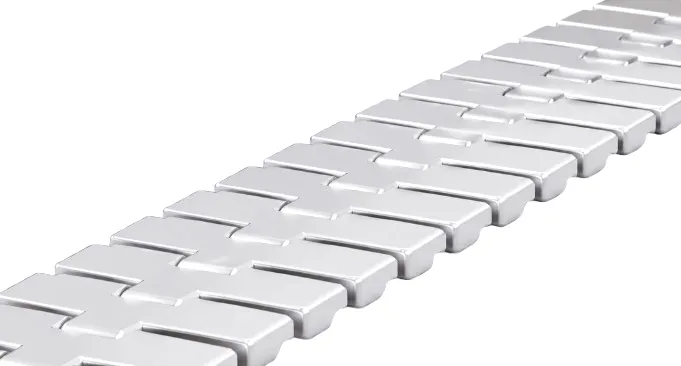
At Ever Power, the design and manufacture of plastic modular belt systems is grounded in precision engineering disciplines that go far beyond standard catalogue supply. The company’s production facility operates advanced CNC machining centres and automated quality control systems that hold component-to-component consistency at levels typically associated with aerospace subcontract manufacturing rather than conveyor component production. This commitment to dimensional precision is not incidental — it is the foundation on which reliable alignment performance depends. A plastic modular belt whose module pitch varies by more than the tolerance specified above cannot be made to track correctly regardless of how carefully the sprockets are set, because the source of the pitch error is intrinsic to the belt modules themselves. By manufacturing to tighter tolerances than the industry minimum, Ever Power ensures that alignment issues encountered in the field are always traceable to installation, wear, or application factors — never to the belt itself.
Ever Power’s customisation capabilities extend across the full range of parameters that influence alignment behaviour: pitch selection, module width and height, drive pocket geometry, hinge rod material and diameter, side guard configuration, and surface texture. For UK customers with specific application requirements — whether that is a belt designed to run on an existing non-standard sprocket pattern, a custom-width configuration for a legacy conveyor frame, or a material specification driven by a particular chemical or temperature environment — Ever Power’s engineering team provides a complete technical proposal covering not just the belt specification but the compatible sprocket geometry, shaft sizing recommendations, and bearing arrangement required to achieve optimal alignment performance. Supply chain reliability is maintained through strategic stock holdings of key raw materials and semi-finished modules, ensuring that custom orders can be fulfilled within commercially competitive lead times without compromising manufacturing quality.
Customer Success Story: Sheffield Pressed Components, South Yorkshire
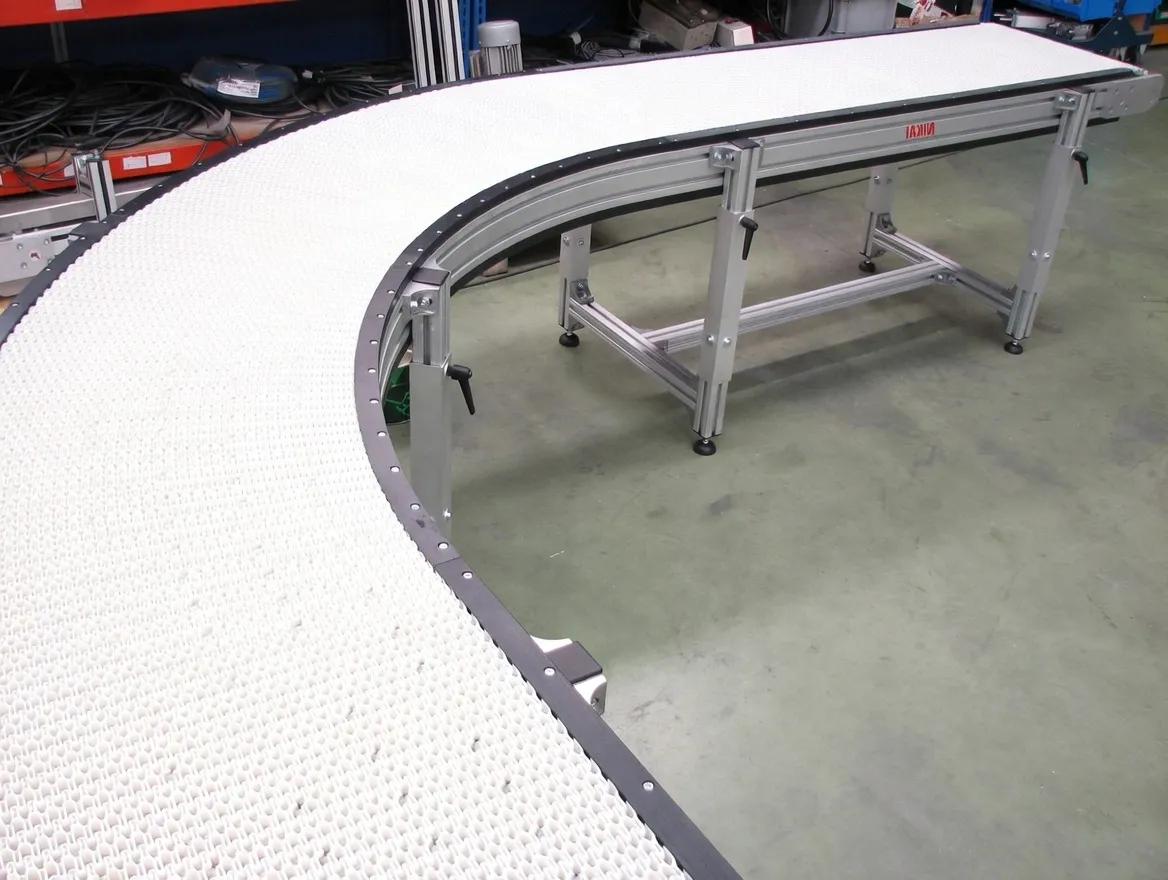 A mid-sized pressed metal components manufacturer in Sheffield’s Lower Don Valley had been experiencing recurring belt walk on a series of parts washing and transfer conveyors installed approximately six years prior. The conveyors — each running a 800mm wide plastic modular belt across a 12-metre carrying run — had required progressively more frequent manual belt re-centring interventions, to the point where maintenance staff were adjusting tracking guides on two of the four conveyors at the start of every shift. The financial cost of this routine was significant: each adjustment required a ten-minute conveyor stop, and the cumulative downtime across a three-shift operation was eroding the plant’s overall equipment effectiveness scores. An initial attempt by the site team to resolve the problem through guide rail adjustment had temporarily improved tracking on one conveyor but worsened it on another, leading to frustration and a request for external technical support.
An Ever Power technical specialist visited the Sheffield site and conducted a systematic alignment audit across all four conveyors. The findings were instructive: all four drive shafts showed measurable parallelism errors relative to their respective tail shafts, ranging from 0.9mm to 2.3mm across the full shaft length. In two of the four cases, the errors had been present from initial installation — confirmed by reviewing the original commissioning records — and had been accepted at the time without proper alignment verification. In the remaining two cases, the errors had developed through bearing seat corrosion caused by the wash-down chemistry used in the parts cleaning process, which had degraded the bearing housing mounting surfaces. The guide rail adjustments made by the site team had been compensating for the shaft errors rather than correcting them, which explained why improvement on one conveyor came at the expense of another in the interconnected system.
Ever Power’s remediation programme addressed the root causes directly. Replacement corrosion-resistant bearing housings in stainless steel were fitted to the two affected conveyors, and all four drive shafts were repositioned to within 0.3mm parallelism across their full length. The sprocket arrays were then reset to the verified belt layout specifications using precision gauges. New plastic modular belt sections were supplied for the two conveyors where module wear had become significant, matched to the corrected sprocket geometry. Following commissioning, all four conveyors tracked without manual intervention through a two-week monitored trial period. The plant’s maintenance manager estimated the intervention had recovered approximately 45 minutes of productive conveyor time per shift across the four lines — a return on the investment that was realised within the first month of normal operation.
We had lived with this belt walk problem for so long it had become part of the daily routine. Ever Power’s engineer identified the shaft parallelism issue within two hours of arriving on site — something our own team had never considered checking. The new belts are running without a single tracking adjustment seven weeks on. The quality of the custom belt sections supplied was noticeably better than what we had previously — the drive pocket engagement is cleaner and the tension distribution across the width is far more even. A genuine engineering solution rather than a workaround.
The custom polypropylene belt Ever Power supplied for our chiller conveyor line has performed far beyond our expectations in terms of dimensional stability during wash-down cycles. We specified a non-standard pitch combination to match our existing sprocket arrangement, and the belt was delivered to tolerance and fitted first time without any adjustment to the sprocket positions. The technical datasheet provided with the delivery included engagement verification data for our specific sprocket profile — exactly the kind of documentation our quality system requires. We would not hesitate to work with Ever Power again.
Sourcing a reliable plastic modular belt supplier that understands both the technical side and the commercial pressures of UK distribution operations is genuinely difficult. Ever Power gave us competitive pricing on a batch of 200-metre belt replacement across our sortation lanes, and the lead time was significantly shorter than the three quotes we received from European suppliers. More importantly, when we had a query about sprocket compatibility with a modified lane configuration, their engineering team provided a written assessment within 24 hours. That level of responsiveness is rare, and it is exactly what you need when managing a high-throughput facility that cannot afford extended analysis delays.
Συχνές ερωτήσεις
The clearest indicator is consistent directional belt migration that persists after guide rail adjustment. If the belt walks repeatedly to the same side despite manual corrections, and this is accompanied by uneven edge wear on the modules, the root cause is almost certainly a geometry error in the shaft or sprocket array rather than a belt tension issue. A systematic check of shaft parallelism — measured at both bearing housings against the frame — is the correct starting point for diagnosis.
The price of a custom-specification plastic modular belt depends on pitch, material, width, and quantity. For UK-based procurement teams, Ever Power provides a detailed quotation covering all these parameters — contact [email protected] with your sprocket tooth pitch, shaft spacing, and belt width for a rapid written proposal. Custom orders are typically priced within the same order of magnitude as catalogue belts once minimum quantity thresholds are met.
For food processing environments subject to regular caustic cleaning — common in Yorkshire meat processing and dairy facilities — acetal (POM) sprockets offer the best combination of corrosion resistance, dimensional stability, and FDA-compliant material certification. Stainless steel 316 is the alternative where mechanical impact resistance is a concern, but its higher cost is only justified where acetal would not survive the operating conditions. Never use standard carbon steel sprockets in caustic wash-down environments regardless of protective coating.
For a three-shift automotive operation, a full geometric alignment verification — including shaft parallelism, sprocket position, and belt tension symmetry checks — is recommended every three months as a minimum, with a visual tracking inspection carried out weekly and logged in the maintenance record. Conveyors carrying eccentric or variable loads, or those subject to thermal cycling, benefit from monthly verification. Trend-based monitoring, where successive alignment measurements are compared, is the most reliable method for identifying drift before it becomes a problem.
Ever Power supplies matched plastic modular belt and sprocket sets to UK customers across all major industrial sectors. Enquiries can be directed to [email protected] with the existing belt pitch, width, and material details. The technical team will confirm sprocket compatibility and, where required, supply a new sprocket array specified to the correct tooth pitch, lateral spacing, and material grade for the application environment. Delivery to UK mainland addresses is available from stock or on short lead-time manufacturing runs.
Ever Power — Precision Conveyor Solutions for UK Industry
Ready to solve your alignment challenges?
📧 Λάβετε μια προσφορά — [email protected]
plastic-modular-belt.com | Ever Power Industrial Conveyor Group |edit by gzl