Plastic Modular Belt Cleaning Guide: CIP, High-Pressure Washdown & Sanitisation Best Practices
From food-grade processing lines in Sheffield to pharmaceutical conveying systems across the West Midlands, getting belt hygiene right is what keeps production running and regulatory audits clean. This guide covers everything engineering teams need to know.
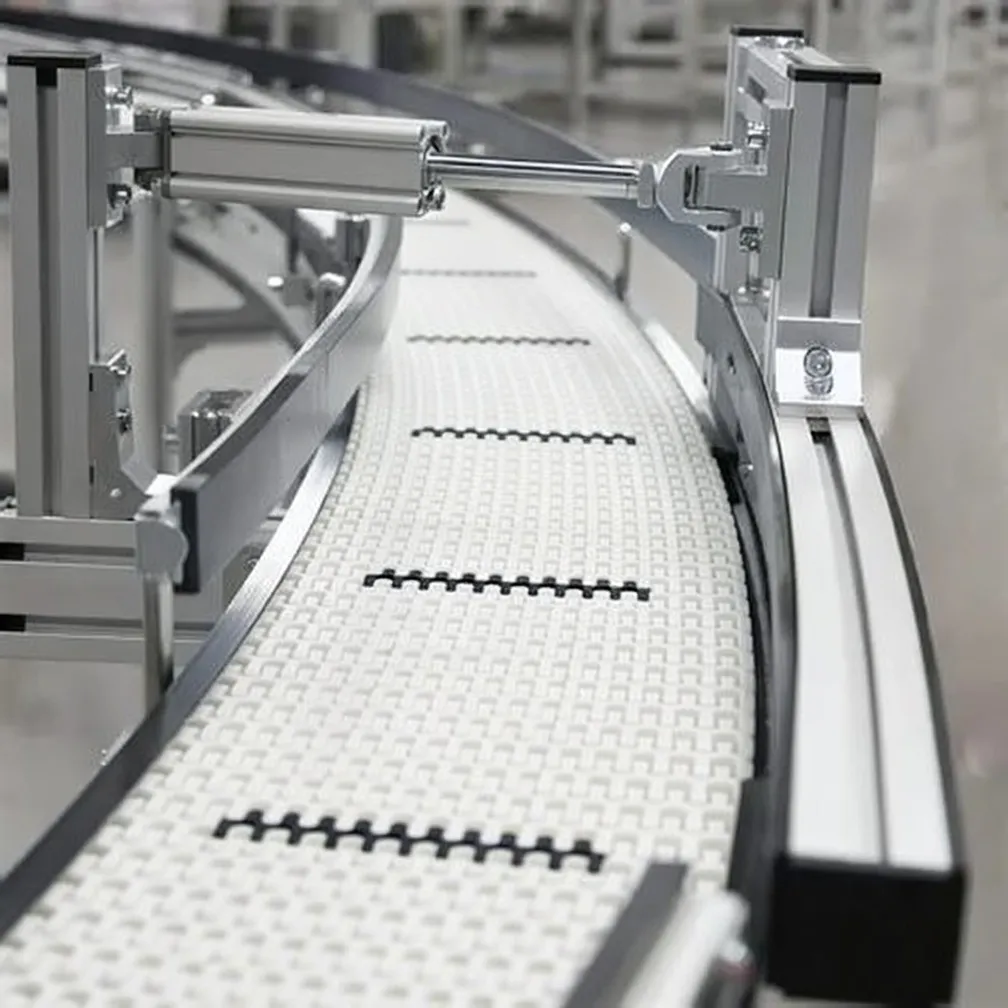 In industries where contamination is measured in parts per million and hygiene failures carry prosecution risk, the ability to clean a conveyor belt thoroughly — without dismantling it, without damaging its structure, and without introducing new contamination — is not a maintenance afterthought. It is core engineering. Plastic modular belt systems have become the standard across UK food manufacturing, beverage filling, meat processing, and pharmaceutical handling precisely because their open-grid architecture, chemically inert polymers, and modular construction are inherently compatible with aggressive cleaning regimes. Yet “cleanable” does not automatically mean “clean.” The way a belt is washed, the chemistry chosen, the pressure settings dialled in, and the sanitisation protocols followed all determine whether a line genuinely meets HACCP requirements or merely appears to.
Why Polymer Selection Defines Your Cleaning Programme
The polymer from which a plastic modular belt is manufactured governs virtually every parameter of its cleaning compatibility. Polypropylene (PP) — the most common material in ambient-temperature food and packaging applications — tolerates a pH range of roughly 1 to 13, handles standard caustic soda (NaOH) concentrations used in CIP circuits without surface attack, and resists most common food-grade disinfectants including quaternary ammonium compounds (QACs) and peracetic acid solutions up to around 2%. Its smooth molecular surface discourages bacterial adhesion compared with more porous materials, though surface scratches accumulated through years of abrasive contact do create microhabitats that demand consistent mechanical action during cleaning. Acetal (POM) belts offer superior dimensional stability under thermal cycling — relevant when your washdown water temperature swings between ambient and 85 °C across a shift — and are favoured in precision alignment applications such as pharmaceutical blister-pack conveying in facilities across Milton Keynes and Cambridge. Nylon (PA6/PA66) construction provides exceptional mechanical strength for heavy-load applications, though its slight hygroscopic character means that belt modules can absorb trace moisture and swell marginally, requiring tighter tolerances in belt-to-sprocket fit to be maintained over time. In applications where chlorinated alkaline cleaners are used — common in UK dairy processing — HDPE or UHMW-PE modules may be specified because their chemical resistance profile extends further under sustained hypochlorite exposure. Understanding exactly which polymer is installed in your system before finalising your cleaning chemistry is non-negotiable.
Heavy Duty Grid Straight Run Conveyor Belt
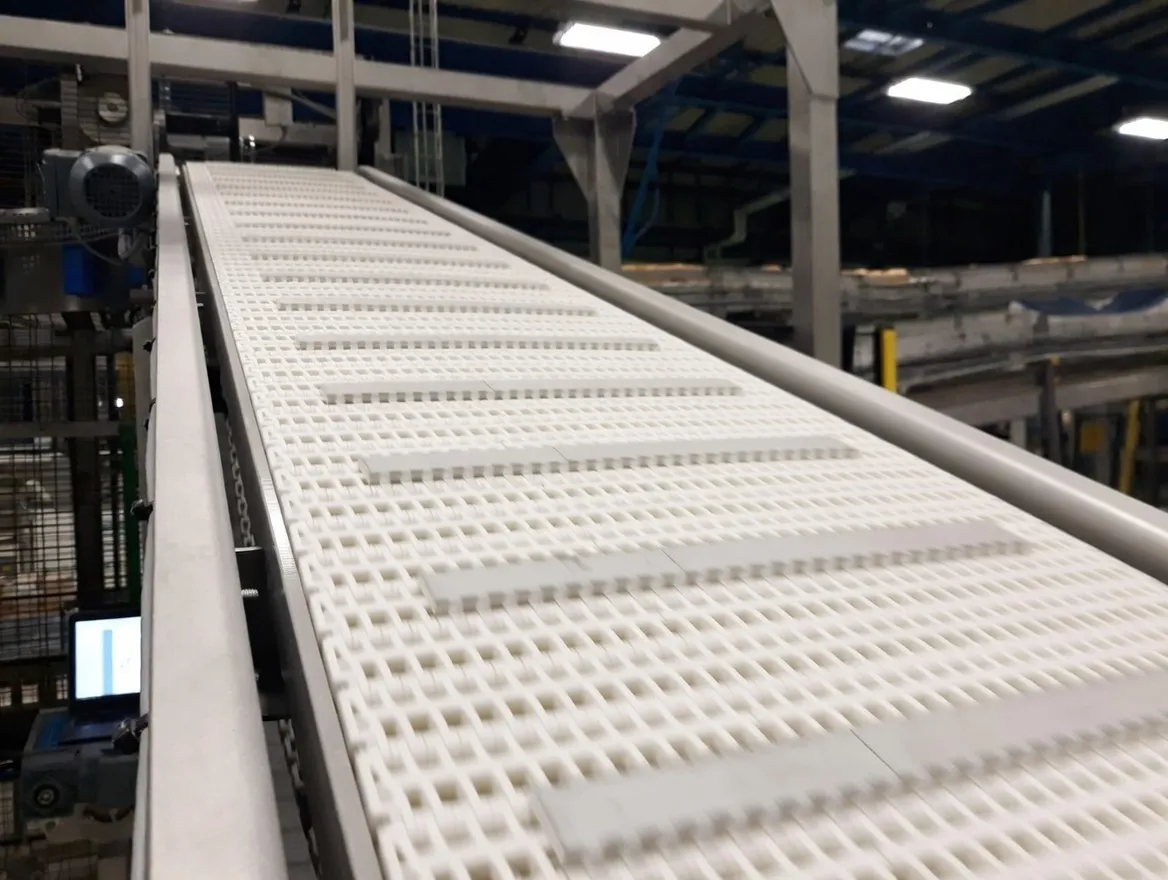
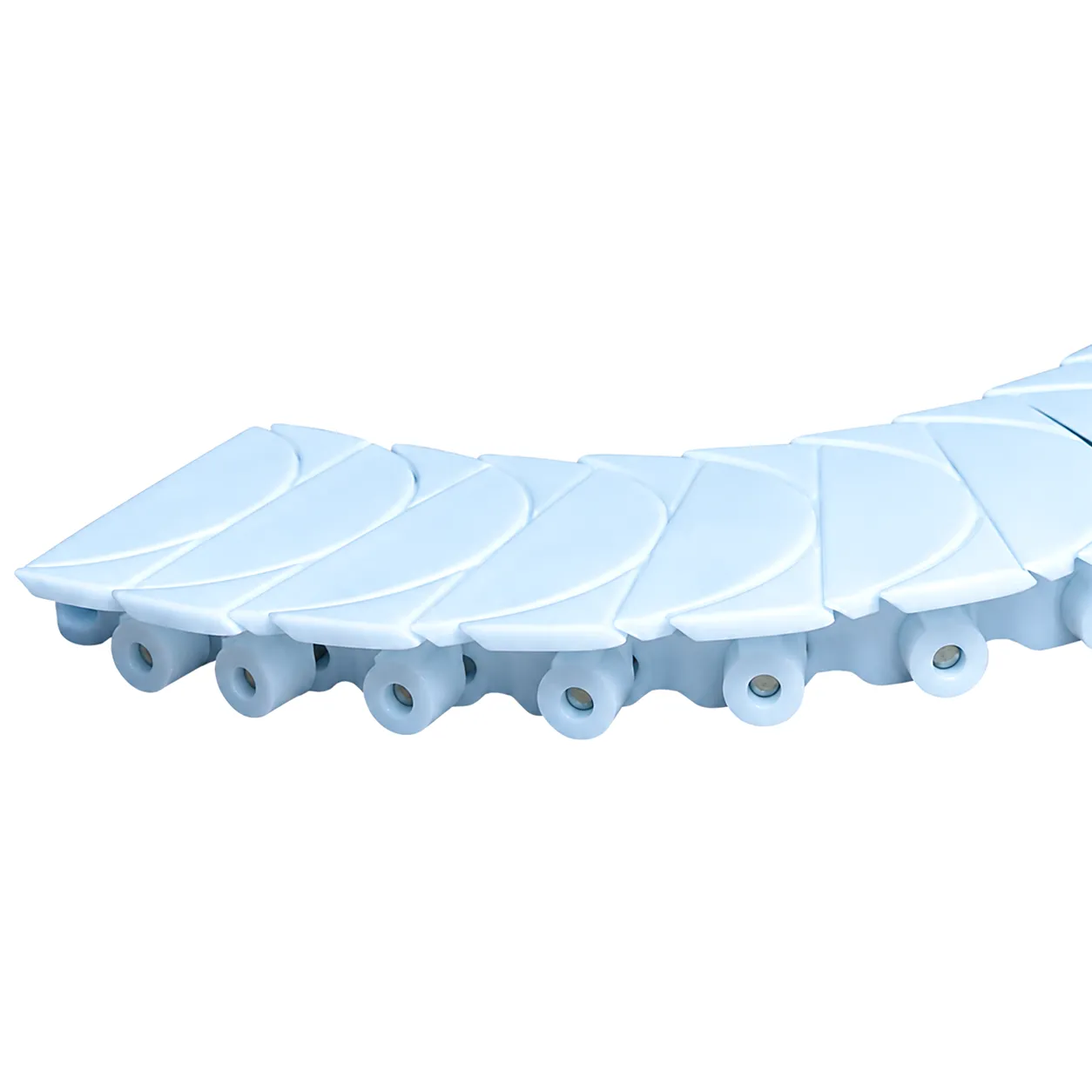
The open grid architecture of this belt is engineered from the ground up for washdown compatibility. With maximum open area for water and detergent penetration, it reduces cleaning cycle times significantly on lines running continuous production schedules — a critical advantage for food manufacturers operating under BRC Global Standards auditing in the UK’s East Midlands processing corridor.
Clean-in-Place (CIP): Engineering Principles for Modular Belt Systems
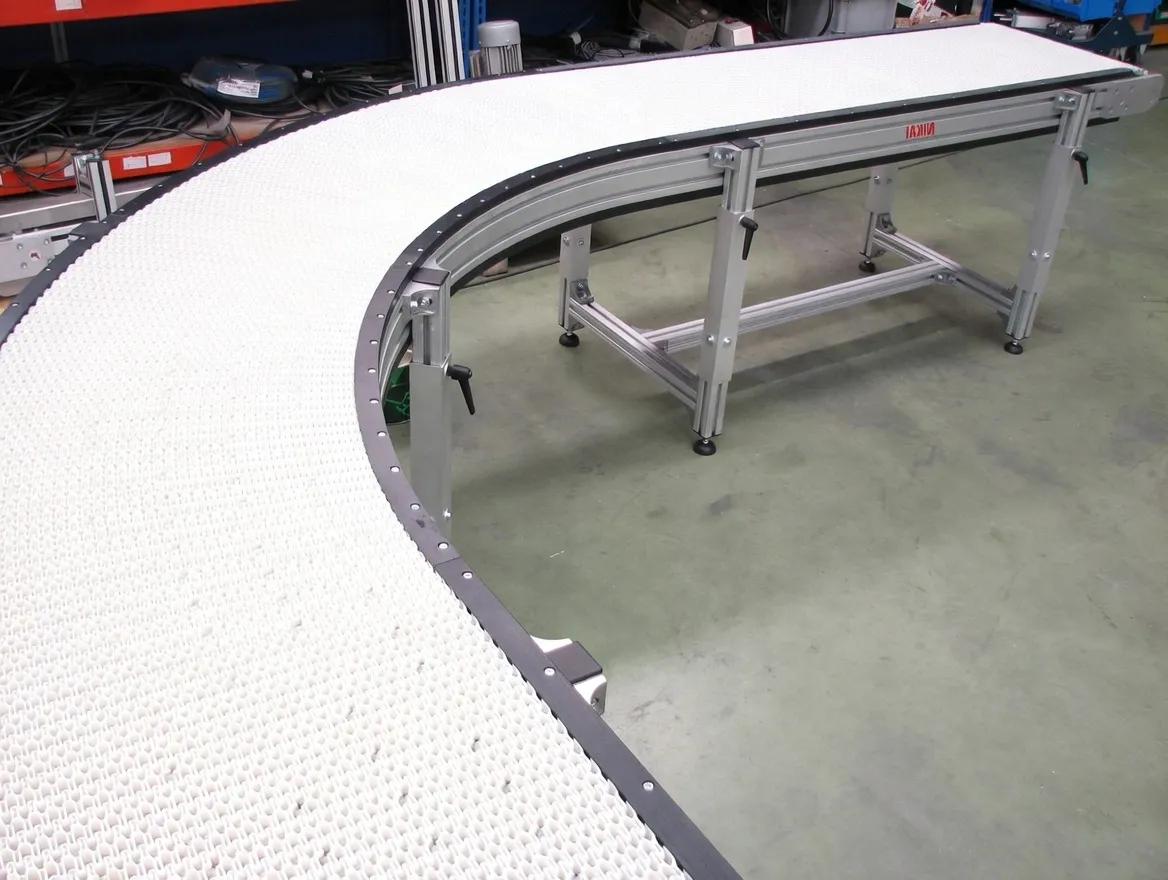 Clean-in-Place technology, which circulates cleaning solutions through a fixed pipe network to wash surfaces without dismantling equipment, is now standard practice on plastic modular belt conveyors serving wet processing environments across UK food manufacturing. Unlike the older clean-out-of-place approach where belts had to be removed and soaked in tanks, CIP allows cleaning cycles to run within shift changeover windows or overnight, keeping asset utilisation high while achieving validated hygiene outcomes. For CIP to work effectively on modular belt systems, three engineering conditions must be satisfied simultaneously. The spray nozzle array must deliver adequate volumetric flow rate and impingement pressure across the full belt width, including the underside of return runs where product residue and biofilm can accumulate unseen. The chemical concentration in the circulating solution must be maintained within the window specified by the detergent supplier — typically 1.5% to 3% NaOH for alkaline phases — because both under-concentration (reduced cleaning action) and over-concentration (potential polymer surface attack and rinsing difficulties) create compliance risk. The contact time for each chemical phase must be controlled by the CIP programme, not by operator judgement, to ensure repeatable validated outcomes across every shift and every crew.
A standard five-stage CIP sequence for plastic modular belt systems on UK food processing lines typically runs: pre-rinse with ambient-temperature water to remove gross soil; hot caustic wash at 60–75 °C to saponify fats and peptise proteins; intermediate rinse to remove caustic residue; acid rinse at 0.5–1.5% phosphoric or nitric acid to remove mineral deposits and restore pH neutrality; and final rinse with potable water to achieve a rinse conductivity at or below 50 µS/cm before the line is cleared as clean. Some facilities add a disinfection stage using peracetic acid or sodium hypochlorite before the final rinse. The critical control point in each stage is the belt’s hinge-rod interface — the narrow gap between module and rod where organic material, limescale, and biological contamination can shelter from spray impact. Specifying belts with wider hinge clearances, or with smooth-bore hinge holes rather than threaded or ribbed variants, makes a measurable difference to CIP effectiveness in validated studies.
Technical & Performance Parameters: Plastic Modular Belt Cleaning Compatibility
| Παράμετρος | PP (Πολυπροπυλένιο) | Ακετάλη (POM) | Nylon (PA6) | UHMW-PE |
|---|---|---|---|---|
| Max Operating Temp | 90 °C | 85 °C | 100 °C | 80 °C |
| CIP Caustic Resistance (NaOH) | Up to 3% / 75 °C | Up to 2% / 70 °C | Up to 3% / 80 °C | Up to 4% / 70 °C |
| Acid Wash Tolerance (pH) | pH 2–13 | pH 4–12 | pH 3–11 | pH 1–14 |
| Peracetic Acid Tolerance | Up to 2% | Up to 1% | Up to 1.5% | Up to 3% |
| Hypochlorite Resistance (Cl2) | Good — up to 200 ppm | Limited — avoid sustained use | Moderate — up to 100 ppm | Excellent — up to 500 ppm |
| High-Pressure Washdown Rating | Up to 100 bar (nozzle distance dependent) | Up to 80 bar | Up to 100 bar | Up to 120 bar |
| FDA / EU 10/2011 Food Contact | Certified | Certified | Certified | Certified |
| Typical CIP Cycle Duration | 45–90 min | 45–90 min | 45–90 min | 45–90 min |
| Belt Pitch Options Available | 1/2″, 1″, 2″ | 1/2″, 1″, 2″ | 1/2″, 1″ | 1″, 2″ |
| Working Load Capacity | Up to 12 kg/m² | Up to 15 kg/m² | Up to 20 kg/m² | Up to 18 kg/m² |
High-Pressure Washdown: Protocols, Pressures & Common Damage Pitfalls
High-pressure washdown is the most physically demanding cleaning method applied to plastic modular belt systems and, when poorly executed, it is also the most likely to cause cumulative structural damage. The interaction between nozzle pressure, nozzle-to-belt distance, water temperature, dwell time, and spray angle determines whether a washdown cycle removes contamination from hinge points and module surfaces or simply redistributes it — or worse, drives it deeper into joints and crevices. In UK meat processing facilities where end-of-shift washdowns are a regulatory fixture, operators frequently default to maximum available pressure on the assumption that more pressure equals better cleaning. The reality is considerably more nuanced. A fan-jet nozzle operating at 80 bar from a distance of 150 mm delivers effective impingement without the risk of hinge-rod deformation or module splitting that can occur when 100+ bar streams are directed perpendicularly at hinge interfaces from close range. Pressure must be matched to belt material: PP modules tolerate up to 100 bar when nozzle distance is maintained above 100 mm; acetal (POM) belts are slightly more susceptible to surface marking and are best kept below 80 bar at short distances.
Water temperature during high-pressure washdown introduces a second variable that significantly affects both cleaning efficacy and belt longevity. Hot water at 60–75 °C dramatically accelerates the softening of animal fats, plant oils, and starch-based soils that adhere to belt surfaces during production, reducing the mechanical energy needed from the water jet and allowing lower pressures to achieve equivalent cleaning outcomes — a meaningful operational advantage for maintenance teams working overnight washdown windows in Sheffield’s food manufacturing sector. However, thermal shock from directing very hot water onto a belt that has cooled to ambient temperature over a production break can induce micro-stress in module polymer, particularly in Acetal, which has a relatively high coefficient of thermal expansion. Gradual pre-rinsing at lower temperatures before transitioning to hot washdown phases is the standard mitigation in well-run facilities. Cold-water washdown with higher-concentration enzyme pre-treatment is increasingly common in sustainability-conscious UK sites seeking to reduce gas consumption from boiler heating.
One frequently overlooked element of high-pressure washdown protocol is the direction of spray relative to belt travel direction. Spraying against the direction of forward belt movement — from the return side, working upstream — is significantly more effective than spraying with belt travel, because the water jet penetrates hinge openings rather than being deflected by the leading face of each module. Maintenance documentation in facilities operating under BRC Global Standard Issue 9 or the BRCGS Packaging Standard consistently identifies hinge-zone cleaning as a key hygiene verification point, and demonstrating that spray direction protocol is captured in written standard operating procedures is an increasingly common expectation during third-party audits. Training washdown operatives in nozzle handling technique — maintaining consistent distance, appropriate sweep speed, and correct spray angle — is as important as specifying the right equipment.
Sanitisation, Biofilm Control & Microbiological Verification
 Cleaning removes visible soil and the bulk of microbial contamination. Sanitisation addresses what cleaning leaves behind — the residual population of microorganisms that, if given the opportunity to multiply during the next production cycle, can reach levels posing genuine food safety risk. In the UK food sector, where listeria monocytogenes control is a particular focus following several high-profile incidents in ready-to-eat chilled meat production, sanitisation of conveyor belt systems is not optional: it is a mandatory element of HACCP plans submitted to the Food Standards Agency and to retail customer assurance schemes such as those operated by the major supermarket chains that dominate British grocery. The challenge with plastic modular belt systems is not the flat top surface — disinfectant solutions applied there at the correct concentration and contact time deliver reliable kill rates against target organisms — but the enclosed geometry of hinge interfaces, which can harbour Listeria and other gram-negative bacteria in biofilm structures that are inherently more resistant to chemical challenge than planktonic cells.
Biofilm formation on plastic modular belt surfaces begins within hours of a cleaning cycle if residual organic material remains in hinge zones or module crevices. The biofilm matrix — an exopolysaccharide scaffold produced by bacterial communities — increases resistance to commonly used disinfectants by a factor of 100 to 1,000 compared with the same organisms in suspension. This means that a sanitiser concentration effective against planktonic bacteria on a clean surface may be completely ineffective against established biofilm, regardless of contact time. The practical implication for UK food manufacturers is that cleaning — genuine physical removal of soil through mechanical action and chemistry — must precede sanitisation, and the adequacy of cleaning must be verified before sanitiser is applied. Verification methods in routine use include ATP bioluminescence testing, which measures total organic residue on the belt surface and returns results within seconds using hand-held luminometers, and environmental swabbing for indicator organisms such as Enterobacteriaceae, which gives a microbiological readout of cleaning adequacy with laboratory turnaround typically within 24–48 hours. The combination of routine ATP checks with periodic microbiological swabbing is standard in accredited UK food facilities and is increasingly expected in pharmaceutical packaging environments in the Greater Manchester corridor.
Application Scenarios: Where Cleaning Protocol Makes the Difference
Plastic modular belt systems in poultry processing — running evisceration, portioning, and packing conveying — operate in heavily contaminated environments with Campylobacter as the primary target organism. Daily multi-stage CIP cycles combined with end-of-production hot washdown and peracetic acid sanitisation are the norm. Belts specified for these environments require maximum open area for washdown penetration, smooth hinge bores, and EU 10/2011 compliance for food contact materials.
Cheese and soft dairy conveying systems present a combination of fat, protein, and whey mineral fouling that challenges conventional cleaning chemistry. Chlorinated alkaline CIP programs at 70–80 °C achieve the necessary saponification, with intermediate acid stages targeting calcium phosphate and lactate deposits. Belts in these applications frequently specify UHMW-PE or PP with smooth flat-top surfaces that minimise crevice retention.
In GMP-regulated pharmaceutical environments, plastic modular belt cleaning validation goes beyond hygiene to include verification that no chemical residues from cleaning agents remain on belt surfaces before contact with primary packaging or uncoated tablets. Rinse water conductivity must reach below 10 µS/cm, and swabbing protocols include TOC (total organic carbon) testing. Acetal and antistatic-modified PP belts are common in these environments due to their dimensional precision and compatibility with IPA-based sanitisation.
Bottle conveying on filling lines involves sugary product spillage, CO2 vapour condensation, and high cycle volumes that create ideal conditions for yeast and mould growth. Flat-top plastic modular belt configurations dominate these applications, with QAC-based sanitisers applied after CIP cleaning and verified by ATP luminometry before line start. The modular belt’s replaceability — individual modules can be swapped without line shutdown — gives maintenance teams significant flexibility in managing belt condition.
Grimsby remains one of Britain’s most significant fish processing hubs, and plastic modular belts running skinning, filleting, and IQF freezer-conveying applications face some of the most demanding cleaning challenges in the UK food industry. Salt, blood, fish oil, and scale debris create complex mixed soils, and the transition from ambient processing to sub-zero freezer environments means belts must tolerate thermal cycling while remaining cleanable to HACCP standards. Open-grid belt configurations with wide hinge clearances are the preferred specification.
Flat Top Straight Run Belt with Side Guards
Side-guarded flat top belts are particularly valued in beverage filling and pharmaceutical tablet conveying applications where containment of product is required alongside washdown compatibility. The integrated side guard eliminates the separate guide rail that creates difficult-to-clean ledges and joints in conventional conveyor designs — a design detail that hygiene auditors at UK retail customer factories frequently identify as a common area of non-conformance.
Ever Power: Precision Manufacturing & Customisation for Hygienic Conveying
Ever Power’s engineering team works directly with UK procurement and hygiene managers to specify the optimal polymer grade, belt pitch, surface texture, and open area ratio for each specific application — whether that is a full CIP-integrated food processing line or a dry-environment pharmaceutical packaging conveyor in the South East.
Every Ever Power belt supplied for UK food or pharmaceutical applications is accompanied by material declarations confirming compliance with EU Regulation 10/2011, RoHS, and FDA 21 CFR §177 where applicable. Certificates of conformity, material data sheets, and cleaning compatibility tables are provided as standard — documents that procurement teams and QA managers routinely require at supplier approval stage.
Ever Power maintains stocked inventory of the most common plastic modular belt widths and pitches in key materials, enabling fast dispatch to UK addresses with standard lead times of 5–10 working days for in-stock configurations. Bespoke widths, non-standard pitches, and special polymer grades are manufactured to confirmed order with lead times discussed at quotation stage, ensuring no surprises for maintenance planning teams managing planned shutdown windows.
📧 Request a Quote from Ever Power
Email: [email protected] — Response within one working day
Customer Success Story: Ready-Meal Processor, Nottingham
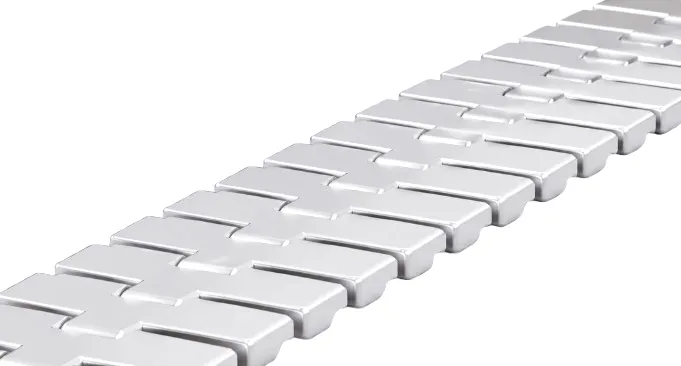 A mid-sized ready-meal manufacturer in Nottingham operating three chilled production lines came to Ever Power following two consecutive BRC audits where the environmental monitoring programme had identified Listeria spp. on return-run surfaces of their legacy steel-mesh conveyor system. The facility, supplying major UK supermarket chains under private-label contracts, faced real risk of losing those contracts if corrective action was not documented and validated within a defined timeline. The hygiene team identified that the steel mesh construction — while technically washable — created thousands of small crevices at wire intersections that were functioning as persistent biofilm reservoirs despite daily CIP cycling.
Ever Power worked with the Nottingham facility’s engineering and hygiene teams over an eight-week period to specify and supply a replacement plastic modular belt system. The chosen configuration — PP open-grid modules on a 1″ pitch with wide-bore hinge holes, assembled on stainless steel frame conveying systems — was validated using ATP bioluminescence testing and environmental swabbing across a 12-week commissioning period. Results demonstrated a 94% reduction in positive environmental monitoring results on belt surfaces compared with the previous steel-mesh baseline, with no positive detections at the hinge-rod interface — previously the most problematic hygiene zone — after the first month of operation under the new CIP protocol jointly developed with Ever Power’s technical team.
The Nottingham facility has since expanded its use of Ever Power plastic modular belt systems to all three production lines and has successfully passed two subsequent BRC audits with Grade AA ratings. The ability to source replacement modules quickly — a key concern for a production environment running six days a week — was specifically cited by the engineering manager as a differentiating factor in the supplier selection decision. Fast, documented supply with full material traceability to production batch has become a standard requirement in the facility’s belt supplier approval procedure.
What UK Customers Say About Ever Power Plastic Modular Belts
“After switching to Ever Power’s open-grid PP belt across our three chilled poultry lines in Sheffield, our environmental monitoring programme recorded a step-change improvement that satisfied the retail customer hygiene auditors immediately. The hinge design genuinely cleans out — no more positive ATP results on return runs after the first two weeks of our revised washdown protocol. For a facility running at the standard BRC demands from the major retailers, that matters enormously.”
“We needed bespoke widths for our fish skinning conveyors — a non-standard 900 mm carrying width that most suppliers couldn’t accommodate without huge minimum quantities. Ever Power quoted us the custom width, provided material certification conforming to EU 10/2011, and delivered within the lead time agreed. The belts have now run through eighteen months of daily high-pressure washdown with chlorinated alkaline CIP and shown no sign of surface degradation. Replacement module availability has been fast every time we’ve needed it.”
“Ever Power’s technical team provided actual chemical compatibility data for our specific sanitiser chemistry — peracetic acid at 0.3% daily with a weekly QAC cycle — rather than generic material spec sheets. That gave our QA team the documented evidence base to include the belts in our validated cleaning programme for the pharmaceutical GMP facility in Cambridge. The compliance documentation package was exactly what our supplier approval procedure required, and it was provided without needing to push for it.”
Συχνές ερωτήσεις
Contact Ever Power’s technical sales team for application-specific belt specification, cleaning protocol guidance, and fast UK delivery with full compliance documentation.
Λάβετε μια προσφορά — [email protected]
επεξεργασία από gzl