
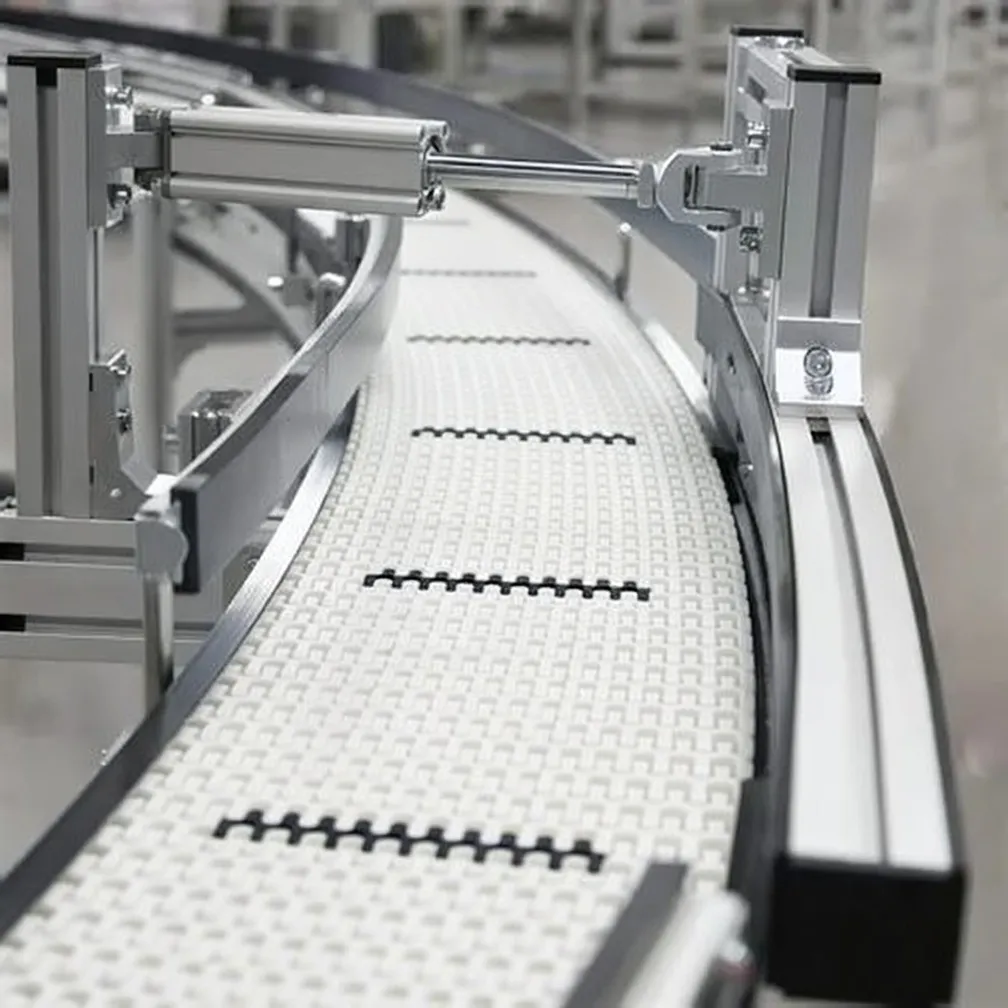
 Selecting the right material for a plastic modular belt is one of the most consequential decisions a plant engineer or procurement specialist will make. The three dominant polymers — polypropylene (PP), polyoxymethylene (POM, commonly called acetal), and polyethylene (PE) — each carry a distinctly different performance profile. In high-throughput UK manufacturing environments, getting this choice wrong can translate into premature belt failure, unplanned downtime, increased maintenance costs, and product contamination risk. Whether you are outfitting a food-processing line in Leeds, a pharmaceutical packaging facility in Cambridge, or a heavy automotive parts conveyor in Coventry, the material science underpinning your modular belt determines whether that conveyor system delivers on its productivity promise month after month.
How Plastic Modular Belts Work: The Engineering Foundation
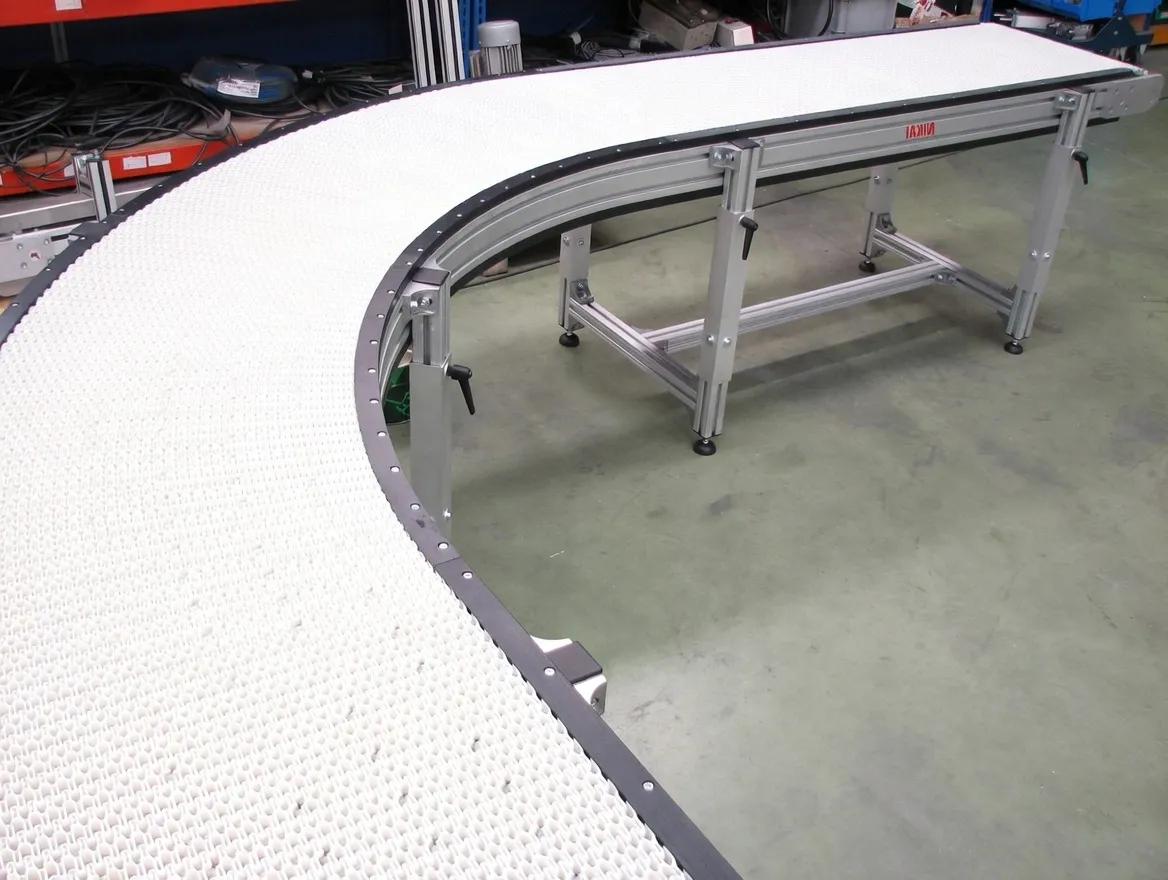
A plastic modular belt consists of individual interlocking modules — typically injection-moulded from thermoplastic polymers — joined by transverse pivot rods that run through aligned hinge eyes. This modular architecture distinguishes them from traditional rubber or fabric conveyor belts in one fundamental way: any damaged section can be replaced in the field without removing the entire belt from service, dramatically reducing maintenance windows. The belt rides over a sprocket-drive system; precision-moulded drive teeth on the module undersides mesh with sprocket profiles to transmit motion cleanly, eliminating the slip issues that plague flat-belt systems under heavy or variable loading.
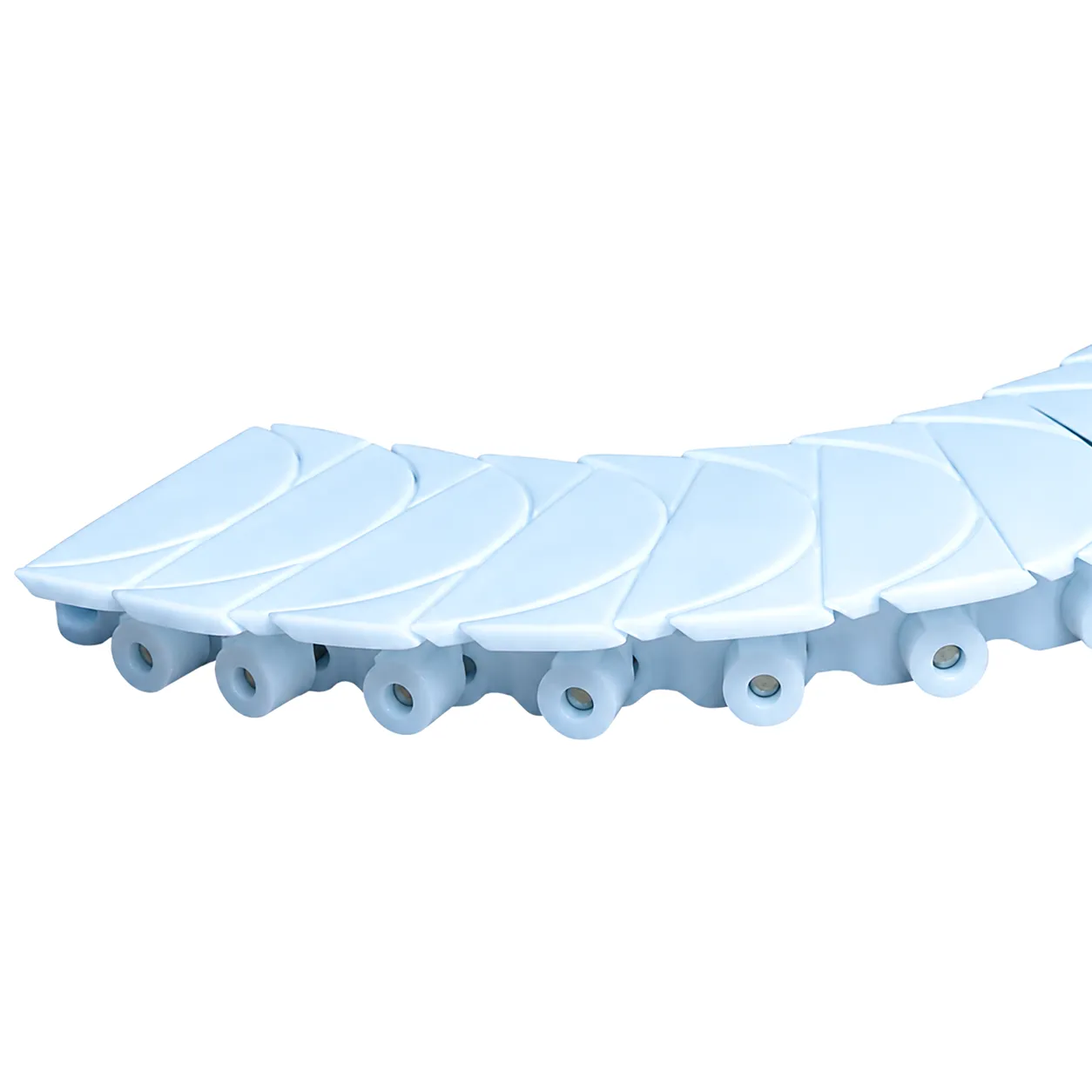
The polymer material from which each module is moulded governs almost every performance parameter: tensile strength, stiffness, chemical inertness, surface friction coefficient, operating temperature range, and dimensional stability under cyclic stress. In a straight-run configuration, modules lock together in a rigid plane; in radius or curve applications, specially profiled modules allow controlled lateral flex without binding. The pivot rod material — often stainless steel or matching polymer — must be specified alongside the belt material because corrosion or wear at the hinge is the most common failure initiation point, particularly in wet UK food-processing environments or caustic washdown operations.
Polypropylene (PP): The Versatile All-Rounder for UK General Industry
Polypropylene is the entry-level workhorse of the plastic modular belt world, and that description should carry no negative connotation — in the right applications, PP delivers outstanding value with a performance ceiling that satisfies the majority of UK general manufacturing requirements. As a semi-crystalline thermoplastic, PP offers a tensile strength typically in the range of 25–40 MPa, a working temperature ceiling of around 90°C continuous (with short excursions to 110°C), and excellent resistance to dilute acids, alkalis, and a broad spectrum of organic solvents. Its density sits around 0.90–0.91 g/cm³, making it the lightest of the three materials covered here — an advantage in applications where belt mass contributes to drive-train load calculations or where elevated conveyor lengths put stress on structural steelwork.
In Birmingham’s automotive component manufacturing sector, PP plastic modular belts are commonly specified for parts washing lines and anodising pre-treatment conveyors, where mild acidic or alkaline chemistry is present and belt replacement cost is a primary consideration. The material’s inherent low moisture absorption (less than 0.02% by weight) means it maintains dimensional stability in wet zones without the swelling or surface degradation that undermines some fabric-core belts. Its UV resistance can be enhanced through additive packages during moulding, making PP suitable for partially outdoor logistics conveyors at UK distribution centres — a growing application area as e-commerce fulfilment infrastructure expands across the Midlands and the North of England.
Where PP falls short is in high-load, high-precision applications. Its flexural modulus (approximately 1.2–1.7 GPa) is notably lower than POM, which means PP belts exhibit more deflection under point loading. In temperature-cycled environments above 60°C continuous, creep — the gradual plastic deformation under sustained stress — begins to accumulate in PP modules, leading to hinge wear and eventual misalignment. This is not a disqualifying characteristic; it is a design parameter. For light-to-medium load applications with operating temperatures below 60°C, PP remains the most cost-effective solution in the UK market.
Polyoxymethylene (POM / Acetal): Precision Engineering Performance for Demanding UK Lines
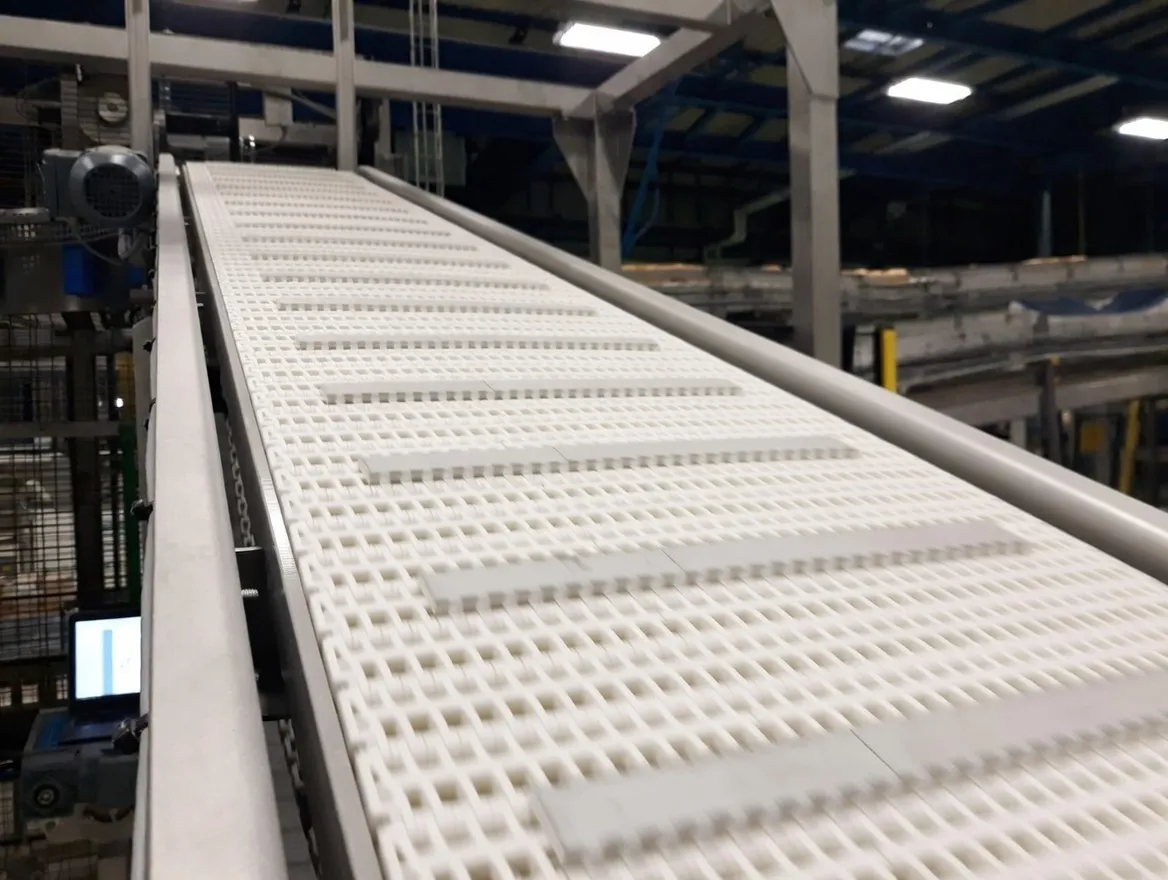
Polyoxymethylene — sold under trade names such as Delrin (homopolymer) and Celcon (copolymer) — is widely regarded as the benchmark material for high-performance plastic modular belt applications. Its crystalline molecular structure produces a combination of mechanical properties that are difficult to match in the thermoplastic category: tensile strength typically between 60–75 MPa, a flexural modulus of 2.5–3.5 GPa, and outstanding fatigue resistance under cyclic loading conditions. These characteristics translate directly to a conveyor belt that maintains precise module geometry across the operational life of the belt, keeps hinge clearances within tolerance even after millions of articulation cycles, and tracks consistently on sprockets without the progressive elongation seen in less stiff polymers.
In Sheffield’s precision engineering and cutlery manufacturing heritage has evolved into high-value metal components and advanced materials production, POM plastic modular belts are frequently specified for parts transfer lines where dimensional accuracy in belt tracking is non-negotiable. A poorly tracking belt in a precision-machined component line can lead to positional errors that cascade through automated assembly cells, triggering costly rework cycles. POM’s low coefficient of friction (0.10–0.35 against steel, depending on surface finish and lubrication) also makes it the preferred choice for accumulation conveyors and low-back-pressure zones in packaging machinery, where products must slide freely across the belt surface without jamming or tip-over.
The material’s continuous service temperature extends to approximately 100°C, with short-term tolerance to 140°C, making POM belts viable for applications involving mild heat exposure — such as post-wash dryer conveyors in food-grade facilities or temperature-stabilisation sections in composite-cure production lines. One important caveat: POM is not appropriate for use in strongly alkaline environments (pH above 8–9 for prolonged exposure), as hydroxyl ions can attack the acetal linkages in the polymer backbone and cause stress cracking. For facilities running aggressive CIP (clean-in-place) protocols using high-concentration caustic soda — common in UK dairy and beverage processing — either PP or PE should be evaluated for washdown zones, while POM handles the dry-run or product-contact sections upstream.
Polyethylene (PE): Chemical Inertness and Hygiene Compliance for UK Food and Pharma
Polyethylene in its ultra-high-molecular-weight form (UHMW-PE) occupies a specific and important niche in the plastic modular belt spectrum: maximum chemical inertness, FDA/EU food-contact compliance, and exceptional wear resistance across low-to-medium operating temperatures. UHMW-PE has a molecular weight typically in the range of 3.5 to 7.5 million g/mol — orders of magnitude higher than standard HDPE or LDPE — which gives it a highly entangled molecular network that resists abrasion even from aggressive, gritty product streams. Its coefficient of friction is among the lowest of any engineering plastic at 0.10–0.20, making it the material of choice when product sliding is actively desired rather than just tolerated.
For UK food manufacturers operating under British Retail Consortium (BRC) Global Standards, hygiene compliance is paramount. PE plastic modular belts are inherently non-porous, offer no substrate for microbial biofilm formation (when maintained correctly), and can withstand the repeated chlorine-based and peracetic acid washdown protocols required for Class A BRC hygiene zones. In poultry processing plants in East Anglia, fish handling facilities on the Humber estuary, and ready-meal production lines across the North West, PE belts provide a compliant, durable conveying surface that meets regulatory scrutiny without compromise.
The trade-offs are important to acknowledge honestly. UHMW-PE’s tensile strength (25–45 MPa) is comparable to PP but its flexural modulus is markedly lower (0.4–1.0 GPa), meaning PE modules are noticeably more flexible and prone to sag under heavy point loads. This is not a belt for heavy automotive parts or dense metal components. Its maximum continuous service temperature is also constrained — typically 80°C for UHMW-PE — which rules it out of hot washing or sterilisation-in-place (SIP) applications unless specific high-density grades are selected. For cold-chain environments, however — refrigerated distribution warehouses from Milton Keynes to Edinburgh — PE’s retained flexibility at sub-zero temperatures is an advantage that neither PP nor POM can match without special low-temperature additive formulations.
Material Performance Comparison Table: PP vs POM vs PE Plastic Modular Belt
The table below provides a technical reference across the key parameters that determine material suitability for industrial conveyor applications. Values represent typical mid-range grades; specific formulations may vary.
| Παράμετρος | PP | POM (Ακετάλη) | PE (UHMW) |
|---|---|---|---|
| Αντοχή σε εφελκυσμό (MPa) | 25–40 | 60–75 | 25–45 |
| Flexural Modulus (GPa) | 1.2–1.7 | 2.5–3.5 | 0.4–1.0 |
| Max Continuous Temp (°C) | 90 | 100 | 80 |
| Min Operating Temp (°C) | 0 to -10 | -40 | -200 |
| Density (g/cm³) | 0.90–0.91 | 1.41–1.42 | 0.93–0.96 |
| Moisture Absorption (%) | <0.02 | 0.20–0.25 | <0.01 |
| Resistance to Dilute Acids | Εξοχος | Καλός | Εξοχος |
| Resistance to Alkalis | Εξοχος | Poor (high pH) | Εξοχος |
| Abrasion Resistance | Καλός | Very Good | Outstanding |
| Food-Contact Compliance | Yes (food grade) | Yes (food grade) | Yes (FDA/EC) |
| Cold-Temperature Flexibility | Μέτριος | Καλός | Exceptional |
| Relative Material Cost | Χαμηλός | Ψηλά | Μέτρια–Υψηλή |
| Typical Max Load (kg/m²) | 80–120 | 200–350 | 60–100 |
Industrial Application Scenarios: Matching Material to UK Production Environment
Food processing lines — from bread baking through poultry portioning to confectionery coating — have diverse and sometimes contradictory demands. In high-humidity baking environments where belt surface temperatures briefly reach 85–90°C, PP plastic modular belts specified with an elevated-temperature formulation are appropriate for the oven-exit zone, while a PE-based modular belt provides the FDA-compliant, low-friction surface required on the downstream cooling and packaging section. Yorkshire’s large agricultural processing industry — grain milling, oil pressing, and vegetable preparation — often runs mildly abrasive product streams where UHMW-PE’s outstanding scratch resistance prevents particulate contamination from worn belt surfaces. Specifying the correct material at each conveyor zone within a single production line can eliminate two common failure modes simultaneously.
The West Midlands automotive supply chain remains one of the most demanding conveyor environments in UK manufacturing. POM plastic modular belts are the dominant material choice for precision parts transfer in machining cells, where consistent belt tracking across CNC feeds and robotic pick-points is critical. Engine block sub-components, brake calipers, and steering column parts all demand a conveyor system that maintains positional repeatability over millions of cycles. The higher material cost of POM is readily justified by avoided re-inspection costs and rework triggered by positional drift. For less precise applications within the same facility — scrap collection conveyors, coolant-return lines, and raw stock staging — PP provides adequate performance at a significantly reduced capital cost per running metre of conveyor.
Pharmaceutical packaging lines operating under MHRA Good Manufacturing Practice (GMP) requirements impose the strictest hygiene and traceability standards in UK industry. PE plastic modular belts with FDA-compliant formulations are the standard specification for tablet and capsule inspection conveyors, blister-pack transfer sections, and lyophilised product handling. The non-porous, easily sanitised surface of PE minimises contamination risk between product batches, while the material’s inherent electrostatic behaviour — lower than PP and POM — reduces the adherence of lightweight pharmaceutical dust particles to the belt surface. White or natural PE colouring aids visual inspection protocols. For sterile areas requiring gamma-radiation sterilisation, specific PE formulations offer acceptable radiation stability; laboratory and procurement teams in Oxford and Cambridge research facilities should request formal material certification from their belt supplier before approval.
High-speed parcel sorting and fulfilment centres — which have expanded significantly across Northamptonshire, Staffordshire, and Greater Manchester over the past decade — use plastic modular belts in divert-and-sort configurations that operate at 0.5 to 3.0 m/s continuously. PP belts with specialist surface profiles (raised-rib, low-friction, or high-friction grip variants) are the default choice at this level: their light weight reduces drive motor energy consumption, their cost allows rapid scheduled replacement on predictive maintenance cycles, and their adequate mechanical performance satisfies the relatively benign loading conditions of parcel handling. Where high-load pallet conveying is integrated into the same facility, short POM belt runs at the pallet-entry and depalletising sections can handle the elevated loads without requiring an entirely different conveyor architecture, making PP/POM hybrid belt specifications across a single facility a cost-effective design strategy.
Customer Success Story: Sheffield Steel Components Manufacturer Solves Conveyor Reliability Crisis
A precision-machined fastener manufacturer based in Sheffield’s Lower Don Valley — producing high-specification bolts, nuts, and threaded inserts for the UK aerospace and energy sector — had been experiencing recurring conveyor failures in their secondary finishing department. The facility runs multiple conveyor lines transporting hardened steel components through vibratory deburring stations, ultrasonic cleaning baths, and phosphate passivation immersion lines before inspection and packaging. Their incumbent rubber-core belt system required full replacement every eight to twelve weeks due to combined attack from cleaning chemistry and cyclic mechanical fatigue at drive points.
After reviewing the application with Ever Power’s technical team, a dual-material strategy was implemented. POM plastic modular belts were specified for the pre-cleaning and deburring transport sections, where mechanical load was highest and chemical exposure was limited to mild alkaline degreaser. For the phosphate passivation and ultrasonic cleaning zones — operating in pH 10–12 solutions — PP plastic modular belts with polypropylene pivot rods were substituted, eliminating the galvanic corrosion affecting previous stainless-steel components. Ever Power manufactured both specifications to match existing sprocket geometry, allowing installation without structural conveyor frame modification.
The outcome after twelve months of operation: planned belt service life extended from an average of ten weeks to approximately 46 weeks across the POM sections and 38 weeks across the PP sections. Unplanned downtime related to conveyor failure dropped by approximately 81%. The maintenance team reported that field module replacement — when required — could be completed within a single shift changeover window, compared to the multi-shift outage previously required for full rubber belt removal and replacement. The procurement team in Sheffield confirmed total annual conveyor belt expenditure reduced by approximately 55% after accounting for the higher unit price of modular belt modules versus the incumbent rubber system.
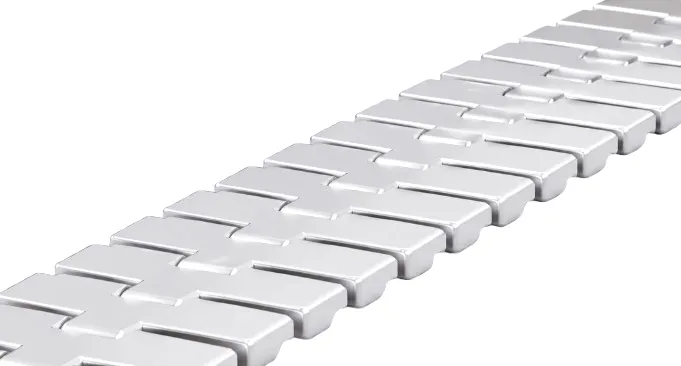
“The POM belt sections have been running continuously for eleven months now without a single unplanned stop. The dimensional consistency across the sprocket-drive points is exactly what our CNC feeds required. Ever Power’s technical team understood the application immediately and provided a formal material certification pack that went through our quality approval process without revision.”
“We specified PP for our caustic washdown zones on the advice of Ever Power’s engineers and the material has held up perfectly to our twice-daily CIP cycles. The polypropylene pivot rods were a critical recommendation — we had corrosion on the previous metal rods within weeks. Delivery from Ever Power was precisely on the confirmed lead time, which matters a great deal to our maintenance scheduling.”
“What impressed us most was Ever Power’s ability to match our existing sprocket profile without any frame modification on our side. Their custom width tolerance was spot-on and the batch traceability documentation went straight into our BRC audit folder. For a business balancing cost management with zero tolerance for contamination, finding a supplier who understood both priorities was genuinely difficult before we engaged Ever Power.”
How to Choose Between PP, POM, and PE: A Practical Decision Guide for UK Engineers
Material selection for a plastic modular belt comes down to a structured evaluation against six primary criteria: operating temperature range, chemical environment, load profile, hygiene requirements, temperature cycling behaviour, and budget constraint. The order of priority will shift depending on your specific application; however, the following framework covers the majority of UK industrial scenarios without oversimplification.
| Your Requirement | Select PP | Select POM | Select PE |
|---|---|---|---|
| Lowest cost per metre | ✓ | ✗ | △ |
| Heavy load (>150 kg/m²) | ✗ | ✓ | ✗ |
| Strong caustic washdown (pH >9) | ✓ | ✗ | ✓ |
| Cold-chain below -20°C | ✗ | △ | ✓ |
| BRC/FDA food-contact compliance | ✓ (food grade) | ✓ (food grade) | ✓ |
| Precision tracking / low creep | ✗ | ✓ | ✗ |
| Maximum abrasion resistance | △ | △ | ✓ |
| ✓ = Recommended △ = Acceptable with caveats ✗ = Not recommended | |||
Frequently Asked Questions About Plastic Modular Belt Material Selection in the UK
Ever Power’s engineering team works with manufacturers across Birmingham, Sheffield, Manchester, Leeds, Cambridge, and beyond. Send your application details and we will recommend the optimal material specification and provide a firm quote within one business day.
📧 Get Your Material Selection Quote Now