Περιγραφή
Plastic Conveyor Belt — UK Supply
Wide Pitch Flat Top Straight Run Belt (5935-FT)
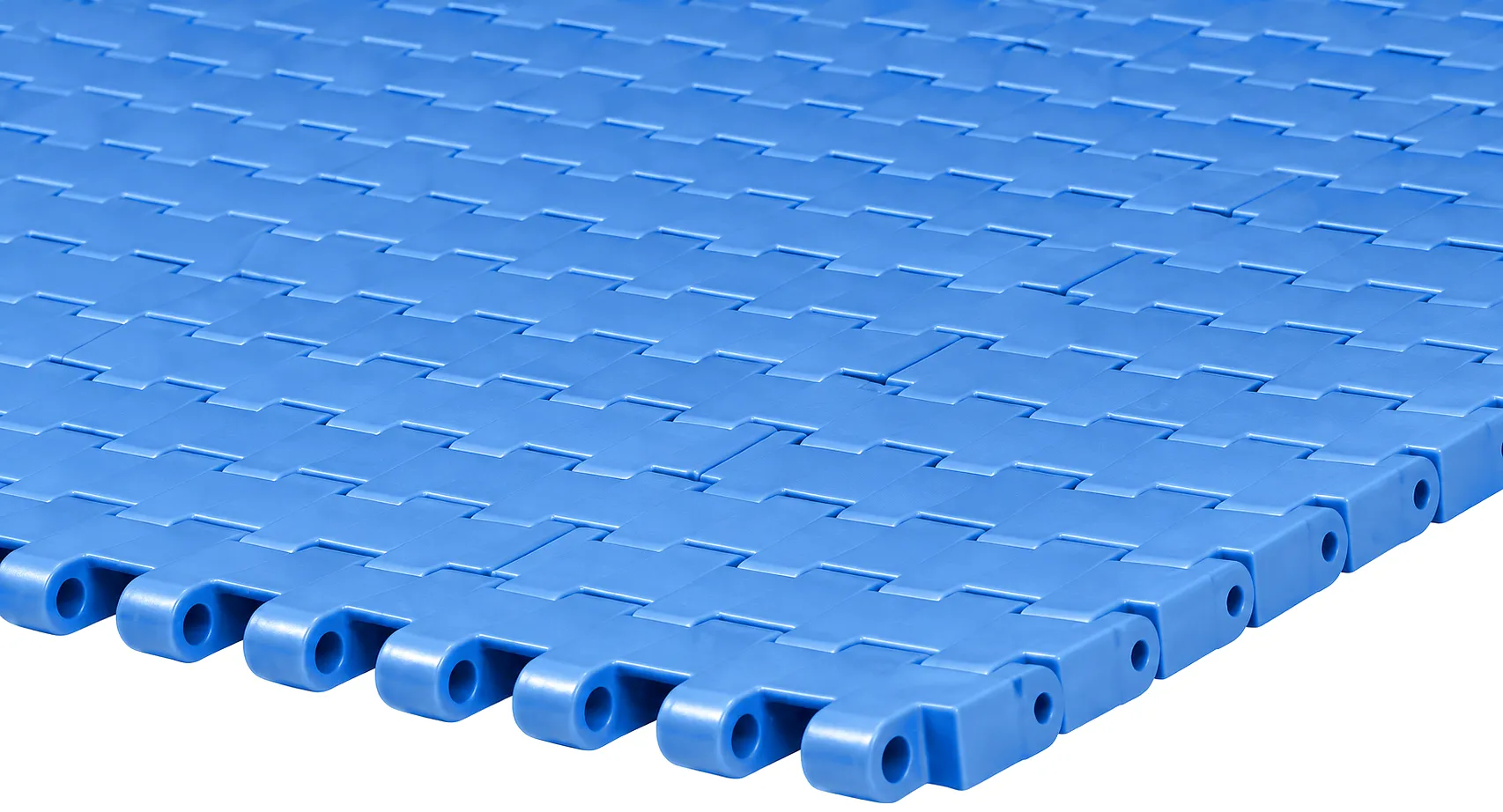
The 5935-FT Wide Pitch Flat Top Straight Run Belt is an engineered plastic modular conveyor belt designed for demanding industrial and food processing environments across the United Kingdom. Its wide-pitch, flat-top surface architecture delivers outstanding product stability, while its modular construction enables rapid, tool-free replacement and on-site customisation without production downtime. Trusted by procurement engineers and operations managers from Manchester to Birmingham, this belt series stands as a benchmark in heavy-duty conveyor belt technology.
What Is the Wide Pitch Flat Top Straight Run Belt?
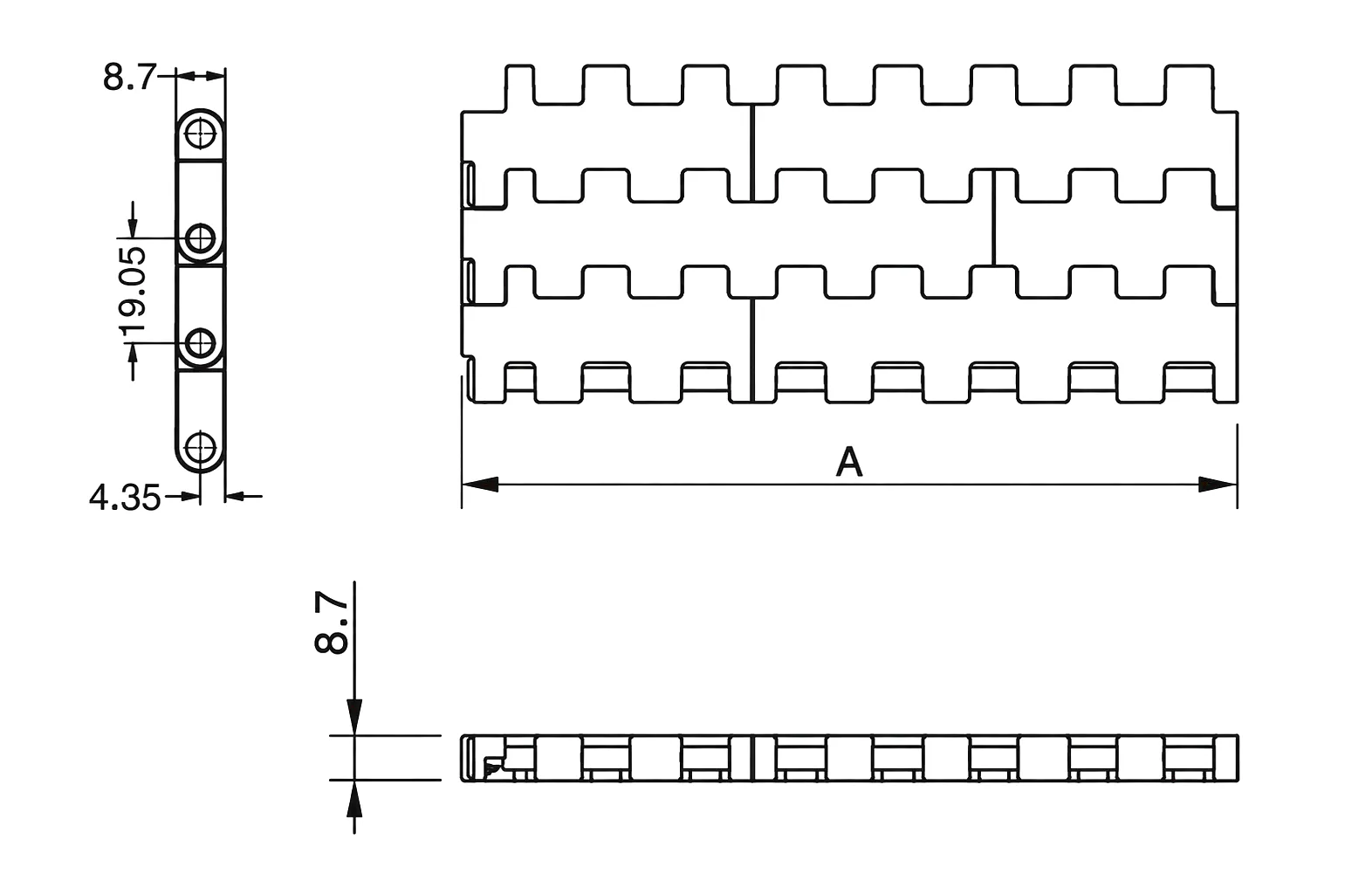
The 5935-FT is a heavy-duty, wide-pitch flat top conveyor belt manufactured from high-grade engineering plastics — available in XLG (acetal), PS (polypropylene), and XP (polypropylene) materials. Each module is precision-moulded to interlock seamlessly, forming a continuous, flush-top running surface ideal for transporting packaged goods, glass containers, automotive parts, or fresh produce without snagging or tipping. The 19.05 mm pitch configuration, combined with a flat top profile, makes it particularly well-suited to high-load straight-run applications throughout UK manufacturing, distribution, and food processing facilities.
Unlike traditional slat conveyors, the modular design of the wide pitch flat top straight run belt allows individual modules to be replaced in minutes, significantly reducing planned and unplanned maintenance windows. British production engineers working in regulated sectors — from pharmaceutical packaging in Leeds to chilled logistics in Swindon — consistently cite minimal downtime and hygienic cleanability as decisive purchasing criteria, both of which the 5935-FT addresses by design.
Explore Related Conveyor Belt Products
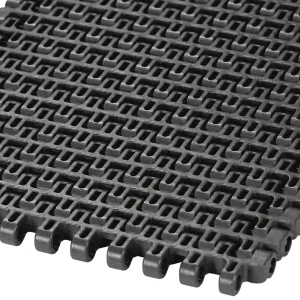
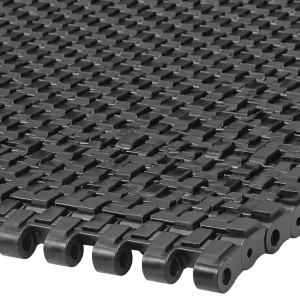
For applications requiring a smooth, unobstructed transport surface on straight conveyor lines, the Flat Top Straight Run Conveyor Belt offers an ideal solution with a fully closed deck surface, maximising contact area and minimising product slippage across a broad range of industries.
Where drainage, airflow, and washdown performance take priority — typical in poultry processing, seafood lines, or fresh vegetable packing — the open-deck Grid Straight Run Conveyor Belt provides superior hygiene compliance while matching the structural integrity of flat-top alternatives.
Why UK Engineers Specify the 5935-FT Wide Pitch Flat Top Belt
Exceptional Load Capacity
With a maximum working load of 13,000 N at 21°C in XLG and PS materials, the 5935-FT handles heavy packaged goods, industrial components, and dense unit loads that would stress narrower-pitch alternatives. This load rating is certified at ambient UK warehouse and production temperatures, giving procurement teams confidence for year-round deployment.
Wide Operating Temperature Range
XLG and PS grades operate across a dry and wet range of 4°C to 65°C, accommodating refrigerated distribution centres and heated curing lines alike. The XP variant extends this further to 4°C–105°C, making it applicable in pasteurisation tunnels and thermal processing sections common in UK dairy and ready-meal manufacturing facilities.
Hygienic Material Options
All three material grades — XLG (acetal copolymer), PS (polypropylene), and XP (heat-resistant polypropylene) — are resistant to common cleaning chemicals, lubricants, and mild acids encountered in CIP washdown cycles. Smooth-surfaced flat top modules leave no bacteria-harbouring crevices on the product contact face, supporting BRC and SALSA food safety audits across UK food factories.
Modular & Customisable Width
Standard mould-part width is 76.2 mm, and modules assemble in 152.4 mm increments — with total belt width calculated as W = 76.2 × N, where N is the number of module columns. This scalable architecture lets UK system integrators specify the exact width needed for any conveyor frame without off-cuts or waste, while non-standard widths are available directly through our technical sales team.
Technical Specifications — 5935-FT Wide Pitch Flat Top Straight Run Belt
All data measured under standard laboratory conditions. For non-standard width requirements, please contact our sales team directly.
| Belts Type | Pitch (mm) | Backflex Radius Min (mm) | Working Load Max N (21°C) | Working Temperature °C | Weight Kg/m² | Belt Material | Belt Width (mm) | Standard Assembly Width | ||
|---|---|---|---|---|---|---|---|---|---|---|
| Dry | Wet | Mold Parts Width | 152.4 | |||||||
| 5935-FT | 19.05 | 25 | 13000 | 4-65 | 4-65 | 6.3 | XLG | 76.2 | 152.4 | W = 76.2 × N |
| 19.05 | 25 | 13000 | 4-65 | 4-65 | 6.3 | PS | ||||
| 19.05 | 25 | 7000 | 4-105 | 4-105 | 4.9 | XP | ||||
If the chain belt requires non-standard width, please contact the salesperson.
Material Science, Operating Principle & Application Scenarios
The 5935-FT wide pitch flat top straight run belt operates on a sprocket-driven, positive-engagement principle. Precision-moulded rod-hinge connections between adjacent rows transmit tension loads longitudinally, while the broad flat deck surface distributes point loads across multiple modules simultaneously. This architecture dramatically reduces stress concentrations compared to single-strand chain systems and allows the belt to operate for extended service intervals without elongation or pitch deviation — a critical advantage in servo-indexed lines and checkweigher infeed sections found throughout UK packaging facilities.
XLG (Acetal Copolymer / POM-C) combines excellent dimensional stability with low moisture absorption, making it the material of choice for dry ambient environments handling metal cans, cardboard cartons, or automotive stampings. Its inherent lubricity reduces friction drag against guide rails, lowering drive motor energy consumption — a meaningful operational saving in large-scale UK logistics hubs running multiple conveyor lines around the clock.
PS (Standard Polypropylene) offers comparable load and temperature performance to XLG at a more competitive price point, making it the most frequently specified grade for general food processing, beverage bottling, and FMCG distribution applications. Its chemical resistance to bleach, sodium hypochlorite, and caustic soda solutions fully supports daily high-pressure washdown protocols in BRC-audited UK food factories.
XP (High-Temperature Polypropylene) pushes the thermal ceiling to 105°C in both dry and wet conditions, enabling deployment in pasteurisation tunnels, hot fill lines, and oven exit sections where standard materials would soften and deform. UK dairy processors and ready-meal manufacturers utilising continuous thermal treatment have adopted XP-grade wide pitch flat top belts to replace steel mesh alternatives that corroded rapidly in acidic product environments.
Typical Application Sectors in the United Kingdom
Food & Beverage Processing
Bakeries, dairy lines, poultry processing, canned goods packing, and bottling plants across England and Scotland.
Pharmaceutical Packaging
Blister pack infeed, vial transport, and compliance-sensitive clean-room conveyor applications.
Automotive Component Handling
Stamped parts, sub-assembly transport, and painted panel lines where scratch-free handling is essential.
E-commerce & Distribution
Sortation conveyors, parcel accumulation tables, and warehouse outbound lanes at UK fulfilment centres.
Customer Success: Real-World Results with the 5935-FT Belt
Case Study — Food Processing / United Kingdom
Chilled Ready-Meal Manufacturer, West Midlands
A mid-sized ready-meal production facility in Wolverhampton was experiencing persistent belt failures on their tray-sealing outfeed conveyor — a steel slat chain that required lubrication every four hours and corroded within eight months under daily CIP washdown. After switching to the 5935-FT belt in PS grade across three conveyor lines, the maintenance team recorded zero unplanned stoppages over the following six-month period. Belt replacement intervals extended from eight months to an estimated three-plus years, and daily lubrication was eliminated entirely, saving approximately 45 minutes of operator time per shift across the facility.
“The difference was immediate. Washdowns that used to leave our old chain rusting within a week have no effect whatsoever on these plastic modules. The flat top surface also improved our checkweigher accuracy — products no longer rock between slats.” — Plant Engineering Manager, Wolverhampton
A bottling plant near Glasgow replaced rubber belt sections on their glass bottle accumulation table with the 5935-FT in XLG material. The acetal surface provided the low-friction, bottle-friendly transport needed without bottle tipping, and the modular width configuration matched the existing conveyor frame exactly — no structural alterations were required during the retrofit.
“Lead time was tight before our summer peak, but the order arrived in eight working days. Fitting took one shift.” — Engineering Supervisor
A Tier-2 automotive supplier in Nottingham introduced the 5935-FT in XP grade on their painted bumper transport line, where ambient temperatures around press ovens frequently exceeded 90°C. Unlike previous nylon belt systems that warped seasonally, the XP modules maintained dimensional accuracy across twelve months of monitored operation, with no recorded pitch elongation or tracking deviation reported.
“We needed a belt that wouldn’t warp near the oven exit. This one just keeps running.” — Process Engineer
Manufacturing & Product Customisation
Precision-Engineered to Your Exact Conveyor Requirements
Our manufacturing facility operates dedicated injection moulding lines running validated tooling for the 5935-FT series 24 hours a day, enabling fast turnaround on both standard and non-standard orders. Beyond the catalogue configurations, our applications engineering team provides a full product customisation service — covering belt width increments outside the standard W = 76.2 × N formula, special rod colours for HACCP colour-coding protocols, custom flight attachments for inclined conveying, and material combinations optimised for specific chemical environments identified during a customer site audit. UK clients benefit from a dedicated pre-sales engineering consultation at no extra charge, where application parameters including line speed, load weight, temperature profile, and cleaning regime are evaluated to select the optimal belt specification before any order is placed.
Every production batch undergoes dimensional inspection, tensile load testing, and thermal cycling verification before dispatch. Documentation packages including material data sheets, dimensional drawings, and third-party food-contact compliance certificates are available for all standard grades — a requirement increasingly mandated by UK retailers and food standards authorities as part of supplier qualification audits.