
Plastic Modular Belt vs Rubber Conveyor Belt: Which Should UK Manufacturers Choose?
A technical and commercial deep-dive for production engineers, procurement managers, and plant directors across British industry — from Birmingham’s automotive supply chain to Sheffield’s advanced manufacturing corridor.
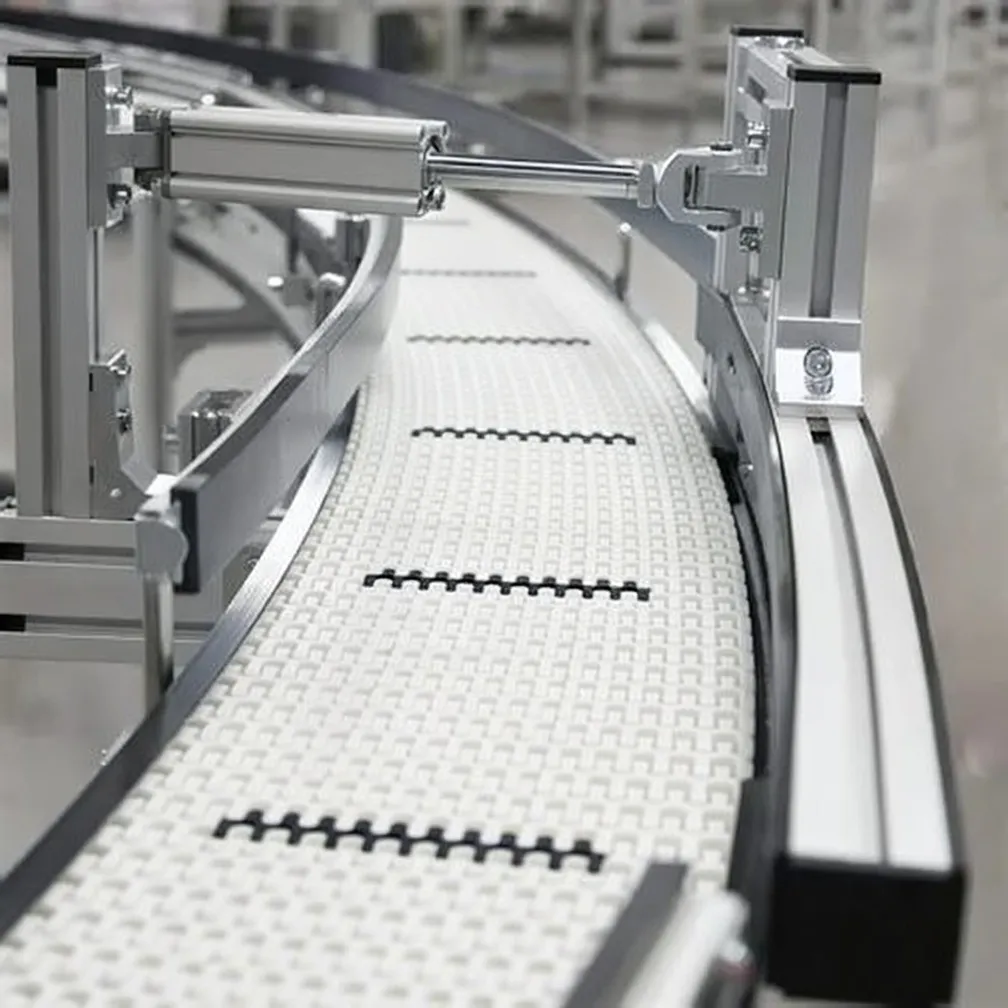 The conveyor belt is one of those components that rarely receives the scrutiny it deserves — until it fails on a peak-production Wednesday in a Coventry automotive parts facility, or degrades prematurely in a Leeds food processing plant after a routine caustic washdown. For decades, rubber conveyor belts dominated British factory floors simply because they were familiar, widely available, and cheap to procure in bulk. The engineering logic seemed sound enough: rubber is flexible, grippy, and resilient under moderate mechanical loads. But as UK manufacturing has evolved — driven by increasingly strict hygiene regulations, automation requirements, and the pursuit of higher overall equipment effectiveness — the limitations of rubber have become harder to overlook. Plastic modular belts have entered the picture not as a novelty, but as a structurally superior alternative for a growing set of industrial applications across the United Kingdom.
How Each Belt Type Actually Works — Engineering Principles Compared
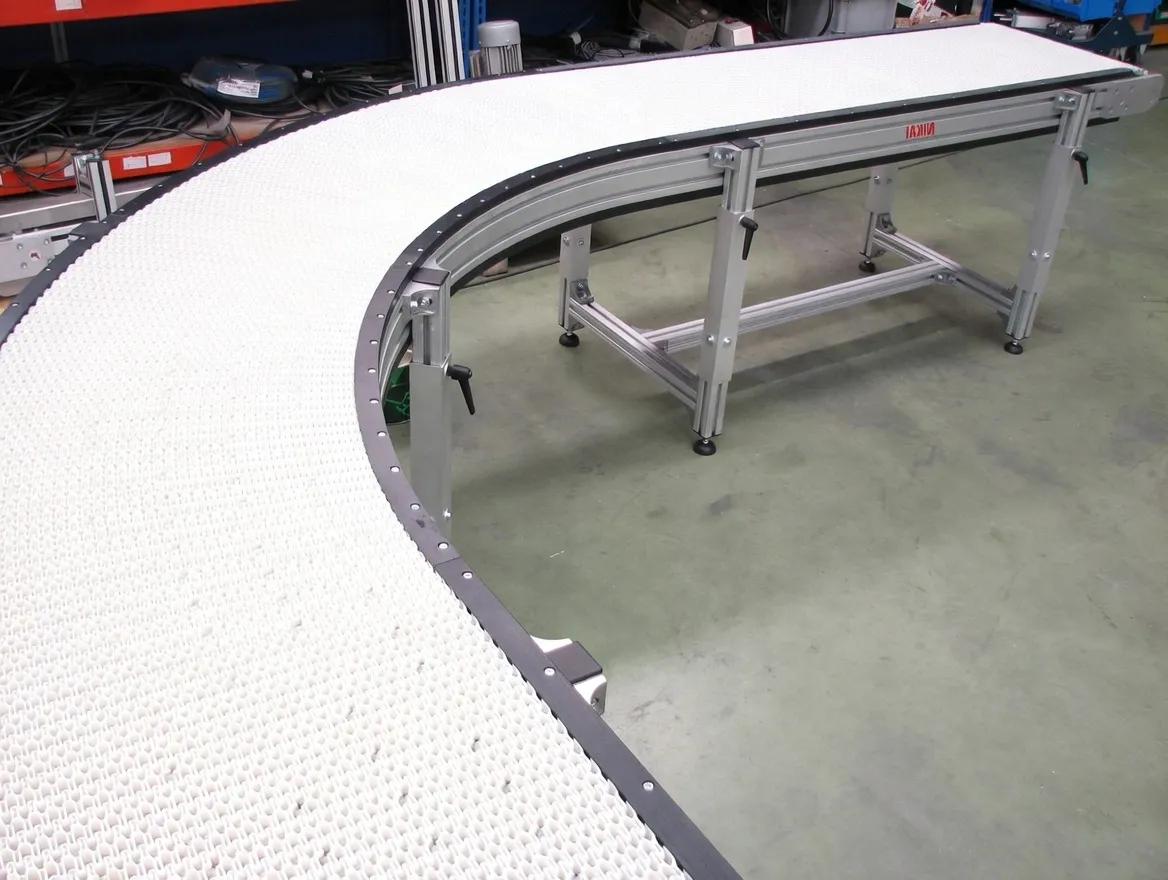
A plastic modular belt is constructed from individual interlocking modules — discrete, precision-moulded polymer segments that hinge together through transverse rods to form a continuous, articulated surface. Each module is typically injection-moulded from engineering-grade thermoplastics such as polypropylene (PP), polyethylene (PE), acetal (POM), or polyamide (nylon). The interlocking geometry creates a belt that is modular in every meaningful sense: individual modules can be replaced without removing the entire belt from service. The belt runs over a flat-deck or sprocket-driven system, where drive sprockets engage positively with the module’s drive contacts, eliminating the slip that characterises friction-driven rubber belts. This positive engagement means consistent speed control across the full width of the conveyor, a significant advantage in precision-timed packaging or sorting operations. The open-grid versions of modular belts allow air, water, and cleaning agents to pass directly through the belt surface, which has made them the dominant choice in food-grade environments regulated under UK Food Standards Agency (FSA) and EU-retained hygiene legislation.
A rubber conveyor belt operates as a continuous loop of vulcanised rubber — typically reinforced with textile plies, steel cords, or aramid fibres — that is tensioned around a series of drive and return pulleys. The drive mechanism relies entirely on friction between the belt surface and the drive pulley. This means that sufficient belt tension must always be maintained to prevent slippage, which in turn places persistent mechanical stress on the entire conveyor structure. Rubber belts are manufactured as a single continuous unit, meaning that any damage — a cut, a tear, a delamination — may require the entire belt to be replaced or vulcanised in-situ. Splicing and repair operations on rubber belts often demand specialist equipment and skilled labour. While modern rubber belts can achieve impressive tensile strengths and are well-suited to long-haul bulk material transport over large distances, their performance envelope narrows significantly in wet, chemically aggressive, or high-hygiene environments. In the context of a medium-scale UK manufacturing operation requiring regular washdowns, precise product control, and minimal unplanned downtime, rubber presents a more demanding maintenance profile than is often acknowledged at the point of purchase.
Core Materials: What UK Engineers Need to Know
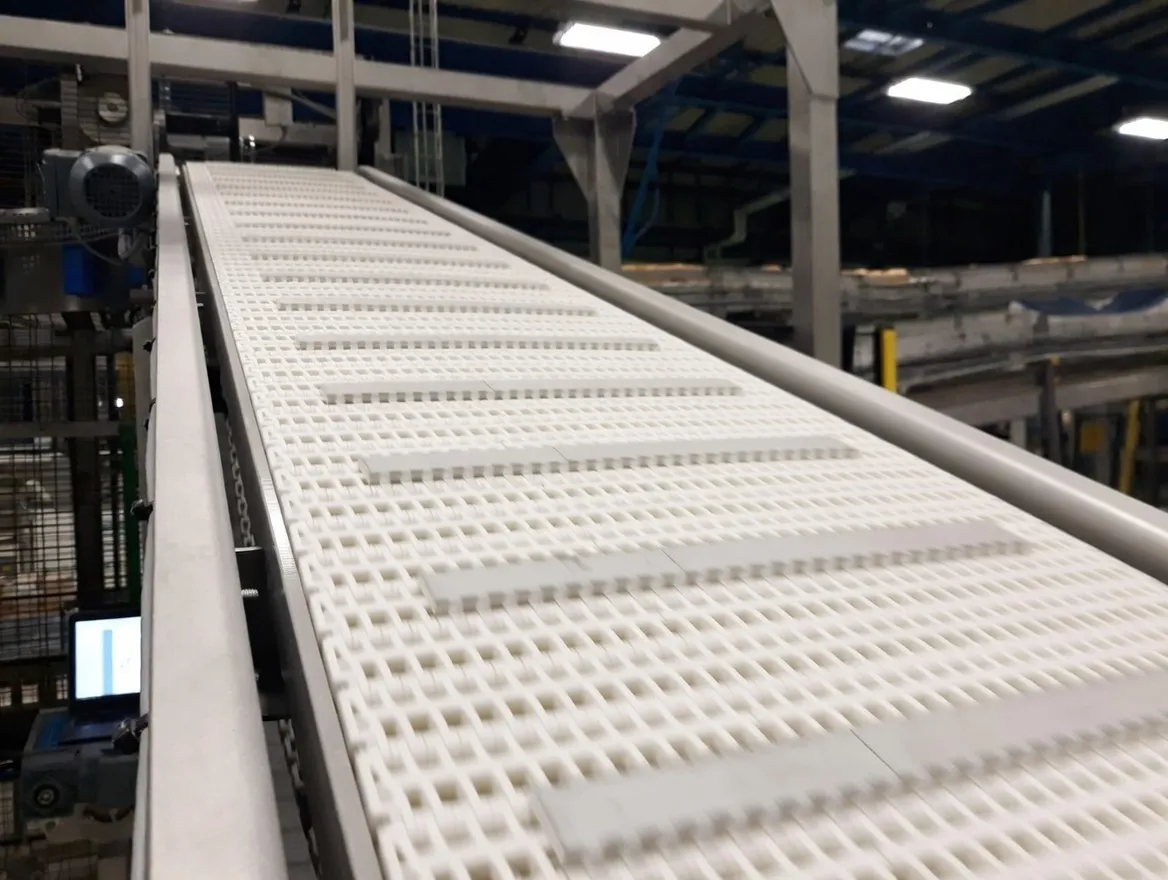
The most commonly specified material for general-purpose food conveying, PP offers excellent resistance to a wide range of cleaning chemicals including the alkaline detergents and peracetic acid solutions widely used in UK food and beverage facilities. PP modules are lightweight, which reduces wear on drive components, and they maintain structural integrity across operating temperatures from -10°C to approximately 90°C — a range that covers most ambient and pasteurisation tunnel applications. Cost-effectiveness makes PP the standard starting point for most belt specifications.
For applications where dimensional precision, low friction, and high abrasion resistance are paramount — such as metal component transfer in Sheffield’s precision engineering firms or automotive assembly in the West Midlands — acetal-grade modular belts deliver outstanding performance. POM has a very low coefficient of friction against steel and most engineering surfaces, making it ideal for accumulation conveyors where product must slide gently against belt guides. Its rigidity also makes it the preferred material where tight pitch tolerances are required for indexing or positioning applications.
High-density polyethylene variants are specified for low-temperature applications, including chilled and frozen food conveying, where standard PP can become brittle. Nylon-based modules offer higher impact strength and are used in heavy-duty conveying scenarios where product weight or mechanical shock loading exceeds what PP can reliably sustain. Both materials can be produced in FDA and EU food-contact compliant formulations, ensuring continued regulatory alignment post-Brexit under UK retained law. In contrast, rubber conveyor belts used in food environments require strict monitoring for surface degradation, as particulate contamination from aged rubber compounds presents a genuine food safety risk.
Technical & Performance Parameter Comparison Table
| Parameter | Plastic Modular Belt | Rubber Conveyor Belt |
|---|---|---|
| Belt Width Range | 100 mm – 4,800 mm | 300 mm – 3,000 mm (standard) |
| Working Temperature | -40°C to +120°C (material dependent) | -20°C to +80°C (standard grade) |
| Max Allowable Load (per metre width) | Up to 350 kg/m (heavy-duty grades) | Up to 500 kg/m (steel-cord grades) |
| Belt Pitch Options | 12.7 mm, 19.05 mm, 25.4 mm, 38.1 mm, 50.8 mm | Continuous (no modular pitch) |
| Chemical Resistance | Excellent (PP, POM, PE resist acids, alkalis, solvents) | Moderate (degrades with oils, solvents, strong acids) |
| Hygienic Cleanability | Superior (open grid options, no crevices) | Challenging (surface cracks harbour bacteria) |
| Drive Type | Positive sprocket engagement (no slip) | Friction drive (slip possible under load) |
| Repairability On-Site | Module-level replacement (minutes) | Full belt replacement or vulcanised splice (hours) |
| Typical Service Life | 5–10 years (partial module replacement extends life) | 2–5 years (full replacement typically required) |
| Food-Grade Certification | FDA, EU 10/2011, UK food contact regulations | Requires specific compound specification; risk of migration |
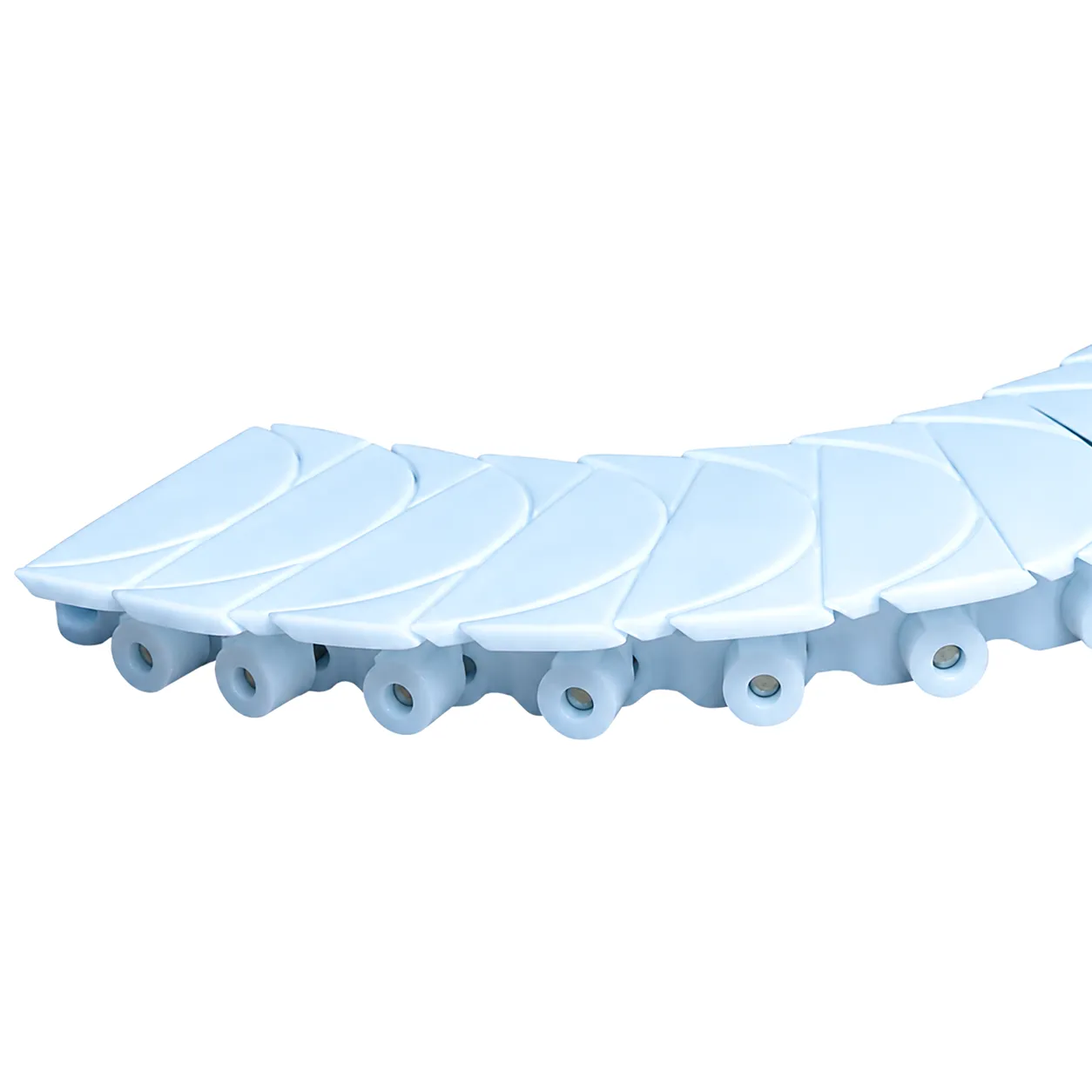
| Lateral Flexibility (Side-Flexing) | Available in side-flexing configurations for curved conveyors | Limited; requires specialised curved belt variants |
| Noise Level During Operation | Low to moderate (lubrication-free options available) | Generally low, increases with wear and tension loss |
Why Plastic Modular Belts Outperform Rubber in Key UK Manufacturing Scenarios
In facilities regulated under the UK’s Food Safety Act and associated hygiene regulations — from poultry processing units in Lincolnshire to dairy operations in Somerset — the ability to clean a conveyor belt quickly and completely is non-negotiable. Rubber conveyor belts develop micro-cracks as they age, and these surface fissures become harbouring sites for Listeria monocytogenes, Salmonella, and other pathogens that are notoriously difficult to eliminate with standard Clean-In-Place (CIP) protocols. Plastic modular belts present a fundamentally different hygienic profile. Their smooth, non-porous module surfaces resist bacterial colonisation, and the open-grid design of many variants allows direct spray-through cleaning that reaches the belt’s underside and the conveyor frame beneath. Many plastic modular belt configurations are fully compatible with high-pressure hot water washing, steam cleaning, and the concentrated detergent concentrations specified in HACCP hygiene plans. This is not a marginal advantage — it directly determines audit readiness and the frequency of unplanned hygiene shutdowns.
When a rubber belt suffers damage — whether from a dropped component on an automotive assembly line in Sunderland or a conveyor jam in a bottling plant in Bristol — the repair process is inherently disruptive. A vulcanised splice repair requires the belt to be removed or immobilised, cleaned, and bonded using specialised equipment and trained technicians, with curing times measured in hours rather than minutes. A full belt replacement compounds this disruption with lead time risk if the correct belt specification isn’t held in stock. With a plastic modular belt, the repair calculus changes entirely. Because the belt is assembled from individual modules, a maintenance engineer can replace a single damaged section — or even a single module — in a matter of minutes, using nothing more than a hinge pin removal tool. The modular design allows operations to maintain a small inventory of replacement modules rather than a full spare belt, reducing both storage space requirements and working capital tied up in conveyor spares. For UK manufacturers operating under tight OEE targets and Just-In-Time supply frameworks, this represents a tangible improvement in operational resilience.
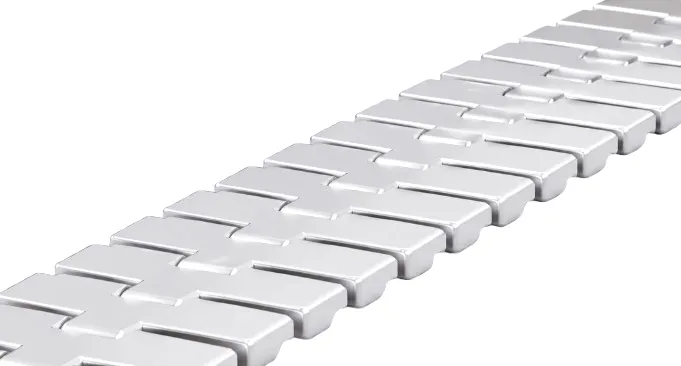
For manufacturers handling small-profile components, bottles, cans, or packaged goods that risk falling from the conveyor edges, the Flat Top Straight Run Belt with Side Guards offers an engineered solution that rubber belt systems simply cannot replicate without costly bespoke fabrication. The integrated side guard modules clip directly onto the belt assembly, eliminating the gap between product and the conveyor edge. This design is particularly valued in pharmaceutical packaging lines, where even minor product falls trigger expensive batch rejection procedures, and in automated logistics sortation facilities where high-speed product flow demands reliable lateral containment without operator intervention.
The purchase price of a plastic modular belt is generally higher than an equivalent-width rubber belt. This is a fact that procurement managers routinely cite as a barrier to adoption, and it is a fair point to raise — if you evaluate conveyor belts purely at the point of purchase. When the analysis extends across a three-to-five-year operational horizon, however, the cost picture shifts significantly. Rubber belts typically require full replacement every two to four years in demanding environments. Maintenance labour for rubber belt repairs is more intensive and often requires external specialist contractors. Energy consumption on rubber belt systems can be higher due to tension-induced mechanical losses. And the cost of unplanned downtime triggered by rubber belt failures — particularly in continuous-process operations like canning, bottling, or automated sortation — often dwarfs the original belt procurement cost many times over. Plastic modular belts, maintained through periodic module replacement and routine inspection, routinely deliver service lives of five to ten years in well-managed installations, with significantly lower aggregate maintenance expenditure across that period.
Industrial Application Scenarios Across the UK
The UK food processing sector — one of the largest manufacturing segments by employment and output — has been among the earliest adopters of plastic modular belt technology. In facilities spanning ready meal production in Leeds, seafood processing in Grimsby, and vegetable packing in the Fenlands of Cambridgeshire, plastic modular belts handle product conveying across chilling tunnels, washers, dryers, and packaging stations. The resistance of polypropylene and PE-grade modules to the repeated thermal cycling between refrigerated and ambient zones is critical here. Rubber belts exposed to similar conditions typically exhibit surface crazing and edge fraying within eighteen months, generating contamination risks that plastic modular belt systems entirely avoid. Open-grid configurations allow drainage of water and process liquids, while the positive-drive mechanism ensures consistent belt speed even when the belt surface carries a film of condensation — a common failure mode for friction-driven rubber systems in chilled environments.
Birmingham and the broader West Midlands remain the heartland of UK automotive supply chain manufacturing, with hundreds of tier-1 and tier-2 suppliers producing everything from pressed steel body components to precision electronic assemblies. Plastic modular belts — particularly acetal-grade variants — are extensively deployed on component transfer and assembly conveyors within these facilities. Their low coefficient of friction allows components to accumulate gently against stops without surface marking, which is critical for finished or semi-finished painted parts. In engine component machining cells, POM-grade modular belts resist cutting fluid contamination far more effectively than rubber, which would swell and delaminate on contact with many machining coolants. At the Nissan plant in Sunderland — one of the most efficient automotive assembly facilities in Europe by throughput-per-worker metrics — and its surrounding supply chain network, plastic modular belt technology forms an essential part of the just-in-time sequencing conveyor infrastructure.
The rapid growth of UK e-commerce fulfilment infrastructure — concentrated in logistics corridors across the East Midlands and South East — has created a demanding new use case for conveyor belt technology. High-speed parcel sortation systems, tilt-tray sorters, and cross-belt sorters all require conveyor belting that can handle variable package sizes, irregular loading patterns, and continuous twenty-four-hour operation. Plastic modular belts in flat-top and roller-top configurations deliver the controlled, smooth transport surface that prevents smaller parcels from tipping while maintaining the speed and accuracy that automated sortation systems demand. Fulfilment centres operated by major UK retailers and logistics providers across Milton Keynes and Daventry have transitioned from conventional rubber belt systems to plastic modular configurations as their throughput volumes have grown, citing both improved reliability and easier maintenance access during the brief maintenance windows available in high-utilisation facilities.
Pharmaceutical and biomedical manufacturing facilities operate under some of the most stringent contamination control requirements of any industry. In cleanroom environments and sterile fill-finish operations — facilities found across Cheshire’s pharmaceutical corridor and around the Cambridge Biomedical Campus — conveyor belt material selection is a regulatory matter, not merely an engineering preference. Plastic modular belts manufactured from FDA-compliant polymer grades and certified to EU 10/2011 food contact standards are the accepted choice. Their smooth surfaces can be validated as part of contamination control protocols, and their resistance to the IPA, hydrogen peroxide vapour, and other sporicidal agents used in pharmaceutical cleanroom decontamination routines is well-documented. Rubber conveyor belts, by contrast, are rarely specified in pharmaceutical cleanroom environments due to particulate generation from surface degradation and the difficulty of validating rubber compound purity in GMP contexts.
Sheffield’s advanced manufacturing sector — built on centuries of steel and precision metalworking expertise — demands conveyor solutions that can handle significant mechanical loads, elevated temperatures from heat-treated components, and exposure to swarf, coolants, and scale. The Heavy Duty Grid Straight Run Conveyor Belt is specifically engineered for these high-stress environments. The open grid structure allows swarf and metal chips to fall through the belt surface and into collection trays below, preventing accumulation that would otherwise cause belt damage or jamming. The heavy-duty module geometry provides enhanced strength at each hinge joint, resisting the point-load impact forces that occur when machined components are transferred onto the belt from robotic or manual handling stations. Where rubber belts in similar environments suffer from accelerated surface wear and cutting from sharp component edges, heavy-duty modular belt systems deliver consistent performance across extended production cycles.
Ever Power: Precision Manufacturing & Global Supply Chain for UK Clients
Ever Power occupies a distinctive position in the global plastic modular belt supply landscape — not as a catalogue distributor, but as a vertically integrated manufacturer with deep engineering capability across the full spectrum of plastic modular belt designs, materials, and configurations. Headquartered in China with a well-established export infrastructure serving UK and European clients, Ever Power operates modern injection moulding facilities equipped with precision tooling capable of producing modular belt components to tolerances that meet or exceed the most demanding OEM specifications. The manufacturing footprint includes dedicated production lines for polypropylene, acetal, polyethylene, and nylon module grades, with separate cleanroom-adjacent moulding areas for food-grade and pharmaceutical-grade certified components.
Customisation is not a peripheral offering at Ever Power — it is a core competency. UK clients routinely request non-standard belt widths, custom surface textures, colour-coded modules for HACCP zone identification, elevated side guards of non-standard heights, and drive configurations adapted to existing conveyor infrastructure. Ever Power’s engineering team works directly with client specifications, producing 3D CAD models and sample modules before committing to full production runs. Lead times for standard configurations serving UK clients are structured to align with typical project timelines in British manufacturing — with DDP (Delivered Duty Paid) shipping options that remove customs administration burden from the client’s procurement team. Quality control at the factory level includes dimensional inspection of sampled modules from every batch, tensile and impact testing of hinge connections, and material certification documentation provided as standard with every shipment.
For UK buyers accustomed to navigating post-Brexit import compliance, Ever Power’s export documentation team provides complete Commodity Codes, Certificates of Origin, and material declarations formatted to HMRC requirements, streamlining the clearance process at UK ports of entry. This end-to-end service model — from initial specification to UK customs-cleared delivery — is what distinguishes Ever Power from generic trading companies operating in this product space.
Ever Power’s technical team is available to review your conveyor specifications, recommend the optimal belt configuration, and provide a detailed quotation with full material certification documentation.
Customer Success Story: Reducing Downtime by 62% at a Leeds Ready Meal Facility
A medium-scale ready meal manufacturer based in the Morley area of Leeds — producing approximately 120,000 meal units per day across three production lines — had been operating with rubber conveyor belts on its post-cooking assembly and packaging lines since the facility opened in 2014. By 2022, maintenance records revealed a pattern of accelerating belt degradation that was directly correlated with the facility’s intensified cleaning regimes introduced to meet updated UK FSA hygiene guidance. The high-temperature caustic washdowns, conducted twice daily, were causing the rubber belt surfaces to blister and crack at a rate that required full belt replacements every fourteen months — at a cost of approximately £4,200 per belt replacement event, exclusive of production downtime.
The facility’s maintenance manager contacted Ever Power through the company’s UK export enquiry channel in late 2022, providing full conveyor drawings and a detailed description of the operating environment. Ever Power’s engineering team proposed a transition to food-grade polypropylene open-grid modular belts across all three production lines, with flush-grid modules on the packaging accumulation sections to ensure smooth carton transfer. Sample modules were dispatched within five working days, and the facility’s engineering team conducted their own material compatibility tests with the plant’s cleaning chemical formulations — all samples passed without visible degradation after sixty consecutive cleaning cycles.
The belt changeover was executed during a planned summer maintenance shutdown in July 2023, with Ever Power providing technical installation guidance remotely via video call. In the twelve months following commissioning, the facility recorded zero unplanned conveyor belt-related shutdowns — compared to eleven such events in the equivalent period under the previous rubber belt system. Belt maintenance costs dropped by 62% against the prior year baseline. The facility’s quality manager noted that the plant’s BRCGS hygiene audit in March 2024 specifically commended the open-grid modular belt installation on Conveyor Lines 2 and 3 as a positive hygiene design feature.
Client Reviews
“We’d been patching rubber belts for years and just accepted it as part of operations. Switching to Ever Power’s PP modular belts on our two post-cooking lines was the single biggest maintenance improvement we made in 2023. The module-level replacement means a damaged section is fixed before the next shift starts — that’s not something we ever thought was possible with our old rubber system.”
“Our component transfer lines were running rubber belts that were just about coping with the coolant exposure, but we were replacing them every eighteen months. Ever Power recommended their acetal-grade modular belt and the performance difference is immediately apparent — no swelling, no surface degradation, and the hinge joints have shown zero wear in nearly two years of continuous operation. The documentation for our ISO 9001 audit was also provided without any chasing, which is not always the case with overseas suppliers.”
“We needed a non-standard width — 1,120mm — and a specific colour coding for our HACCP zones. Most suppliers either couldn’t accommodate the width or quoted lead times of twelve weeks or more. Ever Power had a sample to us in a week and full production delivery within five weeks of order confirmation. The price was competitive, the quality is exactly as specified, and the compliance documentation was complete and correctly formatted for UK customs — not something we’ve always experienced from Asian suppliers.”
Making the Right Choice: A Practical Decision Framework for UK Buyers
Neither plastic modular belts nor rubber conveyor belts are universally superior for every application — and any honest technical assessment must acknowledge the scenarios where rubber retains a genuine advantage. For very long conveyor runs (over 100 metres), bulk material transport at high loads, or steep inclined conveying where high grip is the primary requirement, rubber belt systems — particularly steel-cord reinforced variants — can outperform modular plastic solutions in terms of tensile capacity and incline traction. Open-pit quarrying, long-distance mining overland conveyors, and heavy-gradient coal or aggregate handling are environments where rubber continues to dominate.
For the vast majority of UK manufacturing and processing applications, however, the decision criteria consistently favour plastic modular belt technology. When hygiene compliance is a regulatory requirement — as it is across food, beverage, pharmaceutical, and cosmetic manufacturing — the comparison isn’t close. When operational flexibility, rapid maintenance, and modular repairability are valued — as they are in automotive, electronics, and fast-moving consumer goods production — modular belt architecture delivers tangible performance advantages that rubber cannot replicate. And when a business is evaluating conveyor technology over a meaningful operational horizon rather than the lowest initial procurement cost, the total cost calculation increasingly favours modular plastic across a widening range of UK industrial contexts.
| Application Criterion | Plastic Modular Belt | Rubber Belt |
|---|---|---|
| Food/Pharmaceutical Hygiene | ✓ Preferred | ✗ Challenging |
| Chemical Resistance | ✓ Excellent | △ Moderate |
| On-Site Repairability | ✓ Module-level | ✗ Full replacement |
| Long-Distance Bulk Haulage | ✗ Not optimal | ✓ Strong |
| Curved Conveyor Compatibility | ✓ Side-flex modules | △ Specialist belt only |
| Initial Procurement Cost | △ Higher upfront | ✓ Lower upfront |
| 5-Year Total Cost of Ownership | ✓ Lower overall | ✗ Higher overall |
Frequently Asked Questions — Plastic Modular Belts for UK Manufacturers
How much does a plastic modular belt cost for a UK food processing line, and can I get a quote from a UK-friendly supplier like Ever Power?
The cost of a plastic modular belt varies depending on belt width, module material (PP, POM, PE), belt length, and any custom features such as side guards or colour coding. For a standard food-grade polypropylene belt in a width of 600–1,200mm, indicative pricing from Ever Power for UK clients typically ranges from £18 to £65 per linear metre depending on specification. Requesting a quote directly via [email protected] will generate a detailed, specification-matched price within 24–48 business hours, inclusive of material certification documentation and DDP shipping costs to UK addresses.
What is the difference between a plastic modular belt and a rubber conveyor belt, and which is better for a wet food environment in Yorkshire?
In a wet food environment — such as a fish processing or ready meal production facility in Yorkshire — plastic modular belts are substantially better suited than rubber. The open-grid module designs allow direct wash-through cleaning, the non-porous polymer surfaces resist bacterial biofilm formation, and the polymer materials used (particularly PP and PE) are unaffected by the alkaline detergents and hot water used in FSA-compliant CIP cleaning protocols. Rubber belts in wet food environments are prone to surface crazing, harbour pathogens in micro-cracks, and can generate rubber particulate contamination that presents genuine food safety risks.
Where can I find a reliable plastic modular belt supplier in the UK or with fast delivery to Birmingham and the West Midlands?
Ever Power supplies plastic modular belts to UK clients including facilities in and around Birmingham, Coventry, Wolverhampton, and across the West Midlands manufacturing corridor. While Ever Power’s manufacturing base is in China, the company operates a DDP (Delivered Duty Paid) export model that delivers customs-cleared goods directly to UK customer addresses, typically within three to five weeks for standard configurations. The combination of competitive pricing, fast sample despatch, and complete UK customs documentation makes Ever Power a practical supplier choice for West Midlands manufacturers seeking to avoid the premium pricing of European-stocked distributors.
How long does a plastic modular belt last in a Sheffield steel and metalworking environment with regular coolant exposure?
In Sheffield metalworking environments with consistent coolant exposure, acetal (POM) grade plastic modular belts typically achieve service lives of five to eight years under normal operating conditions. POM has exceptional resistance to the water-soluble and semi-synthetic cutting fluids widely used in CNC machining operations, and its inherent dimensional stability means belt geometry remains consistent even after prolonged chemical exposure. In contrast, rubber belts in similar environments typically show significant degradation — swelling, surface tackiness, and edge fraying — within eighteen to thirty months, accelerating with the frequency and concentration of coolant contact.
Can I get a custom-width plastic modular belt made to a non-standard specification for my packaging line in Manchester, and what is the lead time?
Yes — custom-width plastic modular belts are a core part of Ever Power’s manufacturing service. The modular construction means that belts can be built to virtually any width by varying the number of modules across the belt’s cross-section. Custom configurations including non-standard widths, bespoke surface textures, colour-coded modules, elevated or non-standard side guard heights, and modified drive hole patterns can all be accommodated. For clients in Manchester and the wider North West, standard lead times for custom specifications run to three to five weeks from order confirmation, with sample modules typically despatched within five to seven working days of specification agreement for pre-production validation.
Which type of modular belt material should I choose for a pharmaceutical cleanroom conveyor application in Cambridge or Macclesfield?
For pharmaceutical cleanroom conveyor applications in Cambridge or Macclesfield, food-grade polypropylene or acetal (POM) modules certified to EU 10/2011 and the UK retained equivalent regulations are the standard specification. PP is preferred where the belt will be exposed to IPA or hydrogen peroxide vapour decontamination agents, as PP maintains surface integrity under repeated exposure to these compounds. POM is preferred where dimensional precision and low particle generation during belt operation are critical — its harder surface produces less abraded particulate than PP under high-speed or high-load conditions. Ever Power supplies full material compliance documentation with every pharmaceutical-grade order, formatted to GMP documentation standards.
How do I calculate the price and total cost of ownership of a plastic modular belt system versus my existing rubber belt for a UK production facility?
A basic total cost of ownership comparison should account for: (1) initial belt procurement cost; (2) expected belt service life in your specific operating environment; (3) cost and frequency of maintenance interventions — including labour, spare parts, and specialist contractor fees; (4) estimated value of downtime caused by belt-related failures, based on your production output per hour; (5) energy cost difference between positive-drive modular systems and tension-dependent rubber belt drives; and (6) cleaning and compliance costs attributable to belt hygiene management. For most UK food, pharmaceutical, and precision engineering environments, plastic modular belts deliver a lower five-year total cost despite higher initial procurement pricing. Ever Power’s sales team can assist with a structured cost comparison analysis tailored to your facility’s parameters — contact [email protected] with your current belt specification and operating data.
Whether you’re replacing worn rubber belts, designing a new conveyor system, or sourcing a custom-specification modular belt for a demanding UK application, Ever Power’s engineering and export team is ready to assist with full technical support, sample despatch, and competitive DDP pricing to the UK.
✉ Contact Ever Power — [email protected]