
Item Description
GT2 Timing Belt Pulley Aluminum16 Enamel Wrench for RepRap 3D Printer Prusa i3 GT2 pulley
Purposes:
1) Mechanical producing.
2) Electronics
3) Furnishings Products
4) Auto parts
5) Lights
six) Medical appliance
7) Boats
8) Electronic products.
nine) Constructing
ten) Other individuals
Rewards
1)Aggressive price
2)Diversified abundant experienced expert staff( Over eighteen a long time).
three)Continuance services and help.
four)High quality,trustworthiness and extended product existence.
5)Mature,best and excellence,but straightforward layout, OEM are obtainable.
6)Serviced for: Foxconn Tec,Sanyo Electronics,Honeywell Intercontinental,Kimball Furniture…and many others
Business Conditions
| MOQ | Tiny quantity for testing are offered |
| Phrases | FOB HangZhou /CFR /CIF/Exw |
| Payment | T/T 30 % deposit, 70% equilibrium payment prior to shipment |
| Lead Time | seven-25 doing work days,it is depand on the order amount |
| Sample Availablity | Making sample in 7 days cost-free of demand if we have current tooling |
| Guarantee | 3 Years |
FAQ
A. How to get the offer you for items ?
Drawing or measurement information & Materials & Quantity information supplied,then we will quote the ideal price for you.
B. How to Bundle ?
The things are put in plastic bags,Then place into Hardened Carton box,Last is on the pallet. Or According to customers’ essential.
C. When is the delivery time ?
Shipping will happen among ten-fifteen working times from order confirmed, Moved more quickly supply time can be allowed if Urgently.
D.What is the MOQ ?
To begin of our great business romantic relationship, we will consider our ideal to fulfill your requires. Welcome to small trial buy for screening.
E.What is you payment approach ?
Paypal, T/T,Westeern Union,Moneygram,or other people.
Reproduction and Refund Policy
Possible Redund Concern
one. Items acquired do not match the photograph or description.
a.return for trade–Return the items and we will resend the purchase as before long as we obtain confirmation that the products have shipped.
b. Return for Refund–We will refund the payment as soon as our company gets the items by return again.
2. Products do not meet high quality expectations or have some other top quality troubles.
a.return for trade–Customers do not want to send the items back, They can alternatively offer photographs that obviously shows the problems.
b. Return for refund- Consumer do not need to have to ship the items again,they can alternatively give photographs that evidently displays the issues
| US $0.09-0.4 / Piece | | 1,000 Pieces (Min. Order) |
###
| Type: | Aluminum |
|---|---|
| Used for: | 3D Printer |
| Transport Package: | 100 PCS Per Polybag, 1000PCS Per Carbon Box |
| Specification: | 16 Teeth Bore 5mm |
| Trademark: | GoodUse |
| Origin: | China |
###
| Samples: | US$ 20/Piece 1 Piece(Min.Order) |
|---|
###
| Customization: | Available |
|---|
###
| MOQ | Small quantity for testing are available |
| Terms | FOB Shenzhen /CFR /CIF/Exw |
| Payment | T/T 30 % deposit, 70% balance payment before shipment |
| Lead Time | 7-25 working days,it is depand on the order quantity |
| Sample Availablity | Making sample within 7 days free of charge if we have existing tooling |
| Warranty | 3 Years |
| US $0.09-0.4 / Piece | | 1,000 Pieces (Min. Order) |
###
| Type: | Aluminum |
|---|---|
| Used for: | 3D Printer |
| Transport Package: | 100 PCS Per Polybag, 1000PCS Per Carbon Box |
| Specification: | 16 Teeth Bore 5mm |
| Trademark: | GoodUse |
| Origin: | China |
###
| Samples: | US$ 20/Piece 1 Piece(Min.Order) |
|---|
###
| Customization: | Available |
|---|
###
| MOQ | Small quantity for testing are available |
| Terms | FOB Shenzhen /CFR /CIF/Exw |
| Payment | T/T 30 % deposit, 70% balance payment before shipment |
| Lead Time | 7-25 working days,it is depand on the order quantity |
| Sample Availablity | Making sample within 7 days free of charge if we have existing tooling |
| Warranty | 3 Years |
How to use the pulley system
Using a pulley system is a great way to move things around your home, but how do you use a pulley system? Let’s look at the basic equations that describe a pulley system, the types of pulleys, and some safety considerations when using pulleys. Here are some examples. Don’t worry, you’ll find all the information you need in one place!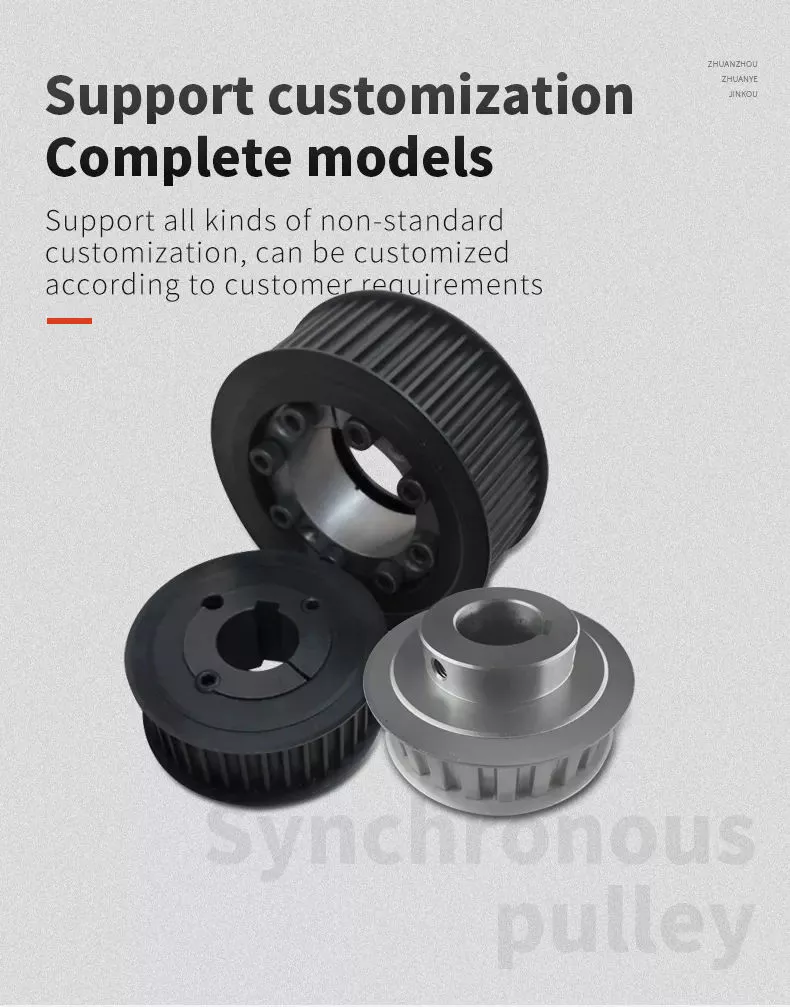
Basic equations of pulley systems
The pulley system consists of pulleys and chords. When the weight of the load is pulled through the rope, it slides through the groove and ends up on the other side. When the weight moves, the applied force must travel nx distance. The distance is in meters. If there are four pulleys, the distance the rope will travel will be 2×24. If there are n pulleys, the distance traveled by the weight will be 2n – 1.
The mechanical advantage of the pulley system increases with distance. The greater the distance over which the force is applied, the greater the leverage of the system. For example, if a set of pulleys is used to lift the load, one should be attached to the load and the other to the stand. The load itself does not move. Therefore, the distance between the blocks must be shortened, and the length of the line circulating between the pulleys must be shortened.
Another way to think about the acceleration of a pulley system is to think of ropes and ropes as massless and frictionless. Assuming the rope and pulley are massless, they should have the same magnitude and direction of motion. However, in this case the quality of the string is a variable that is not overdone. Therefore, the tension vector on the block is labeled with the same variable name as the pulley.
The calculation of the pulley system is relatively simple. Five mechanical advantages of the pulley system can be found. This is because the number of ropes supporting the load is equal to the force exerted on the ropes. When the ropes all move in the same direction, they have two mechanical advantages. Alternatively, you can use a combination of movable and fixed pulleys to reduce the force.
When calculating forces in a pulley system, you can use Newton’s laws of motion. Newton’s second law deals with acceleration and force. The fourth law tells us that tension and gravity are in equilibrium. This is useful if you need to lift heavy objects. The laws of motion help with calculations and can help you better understand pulley systems.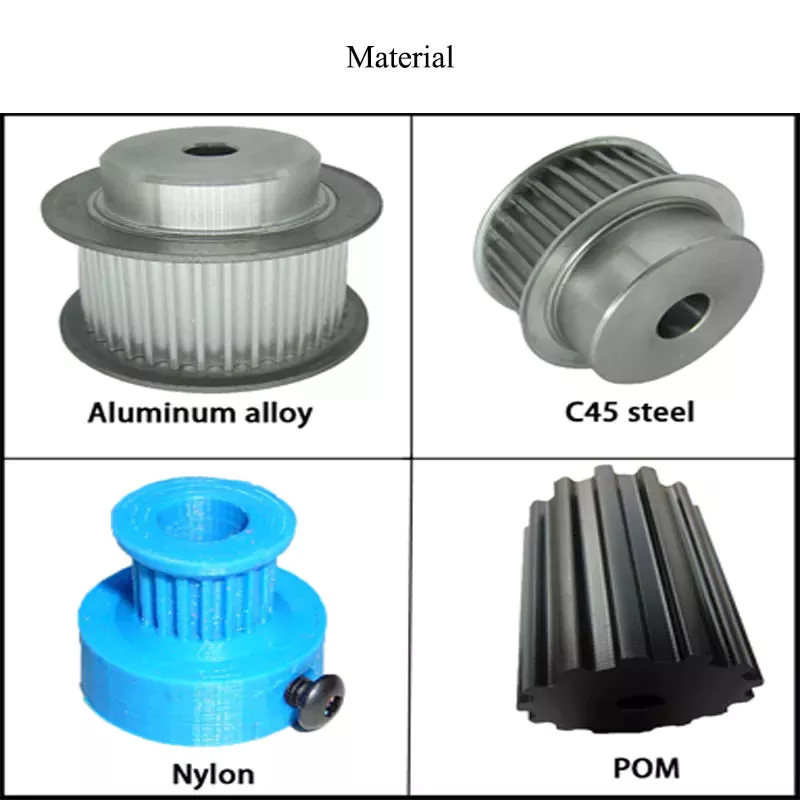
Types of pulleys
Different types of pulleys are commonly used for various purposes, including lifting. Some pulleys are flexible, which means they can move freely around a central axis and can change the direction of force. Some are fixed, such as hinges, and are usually used for heavier loads. Others are movable, such as coiled ropes. Whatever the purpose, pulleys are very useful in raising and lowering objects.
Pulleys are common in many different applications, from elevators and cargo lift systems to lights and curtains. They are also used in sewing machine motors and sliding doors. Garage and patio doors are often equipped with pulleys. Rock climbers use a pulley system to climb rocks safely. These pulley systems have different types of pinions that allow them to balance weight and force direction.
The most common type of pulley is the pulley pulley system. The pulley system utilizes mechanical advantages to lift weight. Archimedes is thought to have discovered the pulley around 250 BC. in ancient Sicily. Mesopotamians also used pulleys, they used ropes to lift water and windmills. Pulley systems can even be found at Stonehenge.
Another type of pulley is called a compound pulley. It consists of a set of parallel pulleys that increase the force required to move large objects. This type is most commonly used in rock climbing and sailing, while composite pulleys can also be found in theater curtains. If you’re wondering the difference between these two types of pulleys, here’s a quick overview:
Mechanical Advantages of Pulley Systems
Pulley systems offer significant mechanical advantages. The ability of the system to reduce the effort required to lift weights increases with the number of rope loops. This advantage is proportional to the number of loops in the system. If the rope had only one loop, then a single weight would require the same amount of force to pull. But by adding extra cycles, the force required will be reduced.
The pulley system has the advantage of changing the direction of the force. This makes it easier to move heavy objects. They come in both fixed and mobile. Pulleys are used in many engineering applications because they can be combined with other mechanisms. If you want to know what a pulley can do, read on! Here are some examples. Therefore, you will understand how they are used in engineering.
Single-acting pulleys do not change direction, but compound pulleys do. Their mechanical advantage is six. The compound pulley system consists of a movable pulley and a fixed pulley. The mechanical advantage of the pulley system increases as the number of movable wheels decreases. So if you have two wheels, you need twice as much force to lift the same weight because you need a movable pulley.
The mechanical advantage of a pulley system can be maximized by adding more pulleys or rope lengths. For example, if you have a single pulley system, the mechanical advantage is one of the smallest. By using two or three pulleys, up to five times the mechanical advantage can be achieved. You can also gain up to ten times the mechanical advantage by using multiple pulley systems.
The use of a single movable pulley system also adds to the mechanical advantage of the pulley system. In this case, you don’t have to change the direction of the force to lift the weight. In contrast, a movable pulley system requires you to move the rope farther to generate the same force. Using a compound pulley system allows you to lift heavy loads with ease.
Safety Issues When Using Pulley Systems
Pulleys have an incredibly unique structure, consisting of a disc with a groove in the middle and a shaft running through it. A rope or cord is attached to one end of a pulley that turns when force is applied. The other end of the rope is attached to the load. This mechanical advantage means that it is much easier to pull an object using the pulley system than to lift the same object by hand.
Although pulley systems are a common part of many manufacturing processes, some employers do not train their workers to use them properly or install protection to prevent injury. It is important to wear proper PPE and follow standard laboratory safety practices during pulley system activities. Make sure any support structures are strong enough to handle the weight and weight of the rope or rope. If you do fall, be sure to contact your employer immediately.


editor by czh 2023-01-21