
Product Description
Product Details
Description
- OEM size suit for customers’ requirment
- Multiple color can be choosed
- Engraved or embossed logo accepted
- Large order quantity are CZPT to be fulfilled
- Strict quality control system
- In time delivery and thoughtful custom-service
- Certification: SGS, GB/T 19001-2016, ISO9001:2005
| Service | Product & Mold Design and Making,Material Modification,Surface Treatment,Assembly,Custom Packaging |
| Technology | Injection molding, CNC machining, Extrusion, vacuum forming, Compression molding, Over molding&insert molding |
| Material | Rubber silicone plastic metal Nylon ,mc nylon, POM,ABS,PU,PP,PE,PTFE,UHMWPE,HDPE,LDPE, PVC,etc. |
| Color | any color according to Pantone code |
| Size | As per customer’s requirements |
| Additives | UV absorbers, Flame retardants, Plasticizers, Colorants, Carbon fibers, Glass fibers |
| Surface Treatment | Glossy, Semi-gloss, Matte, Textured finish, As-machined |
| Biggest Part Size | 1500*1500*1000mm |
| Tolerance | 0.01mm–0.001mm |
| Product Volume | 50,000,000 Pcs/Month |
| Drawing Format | 2D Drawing: PDF/JPG/PNG 3D Drawing: STEP/STP/IGS/DXF/DWG |
| Packaging | Can be customized packaging |
| Shippment | We have longterm cooperation with internation shipping agent and express company, so that shipping safty and arriving time are secured |
| Application | Automotive, ATV, Mechanical equipment, Construction, Home appliance, Aviation, Office facilities, Agriculture, etc. |
Our Factory
Customization Capabilities
/* March 10, 2571 17:59:20 */!function(){function s(e,r){var a,o={};try{e&&e.split(“,”).forEach(function(e,t){e&&(a=e.match(/(.*?):(.*)$/))&&1
| Pulley Sizes: | Type D |
|---|---|
| Manufacturing Process: | Forging |
| Material: | Plastic |
| Samples: | US$ 999/Piece 1 Piece(Min.Order) | Order Sample For sample price, package information, and logisti |
|---|
| Customization: | Available | Customized Request |
|---|
.shipping-cost-tm .tm-status-off{background: none;padding:0;color: #1470cc}
| Shipping Cost: Estimated freight per unit. | about shipping cost and estimated delivery time. |
|---|
| Payment Method: |
|
|---|---|
| Initial Payment Full Payment |
| Currency: | US$ |
|---|
| Return&refunds: | You can apply for a refund up to 30 days after receipt of the products. |
|---|
What innovations and advancements have been made in plastic belt technology in recent years?
In recent years, there have been several notable innovations and advancements in plastic belt technology. Here’s a detailed explanation:
- 1. Enhanced Material Formulations:
One significant advancement in plastic belt technology is the development of enhanced material formulations. Manufacturers have been working on creating new polymer blends or modifying existing ones to improve the performance characteristics of plastic belts. These advancements focus on enhancing properties such as strength, flexibility, wear resistance, temperature resistance, and chemical resistance. The result is the availability of plastic belts that can withstand more demanding applications, exhibit greater durability, and offer improved overall performance.
- 2. Reinforcement Technologies:
Reinforcement technologies have been introduced to enhance the strength and load-carrying capacity of plastic belts. Reinforcements such as embedded fibers, fabric layers, or metal cords are incorporated into the belt structure to provide increased tensile strength and dimensional stability. These advancements allow plastic belts to handle heavier loads, endure higher tension levels, and resist elongation or stretching during operation. Reinforced plastic belts are particularly beneficial in industries such as logistics, manufacturing, or mining where heavy-duty conveying is required.
- 3. Modular Belt Designs:
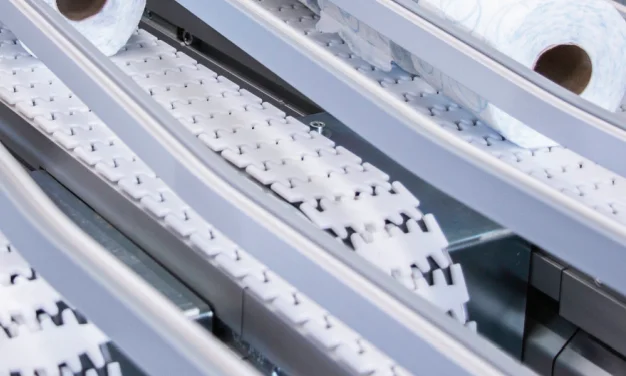
Modular plastic belt designs have gained popularity due to their versatility and ease of maintenance. These belts consist of interlocking modules or links that can be easily assembled and disassembled, allowing for quick belt repairs, replacements, or modifications. The modular design also enables customization of belt width, length, and configuration to suit specific conveyor systems and applications. Additionally, modular plastic belts offer improved hygiene as they have fewer crevices and joints where debris or contaminants can accumulate, making them ideal for industries such as food processing or pharmaceuticals.
- 4. Advanced Surface Coatings:
Advancements in surface coatings have contributed to the performance and functionality of plastic belts. Innovative coatings are applied to the belt surface to enhance properties such as slip resistance, release characteristics, abrasion resistance, or chemical resistance. These coatings can improve the belt’s traction, prevent product sticking or slipping, prolong belt life, and protect against chemical damage. Additionally, specialized coatings with antimicrobial properties have been developed to inhibit the growth of bacteria or microorganisms on the belt surface, making them suitable for applications with strict hygiene requirements.
- 5. Conveyor System Integration:
Recent advancements in plastic belt technology have also focused on improving integration with conveyor systems. Manufacturers have developed innovative designs for sprockets, guides, and other components that ensure efficient belt tracking, reduced friction, and improved overall system performance. These advancements help minimize belt wear, reduce energy consumption, and enhance the lifespan of plastic belts and other conveyor system components.
- 6. Sustainability and Recycling:
There is an increasing emphasis on sustainability in plastic belt technology. Manufacturers are exploring eco-friendly materials and production processes to reduce the environmental impact of plastic belts. Some advancements include the use of recycled or biodegradable materials in belt manufacturing, as well as the development of recycling programs to collect and process used plastic belts at the end of their lifespan. These initiatives aim to minimize waste generation, conserve resources, and promote the circular economy in the conveyor industry.
In summary, recent years have seen significant innovations and advancements in plastic belt technology. Enhanced material formulations, reinforcement technologies, modular belt designs, advanced surface coatings, improved conveyor system integration, and a focus on sustainability have all contributed to the development of more robust, versatile, and environmentally friendly plastic belts. These advancements offer improved performance, durability, customization options, and ease of maintenance, making plastic belts a reliable choice for a wide range of conveyor applications.
What role do plastic belts play in ensuring hygiene and cleanliness in food processing applications?
Plastic belts play a crucial role in ensuring hygiene and cleanliness in food processing applications. Here’s a detailed explanation:
- 1. Smooth, Non-Porous Surfaces:
Plastic belts used in food processing applications are designed with smooth, non-porous surfaces. These surfaces prevent the accumulation of food particles, liquids, or other contaminants, reducing the risk of bacterial growth and cross-contamination. Smooth surfaces also make it easier to clean the belts effectively, ensuring optimal hygiene standards are maintained.
- 2. Resistance to Moisture and Chemicals:
Plastic belts for food processing applications are resistant to moisture and a wide range of chemicals used in cleaning and sanitization processes. They can withstand frequent washdowns with water, detergents, and disinfectants without degrading or compromising their structural integrity. This resistance to moisture and chemicals contributes to the overall cleanliness and hygiene of the food processing environment.
- 3. Bacterial Growth Prevention:
Plastic belts inhibit bacterial growth due to their non-porous surfaces and resistance to moisture. Unlike fabric belts, which can absorb and retain moisture, plastic belts do not provide a favorable environment for bacteria to thrive. By minimizing bacterial growth, plastic belts help maintain the cleanliness and safety of food products during processing.
- 4. Compatibility with Sanitization Processes:
Plastic belts used in food processing applications are designed to withstand regular sanitization procedures. They can be easily cleaned using standard cleaning agents, high-pressure washdowns, or even steam cleaning. Plastic belts are resilient to the harsh chemicals and high temperatures often employed in food processing facilities for effective sanitization, ensuring that the belts themselves remain hygienic and do not become a source of contamination.
- 5. Compliance with Food Safety Standards:
Plastic belts used in the food processing industry are often manufactured from food-grade materials that comply with relevant safety regulations. These materials are chosen for their ability to meet strict food safety requirements, including FDA (Food and Drug Administration) or EU (European Union) regulations. By using plastic belts that meet these standards, food processors can ensure that their operations align with the necessary hygiene and safety guidelines.
- 6. Easy Maintenance and Inspection:
Plastic belts are relatively easy to maintain and inspect for cleanliness. Their smooth surfaces allow for quick visual inspection to detect any visible contamination or debris. If cleaning is required, plastic belts can be easily cleaned using appropriate methods, reducing downtime and allowing for efficient production processes.
In summary, plastic belts play a vital role in ensuring hygiene and cleanliness in food processing applications. Their smooth, non-porous surfaces, resistance to moisture and chemicals, prevention of bacterial growth, compatibility with sanitization processes, compliance with food safety standards, and ease of maintenance contribute to maintaining a clean and safe environment for food processing operations.
Can you describe the different types of plastic belts available in the market today?
There are several different types of plastic belts available in the market today, each designed to meet specific application requirements. Here’s an overview of some commonly used types:
- 1. Modular Plastic Belts:
Modular plastic belts consist of interlocking plastic modules or links that form a continuous belt. These belts offer flexibility, allowing them to navigate around corners, bends, and other obstacles smoothly. They are commonly used in applications that require accumulation, incline/decline conveying, or small product transfer. Modular plastic belts are available in various configurations, such as flat-top, flush-grid, and raised-rib designs, to accommodate different product types and handling requirements.
- 2. Solid Plastic Belts:
Solid plastic belts are made from a single piece of plastic material without interlocking modules. They offer a smooth and continuous surface, making them suitable for applications that require stable and consistent product conveying. Solid plastic belts are often used in industries such as food processing, where hygiene, easy cleaning, and resistance to contamination are crucial.
- 3. Cleated Plastic Belts:
Cleated plastic belts feature integrally molded cleats or projections on their surface. These cleats help to prevent product slippage and facilitate the inclined or vertical movement of bulk materials or packages. Cleated plastic belts are commonly used in applications such as incline or decline conveying, sorting, and elevating products in industries like agriculture, recycling, and manufacturing.
- 4. Wire Mesh Plastic Belts:
Wire mesh plastic belts consist of a plastic mesh overlaying metal or plastic rods. These belts offer an open and breathable surface, allowing for easy drainage, airflow, and visual inspection of conveyed products. They are often used in applications where heat, steam, or liquids need to pass through the belt, such as baking ovens, washing processes, or drying operations in the food industry.
- 5. Vacuum Plastic Belts:
Vacuum plastic belts are designed with a perforated or porous surface that allows the application of vacuum pressure to hold and stabilize lightweight or delicate products during conveying. These belts are commonly used in industries such as electronics, printing, and packaging, where precise positioning and gentle handling of products are required.
- 6. Anti-Static Plastic Belts:
Anti-static plastic belts are specifically designed to dissipate static electricity and prevent the buildup of electrostatic charges. They are used in applications where static discharge could damage sensitive electronic components or create safety hazards. Anti-static plastic belts are commonly employed in electronics manufacturing, semiconductor production, and cleanroom environments.
These are just a few examples of the different types of plastic belts available in the market today. The choice of plastic belt depends on factors such as the application requirements, load capacity, product characteristics, environmental conditions, and industry-specific regulations. Manufacturers often offer a range of customization options to tailor the belt design, material, and features to meet the specific needs of their customers.


editor by CX 2024-02-24