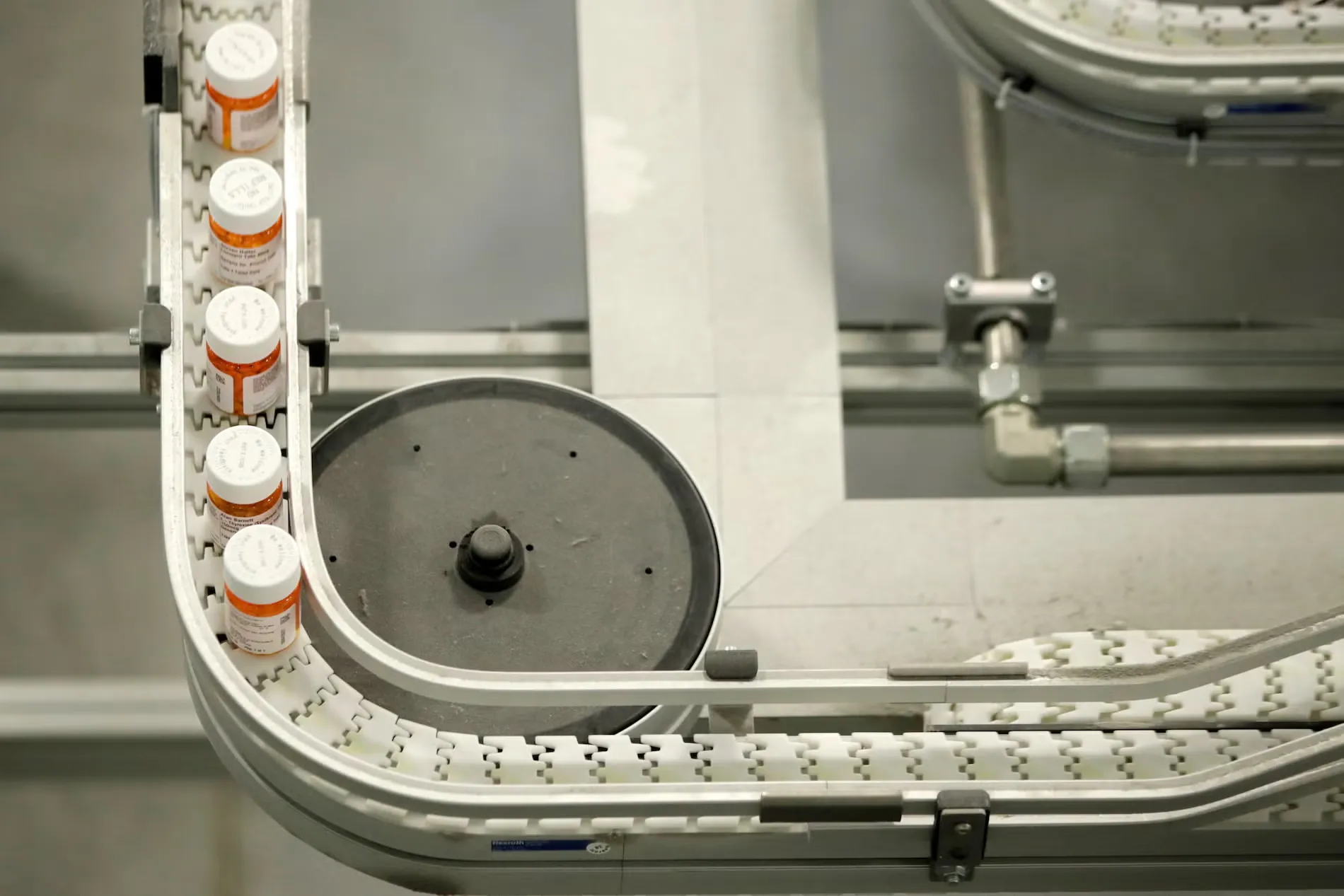
 Medical device manufacturers across the United Kingdom operate under some of the most stringent production and hygiene standards in the world. Whether a facility is producing single-use surgical instruments, implantable components, diagnostic equipment, or pharmaceutical packaging, the conveyor systems running through every stage of the line must meet regulatory demands that go well beyond what standard industrial belting can offer. The plastic modular belt — designed, selected and maintained with medical-grade intent — has emerged as the conveying solution of choice for UK facilities seeking to satisfy MHRA, ISO 13485 and EU MDR requirements while simultaneously improving OEE and reducing downtime.
Unlike traditional flat rubber belts or stainless-steel mesh conveyors, a properly specified plastic modular belt provides an unrivalled combination of chemical resistance, dimensional stability under thermal stress, easy in-situ cleaning, and the geometric openness required by modern sterilisation tunnel designs. Over nearly two decades working on the application side of this technology, the evidence is clear: the specification decision made at belt-selection stage has a direct, measurable impact on cost-per-unit, contamination risk and validated cleaning cycle performance.
Why the Medical Sector Demands a Specialist Plastic Modular Belt
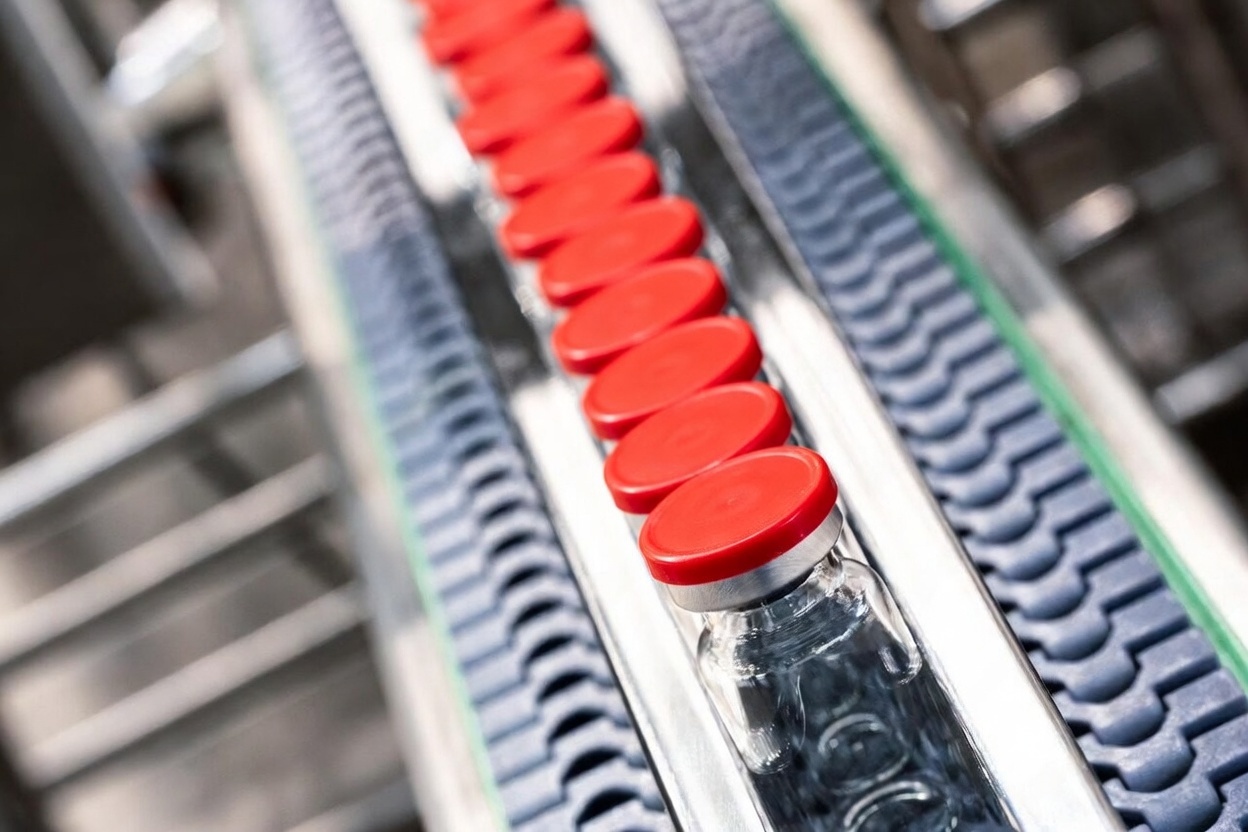 The medical device supply chain moves products through environments that subject belting materials to a punishing combination of wet cleaning agents, disinfectants, enzymatic detergents, high-pressure washdowns, saturated steam, dry heat, ethylene oxide (EtO) gas, gamma radiation and hydrogen peroxide vapour sterilisation cycles. No single material answers all these challenges out of the box — but the modular polypropylene (PP), acetal (POM) and polyethylene (PE) families used in specialist plastic modular belt construction come remarkably close.
The interlocking link-and-rod construction of a plastic modular belt means that any section of belt can be removed and replaced without specialist tools in under fifteen minutes. In a validated cleanroom or production environment, this reduces the total validated shutdown window significantly compared with spliced flat belts — a practical advantage that GMP-focused quality managers throughout England, Scotland and Wales have come to depend on.
Furthermore, most modular belt modules are manufactured from FDA-compliant and EU 10/2011 food-contact-grade resins, satisfying the material traceability requirements embedded in ISO 13485:2016 quality management systems. When the plastic modular belt supplier provides full material declarations and batch-specific compliance certificates — as reputable UK-focused suppliers do — the documentation burden for design verification activities under EU MDR Annex I is substantially reduced.
Technical & Performance Specifications at a Glance
| Παράμετρος | PP (Πολυπροπυλένιο) | POM (Ακετάλη) | PE (Πολυαιθυλένιο) |
|---|---|---|---|
| Operating Temp Range | -20 °C to +105 °C | -40 °C έως +90 °C | -50 °C to +80 °C |
| Χημική αντοχή | Άριστο (οξέα, αλκάλια) | Good (solvents limited) | Excellent (wide range) |
| Αντοχή σε εφελκυσμό | 25–35 MPa | 60–70 MPa | 18–25 MPa |
| Pitch Options (mm) | 12.7 / 25.4 / 38.1 | 12.7 / 25.4 | 25.4 / 38.1 |
| Ανοιχτή περιοχή (%) | Up to 52% | Up to 48% | Up to 55% |
| Autoclave Compatible | ✓ Yes | ✓ Yes | ○ Limited |
| EtO Gas Resistant | ✓ Yes | ✓ Yes | ✓ Yes |
| FDA / EU 10/2011 Grade | ✓ Compliant | ✓ Compliant | ✓ Compliant |
Key Application Scenarios Across the Medical Device Lifecycle
Autoclave Tunnel Feed & Discharge
High open-area PP belts transfer pre-packaged device trays through continuous steam sterilisation tunnels. The belt survives repeated 134 °C saturated steam cycles without pitch elongation, protecting indexing accuracy across tens of thousands of cycles.
EtO Chamber Loading Systems
Gas-permeable plastic modular belt configurations with maximum open area ensure EtO penetration reaches every surface of the product load during sterilisation, while the inert resin substrate exhibits no reaction with EtO residuals that could compromise sterility assurance levels.
Assembly Line & Inspection Conveyors
Smooth-top or friction-top modular belt modules provide controlled, low-vibration product indexing for delicate implantable components — whether surgical fasteners, catheter subassemblies, or ophthalmic lenses — through operator assembly and machine vision inspection stations.
Tray Washing & Drying Tunnels
Washer-disinfector process tunnels used in hospital CSSD (Central Sterile Services Department) and contract sterilisation facilities routinely deploy high-open plastic modular belt variants that allow washing, rinsing and hot-air drying water and vapour to pass freely through the belt plane.
Pharmaceutical Blister & Pouching Lines
In pharmaceutical manufacturing and combination product lines across UK sites, plastic modular belt systems convey blister packs, unit-dose pouches and foil-sealed medical devices through sealing, coding and cartoning operations, satisfying GMP requirements for non-reactive belt contact surfaces.
Cold-Chain & Cryogenic Conveying
PE-grade modular belt modules remain flexible and impact-resistant down to -50 °C, making them the preferred choice for cryo-preserved biological sample handling, blood product processing, and cold-chain packaging operations in UK hospital blood banks and biorepository facilities.
Operating Principle, Material Science & Construction
The operating principle of a plastic modular belt is elegantly straightforward. Injection-moulded thermoplastic modules — each typically 100 mm or 200 mm in the running direction — are connected laterally and longitudinally by stainless-steel or plastic hinge rods threaded through aligned bores along each module edge. The resulting assembly behaves as a continuous flat belt on the carrying run but can articulate freely around drive and tail sprockets, or through spiral and curved sections, without the mechanical stress concentrations that shorten flat-belt service life.
The choice of resin has profound implications in medical environments. Polypropylene (PP) offers outstanding resistance to the full spectrum of hospital-grade disinfectants — including quaternary ammonium compounds, peracetic acid, sodium hypochlorite, and aldehydes — while remaining economical to replace. Acetal (POM) provides significantly higher stiffness and compressive strength per unit of belt width, making it the material of choice where the plastic modular belt must support dense metal instrument tray loads across wide unsupported spans. Polyethylene’s extraordinary impact toughness and cold-temperature flexibility make it the standard selection for cryogenic conveying and applications involving shock loading.
Module surface geometry contributes as much as resin selection to overall application suitability. Flat-top modules offer maximum contact area for stable product transport; raised-rib modules create air gaps that improve drain-down and prevent capillary adhesion of cleaning fluids; friction-top modules with textured overmoulded surfaces arrest sliding on inclines up to 35 °; and perforated modules maximise gas and steam penetration for sterilisation tunnel applications. When a standard catalogue geometry does not fully address a given application — a common scenario in bespoke medical device production lines — custom module tooling can be developed through Ever Power’s in-house mould-design capability within six to ten weeks from design freeze.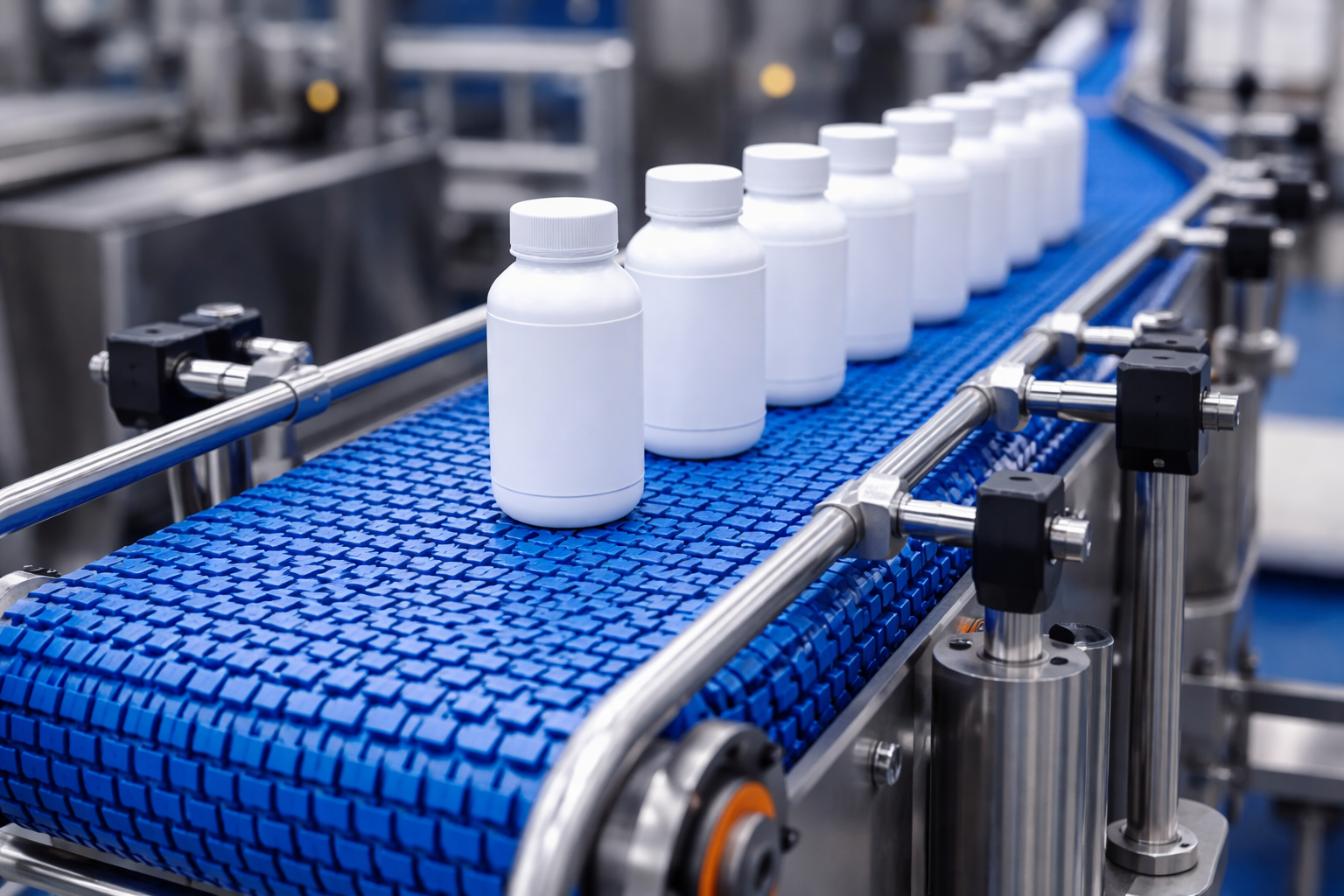
Customer Success: Surgical Instrument Manufacturer, East Midlands, UK
Background: A Nottingham-based manufacturer producing single-use laparoscopic instruments for NHS and private hospital supply was experiencing chronic belt failures on their washer-disinfector and steam sterilisation tunnel lines. Rubber flat belts required complete replacement every seven to nine weeks due to accelerated edge cracking caused by repeated 134 °C autoclave cycling combined with peracetic acid cleaning protocols. Each replacement took the line down for four to six hours, costing an estimated £3,200 per incident in lost production and maintenance labour.
Solution: Working with the facility’s process engineering team, Ever Power specified a 25.4 mm pitch, 52% open-area natural polypropylene πλαστική αρθρωτή ζώνη running on a redesigned low-tension conveyor frame. The hinge rods were upgraded to 316L stainless steel for additional corrosion resistance against the acidic cleaning agents in use. A phased transition was planned to enable IQ/OQ validation to proceed in parallel with ongoing production, minimising disruption to existing customer delivery commitments.
Results over 18 months of operation: Zero full belt replacements were required. Two individual module replacements — both attributable to operator handling incidents rather than material fatigue — were completed during scheduled cleaning breaks, each taking less than twelve minutes. Calculated annualised maintenance saving: £38,400. The facility’s quality manager commented that the cleaning validation protocol achieved first-pass OQ acceptance without remediation, attributing this partly to the high open-area geometry improving detergent drainage characteristics.
“We had genuinely underestimated the lifecycle cost of our previous belting solution. The plastic modular belt specification from Ever Power transformed our sterilisation line OEE from 71% to over 89% — that kind of improvement goes directly to our unit economics.”
— Head of Engineering, Surgical Instrument Manufacturer, Nottinghamshire
Τι λένε οι πελάτες μας
“The compliance documentation pack supplied with each belt consignment has made our ISO 13485 internal audit process significantly simpler. Auditors can find everything they need for material traceability in minutes rather than hours.”
Compliance Manager — Medical Diagnostics OEM, Cambridge, UK
“We operate a 24/7 implantable device line and cannot tolerate unplanned stoppages. The plastic modular belt solution has delivered 99.2% availability over the past twelve months. The modular replacement system genuinely lives up to the claims made during the application review.”
Production Director — Orthopaedic Implant Manufacturer, Leeds, West Yorkshire
“Our contact at Ever Power understood the EtO sterilisation process requirements from the very first conversation. The recommended belt specification passed our validation protocol on the first attempt, with no exceptions. Pricing was competitive and delivery to our Glasgow facility was quicker than expected.”
Validation Engineer — Contract Sterilisation Services, Glasgow, Scotland
Συχνές ερωτήσεις
Ready to upgrade your medical sterilisation conveying line?
Contact Ever Power’s application engineering team for a no-obligation belt specification review and competitive quote — delivered to UK medical manufacturers within 24 hours.
✉ Λάβετε μια προσφορά — [email protected]
Ever Power · Plastic Modular Belt Specialists · Supplying the UK Medical Device Industry