
Reply within 24 hours · UK & Global supply · Custom sizing available
Why Chemical Packaging Lines Demand a Different Kind of Belt
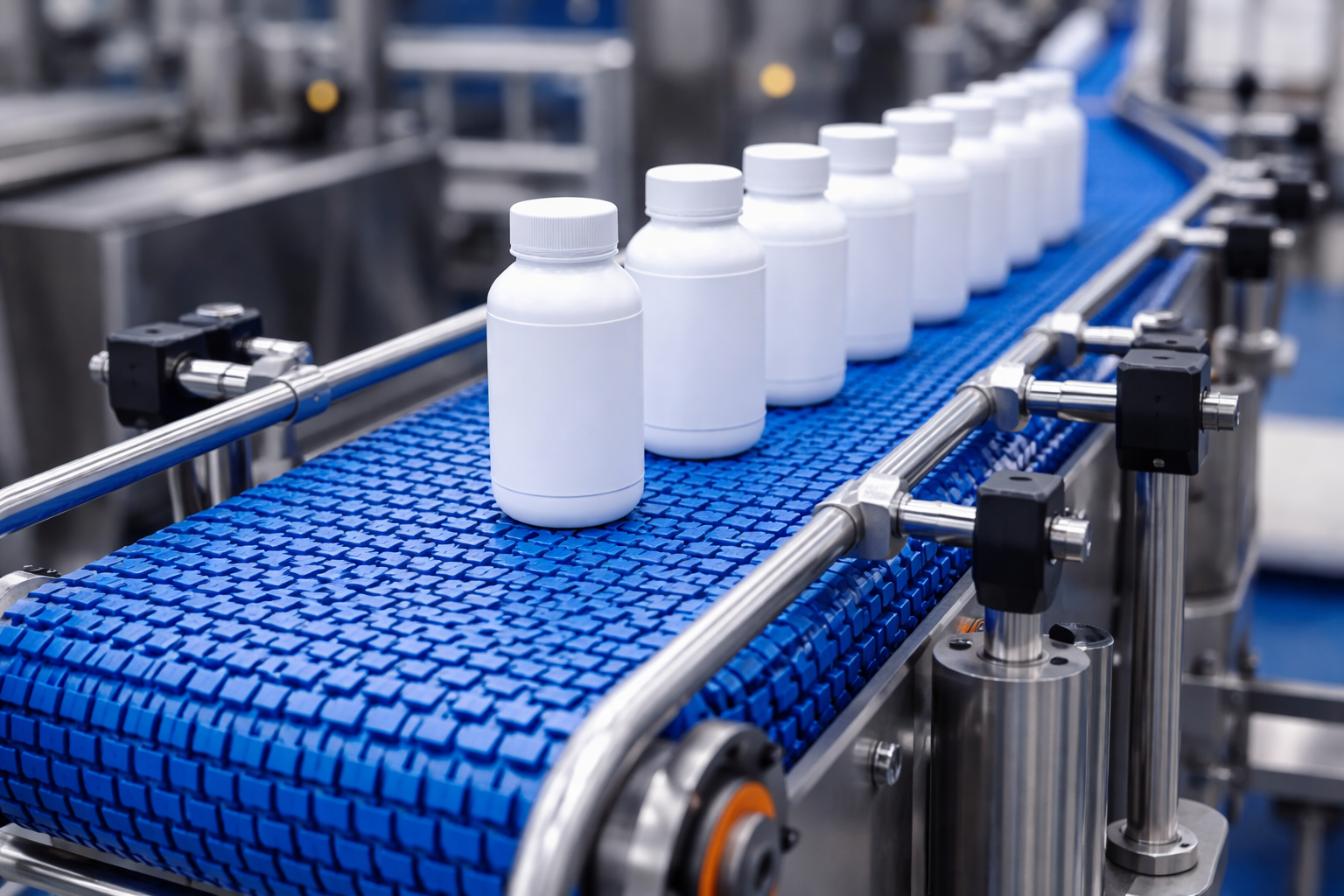 Walk through any chemical packaging facility in the UK — whether that’s a detergent bottling plant in Birmingham, a pharmaceutical intermediate packer in Cheshire, or an agrochemical drum-filling operation in East Yorkshire — and you will immediately notice the punishment that conveyor belts endure. Drums of sodium hydroxide solution sweat condensation onto belt surfaces. Aerosol cans trailing traces of propellant lubricant collect under the return path. Caustic cleandown regimes involving concentrated bleach or acidic sanitisers are run at shift-end, sometimes daily. Conventional PVC flat belts crack, delaminate, and absorb odours within months. Rubber belts swell and blister. That’s precisely where a properly specified plastic modular belt turns a maintenance headache into a non-event — provided you’ve chosen the right module geometry, the right polymer, and the right hinge pin arrangement for the actual process conditions you’re running.
The engineering logic behind plastic modular belt selection in chemical packaging isn’t complicated, but it does require systematic thinking. Over the past 18 years working with conveyor system integrators, OEM machine builders, and end users across England, Scotland, and Wales, the same recurring mistakes surface: under-specifying the plastic material for chemical resistance, ignoring the open-area percentage when drainage is critical, and overlooking belt pitch when gentle product handling is non-negotiable. This article walks through each of those considerations in plain language, with data tables, real application examples, and guidance on how to communicate your requirements clearly to a supplier — including when customisation is the right answer.
How a Plastic Modular Belt Actually Works — and What It’s Made Of
A plastic modular belt is constructed from individual interlocking modules — typically injection-moulded — connected by transverse hinge rods that run the full belt width. Unlike a flat belt that behaves as a single continuous membrane under tension, each module in a plastic modular belt carries load independently. This distributed load architecture means that a single damaged module can be replaced in minutes without removing the entire belt from the conveyor frame. In a chemical packaging environment where contamination risk is a regulatory concern, that replaceability matters: a cracked module that could harbour pathogens or chemical residue is swapped out before a scheduled maintenance window, not on an unplanned shutdown.
The primary polymers used in plastic modular belt manufacture each carry distinct chemical resistance profiles. Acetal (polyoxymethylene, POM) is the workhorse — dimensionally stable, low friction, excellent resistance to most organic solvents, but it does not tolerate prolonged exposure to strong acids or oxidising agents. Polypropylene (PP) offers far superior resistance to alkaline chemicals and dilute acids, which makes it the preferred choice for detergent packaging lines where belt cleandown involves sodium hypochlorite or caustic soda concentrations that would embrittle acetal within weeks. Polyethylene (PE) is softer and better suited to applications demanding very gentle handling — fragile glass bottles of corrosive cleaning agents, for instance. Nylon grades bring high abrasion resistance for heavier drum handling, though nylon absorbs moisture and can swell dimensionally in wet environments. UHMW-PE (ultra-high-molecular-weight polyethylene) offers an exceptional combination of chemical inertness and toughness for the most aggressive conditions.
Key Technical Specifications — Plastic Modular Belt for Chemical Packaging
The parameters below represent typical performance ranges. Exact values vary by module series and pitch. Ever Power provides detailed datasheets and supports custom specification for non-standard widths, perforations, and surface textures.
Application Scenarios in Chemical Packaging Lines
Chemical packaging encompasses a far wider range of sub-applications than most plant engineers initially appreciate. The requirements for a bottle-filling line running fabric softener at ambient temperature are completely different from a drum-filling station handling industrial-strength drain cleaner at 60°C. The plastic modular belt systems that perform in each scenario share the same basic architecture but differ in module pitch, open area, material selection, and side-guard configuration. Below, the most demanding and common UK-market scenarios are examined in detail.
Bottle & Jug Filling Lines
Gentle handling of HDPE and PET bottles carrying bleach, disinfectant, and detergent. Flat-top or flush-grid plastic modular belt in PP prevents slipping and handles washdown with ease. Blue-coloured modules assist visual checks mandated under BRC and BRCGS packaging standards.
Drum & IBC Accumulation
200-litre drums and 1,000-litre IBCs are heavy and abrasive. Raised-rib or carpet-top plastic modular belt in Nylon or UHMW-PE handles sustained heavy loads without surface wear. Stainless-steel hinge rods rated for 316-grade corrosion resistance handle caustic spillage at the base.
Aerosol Can Conveying
Round-base aerosol cans require precise lateral control. Side-flexing plastic modular belt allows curved conveyor runs to guide cans from filling to capping without tipping. Propellant-resistant PP prevents swelling. Open-hinge design minimises lubricant accumulation.
Incline/Decline Transfers
Chemical packaging lines often require elevation changes between filling, labelling, and palletising stations. Cleated or grip-top plastic modular belt in PP maintains product position on inclines up to 30 degrees. The open cleats also drain residual liquid — essential when containers exit a wet rinsing station.
Washdown-Intensive Zones
Where cleaning-in-place (CIP) protocols use aggressive concentrations of sodium hypochlorite or peracetic acid, PP or PE plastic modular belt resists degradation that would render an acetal belt unusable within a season. Perforated modules allow high-pressure water jets to pass through without trapping pooling chemicals.
Agrochemical Powder Packaging
Dusty granular herbicide and pesticide packaging generates airborne particles that coat belt surfaces and accelerate abrasive wear. Low-friction, closed-surface plastic modular belt in UHMW-PE resists particle embedment and can be brushed clean without surface damage — keeping the line running clean between scheduled maintenance windows.
Why UK Chemical Packers Choose Plastic Modular Belt Over Alternatives
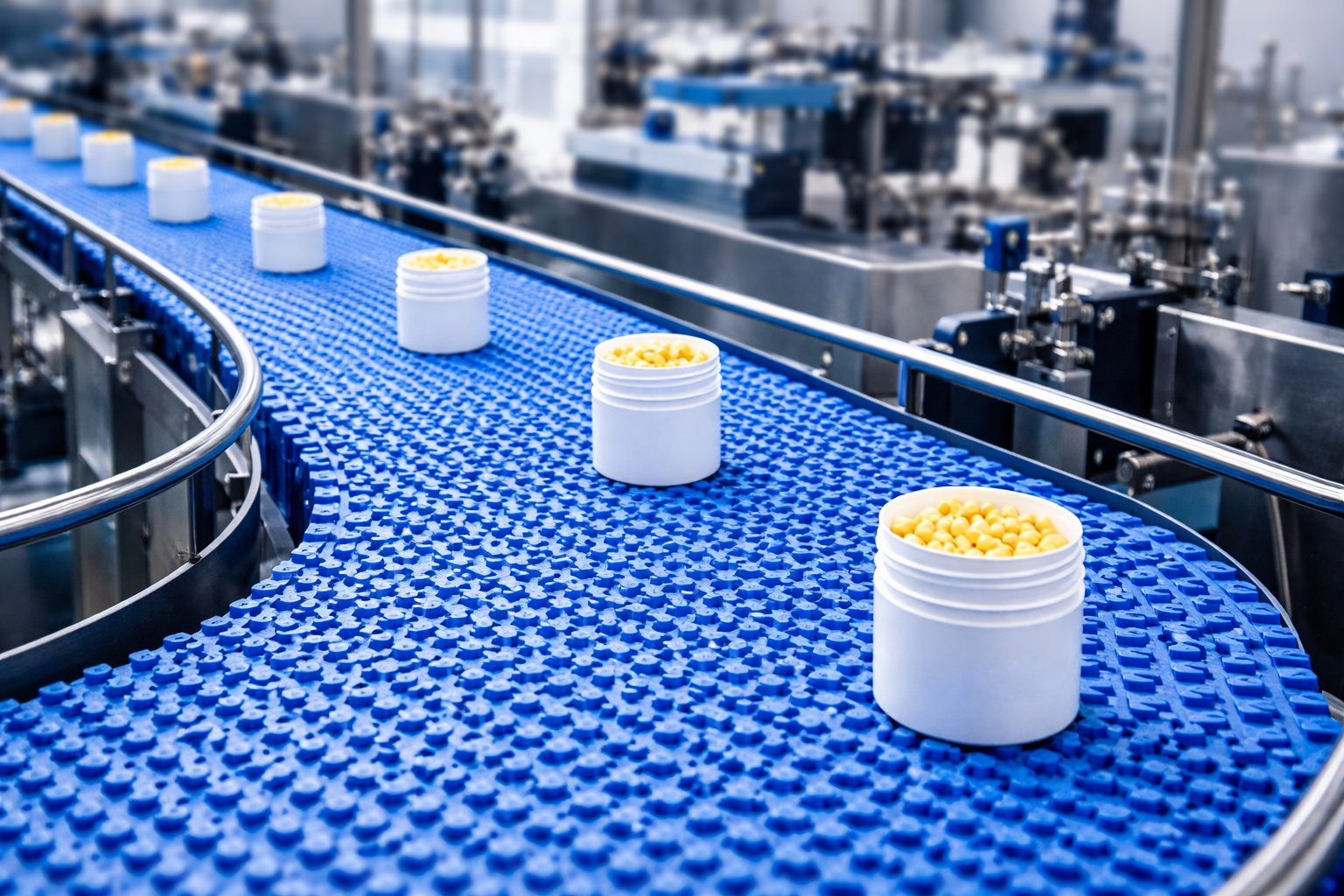 The case for plastic modular belt in chemical packaging goes well beyond chemical resistance. When a maintenance team at a household cleaning products factory in West Midlands calculated total cost of ownership over a five-year horizon, the comparison against conventional flat rubber belt was decisive. Not only did the plastic modular belt last roughly three times longer under the same daily bleach washdown regime, but the ability to replace individual damaged modules — rather than the entire belt — reduced planned maintenance downtime by approximately 65% over the comparison period. Strip that number back to actual production hours and you’re looking at tens of thousands of pounds recovered per line per year.
Beyond longevity and repairability, the dimensional stability of polypropylene and acetal plastic modular belt under varying humidity and temperature conditions removes a source of tracking problems that plague elastomeric belts in wet environments. When a belt tracks reliably, the guide rail contacts less, the drive sprocket wears more evenly, and the control system doesn’t need constant belt-tension corrections — all of which feeds back into line availability. UK chemical manufacturers operating under COMAH (Control of Major Accident Hazards) regulations appreciate the additional reliability argument: an unexpected belt failure on a corrosive chemical filling line isn’t merely a production loss, it’s a potential spill event with regulatory consequences.
Customer Success: Cleaning Products Manufacturer, West Yorkshire, UK
Case Study — Industrial Cleaning Products
A mid-sized manufacturer of professional cleaning products based in West Yorkshire was running three high-speed bottle-filling lines, each processing up to 4,800 bottles per hour of sodium hypochlorite-based disinfectant at 5% active concentration. The incumbent PVC flat belts were being replaced every four to five months due to cracking and surface pitting caused by repeated daily bleach washdown cycles. Annual belt replacement cost across three lines exceeded £18,000, excluding labour and unplanned downtime.
After engaging Ever Power’s application engineering team, the facility transitioned to a 25.4 mm pitch polypropylene flat-top plastic modular belt with 316-grade stainless-steel hinge rods and a 15% open-area grid pattern that allowed residual liquid to drain through rather than pool on the belt surface. Belt colour was specified in blue to align with the facility’s colour-coded contamination control programme. Within 14 months of installation, not a single module had required replacement — a complete reversal of the previous maintenance pattern. The engineering manager commented that the improvement in line availability during the third shift, when cleaning routines were most intensive, had been “remarkable.”
Measured Outcomes:
● Belt replacement cost reduced from £18,000/year to approximately £1,800/year ● Unplanned downtime on three lines cut by 71% ● Washdown time reduced by 20% due to open-grid drainage ● Full ROI achieved in 6.5 months
“We’d been replacing PVC belts on our bleach line every quarter. Ever Power’s PP modular belt has been running for 18 months without a single module change. The difference is night and day.”
— Engineering Manager, Industrial Cleaning Products Manufacturer, West Yorkshire, UK
“Our agrochemical packaging line needed a belt that could handle dusty granular product and daily high-pressure washdown. The UHMW-PE modular belt from Ever Power handles both without compromise.”
— Production Director, Agrochemical Packaging Facility, Lincolnshire, UK
“Getting a quote was straightforward and delivery to our Scottish facility was faster than expected. The technical support during commissioning was genuinely helpful — they knew the product inside out.”
— Maintenance Supervisor, Chemical Contract Packager, Lanarkshire, Scotland
Ever Power’s Customisation Capability — Built for Demanding Applications
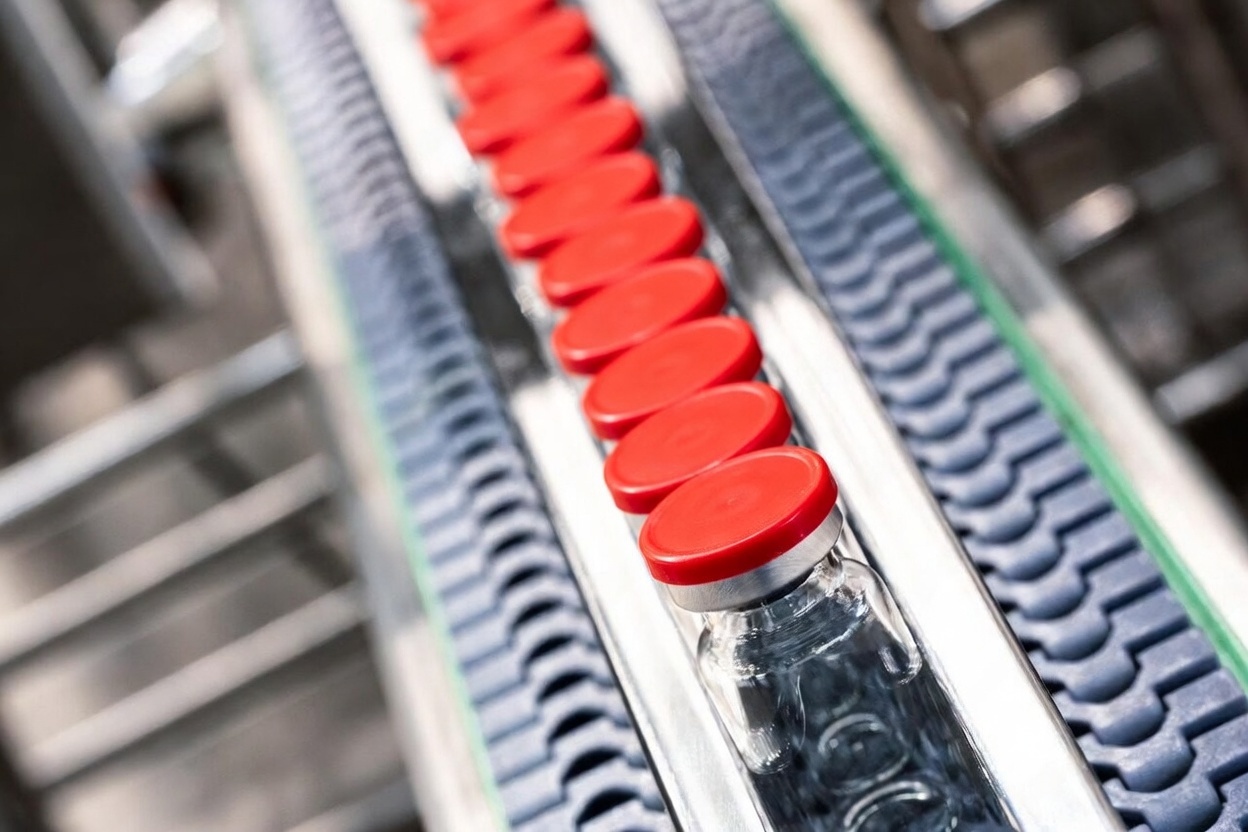 Not every chemical packaging line fits a catalogue product. Ever Power operates a purpose-equipped manufacturing facility with in-house injection moulding tooling that covers a comprehensive range of module geometries — flat-top, flush-grid, open-grid, raised-rib, cleated, side-flexing, and radius configurations — across all standard pitch sizes from 12.7 mm to 101.6 mm. Beyond standard catalogue, the engineering team has an established track record of developing application-specific module profiles: custom cleat heights for unusual incline angles, non-standard perforation patterns for specialised drainage requirements, co-moulded antistatic compounds for explosive-atmosphere chemical environments (ATEX considerations), and custom colour formulations for facilities with stringent colour-coded safety protocols.
Belt width customisation is a particular area of strength. Chemical packaging lines — especially those retrofitted into existing conveyor frames with non-standard widths — frequently require belt widths that sit between catalogue sizes. Ever Power’s production process supports custom width specification down to the module level, meaning a 787 mm wide πλαστική αρθρωτή ζώνη is as straightforward to supply as a standard 800 mm unit. For UK customers specifically, the company provides technical pre-sales support including tensile load calculations, chemical resistance confirmation, and CAD drawings compatible with both SolidWorks and AutoCAD formats. Samples of proposed module grades are available for in-facility chemical compatibility testing before an order is placed.
✉ Λάβετε μια προσφορά — [email protected]
Custom widths · ATEX options · FDA & EU10/2011 compliance · Sample dispatch within 5 working days
Συχνές ερωτήσεις
What is the best plastic modular belt material for a bleach packaging line that needs daily caustic washdown in the UK?
How much does a custom-width plastic modular belt cost for a chemical packaging line, and can I get a quote from a UK supplier?
Which plastic modular belt pitch is most suitable for conveying 500ml HDPE detergent bottles on a high-speed packaging line?
Where can I find a reliable supplier of plastic modular belt for chemical and agrochemical packaging operations in England or Scotland?
How long does a polypropylene plastic modular belt typically last on a chemical packaging line compared to a standard rubber belt?
Can plastic modular belt be used in ATEX-classified zones within a chemical packaging facility in the UK?
Ready to Upgrade Your Chemical Packaging Line?
Talk to Ever Power’s application engineers about your specific conveyor and chemical conditions. We supply and customise plastic modular belt for facilities throughout the United Kingdom.
[email protected] · Serving England, Scotland, Wales & International