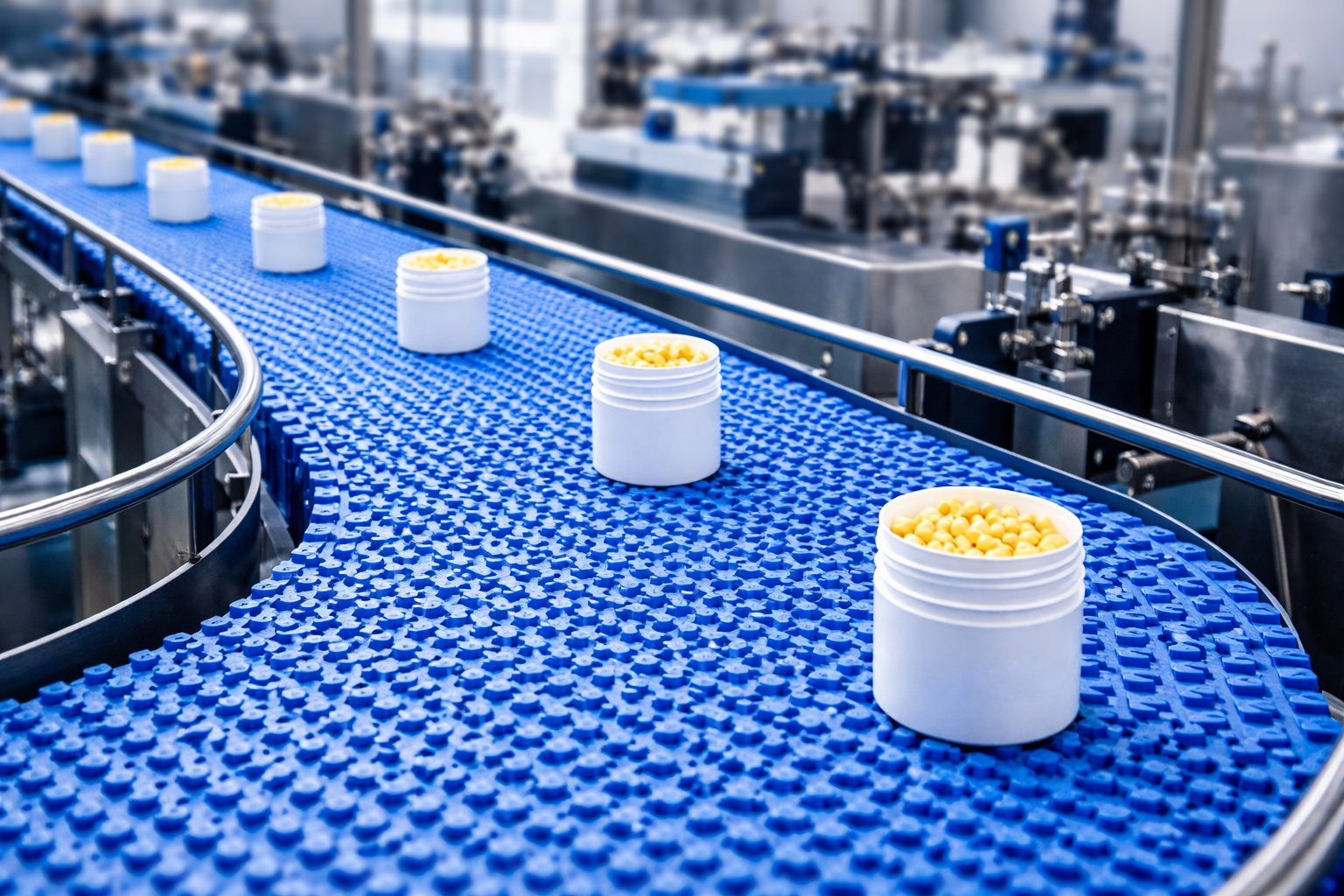
 Walk into any major chemical packaging facility in the UK — whether that’s a detergent manufacturer in Birmingham, an agrochemical bottler in Yorkshire, or a pharmaceutical excipient plant in the East Midlands — and the conveyor running through the heart of the packaging line is doing far more work than it appears. It is holding together the entire production rhythm. Every bottle, every drum, every pallet load of hazardous powder depends on a belt that keeps moving without failure, without contamination risk, and without bowing under the chemical aggression of daily wash-down cycles.
The plastic modular belt has quietly become the backbone of chemical packaging conveyance across British industry. Unlike traditional flat rubber or PVC belts, modular plastic belts are constructed from interlocking polypropylene, acetal (POM), or polyethylene modules — each individually replaceable, each engineered to resist the chemical environments that destroy conventional belting within months. This article pulls together 18 years of hands-on application engineering experience to explain exactly why the plastic modular belt is the correct specification choice for UK chemical packaging lines, and what your facility needs to understand before making the investment.
Plastic modular belt system installed on a chemical drum filling and packaging line — corrosion-resistant, easy to clean, and built for continuous production.
Why Chemical Packaging Lines Demand a Different Class of Conveyor Belt
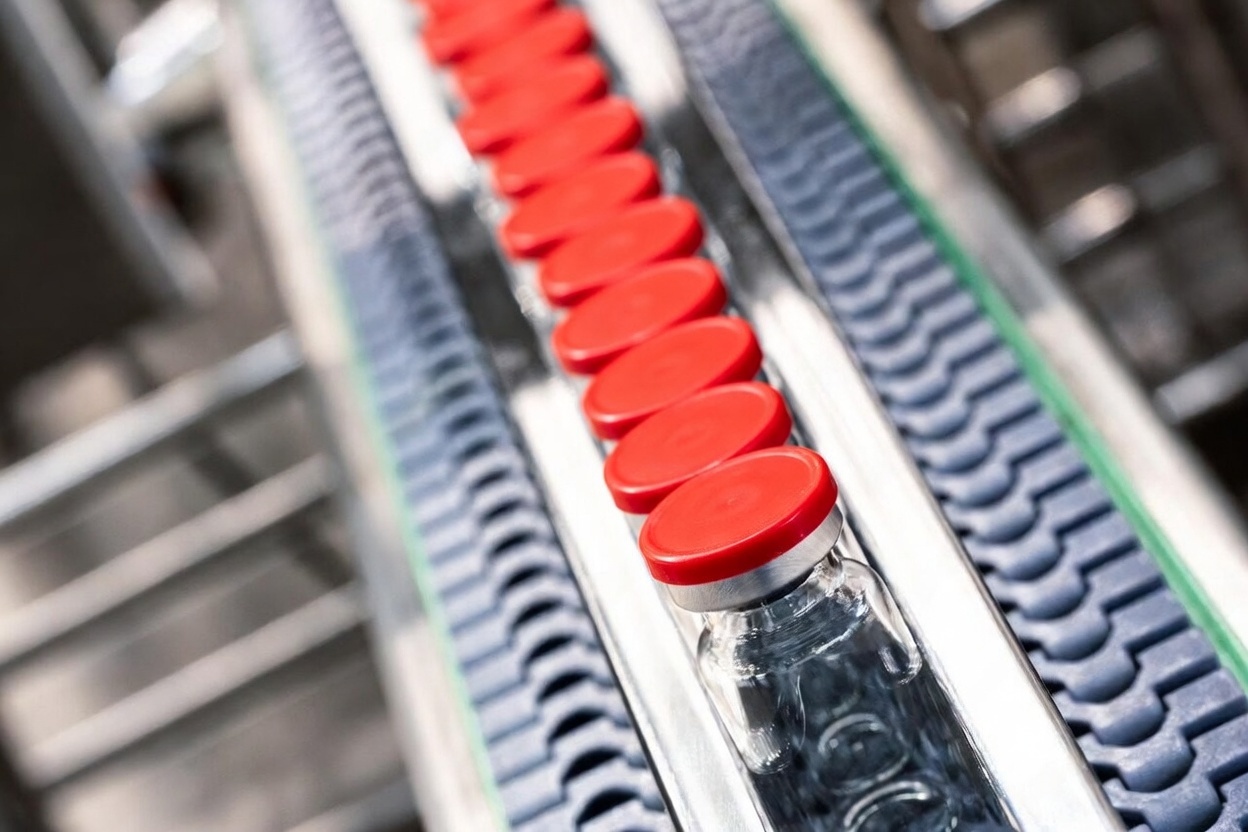 Chemical manufacturing and packaging environments are among the most demanding in British industry. The combination of aggressive cleaning agents, spilled product acids or alkalis, high-pressure water jets, and extreme temperature cycling creates a regime that standard rubber belts simply cannot survive economically. Facilities operating under COSHH regulations face additional audit obligations — any belt that sheds fragments, harbours residual chemical contamination, or fails to meet hygienic design standards introduces both a safety liability and a regulatory risk.
The plastic modular belt addresses these challenges at the material and structural level. Polypropylene modules resist a broad spectrum of acids, bases, and oxidising agents. Acetal (Delrin/POM) modules offer superior dimensional stability under thermal cycling. The open-grid designs allow liquid and particulate to pass through freely during wash-down, eliminating the biofilm and residue traps that contaminate flat belts. And because every module is individually replaceable without removing the entire belt from the conveyor frame, maintenance turnaround on a plastic modular belt system is a fraction of what operators experience with conventional alternatives.
Industry note: UK chemical manufacturers operating under BRC, ISO 9001:2015, and REACH compliance frameworks increasingly specify plastic modular belts as the default conveying standard, citing lower total contamination risk and improved audit traceability compared to rubber or PVC systems.
Belt Materials & Construction: What Goes Into a Chemical-Grade Modular Belt
Πολυπροπυλένιο (PP)
The most widely used material in UK chemical packaging. PP offers excellent resistance to dilute acids, alkalis, and most organic solvents. Operating temperature range of -10°C to +90°C makes it suitable for ambient-temperature bottling and drum-filling lines. Food-grade PP variants comply with EU Regulation 10/2011 for incidental food contact zones.
Acetal / POM (Polyoxymethylene)
Preferred for high-load applications and where dimensional precision matters under temperature variation. POM modular belts maintain tight tolerances across the full operational temperature range (-40°C to +100°C), making them ideal for refrigerated chemical storage picking lines and heated curing conveyors in adhesive packaging. Low moisture absorption keeps tracking stable even after prolonged wash-down exposure.
HDPE & Anti-Static Grades
High-density polyethylene modules provide exceptional impact resistance for heavy-duty drum and IBC conveying applications. Anti-static (ESD) grades are critical wherever flammable vapours are present — a requirement in UK ATEX Zone 2 classified areas within solvent-based chemical packaging lines. Static-dissipative plastic modular belts maintain surface resistivity below 10^6 ohms to prevent discharge events.
PVDF & High-Purity Grades
Polyvinylidene fluoride (PVDF) modules are specified where highly aggressive oxidising acids — such as concentrated nitric acid or hydrogen peroxide — are present in the packaging environment. Though a premium material choice, PVDF plastic modular belts dramatically outlast PP or POM in these extreme chemical conditions, reducing annual belt replacement costs and unplanned downtime in the UK’s specialty chemical sector.
Παράμετροι Τεχνικής Απόδοσης
All values represent standard ranges for Ever Power plastic modular belts configured for chemical packaging line service. Custom specifications available on request.
| Παράμετρος | PP Grade | POM/Acetal Grade | HDPE/ESD Grade | PVDF Grade |
|---|---|---|---|---|
| Εύρος θερμοκρασίας λειτουργίας | -10 °C to +90 °C | -40 °C to +100 °C | -50 °C to +80 °C | -30 °C to +130 °C |
| Max. Belt Speed | Up to 60 m/min | Up to 80 m/min | Up to 50 m/min | Up to 60 m/min |
| Max. Load (kg/m²) | Up to 1,200 kg/m² | Up to 1,800 kg/m² | Up to 2,200 kg/m² | Up to 900 kg/m² |
| Χημική αντοχή | Dilute acids, alkalis, most solvents | Broad spectrum, limited strong oxidisers | Acids, alkalis; ESD surface <10^6 Ω | Strong oxidisers, HF, chlorinated acids |
| Pitch Options (mm) | 12.7 / 25.4 / 38.1 / 50.8 | 12.7 / 25.4 / 38.1 | 25.4 / 38.1 / 50.8 | 25.4 / 38.1 |
| Υγιεινός Σχεδιασμός | ✓ Open grid / flush grid | ✓ Open grid / solid top | ✓ Solid top / drainage | ✓ Open grid |
| ATEX Suitability | Standard: No | Standard: No | ESD Grade: Zone 2 | Standard: No |
Application Scenarios: Where Plastic Modular Belts Work Hardest in UK Chemical Packaging
Across the UK’s diverse chemical sector, plastic modular belt systems are deployed in a wide range of packaging configurations. Understanding each scenario helps in selecting the right belt series, pitch, and material.
Bottle & Jerrycan Filling Lines
Detergent, bleach, and industrial cleaner bottling lines demand belts that handle overspill aggressively without degrading. Open-grid PP plastic modular belts allow caustic spillage to drain away freely, while the modular structure supports accurate indexing into filling heads.
Drum & IBC Conveying
Heavy 200-litre drums of solvent or acid require HDPE plastic modular belts with reinforced knuckle joints and wider pitch. The modular design distributes the load across multiple modules simultaneously, preventing the catastrophic splice failures seen with heavy rubber belt systems at comparable loads.
Powder Packaging (Big Bag / FIBC)
Fertiliser, catalyst powder, and specialty chemical FIBC filling lines create fine particle environments that lodge inside conventional belt splices. Solid-top plastic modular belts prevent powder ingress entirely, while the smooth running surface reduces vibration that can cause premature big-bag rupture.
ATEX-Zone Solvent Packaging
UK facilities packaging flammable solvents — ethanol, acetone, toluene — under DSEAR regulations must use ESD-grade plastic modular belts in the classified zone. Anti-static dissipation prevents vapour ignition risk from belt surface charge build-up, satisfying both the technical and insurance requirements for Zone 2 conveyor specification.
Agrochemical & Crop Protection
Pesticide and herbicide packaging in Yorkshire and Lincolnshire — the heart of UK agrochemical production — sees some of the most varied product contact conditions of any packaging sector. Plastic modular belts in PP or POM handle intermittent contact with concentrated crop protection products while meeting the traceability requirements demanded by UK HSE product stewardship standards.
Palletising & End-of-Line
End-of-line accumulation and palletising conveyors in chemical facilities benefit from low-back-pressure flat-top plastic modular belts, which allow containers to accumulate in controlled queues without toppling or crushing labels. The predictable friction coefficient of PP flat-top modules outperforms rubber in consistent container handling across all ambient conditions.
Six Measurable Advantages of Plastic Modular Belts Over Conventional Belting in Chemical Packaging
Production managers across UK chemical plants ask the same core question: “Why should we change?” The answer is not theoretical — it is captured in maintenance logs, downtime records, and compliance audit outcomes. Here is what facilities consistently report after transitioning to plastic modular belt systems on their packaging lines.
01
Module-Level Replacement
Replace a damaged module in minutes without removing the entire belt. Average repair time on a plastic modular belt line: 8–15 minutes versus 90–180 minutes for rubber belt splice repairs.
02
Chemical Resistance by Design
Material selection is matched precisely to chemical contact profile. No delamination, no swelling, no brittleness from UV or chemical exposure — the failure modes that dominate rubber belt maintenance records.
03
Superior Washdown Hygiene
Open-grid and flush-grid designs allow complete water and detergent penetration during CIP cycles. No hidden residue zones. This directly reduces microbial contamination risk and satisfies UK BRC and COSHH audit requirements.
04
Positive Drive — No Tensioning
Sprocket-driven plastic modular belts require no tensioning adjustments. The positive drive eliminates the tracking drift that plagues conventional belts in wet environments, reducing the operator attention and re-tensioning labour that accumulates over shift patterns.
05
Longer Service Life
Chemical-grade plastic modular belts in typical UK packaging environments achieve 5–8 years service life versus 12–18 months for standard rubber belts. Total cost of ownership across a 5-year period typically favours the plastic modular belt by 40–60% once maintenance labour is included.
06
Complete Customisation
Width, pitch, module colour-coding for contamination traceability, side-guard configurations, and sprocket pitch — all defined to match your exact conveyor frame and production geometry. No off-the-shelf compromise.
Customer Success: Real Results from Chemical Packaging Lines Across the UK and Beyond
These outcomes represent typical performance improvements observed after implementing Ever Power plastic modular belt systems in chemical packaging operations.
UK — Yorkshire
Agrochemical Packaging
Herbicide Bottling Line Uptime Increased by 34% After Switching to PP Modular Belt
A leading UK agrochemical manufacturer operating a high-volume herbicide bottling facility near Leeds was experiencing approximately 3.2 hours of unplanned conveyor downtime per week on their primary packaging line. The root cause was consistent rubber belt degradation from contact with concentrated glyphosate formulations during normal production overspill. After consulting with our application engineers, the facility was retrofitted with a 38.1 mm pitch, open-grid polypropylene plastic modular belt across five conveyor sections. Within four months of installation, weekly unplanned downtime on those sections fell to under 0.4 hours, representing an uptime improvement of 34% on the packaging line and a calculated annual labour saving of £28,000 across maintenance and production recovery costs.
“The module-by-module replacement approach completely changed how our maintenance team handles belt issues. What used to be a shift-stopping event is now a five-minute task between batches. We’ve not had a full belt changeover on those lines in over two years.”
— Operations Manager, Agrochemical Bottling, West Yorkshire, UK
“We operate a bleach and industrial cleaner packaging line in the East Midlands, and the PVDF modular belt Ever Power supplied for our concentrated hypochlorite section has been running without issue for three years now. Previous rubber belts lasted no more than four months in that zone.”
Production Engineer — Household Chemical Manufacturer, Nottinghamshire
“Sourcing a correctly specified anti-static plastic modular belt for our ATEX Zone 2 solvent packaging line was proving difficult until we contacted Ever Power. They understood the DSEAR requirements immediately, proposed the right ESD-grade solution, and the lead time was exceptional for a custom belt width.”
Maintenance Manager — Specialty Solvent Packager, Teesside
“We supply fertiliser in bulk bags across Europe and needed a belt that could handle 1-tonne FIBC loads reliably without tracking issues. The HDPE plastic modular belt on our palletising line has been one of the most trouble-free capital decisions we have made in the last decade.”
Logistics & Packaging Director — Fertiliser Manufacturer, Lincolnshire
Custom-Built to Your Chemical Packaging Line: Ever Power’s Manufacturing Capability
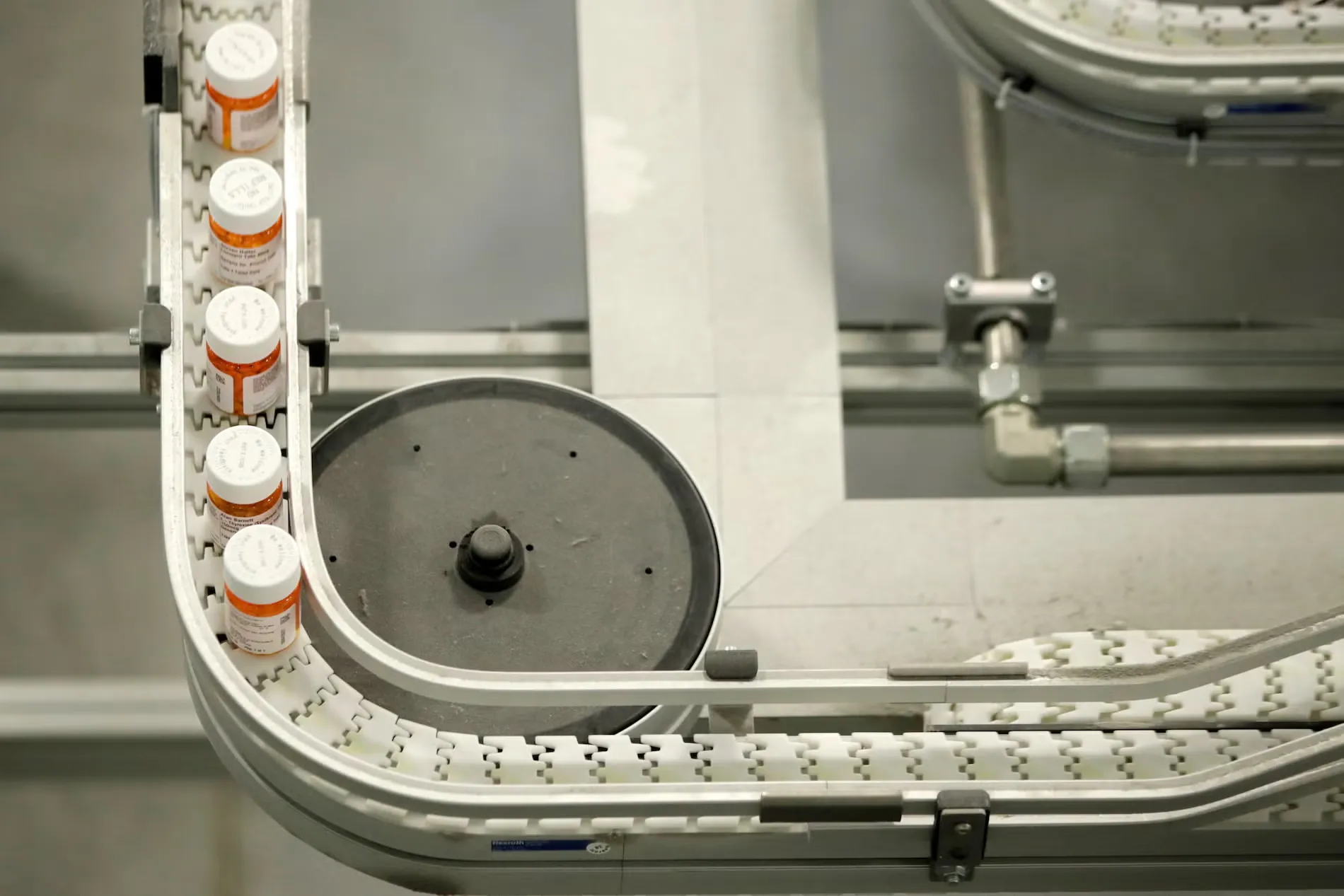 No two chemical packaging lines are identical. Belt width, conveyor frame design, product contact chemistry, operating temperature, speed requirements, and regulatory environment all vary from one facility to the next. That is precisely why Ever Power does not sell off-the-shelf belts — every plastic modular belt we supply is built to the specific parameters of your application, manufactured in our dedicated modular belt production facility with full dimensional and material traceability.
Our production capability spans belt widths from 100 mm to 3,000 mm, all standard modular pitches from 12.7 mm to 50.8 mm, and the full material range from standard PP through to chemical-grade PVDF. We manufacture open-grid, flush-grid, solid-top, and perforated-top variants, with optional accessories including side guards, cleats, flights, and tab attachments. Colour-coded modules — essential for contamination traceability in multi-product chemical facilities — are produced in our standard palette and on request for bespoke colour systems.
For UK customers, we provide technical drawings in standard CAD formats, material certificates with batch traceability, and full chemical resistance documentation for audit purposes. Our application engineers are available for direct consultation with your engineering or maintenance team prior to specification — a service that has consistently prevented the costly misspecification errors that arise when belts are selected purely from catalogue parameters without consideration of actual process chemistry.
Ready to Specify Your Chemical Packaging Line Belt?
Share your application details with our engineering team. We will confirm the correct material grade, belt series, and configuration within 24 hours.
Serving UK Chemical Packaging Facilities from Teesside to the Thames Estuary
The United Kingdom has one of Europe’s most diverse chemical manufacturing bases. From the petrochemical and specialty chemical clusters along the Humber Estuary and Teesside to the home care and personal care chemical manufacturers in the South East, there is significant regional variation in the types of chemical packaging operations — and consequently in the demands placed on conveyor belt systems. Understanding these regional and sector-specific characteristics is central to specifying the right πλαστική αρθρωτή ζώνη for each facility.
Facilities in Scotland, Northern England, and Wales frequently operate in older plant buildings where conveyor retrofitting rather than new-frame installation is the practical reality — a scenario that modular belt systems handle naturally, since standard pitches and sprocket configurations can be adapted to existing frame geometry. Facilities in the South East and Midlands serving the consumer goods chemical market often prioritise throughput and hygienic design compliance, making the broad surface area and cleanability of solid-top and flush-grid modular belts particularly relevant.
The UK’s post-Brexit regulatory environment has also shifted chemical sector compliance towards a blend of retained EU regulations and evolving UK REACH and HSE requirements. Plastic modular belt material certification and chemical resistance documentation produced by Ever Power is provided in formats compatible with both retained EU regulation frameworks and UK-specific documentation requirements, ensuring that procurement and compliance teams can integrate belt specifications into their regulatory management systems without additional translation effort.
Συχνές ερωτήσεις
Practical answers to the questions UK chemical packaging engineers ask most often when specifying plastic modular belts
➕ What is the best plastic modular belt material for a chemical packaging line handling concentrated bleach products in the UK?
For concentrated sodium hypochlorite (bleach) packaging, polypropylene is the standard starting point, but for highly concentrated formulations above 12% available chlorine, PVDF-grade modular belt modules are the correct specification. PP handles typical household bleach concentrations reliably, but prolonged contact with stronger industrial bleach formulations can cause surface chalking over 18–24 months. PVDF modules offer full resistance to oxidising chlorine compounds across the concentration range encountered in UK industrial bleach packaging.
➕ How much does a plastic modular belt cost for a chemical packaging line in the UK compared to a rubber belt?
Initial capital cost is typically 2–3 times higher than an equivalent rubber belt. However, total cost of ownership over a 5-year period in chemical packaging environments consistently favours the plastic modular belt by 40–60%, driven by longer service life, dramatically lower maintenance labour, and module-level replacement capability. For an accurate quote for your specific conveyor dimensions, contact [email protected].
➕ Which plastic modular belt supplier in the UK can provide ATEX-rated ESD belts for a solvent chemical packaging line?
Ever Power manufactures ESD (electrostatic dissipative) plastic modular belts for ATEX Zone 2 classified areas in solvent packaging lines across the UK. Our anti-static modular belt modules maintain surface resistivity below 10^6 ohms, meeting DSEAR and EN 13463 requirements for electrostatic ignition risk management. Full ESD compliance documentation including resistivity test certificates is provided with every belt supplied.
➕ How long does it take to get a custom-width plastic modular belt delivered to a UK chemical packaging facility?
Standard lead time for custom-width plastic modular belts to UK destinations is 7–14 working days for PP and POM grades. PVDF and ESD anti-static grades may require 14–21 working days. Emergency replacement belts for critical production line breakdowns can often be accommodated on a prioritised basis — contact [email protected] with your dimensions and urgency for immediate availability confirmation.
➕ What belt pitch should I specify for a plastic modular belt on a plastic bottle conveying line in a detergent packaging plant?
For standard HDPE and PET detergent bottles (0.5 litre to 5 litre) on a flat conveying section, 25.4 mm pitch PP flat-top or open-grid modules are the most common specification in UK household chemical packaging. For smaller containers below 200 ml, 12.7 mm pitch modules prevent containers from tilting into the module gaps. Our engineers are happy to confirm the right pitch for your specific bottle geometry — just send your container drawings to our team.
➕ Where can a fertiliser packaging plant in Lincolnshire get a plastic modular belt quote for heavy FIBC pallet conveying?
Fertiliser and agrochemical FIBC conveying applications in Lincolnshire and across the East Midlands are a core application area for Ever Power’s HDPE plastic modular belts. For FIBC palletising and conveying, we specify wide-pitch HDPE modules with reinforced knuckle joints rated for the load distribution profile of 500–1,000 kg laden FIBC bags. Email your conveyor dimensions and load requirements to [email protected] for a same-day quotation.
Specify Your Chemical Packaging Line Belt Today
Ever Power supplies custom plastic modular belts to chemical packaging facilities across the UK — from single-section retrofits to full packaging line builds. Our application engineers are ready to confirm the correct specification for your chemical process environment.
Written by Ever Power Application Engineering Team | 18+ Years in Plastic Modular Belt Applications
Serving chemical packaging facilities across England, Scotland, Wales and Northern Ireland | ISO 9001:2015 Certified Manufacturing
© Ever Power Industrial Conveyor Solutions
επεξεργασία από gzl