
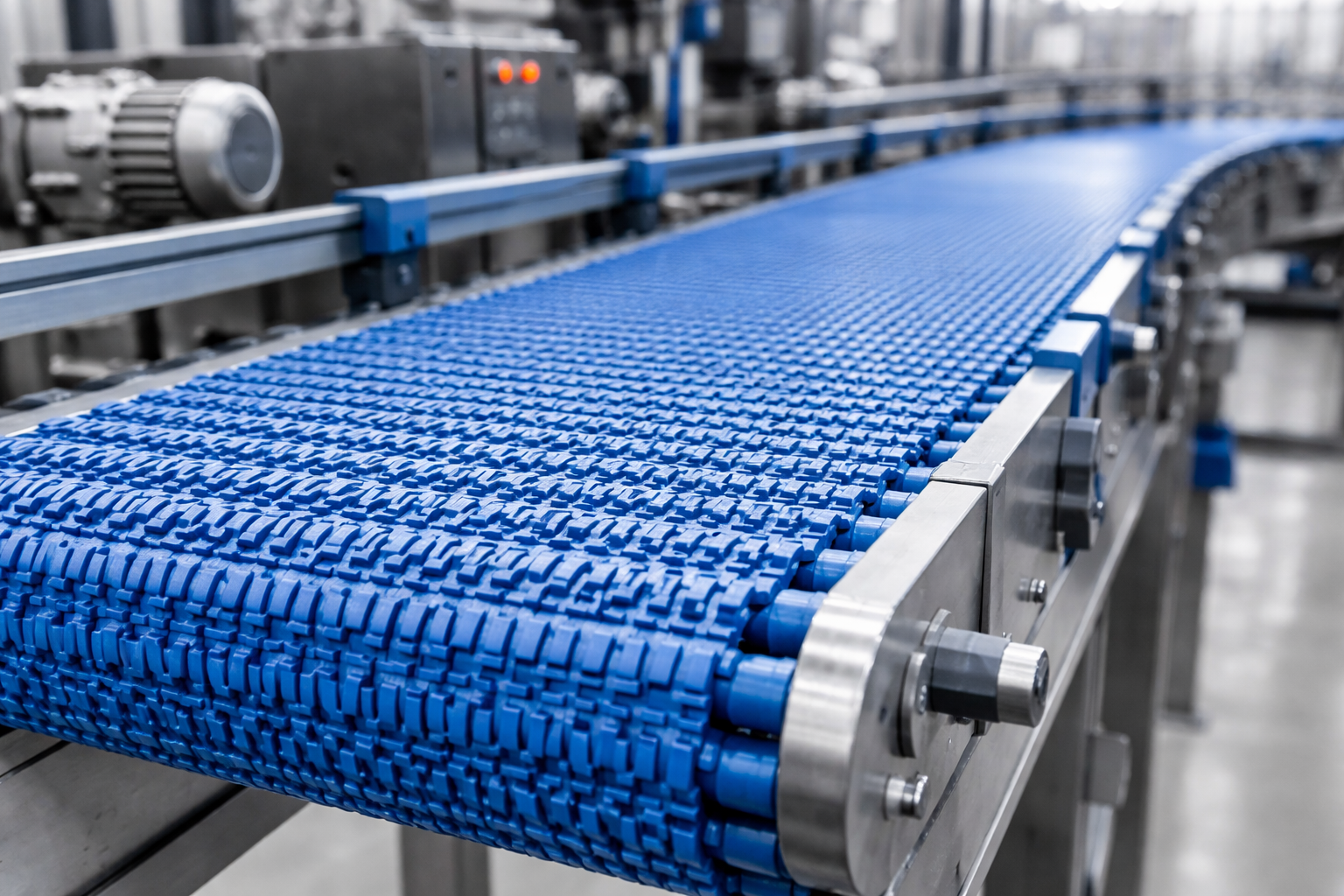
 Σε ολόκληρο τον αυτοκινητοβιομηχανικό τομέα του Ηνωμένου Βασιλείου — από τα Midlands μέχρι τα Βορειοανατολικά — οι μηχανικοί των εργοστασίων και οι διευθυντές παραγωγής αντιμετωπίζουν μια κοινή πρόκληση: συστήματα μεταφορικών ταινιών που μπορούν να χειριστούν τεράστιες διακυμάνσεις φορτίου, να επιβιώσουν σε περιβάλλοντα πλούσια σε χημικά και να διατηρήσουν σχεδόν μηδενικό χρόνο διακοπής λειτουργίας σε λειτουργίες τριών βάρδιων. Οι παραδοσιακοί μεταφορικοί ιμάντες από χαλύβδινες λαμαρίνες και τα συστήματα ιμάντων από καουτσούκ εξυπηρέτησαν τον σκοπό τους σε μια παλαιότερη εποχή κατασκευής, αλλά η σύγχρονη τελική συναρμολόγηση αυτοκινήτων απαιτεί πολύ περισσότερα. Ο πλαστικός αρθρωτός ιμάντας έχει εξελιχθεί τις τελευταίες δύο δεκαετίες στην κυρίαρχη επιλογή για μεταφορά αμαξώματος σε λευκό χρώμα, σταθμούς τοποθέτησης θυρών και διακοσμητικών, γραμμές σύνδεσης κινητήρων και περιοχές δοκιμών στο τέλος της γραμμής παραγωγής.
Αυτό που κάνει αυτή την επιλογή υλικών τόσο συναρπαστική δεν είναι ένα μόνο χαρακτηριστικό — είναι η σύγκλιση της μηχανικής ακεραιότητας, της χημικής αντοχής, της υγιεινής καθαριότητας, της ευελιξίας σχεδιασμού και του συνολικού κόστους ιδιοκτησίας που καμία εναλλακτική λύση με βάση το μέταλλο δεν μπορεί να αναπαράγει σε όλο το εύρος των σεναρίων συναρμολόγησης αυτοκινήτων. Έχοντας αφιερώσει δεκαοκτώ χρόνια στην προδιαγραφή, την εγκατάσταση και την αντιμετώπιση προβλημάτων λύσεων μεταφορικών ταινιών σε γραμμές συναρμολόγησης από το Κόβεντρι έως το Σάντερλαντ, μπορώ να πω με σιγουριά ότι ο πλαστικός αρθρωτός ιμάντας δεν είναι απλώς ένα εξάρτημα — είναι μια στρατηγική απόφαση υποδομής.
Τι είναι μια πλαστική αρθρωτή ζώνη — και γιατί έχει σημασία στη συναρμολόγηση αυτοκινήτων;
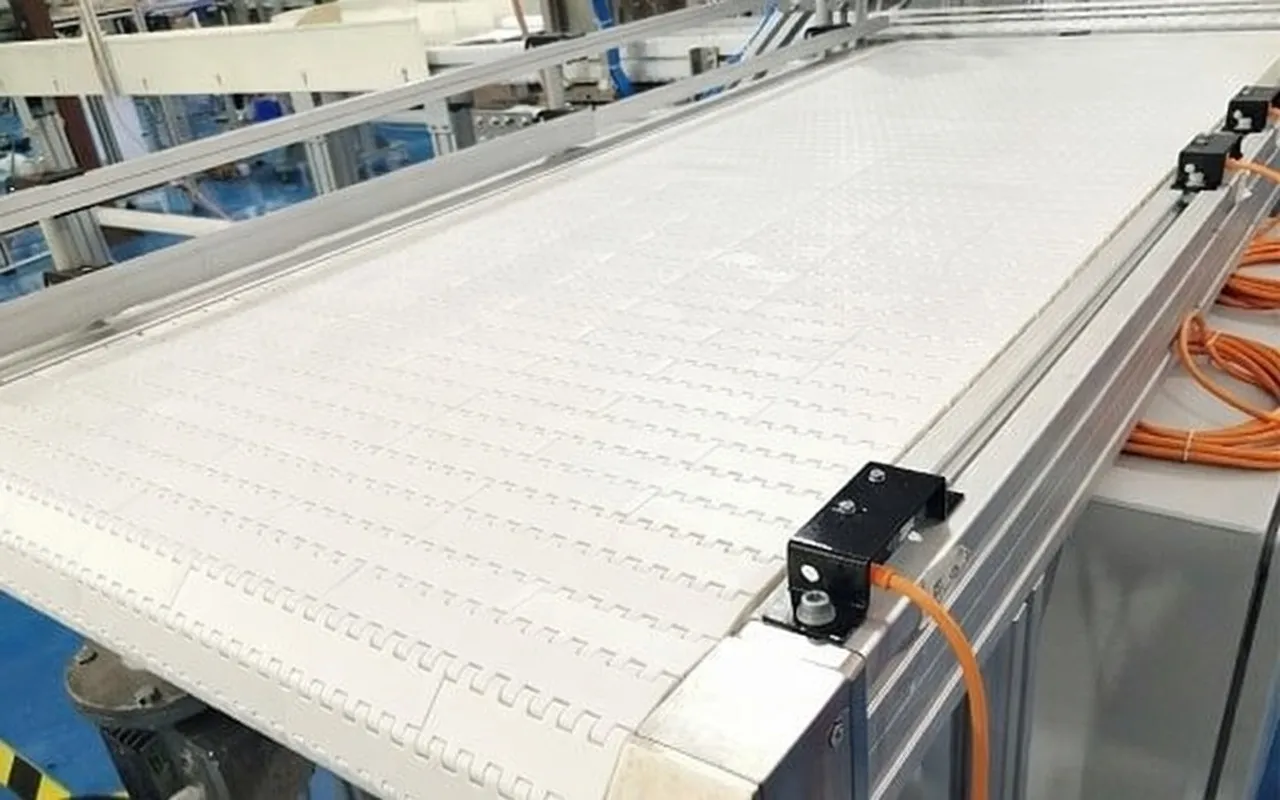 Ένας πλαστικός αρθρωτός ιμάντας είναι ένας μεταφορικός ιμάντας κατασκευασμένος από αλληλοσυνδεόμενες θερμοπλαστικές μονάδες, συνήθως χυτευμένες με έγχυση σε πολυπροπυλένιο (PP), πολυαιθυλένιο (PE) ή ακετάλη (POM - πολυοξυμεθυλένιο), συνδεδεμένες μεταξύ τους χρησιμοποιώντας εγκάρσιες ράβδους άρθρωσης. Σε αντίθεση με έναν συμβατικό συνεχή ελαστικό ιμάντα, ένας αρθρωτός σχεδιασμός επιτρέπει την αντικατάσταση μεμονωμένων σειρών ή τμημάτων χωρίς την αποσυναρμολόγηση ολόκληρου του μεταφορικού ιμάντα. Σε μια γραμμή τελικής συναρμολόγησης αυτοκινήτων, όπου ο χρόνος διακοπής λειτουργίας του μεταφορικού ιμάντα μεταφράζεται άμεσα σε απώλεια παραγωγής που μετριέται σε μονάδες οχημάτων ανά ώρα, αυτό το πλεονέκτημα επισκευής από μόνο του δικαιολογεί την επένδυση.
Η γεωμετρία της αλληλοσυνδεόμενης μονάδας κατανέμει την εφελκυστική τάση σε όλο το πλάτος του ιμάντα αντί να τη συγκεντρώνει σε μια στενή ράχη, πράγμα που σημαίνει ότι ο πλαστικός αρθρωτός ιμάντας χειρίζεται την εγκάρσια φόρτιση — ένα συνηθισμένο φαινόμενο όταν οι εργαζόμενοι πατούν στην επιφάνεια του ιμάντα ή όταν βαριά υποσυγκροτήματα φορτώνονται εκτός κέντρου — χωρίς τον κίνδυνο θραύσης των άκρων ή καταστροφικής διάδοσης του σχισίματος που μαστίζει τις εναλλακτικές λύσεις με επίπεδο ιμάντα.
Στο συγκεκριμένο πλαίσιο των αυτοκινητοβιομηχανικών εργοστασίων του Ηνωμένου Βασιλείου, όπου οι απαιτήσεις της Εκτελεστικής Αρχής για την Υγεία και την Ασφάλεια επιβάλλουν τακτικές τεκμηριωμένες αξιολογήσεις κινδύνου των συστημάτων μεταφορικών ταινιών, οι παραλλαγές ανοιχτού πλέγματος και επίπεδου πλέγματος του πλαστικού αρθρωτού ιμάντα προσφέρουν πρόσθετα πλεονεκτήματα συμμόρφωσης: τα υπολείμματα πέφτουν μέσα από την επιφάνεια του ιμάντα αντί να συσσωρεύονται κάτω από τα εξαρτήματα και η επικύρωση καθαρισμού είναι απλή. Αυτό έχει τεράστια σημασία στους σταθμούς αναβάθμισης κινητήρα και τελικής επιθεώρησης ποιότητας όπου ο έλεγχος της μόλυνσης είναι κρίσιμος.
Υλικά, Κατασκευή & Τεχνικές Παράμετροι Απόδοσης
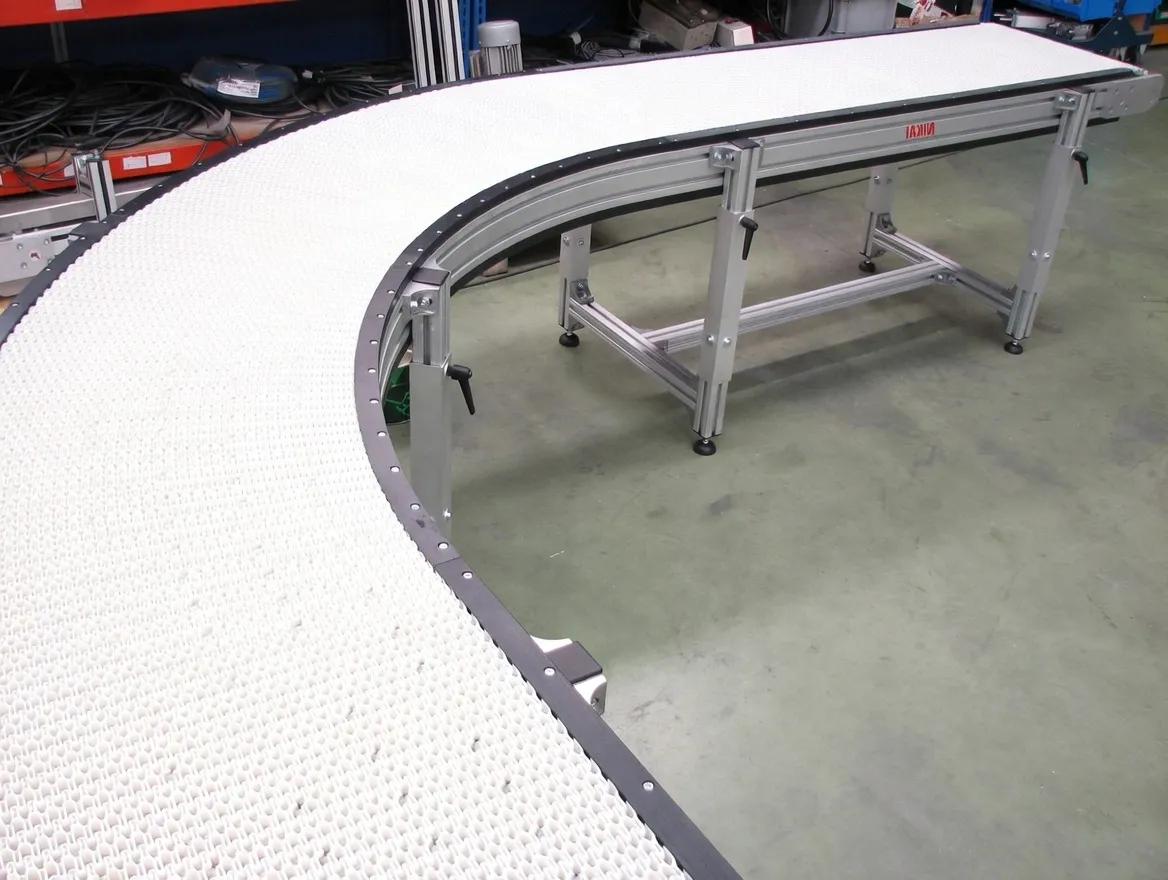 Η επιλογή του βασικού πολυμερούς έχει άμεση σχέση με τη διάρκεια ζωής σε ένα περιβάλλον συναρμολόγησης αυτοκινήτων. Οι ποιότητες πολυπροπυλενίου προσφέρουν εξαιρετική ισορροπία κόστους και χημικής αντοχής, καθιστώντας τες την προεπιλεγμένη επιλογή για τη μεταφορά γενικής συναρμολόγησης. Οι μονάδες ακετάλης (POM) παρέχουν σημαντικά υψηλότερη ακαμψία και χαμηλότερο συντελεστή τριβής, κάτι που προτιμάται για την ακριβή μεταφορά πάνελ αμαξώματος όπου η εκτροπή του ιμάντα υπό φορτίο θα προκαλούσε κακή ευθυγράμμιση σε σταθμούς συγκόλλησης ρομπότ. Για περιοχές κοντά σε θαλάμους βαφής ή όπου οι επιφάνειες του ιμάντα έρχονται σε επαφή με βαμμένα πάνελ, καθορίζονται ειδικές αντιστατικές συνθέσεις και παραλλαγές με υφή επιφάνειας για την πρόληψη ζημιών από ηλεκτροστατική εκκένωση (ESD) και φθοράς της επιφάνειας.
Βασικά σενάρια εφαρμογής στην τελική συναρμολόγηση αυτοκινήτων
Ο πλαστικός αρθρωτός ιμάντας δεν αποτελεί μια λύση που ταιριάζει σε όλους — η ιδιοφυΐα του έγκειται στο πώς η διαμορφώσιμη γεωμετρία των μονάδων του και οι επιλογές υλικών ευθυγραμμίζονται ακριβώς με τις ποικίλες απαιτήσεις κάθε σταθμού συναρμολόγησης. Οι ακόλουθοι σταθμοί αντιπροσωπεύουν τις ζώνες ανάπτυξης με την υψηλότερη αξία σε ένα τυπικό εργοστάσιο αυτοκινήτων στο Ηνωμένο Βασίλειο.
Μεταφορά σώματος σε λευκό (BIW)
Τα πλαστικά αρθρωτά συστήματα ιμάντων ευρείας διαμέτρου μεταφέρουν γυμνά κελύφη οχημάτων μεταξύ των ρομπότ συγκόλλησης και των συστημάτων πλαισίωσης. Η επίπεδη, άκαμπτη επιφάνεια αποτρέπει την παραμόρφωση του κελύφους, ενώ ο σχεδιασμός ανοιχτού πλέγματος επιτρέπει στα πιτσιλίσματα συγκόλλησης να πέφτουν χωρίς να συσσωρεύονται και να προκαλούν σφάλματα τοποθέτησης.
Σταθμός ζευγαρώματος κινητήρα
Ο σταθμός ζευγαρώματος, όπου η βάση κινητήρα-κιβωτίου ταχυτήτων-μπροστινής ανάρτησης ανυψώνεται και συνδυάζεται με το αμάξωμα που κατεβαίνει, απαιτεί ιμάντες ικανούς να αντέχουν διαλείποντα φορτία που υπερβαίνουν τα 800 kg. Οι υψηλής αντοχής αρθρωτοί ιμάντες POM με ενισχυμένες ράβδους μεντεσέδων αποτελούν το μηχανολογικό πρότυπο εδώ.
Εσωτερική επένδυση και τοποθέτηση καθισμάτων
Οι πλαστικοί αρθρωτοί ιμάντες με αντιστατικές επιφανειακές επεξεργασίες προστατεύουν τα ευαίσθητα ηλεκτρονικά συστήματα που είναι ενσωματωμένα στα σύγχρονα συγκροτήματα καθισμάτων και στα πάνελ επένδυσης. Οι παραλλαγές χαμηλής τριβής επιτρέπουν στους χειριστές να σύρουν τα εξαρτήματα πλευρικά στην τελική τους θέση χωρίς μηχανική βοήθεια.
Δοκιμές και έλεγχος στο τέλος της γραμμής
Οι σταθμοί σκόπευσης προβολέων, ευθυγράμμισης τροχών και δοκιμής κύλισης χρησιμοποιούν κινούμενες πλατφόρμες πλαστικών αρθρωτών ιμάντων που πρέπει να παραμένουν απόλυτα επίπεδες υπό το βάρος του οχήματος ενώ περιστρέφονται κάτω από τους κινούμενους τροχούς. Εξειδικευμένες μονάδες επίπεδης οροφής με ένθετα υψηλής πρόσφυσης χειρίζονται αυτό το πρόβλημα άψογα.
Μεταφορά και Απορρόφηση Χρωματοπωλείου
Τα αποθέματα αποθήκευσης μετά τη βαφή του αμαξώματος λειτουργούν σε περιβάλλοντα υψηλής θερμοκρασίας κοντά σε φούρνους σκλήρυνσης. Οι ιμάντες υψηλής θερμοκρασίας από PP ή PVDF διατηρούν τη διαστατική σταθερότητα και αντιστέκονται στη μόλυνση από διαλύτες, προστατεύοντας παράλληλα τις φρεσκοβαμμένες επιφάνειες από σημάδια.
Συναρμολόγηση μονάδας μπαταρίας ηλεκτρικού οχήματος
Η αυξανόμενη βάση κατασκευής ηλεκτρικών οχημάτων στο Ηνωμένο Βασίλειο — σε εγκαταστάσεις όπως αυτές στα Δυτικά Μίντλαντς και το Σάντερλαντ — απαιτεί αντιστατικούς, ηλεκτρικά διαχύτες πλαστικούς αρθρωτούς ιμάντες για τη συναρμολόγηση στοιχείων και μονάδων μπαταριών. Οι ασφαλείς για ηλεκτροστατική εκκένωση ποιότητες PP με ονομαστική επιφανειακή αντίσταση 10^6 – 10^9 ohm αποτελούν πλέον στάνταρ.
Γιατί οι μηχανικοί αυτοκινήτων στο Ηνωμένο Βασίλειο προκρίνουν την πλαστική αρθρωτή ζώνη έναντι των ανταγωνιστικών λύσεων
Μια δομημένη σύγκριση με εναλλακτικές τεχνολογίες μεταφορικών ταινιών αποκαλύπτει γιατί ο πλαστικός αρθρωτός ιμάντας διατηρεί τη θέση του ως η προτιμώμενη λύση σε όλα τα εργοστάσια αυτοκινήτων του Ηνωμένου Βασιλείου που λειτουργούν με συστήματα παραγωγής JLR, BMW, Nissan και Toyota.
Επιτυχία Πελατών: Τι Έζησαν τα Πραγματικά Εργοστάσια Συναρμολόγησης
Η ακόλουθη μελέτη περίπτωσης και οι μαρτυρίες αντικατοπτρίζουν τα αποτελέσματα από πραγματικά σενάρια ανάπτυξης σε ευρωπαϊκές εγκαταστάσεις κατασκευής αυτοκινήτων.
Δυτικά Μίντλαντς, Ηνωμένο Βασίλειο — Κορυφαία Κατασκευαστής Αρχικού Τύπου (OEM) Επιβατικών Οχημάτων Υψηλής Ποιότητας (Premium)
Μείωση του μη προγραμματισμένου χρόνου διακοπής λειτουργίας του μεταφορικού ιμάντα κατά 73% σε γραμμή κοπής υψηλού όγκου
Ένας κατασκευαστής επιβατικών οχημάτων υψηλής ποιότητας που λειτουργούσε μια τριβάρδια τελική συναρμολόγηση στα Δυτικά Μίντλαντς αντιμετώπιζε κατά μέσο όρο 4,2 απρογραμμάτιστες διακοπές λειτουργίας των μεταφορικών ταινιών την εβδομάδα στη γραμμή τοποθέτησης εσωτερικών επενδύσεων. Το υπάρχον σύστημα αλυσίδας με χαλύβδινες λαμαρίνες απαιτούσε κύκλους λίπανσης ανά δεκαπενθήμερο, παρήγαγε υπερβολικά επίπεδα θορύβου που υπερέβαιναν τις οδηγίες HSE και είχε υποστεί δύο καταστροφικές βλάβες στην αλυσίδα σε οκτώ μήνες — η καθεμία προκαλώντας πάνω από τρεις ώρες απώλειας παραγωγής.
Μετά από πλήρη έλεγχο του μεταφορικού ιμάντα, η ομάδα μηχανικών εξόπλισε τη γραμμή κλεισίματος μήκους 48 μέτρων με ένα σύστημα πλαστικών αρθρωτών ιμάντων POM με επίπεδη κορυφή πλάτους 1.000 mm χρησιμοποιώντας μονάδες βήματος 25,4 mm με ενσωματωμένα πλευρικά προστατευτικά. Η εγκατάσταση ολοκληρώθηκε κατά τη διάρκεια μιας προγραμματισμένης διακοπής λειτουργίας το Σαββατοκύριακο. Στους δώδεκα μήνες που ακολούθησαν την εγκατάσταση, οι μη προγραμματισμένες διακοπές λειτουργίας σε αυτήν τη γραμμή μειώθηκαν σε μόλις 1,1 ανά εβδομάδα - μείωση 73,8%. Το κόστος λίπανσης εξαλείφθηκε εντελώς. Τα επίπεδα θορύβου του ιμάντα μειώθηκαν από 84 dB(A) σε 71 dB(A), φέρνοντας την περιοχή εντός των οδηγιών HSE χωρίς πρόσθετα μέτρα περίφραξης.
Από συνήθεια, προδιαγράφαμε ατσάλινη αλυσίδα για το σχοινί για πάνω από μια δεκαετία. Μετά τη μετάβαση σε έναν υψηλής αντοχής αρθρωτό ιμάντα POM, η ομάδα συντήρησης αφιέρωσε σημαντικά λιγότερο χρόνο σε παρεμβάσεις που σχετίζονται με τον ιμάντα — οι μονάδες είναι εύκολες στην αντικατάσταση και ολόκληρο το σύστημα λειτουργεί πιο καθαρά.
Ο ασφαλής έναντι ηλεκτροστατικής εκκένωσης πλαστικός ιμάντας στη σειρά μονάδων μπαταριών EV μας λειτουργεί εδώ και δεκαοκτώ μήνες χωρίς ούτε μια διακοπή που σχετίζεται με τον ίδιο τον ιμάντα. Η αντιστατική πιστοποίηση παρείχε στην ομάδα ποιότητας μας ακριβώς την τεκμηρίωση που χρειαζόταν για τη συμμόρφωση με τους κανονισμούς ελέγχου. Είμαι πραγματικά εντυπωσιασμένος από τις γνώσεις εφαρμογής που συνοδεύουν το υλικό.
Αλλάξαμε τρεις μεταφορικές ταινίες σταθμών επιθεώρησης από ελαστικό ιμάντα σε πλαστικό αρθρωτό ιμάντα μετά από επίμονα προβλήματα μόλυνσης κατά τους καλοκαιρινούς μήνες, όταν οι θερμοκρασίες στο βαφείο μας ανεβαίνουν απότομα. Διαφορά ημέρας και νύχτας — καμία τάνυση, καμία ολίσθηση, καμία επιφανειακή μόλυνση στα πάνελ. Δεν θα ξαναγύριζα.
Ever Power: Κατασκευή και Προμήθεια Πλαστικών Αρθρωτών Ιμάντων κατά Παραγγελία στο Ηνωμένο Βασίλειο
Η παραγωγική ικανότητα της Ever Power βασίζεται σε μία αρχή: κανένα έργο συναρμολόγησης αυτοκινήτων δεν είναι στάνταρ. Κάθε γραμμή έχει μοναδικά προφίλ φορτίου, περιβαλλοντικούς περιορισμούς και απαιτήσεις ποιότητας ειδικές για τον κατασκευαστή πρωτότυπου εξοπλισμού (OEM). Το εργοστάσιο λειτουργεί εργαλεία χύτευσης με έγχυση πολλαπλών κοιλοτήτων σε ποιότητες PP, POM, PE και εξειδικευμένων πολυμερών μηχανικής, με πλάτη ιμάντα πλήρως προσαρμόσιμα από 150 mm έως 2.400 mm και διαμορφώσεις βήματος που εκτείνονται από 12,7 mm έως 101,6 mm. Χρωματική κωδικοποίηση, ιχνηλασιμότητα παρτίδας με χάραξη με λέιζερ και προσαρμοσμένη υφή επιφάνειας μονάδων είναι διαθέσιμες ως τυπικές επιλογές προσαρμογής.
Για πελάτες του βρετανικού κλάδου της αυτοκινητοβιομηχανίας με απαιτήσεις εφοδιαστικής αλυσίδας προέλευσης ΕΕ ή ευθυγραμμισμένες με το πρότυπο IATF 16949, η Ever Power παρέχει πλήρη τεκμηρίωση πιστοποίησης υλικών, δηλώσεις συμμόρφωσης με την οδηγία RoHS και αρχεία ιχνηλασιμότητας σε επίπεδο παρτίδας με κάθε αποστολή. Η ομάδα μηχανικών προσφέρει συμβουλές πριν από τον σχεδιασμό, προσομοίωση πλάτους ιμάντα και θέσης γραναζιού ενσωματωμένης σε CAD, καθώς και υποστήριξη θέσης σε λειτουργία επί τόπου για σύνθετες διατάξεις μεταφορικών ταινιών πολλαπλών κλώνων. Οι διαμορφώσεις πλαστικών αρθρωτών ιμάντα με πλευρική κάμψη — ικανές να πλοηγούνται σε καμπύλες με ακτίνα έως και 300 mm — κατασκευάζονται κατόπιν παραγγελίας, επιτρέποντας τη βελτιστοποίηση της διάταξης του εργοστασίου που ανακτά πολύτιμο χώρο δαπέδου σε περιοχές συναρμολόγησης με συμφόρηση.
Είτε χρειάζεστε έναν απλό ανταλλακτικό ιμάντα για ένα υπάρχον πλαίσιο μεταφορικού ιμάντα είτε ένα εξατομικευμένο σύστημα μεταφοράς πολλαπλών ζωνών που έχει σχεδιαστεί από την αρχή, η ικανότητα της Ever Power να παραδίδει από το πρωτότυπο έως τον όγκο παραγωγής την καθιστά έναν πραγματικά ικανό συνεργάτη κατασκευής για τους μηχανικούς της εφοδιαστικής αλυσίδας αυτοκινήτων στο Ηνωμένο Βασίλειο.
Έξι μετρήσιμα πλεονεκτήματα που οδηγούν στην υιοθέτηση σε εργοστάσια αυτοκινήτων στο Ηνωμένο Βασίλειο
Οι μηχανικοί εργοστασίων που αξιολογούν τις τεχνολογίες μεταφορικών ταινιών καταλήγουν πάντα στις ίδιες έξι διαστάσεις απόδοσης όταν διατυπώνουν την επιχειρηματική υπόθεση για την υιοθέτηση πλαστικών αρθρωτών ιμάντων. Κάθε ένα από αυτά τα πλεονεκτήματα είναι ποσοτικοποιήσιμο μέσω λειτουργικών δεδομένων που συλλέγονται από πολυετείς εγκαταστάσεις σε εγκαταστάσεις αυτοκινητοβιομηχανίας στο Ηνωμένο Βασίλειο και την Ευρώπη.
Ταχεία επισκευή στο πεδίο
Η αντικατάσταση μεμονωμένων σειρών μονάδων διαρκεί 8-15 λεπτά με τυπικά εργαλεία χειρός. Δεν απαιτείται εξειδικευμένος τεχνικός. Ο χρόνος διακοπής λειτουργίας ανά περιστατικό ιμάντα μειώνεται από 2-4 ώρες σε λιγότερο από 20 λεπτά.
Λειτουργία χωρίς λίπανση
Οι θερμοπλαστικές ολισθαίνουσες επιφάνειες εξαλείφουν εντελώς τις απαιτήσεις λίπανσης, εξαλείφοντας τις προγραμματισμένες εργασίες PM, το κόστος προμήθειας λιπαντικών και τον κίνδυνο μόλυνσης του αμάξωμα του οχήματος.
Ηλεκτροστατική Ακτινοβολία & Προστασία Επιφανειών
Οι πιστοποιημένες αντιστατικές ποιότητες προστατεύουν τα ευαίσθητα ηλεκτρονικά συστήματα, τους αισθητήρες και τις βαμμένες επιφάνειες της μπαταρίας ηλεκτρικών οχημάτων (EV) από ζημιές και σημάδια εκφόρτισης — μια κρίσιμη απαίτηση σε όλες τις σύγχρονες αυτοκινητοβιομηχανίες του Ηνωμένου Βασιλείου.
Αντοχή σε χημικές ουσίες και διάβρωση
Οι θερμοπλαστικές μονάδες είναι ανθεκτικές στα λάδια κινητήρα, τα υγρά κιβωτίου ταχυτήτων, το υγρό φρένων και τα καθαριστικά χωρίς να υποβαθμίζουν την επιφάνεια — διατηρώντας την απόδοση σε χημικά επιθετικά περιβάλλοντα που είναι τυπικά στις ζώνες συναρμολόγησης του κινητήρα.
Χαμηλότερο συνολικό κόστος ιδιοκτησίας
Όταν το κόστος προμήθειας, συντήρησης, διακοπής λειτουργίας και αντικατάστασης μοντελοποιείται σε ένα πενταετές παράθυρο, ο πλαστικός αρθρωτός ιμάντας προσφέρει σταθερά το χαμηλότερο προφίλ συνολικού κόστους σε σύγκριση με τις εναλλακτικές λύσεις χαλύβδινων αλυσίδων και ελαστικών ιμάντων σε όλες τις εφαρμογές συναρμολόγησης αυτοκινήτων.
Ελευθερία Σχεδιασμού Διάταξης
Οι πλευρικά εύκαμπτες και αμφίδρομες παραλλαγές πλαστικών αρθρωτών ιμάντων επιτρέπουν καμπύλες διαδρομές μεταφοράς και συμπαγείς διαμορφώσεις τόρνευσης που είναι αδύνατες με άκαμπτα συστήματα αλυσίδας, επιτρέποντας τη βελτιστοποίηση των διατάξεων των εγκαταστάσεων με γνώμονα την εργονομία και την πρόσβαση από το ρομπότ.
Συχνές ερωτήσεις
Ερωτήσεις από μηχανικούς αυτοκινήτων και επαγγελματίες προμηθειών του Ηνωμένου Βασιλείου σχετικά με την επιλογή και την προμήθεια πλαστικών αρθρωτών ιμάντων.
Είστε έτοιμοι να καθορίσετε τον κατάλληλο πλαστικό ιμάντα για τη γραμμή συναρμολόγησης του αυτοκινήτου σας;
Η ομάδα μηχανικών μας υποστηρίζει τους κατασκευαστές αυτοκινήτων στο Ηνωμένο Βασίλειο με επιλογή ιμάντα, υπολογισμούς φορτίου, κατασκευή κατά παραγγελία και πλήρη τεχνική τεκμηρίωση. Επικοινωνήστε μαζί μας για μια λεπτομερή προσφορά προσαρμοσμένη στις προδιαγραφές του μεταφορικού σας ιμάντα.
📧 Λάβετε μια Προσαρμοσμένη Προσφορά — [email protected]
επεξεργασία από gzl