
 Plastic Modular Belt for Parcel Sorting Conveyors:
🕐 12 min read
📋 Updated 2025
🌍 Published for UK Distribution & Logistics
By Senior Applications Engineer, 18+ yrs · Plastic Modular Conveyor Systems
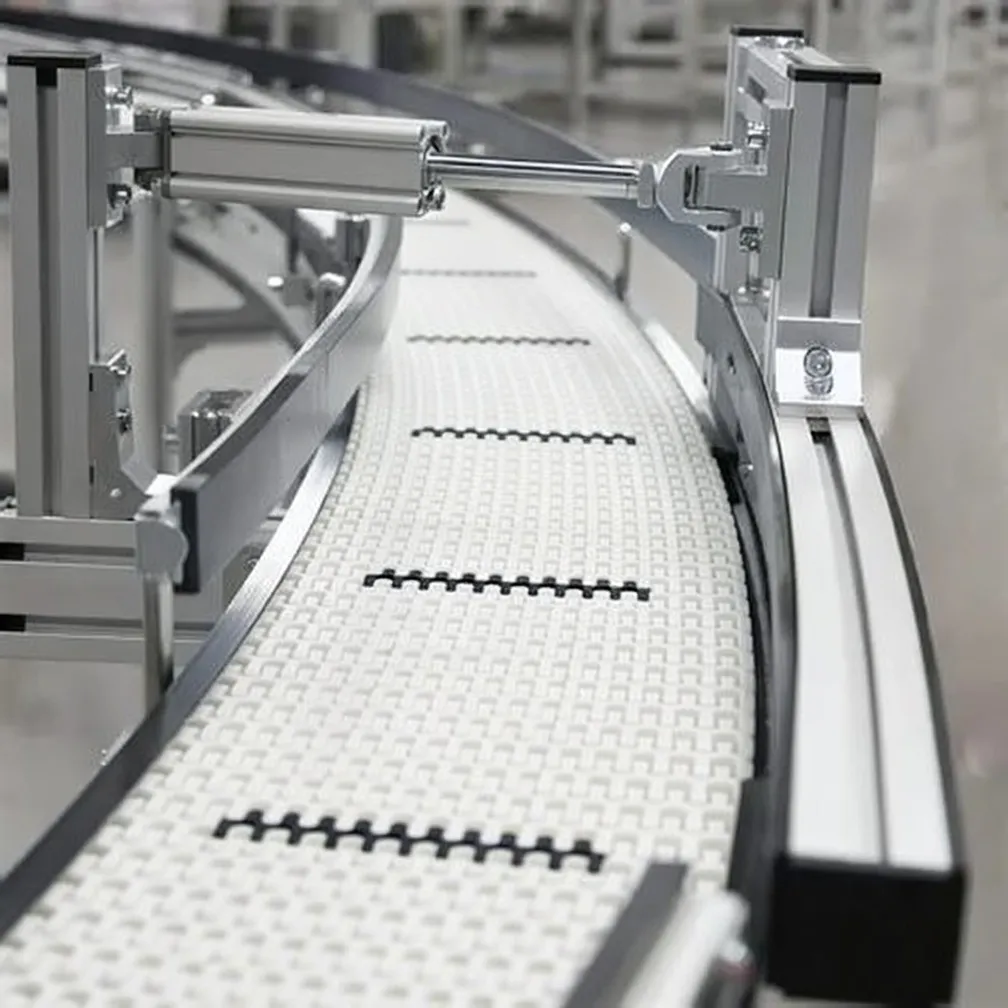 Walk into any major parcel sorting centre in the Midlands or around the M25 corridor and you will notice something that wasn’t there a decade ago: the unmistakable interlocked geometry of plastic modular belts running at speed through multi-tier induction loops and crossbelt sorters. The shift away from traditional flat rubber belts and slat chains has been deliberate, data-driven, and largely irreversible. These operations handle tens of thousands of parcels per hour. When a belt fails mid-sort, the cascading effect on downstream scan tunnels, label applicators, and despatch manifests is not merely inconvenient — it is commercially devastating.
The plastic modular belt has earned its place in this environment not through marketing, but through measurable performance. Its modular construction means individual segments can be replaced in minutes rather than hours. Its polymer composition resists the oils, cleaning agents, and dimensional variation introduced by temperature cycling in large warehouses. Its open-hinge designs allow airflow, drainage, and sensor visibility that solid-surface belts simply cannot provide. For a UK distribution centre processing premium e-commerce or pharmaceutical parcels, these are not minor conveniences — they are operational requirements.
This article draws on over 18 years of hands-on experience specifying, commissioning, and troubleshooting plastic modular belt installations across parcel sorting machinery in the UK and Europe. It covers material science, belt geometry, layout engineering, real-world case studies, and the technical parameters procurement teams need when sourcing from a reliable plastic modular belt supplier.
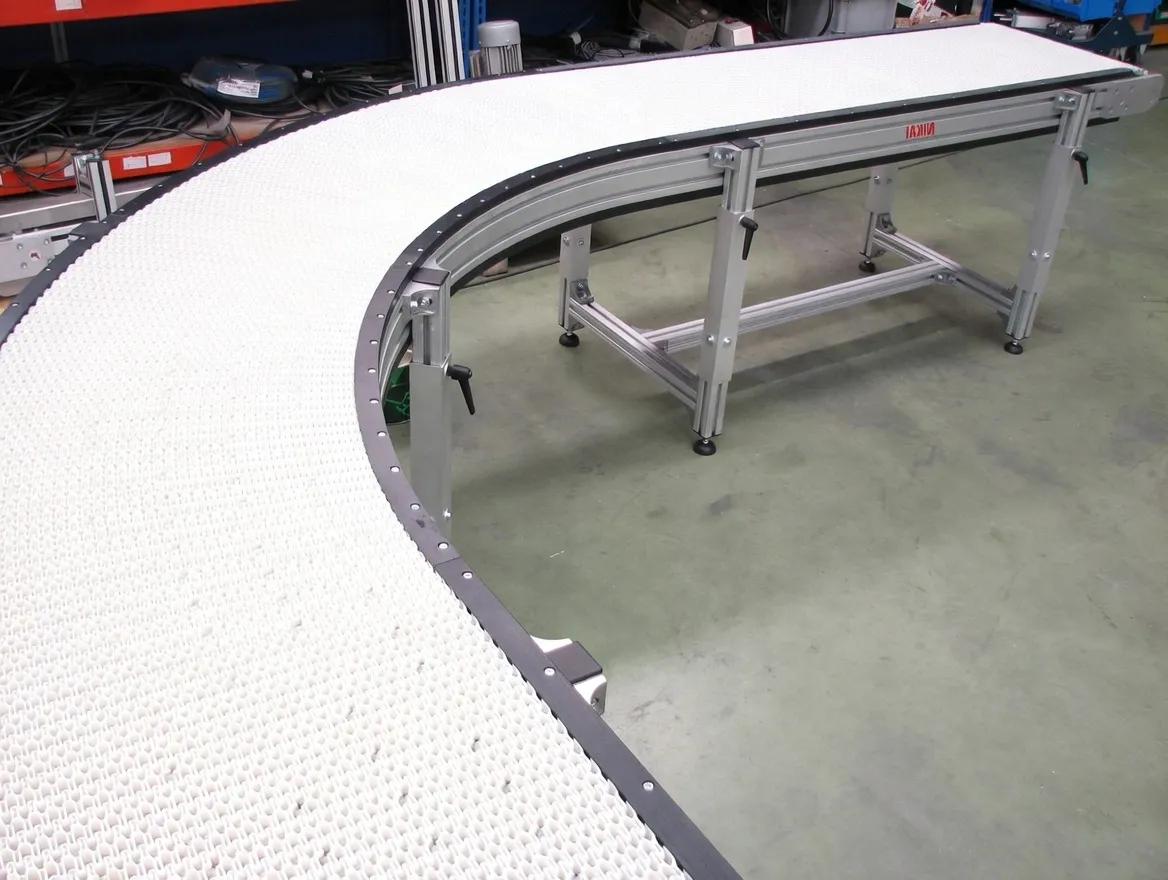
Plastic modular belts on a high-speed parcel sorting main conveyor line — Ever Power custom configuration for UK distribution
Why Parcel Sorting Conveyors Demand More Than Standard Belt Technology
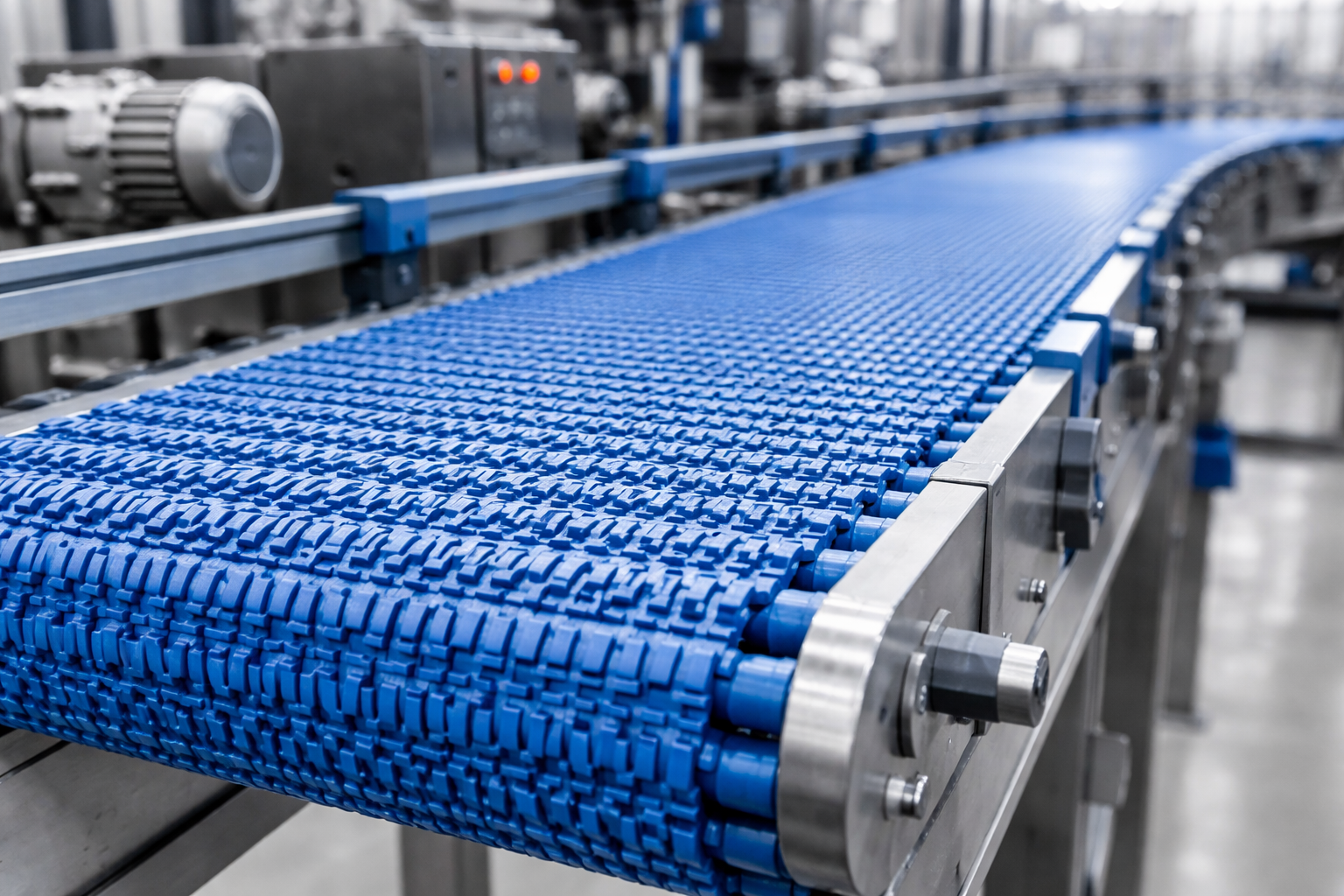 Parcel sorting is arguably the most punishing application category within the broader conveyor belt industry. Unlike food processing lines where loads are predictable and uniform, or automotive assembly where cycle times are fixed, a parcel sorting centre deals with extreme variability. A plastic modular belt on a main induction conveyor might support a 20 kg bagged item one second and a 200 g poly mailer the next — both requiring stable tracking, consistent gap control, and zero slippage relative to the scan tunnel downstream.
Peak trading periods in the UK — Black Friday, the pre-Christmas surge through November and December, and post-New Year returns — drive throughput spikes of 300–400% above baseline. The mechanical stresses imposed on belt joints, drive sprockets, and support wearstrips during these periods are significant. Traditional PVC or rubber flat belts have repeatedly shown edge cracking, surface tracking failure, and carryback accumulation under these conditions. The plastic modular belt, engineered with distributed hinge geometry and high-molecular-weight polymer modules, handles cyclic loading without fatigue accumulation at splice zones — because there are no splice zones.
Add to this the regulatory environment: UK warehouses operating under UKCA/CE machinery directives, the Provision and Use of Work Equipment Regulations (PUWER), and sector-specific hygiene protocols in pharmaceutical logistics — and the case for a modular plastic belt system with predictable, documented performance becomes compelling from a compliance perspective alone.
Material Science Behind the Plastic Modular Belt: What the Polymer Choice Actually Means
Not all plastic is created equal, and in a high-speed parcel sorting environment the polymer formulation of your modular belt modules is a direct engineering decision — not a commodity choice. The dominant materials in production-grade plastic modular belts are polypropylene (PP), acetal (POM), polyethylene (PE), and nylon (PA6/PA66), each with distinct performance envelopes that map to different zones within a parcel sortation system.
In the context of a UK parcel sorting centre, where ambient warehouse temperature swings between 8°C in January and 30°C+ during a summer peak period, the dimensional stability of the belt module becomes critical. A polypropylene module may expand by approximately 0.15% per 10°C rise — manageable in a correctly designed frame with appropriate expansion clearance, but problematic if that clearance was designed for a belt width of 600 mm and the operator later upgrades to an 800 mm configuration without re-engineering the support structure. This is the kind of detail that separates an experienced plastic modular belt applications engineer from a catalogue specification exercise.
Technical Performance Parameters: Plastic Modular Belt for Parcel Sorting Applications
The table below reflects typical specification ranges for plastic modular belts deployed on main sortation conveyors, induction merge lines, and divert sections in UK distribution centres. These figures are validated against installations we have personally commissioned and monitored over multi-year service periods.
Customer Success: How a UK Logistics Operator Eliminated 94% of Unplanned Belt Stoppages
🚚 E-Commerce Fulfilment
✔ Verified Installation
Background: A Regional 3PL Processing 85,000 Parcels Per Day
A third-party logistics provider based in Nottinghamshire — managing e-commerce fulfilment for three major UK retail brands — was experiencing recurring belt failure events on their main sortation line. Operating 18 hours per day, 6 days per week, their existing PVC flat belt system was generating an average of 2.3 unplanned stoppages per week, each lasting 35–55 minutes. At a calculated cost of £4,200 per hour in throughput loss, the annual financial impact exceeded £180,000 — before accounting for labour overtime and carrier SLA penalties.
Ever Power’s UK applications team conducted a full line audit, including speed profiling, parcel weight distribution analysis, and thermal mapping of the conveyor frame. The recommendation: a full conversion to a 600 mm wide flat-top polypropylene plastic modular belt with 25.4 mm pitch on the main induction and sort loop, and acetal (POM) modules on the three high-speed divert transfer points. The conversion was staged across three planned maintenance windows to avoid operational disruption.
Results after 14 months of operation: Unplanned stoppages reduced from 2.3 per week to 0.13 per week — a 94.3% reduction. A single module row replacement event (8 minutes, performed during a scheduled break) replaced the entire previous maintenance regime of belt splice repairs and edge-crack patching. Total maintenance cost in Year 1 post-conversion was 31% lower than Year 1 pre-conversion, inclusive of the module inventory held on-site.
Τι λένε οι πελάτες μας
“We had tried two other belt suppliers before Ever Power. The difference with the plastic modular belt was immediate — the maintenance team spent the first month expecting something to go wrong. It never did. Two years later, we have reordered the same belt configuration for our second site in Coventry.”
— Operations Director, E-Commerce 3PL, Nottinghamshire, UK
“The pharmaceutical ambient-temperature sort line we converted in 2023 handles product packaging that cannot tolerate any contamination from belt particulate. The Ever Power acetal modular belt gave us the documentation package our quality team needed, and the line has run without issue through two FDA audit periods. That peace of mind is worth the premium over generic alternatives.”
— Engineering Manager, Pharmaceutical Logistics, Cambridgeshire, UK
“Our courier hub in Manchester processes around 60,000 items per day. When we expanded capacity by 40% last year, we needed belts that could be retrofitted into our existing frame dimensions. Ever Power’s engineering team designed a custom module width that matched our legacy frame exactly — saved us from a £90,000 structural modification. That is what I call a genuine supplier partnership.”
— Head of Facilities, Parcel Courier Hub, Greater Manchester, UK
Ever Power: Manufacturing Capability & Custom Plastic Modular Belt Solutions
Ever Power operates a fully vertically integrated πλαστική αρθρωτή ζώνη manufacturing facility with injection moulding capacity across PP, POM, HDPE, and PA66 grades. Our engineering team does not offer a catalogue-only service. Every project begins with an application review — belt width, speed requirements, load profile, chemical environment, and integration constraints are all documented before a single module is specified. This approach has allowed us to serve customers across 40+ countries, including a growing number of UK distribution and logistics operators who require documentation packs compatible with BRCGS, ISO 22000, and UKCA marking requirements.
Our customisation capabilities extend to non-standard module widths (to ± 1 mm tolerance), custom surface finishes including friction-top rubber inserts, cleated modules for incline sections, and lane-divider configurations built directly into the belt module geometry. For UK customers operating 24/7 parcel sortation lines, we maintain a fast-dispatch inventory of the most common module configurations, with typical lead times of 3–5 working days ex-works for standard orders and 10–15 working days for custom configurations.
We also provide full belt assembly services — modules, hinge rods, and drive sprockets supplied as a matched set, pre-assembled to your specified belt length, reducing installation time at your facility. For distribution centre operators managing lean maintenance teams, this matters. Every hour your engineering staff spend on belt assembly is an hour not spent on preventive maintenance of the broader sortation system.
Frequently Asked Questions: Plastic Modular Belts for UK Parcel Sorting Conveyors
Ready to Upgrade Your Parcel Sorting Conveyor with a High-Performance Plastic Modular Belt?
Our UK-facing applications engineering team is ready to review your conveyor specification and recommend the optimal plastic modular belt configuration — from single-zone retrofits to full-line system reviews. No obligation, no generic catalogue response.
επεξεργασία από gzl