
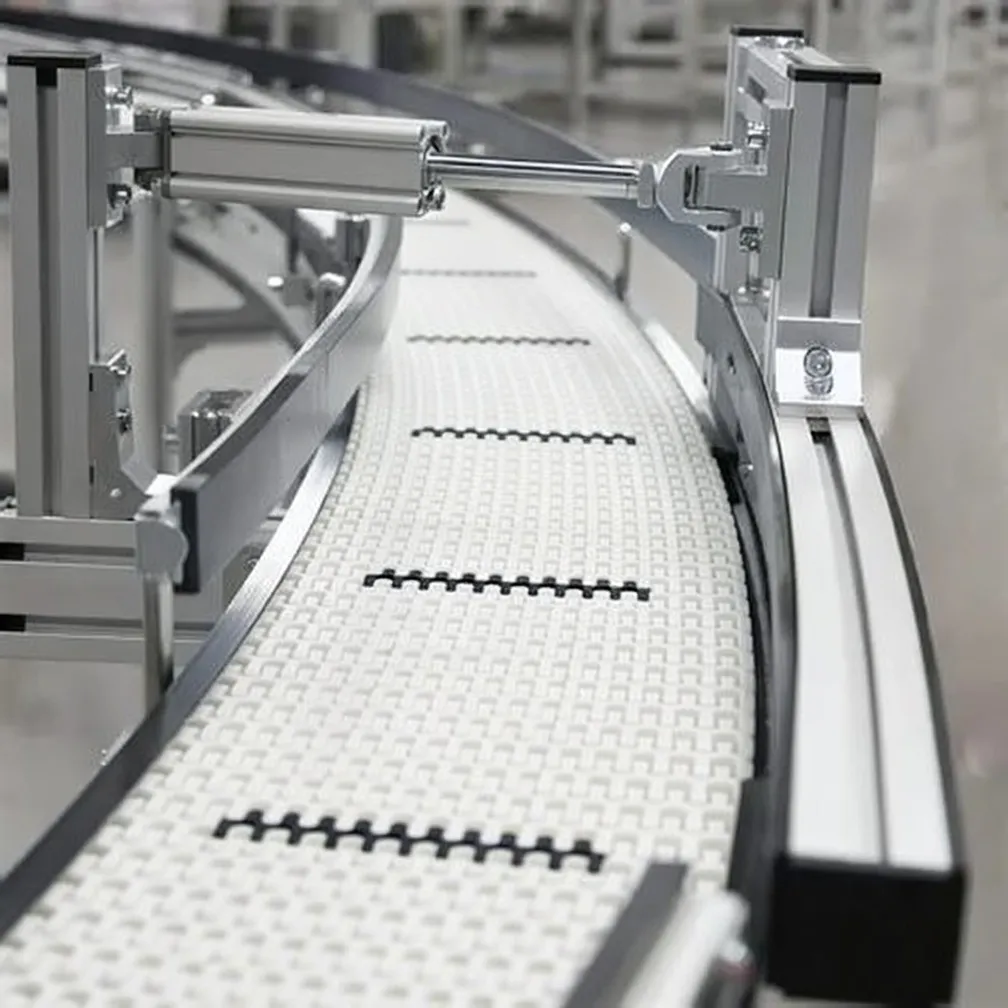
 Plastic Modular Belt for Snack Food Processing Lines: The Complete Engineering Guide for UK Manufacturers
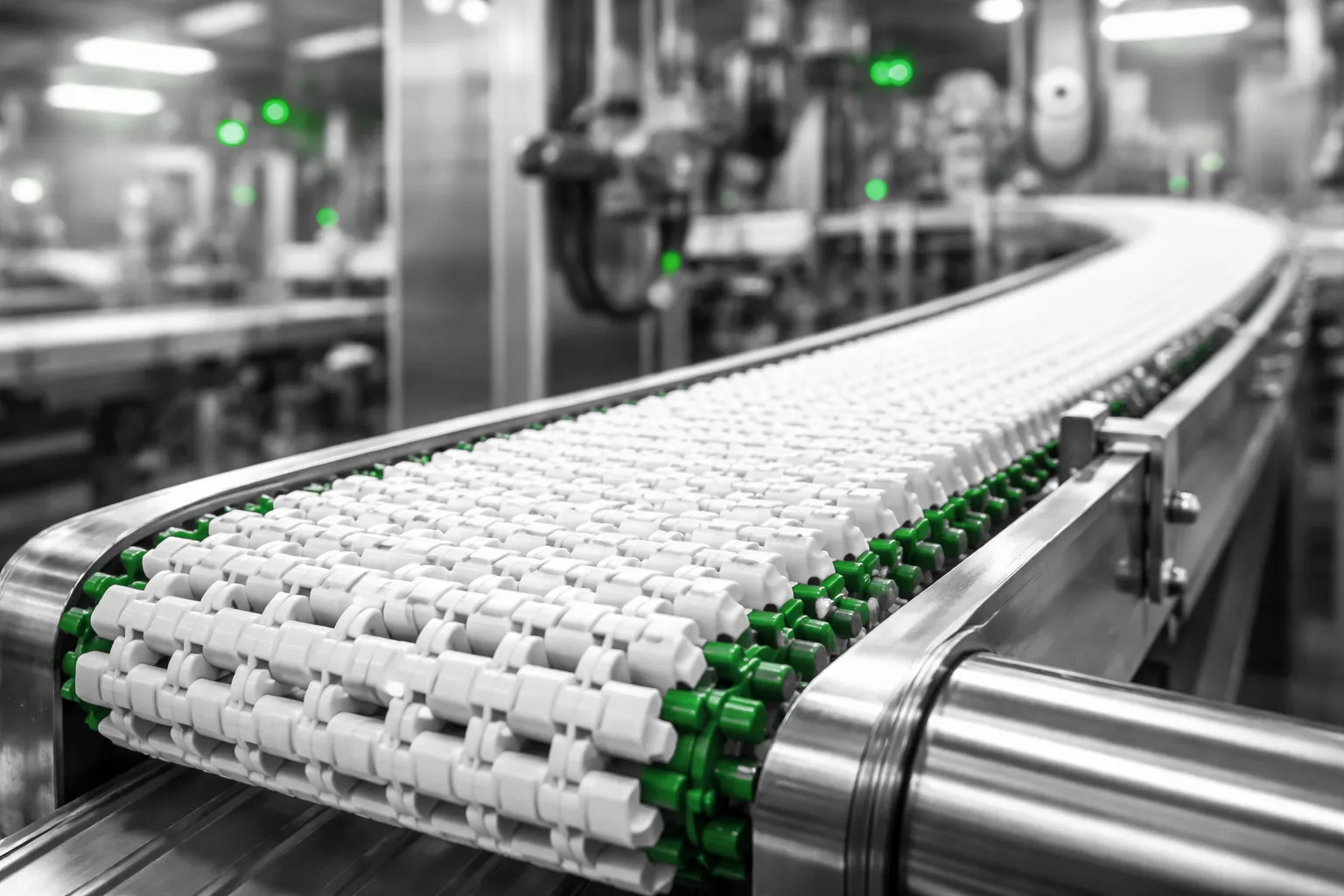 Walk through any major snack food factory in the United Kingdom — whether it is a crisps facility in the Midlands, a nut roasting plant in the North West, or a biscuit production site in Scotland — and you will almost certainly find plastic modular belts running at the heart of the conveying system. The reasons are not difficult to understand. Snack food processing demands conveyor technology that can handle high-speed product transfer, aggressive washdown routines, variable temperature zones, and strict hygiene audits, all at the same time, without interruption.
Unlike traditional rubber or fabric belts, a plastic modular conveyor belt is built from individual interlocking plastic modules — typically manufactured from food-grade polypropylene, polyethylene, or acetal — that snap together to form a continuous, open-mesh or solid-surface conveying surface. This modular architecture means that a single damaged section can be replaced in minutes rather than hours, eliminating the costly scheduled shutdowns that rubber belt systems frequently require. For a snack food manufacturer operating three shifts a day, six or seven days a week, that difference in maintenance downtime directly translates into measurable production revenue.
At Ever Power, we have spent more than eighteen years engineering plastic modular belt solutions specifically for the food processing sector. The knowledge collected in this guide is drawn directly from installations across the UK and international markets — covering everything from flavour coating drum exits to cooling tunnel conveyors, packaging infeed systems, and multi-tier elevation transfers. If you are specifying a new line or troubleshooting an existing installation, this is the resource you need.
Ever Power plastic modular belts in an active UK snack food production environment — open-mesh design ensures rapid oil drainage and hygiene compliance.
Why Snack Food Processing Sets the Toughest Standards for Conveyor Belts
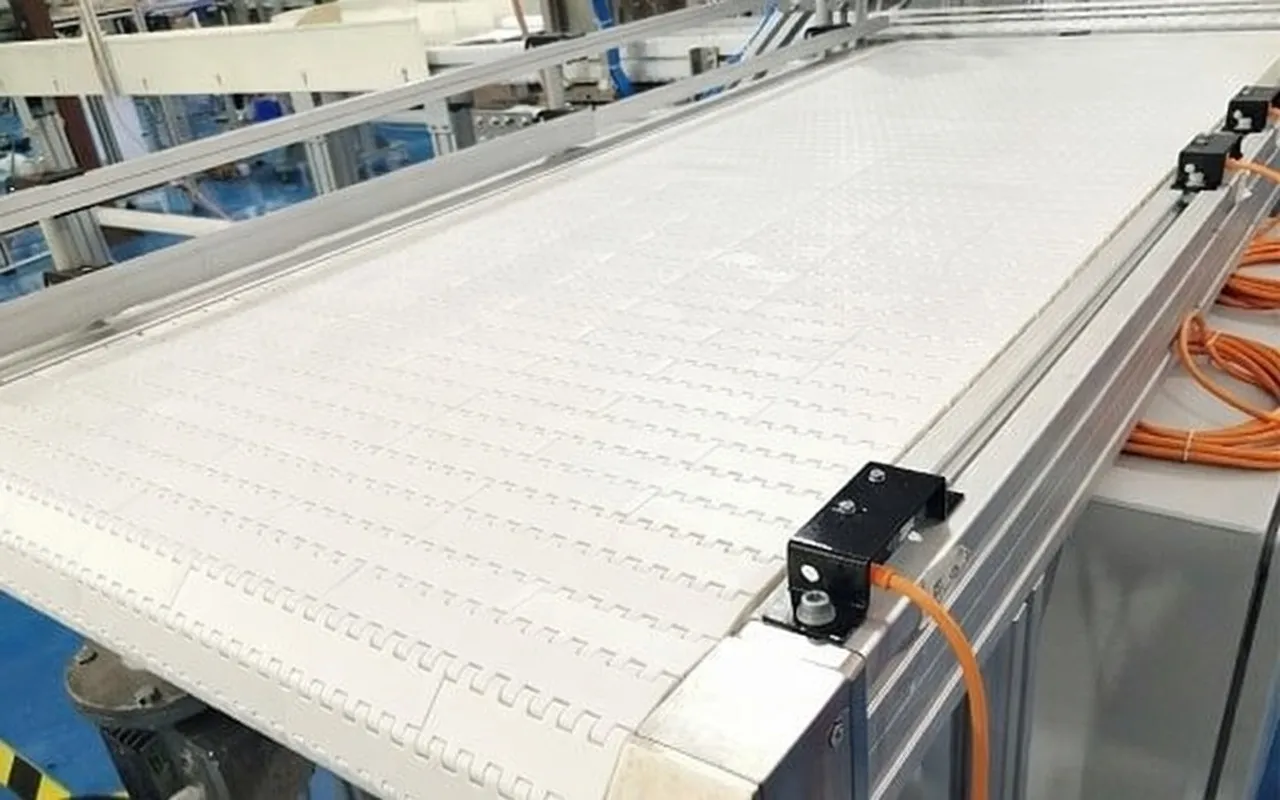 The snack food industry sits at a peculiar intersection of demanding process conditions. A single production line may need to handle frying temperatures of 180 °C at one end, blast cooling at -5 °C downstream, salt and seasoning dusting in between, and then product accumulation ahead of high-speed packaging equipment — all within a few dozen metres of conveyor run. Rubber belts absorb oils and salts, degrade rapidly under thermal cycling, and trap bacteria in surface cracks. Fabric belts are worse: they are virtually impossible to sanitise to BRC or SQF standard without being removed and autoclaved, which no production manager wants to schedule weekly.
Plastic modular belts answer every one of these challenges structurally. The smooth or textured module surfaces do not absorb flavour oils or seasoning dust. Open-hinge designs allow high-pressure washdown water and sanitising chemicals to reach every part of the belt without the need for removal. The belt’s inherent dimensional stability across a wide temperature range — typically -40 °C to +120 °C for polypropylene grades, and up to +150 °C for specialised acetal modules — means a single belt specification can run from the fryer exit all the way to the packaging infeed without thermal damage or dimensional creep.
For UK food manufacturers operating under the Food Safety Act 1990, the UK Food Standards Agency guidelines, and major retailer codes of practice such as TESCO TFM or M&S Plan A, selecting a plastic modular conveyor belt with certified food-safe materials is not a choice — it is a non-negotiable compliance requirement. All Ever Power food-grade modules carry EC 1935/2004, FDA 21 CFR, and REACH compliance documentation as standard.
Παράμετροι Τεχνικής Απόδοσης
Verified specifications for Ever Power plastic modular belts deployed in snack food applications
| Παράμετρος | PP (Food Grade) | PE (HDPE) | Ακετάλη (POM) |
|---|---|---|---|
| Εύρος θερμοκρασίας λειτουργίας | -30 °C to +120 °C | -40 °C έως +90 °C | -40 °C to +150 °C |
| Αντοχή σε εφελκυσμό | 30–35 MPa | 25–30 MPa | 60–70 MPa |
| Επιλογές βήματος ζώνης | 12.7 / 25.4 / 38.1 mm | 12.7 / 25.4 mm | 12.7 / 19.05 / 25.4 mm |
| Μέγιστο πλάτος ιμάντα | Up to 3,000 mm | Έως 2.400 mm | Έως 2.400 mm |
| Χημική αντοχή | Άριστο (οξέα, αλκάλια) | Καλός | Excellent (solvents) |
| Ανοιχτή περιοχή (%) | 0% – 52% (configurable) | 0% – 45% | 0% – 52% |
| FDA / EC 1935 Compliant | ✅ Yes | ✅ Yes | ✅ Yes |
| Typical Lifespan (food env.) | 3–6 years | 2–4 years | 5–9 years |
How a Plastic Modular Belt Actually Works — Material Science & Design Principles
The Interlocking Module Architecture
Each plastic modular belt module is injection-moulded to precise dimensional tolerances, with male and female hinge eyes on alternating rows. A connecting rod — made from polypropylene, stainless steel, or acetal depending on the application — passes through the aligned hinge eyes of adjacent rows to form the belt. The result is a belt that is infinitely scalable in width (by adding modules across the belt width) and length (by adding rows along the belt run). Critically, the design creates a positive drive relationship between the belt and the sprocket teeth on the drive shaft, eliminating the belt slip and stretch that leads to tracking failures in friction-driven rubber belt systems.
Material Selection for Food Safety
The polymer selected for snack food plastic modular belt applications must satisfy both mechanical and regulatory criteria simultaneously. Polypropylene (PP) is the workhorse material — chemically inert, easy to colour for metal-detection visibility (typically blue for food lines), and cost-effective for high-volume belt runs. Acetal (polyoxymethylene, POM) offers superior rigidity, hardness, and wear resistance at elevated temperatures, making it the preferred material for fryer exit and oven transfer zones where PP would begin to creep. HDPE modules are selected where product impact loading is high and where maximum food compliance certification depth is needed — for example on direct-contact organic certified lines.
The coloured module strategy deserves particular mention in the context of UK food manufacturing. Under metal detection protocols on snack lines, plastic belt fragments — should any occur during belt damage — must be detectable. Ever Power’s blue food-grade plastic modular belts are formulated to be detectable by standard X-ray inspection systems at concentrations that comply with retailer-mandated foreign body control specifications. This seemingly small engineering choice carries significant weight during BRC audits and during the annual foreign body risk assessments that UK retail suppliers must submit.
Product Advantages: Why UK Snack Manufacturers Choose Plastic Modular Belts
Δυνατότητα επισκευής σε αρθρωτά μέρη
Replace individual damaged modules in under 10 minutes without specialist tools — no full belt replacement, no extended downtime.
Superior Hygiene
Non-porous surfaces and open-hinge access allow full CIP/COP washdown to BRC, SALSA, and SQF hygiene standards without belt removal.
Thermal Stability
Consistent performance from -40 °C to +150 °C depending on material grade — no thermal creep, no belt stretch, no tracking drift.
Compliance-Ready
Full EC 1935/2004 and FDA 21 CFR documentation supplied as standard — simplifies retailer audits and Assured Food Standards submissions.
Full Customisation
Custom widths, pitches, surface textures, flight heights, and material grades to match any snack line configuration — including retrofit replacements for legacy belts.
Lower Total Cost
5–9 year operational lifespan (acetal grades), combined with module-level repair capability, delivers 40–60% lower total cost of ownership versus rubber belt alternatives over a 5-year production horizon.
Client Success Story: Tyrrells-Style Artisan Crisps Producer, West Midlands, UK
Η Πρόκληση
A premium artisan crisp manufacturer operating from a dedicated production facility in the West Midlands was experiencing a recurring problem with their fryer exit conveyor. The PVC-coated fabric belt they had been running since 2018 was absorbing sunflower oil into the belt substrate, creating a persistent harbouring point that caused ATP bioluminescence readings to fail at monthly hygiene audits. The belt also required full replacement every 14 months at a cost of approximately £4,200 per belt, across four parallel frying lines. Annual belt replacement cost alone exceeded £16,800, before accounting for the production time lost during each changeover (typically 4 hours per belt).
Their Technical Director contacted Ever Power after finding our specification guide for fryer-line applications. Following a site visit and a thermal survey of the fryer discharge zone, we recommended a food-grade polypropylene plastic modular belt with 45% open area, 25.4 mm pitch, and stainless steel connecting rods — a belt rated to 130 °C continuous service temperature that would handle the 115–120 °C product temperatures at the fryer exit without dimensional instability.
The Result
Eighteen months after installation across all four fryer lines, the manufacturer reported zero ATP hygiene failures attributable to belt harbouring — a complete elimination of the previous recurring non-conformance. Belt maintenance cost dropped to module-level repairs totalling less than £380 per line per year. When the Technical Director conducted an ROI calculation for their next BRC audit review, the switch to plastic modular conveyor belts had saved the business over £62,000 across the production period, after accounting for installation costs, spare module stockholding, and the value of recovered production time.
Τι λένε οι πελάτες μας
“After switching to Ever Power plastic modular belts on our fryer exits, our monthly hygiene audits became genuinely straightforward. The oil simply drains through the belt — there’s nothing to harbour. I wish we’d changed years earlier.”
“We run a nut roasting and glazing line in Lancashire and the acetal modular belts from Ever Power have now done four years without a single full replacement. The anti-stick surface on the glazing conveyor was the key feature — product transfer is clean, and our waste rate dropped significantly within the first month.”
“As a Scottish shortbread and biscuit manufacturer supplying major UK supermarkets, we need reliable BRC documentation for everything that touches product. Ever Power provided complete EC 1935 compliance packs within 48 hours of our first enquiry. The belt itself has performed without issue for over three years on our oven exit conveyor.”
Ever Power Manufacturing & Custom Engineering Capability
At Ever Power, our manufacturing facilities are equipped with precision injection moulding presses calibrated to ISO tolerances for every standard and custom module geometry. Our engineering team handles complete custom plastic modular belt design projects from initial enquiry through to on-site commissioning support — including retrofit designs for legacy frame systems where the original belt supplier is no longer active or where standard belt widths and pitches do not match the existing conveyor structure.
Custom capabilities include: non-standard module pitches from 8 mm to 75 mm; bespoke flight heights and configurations for incline conveying of loose snack products; mixed-material belt assemblies combining PP modules with acetal rods for specific temperature profiles; antimicrobial additive incorporation for high-care zone applications; and custom colour coding beyond the standard blue food-line specification.
Our Customisation Services
Bespoke belt width from 100 mm to 3,000 mm
Custom module pitch, open area & surface texture
Retrofit design for any existing conveyor frame
Full EC 1935 / FDA compliance documentation pack
Side-flex & radius turn belt design capability
Antimicrobial & X-ray detectable module formulations
Fast delivery: standard belts despatched in 7–10 working days to UK addresses
Serving UK Snack Food Manufacturers: Delivery, Compliance & Support
The United Kingdom hosts one of Europe’s most sophisticated snack food manufacturing sectors. Major production hubs in the East Midlands (crisps and extruded snacks), Yorkshire (biscuits and cereal bars), Lancashire (nuts and dried fruit), and the Central Belt of Scotland (shortbread and oatcakes) all share common conveyor engineering challenges — and all have become active markets for plastic modular belt technology over the past decade. Industry bodies including the Food and Drink Federation (FDF) and the British Retail Consortium (BRC) have progressively tightened hygiene and allergen-control standards, accelerating the transition away from porous rubber and fabric belt materials in direct-contact food conveying zones.
Ever Power supplies plastic modular belts to UK snack food manufacturers with standard lead times of 7–10 working days for in-stock configurations and 3–5 weeks for custom-engineered belt assemblies. All shipments to UK destinations include full material certification, dimensional inspection reports, and compliance documentation conforming to current UK retained EU food contact materials legislation — ensuring a smooth audit trail for BRC technical file submissions.
Technical enquiries from UK production engineers and procurement teams receive a dedicated response from our applications team — typically within one working day. For complex retrofit or new-line specification projects, we offer a complimentary belt selection and sizing service, providing a recommended specification with justification and a detailed price and delivery quote. Contact us at [email protected] to begin the conversation.
Plastic Modular Belt vs. Rubber Belt vs. Woven Mesh: Head-to-Head Comparison
Snack food processing environment — direct product contact zones
| Criterion | Πλαστική αρθρωτή ζώνη | Λαστιχένια ζώνη | Woven Metal Mesh |
|---|---|---|---|
| Hygiene / Washdown | Excellent ✅ | Poor ❌ | Good ⚠️ |
| Oil/Seasoning Resistance | Excellent ✅ | Poor ❌ | Good ⚠️ |
| Temperature Range | -40 °C to +150 °C ✅ | -20 °C to +80 °C ⚠️ | Wide range ✅ |
| Repair Without Full Replacement | Yes ✅ | No ❌ | Limited ⚠️ |
| Salt/Chemical Corrosion | Immune ✅ | Moderate ⚠️ | High risk ❌ |
| Συνολικό Κόστος 5 Ετών | Lowest ✅ | Highest ❌ | Medium ⚠️ |
Συχνές ερωτήσεις
Common questions from UK snack food engineers and procurement managers