Industrial Conveyor Solutions · Chemical Packaging
Plastic Modular Belt on Chemical Packaging Lines: The Complete Engineering Guide for UK Manufacturers
How corrosion-resistant, food-grade modular belt technology is transforming chemical packaging operations — from drum filling stations to pallet dispatch — across British industry.
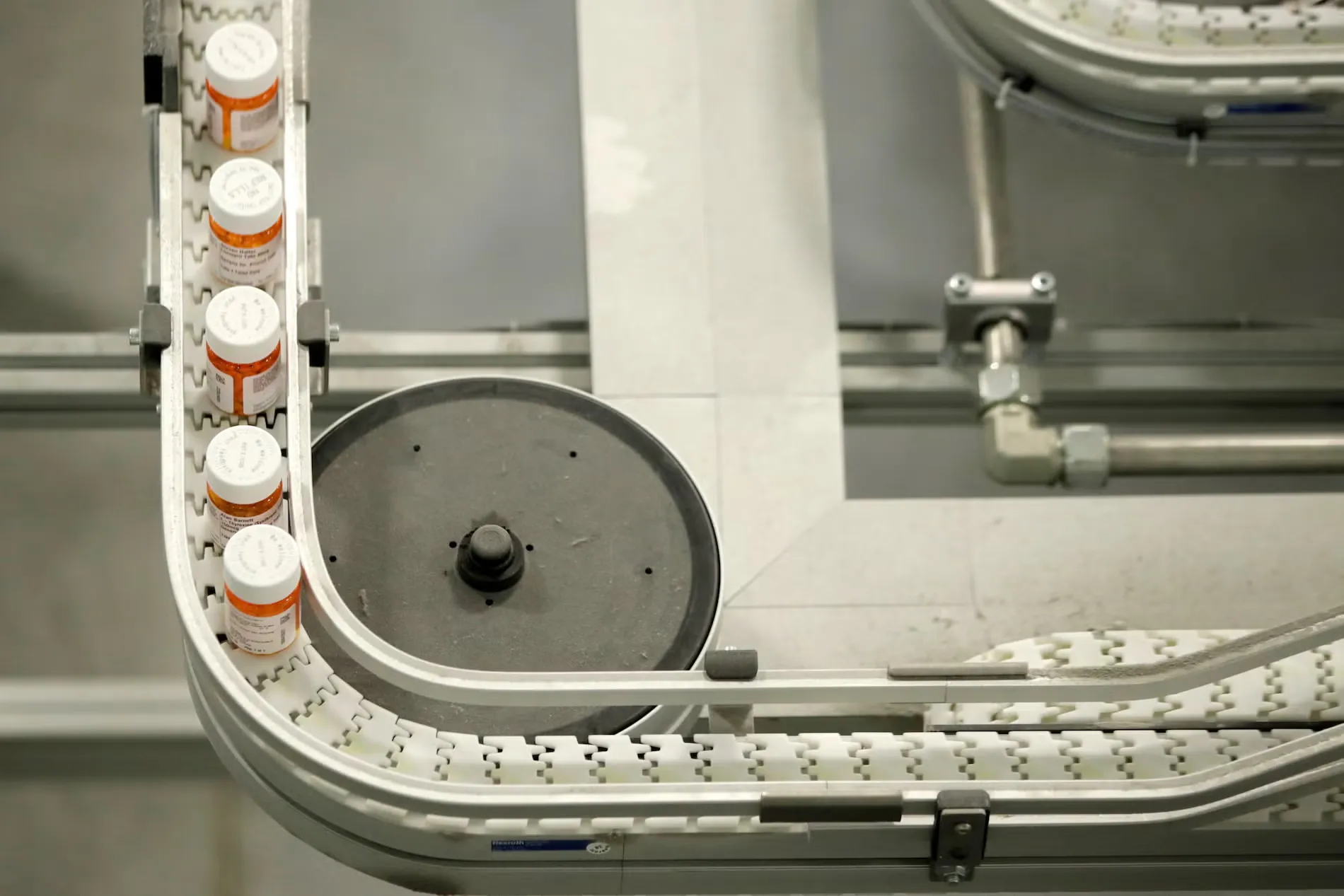 Chemical packaging lines operate under conditions that destroy ordinary conveyor systems within months. Caustic splashes, solvent vapours, high-pressure washdowns and strict regulatory demands combine to create one of the most punishing environments in British manufacturing. Yet plastic modular belt conveyor systems — engineered from corrosion-resistant polymers, assembled in snap-fit interlocking modules, and configured to the precise geometry of each filling or labelling station — are proving themselves as the backbone of modern chemical packaging operations across the United Kingdom. Whether a site is bottling household bleach in Cheshire, canning industrial lubricants in the West Midlands, or palletising agrochemical drums in East Anglia, the right plastic modular belt specification can reduce downtime, slash maintenance labour, satisfy ATEX and COSHH requirements simultaneously, and extend conveyor service life well beyond a decade.
This guide draws on more than 18 years of hands-on application engineering experience to walk you through the material science, the mechanical principles, the selection logic, and the real operational data that separates a well-specified plastic modular belt installation from one that fails within its first operating year.
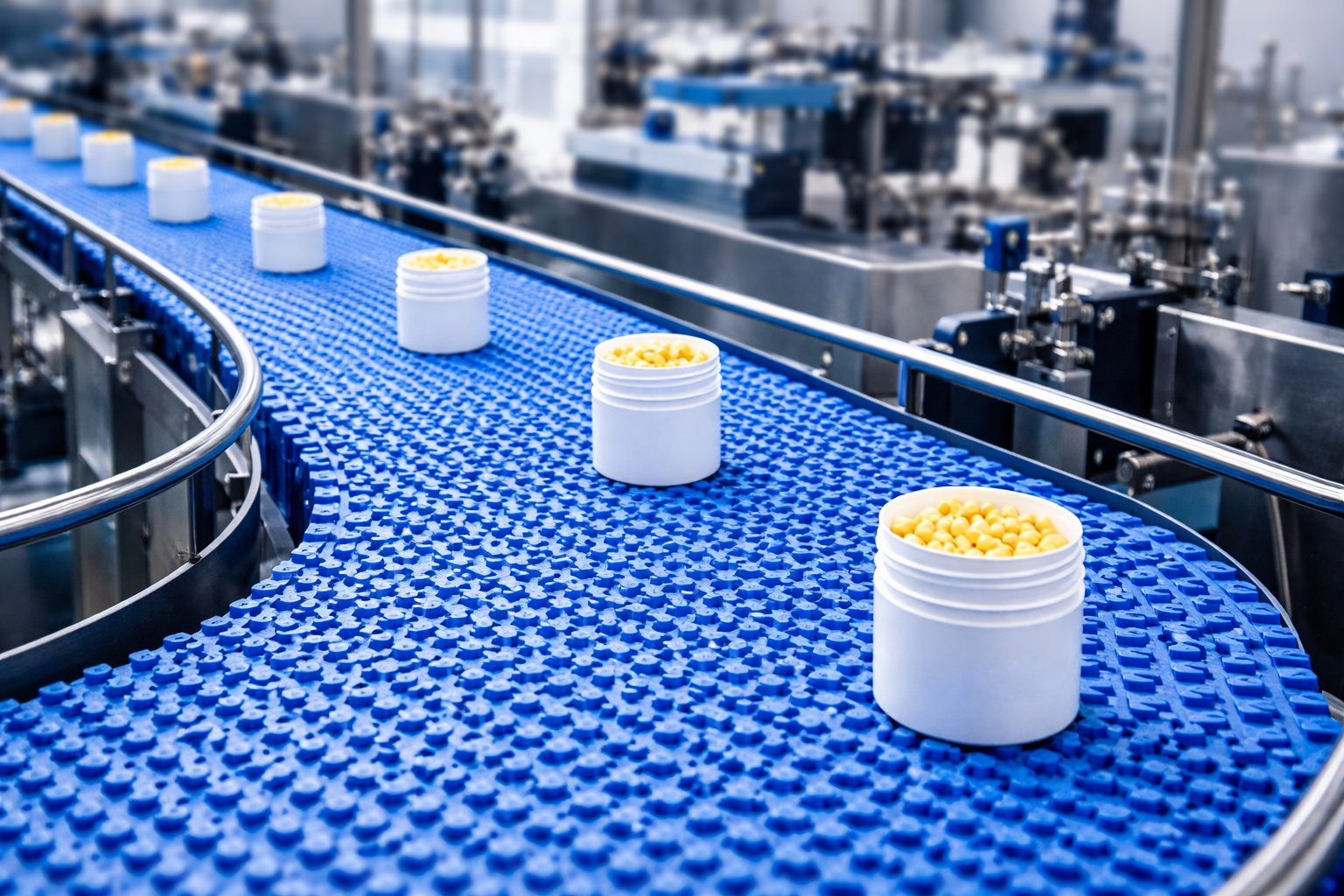
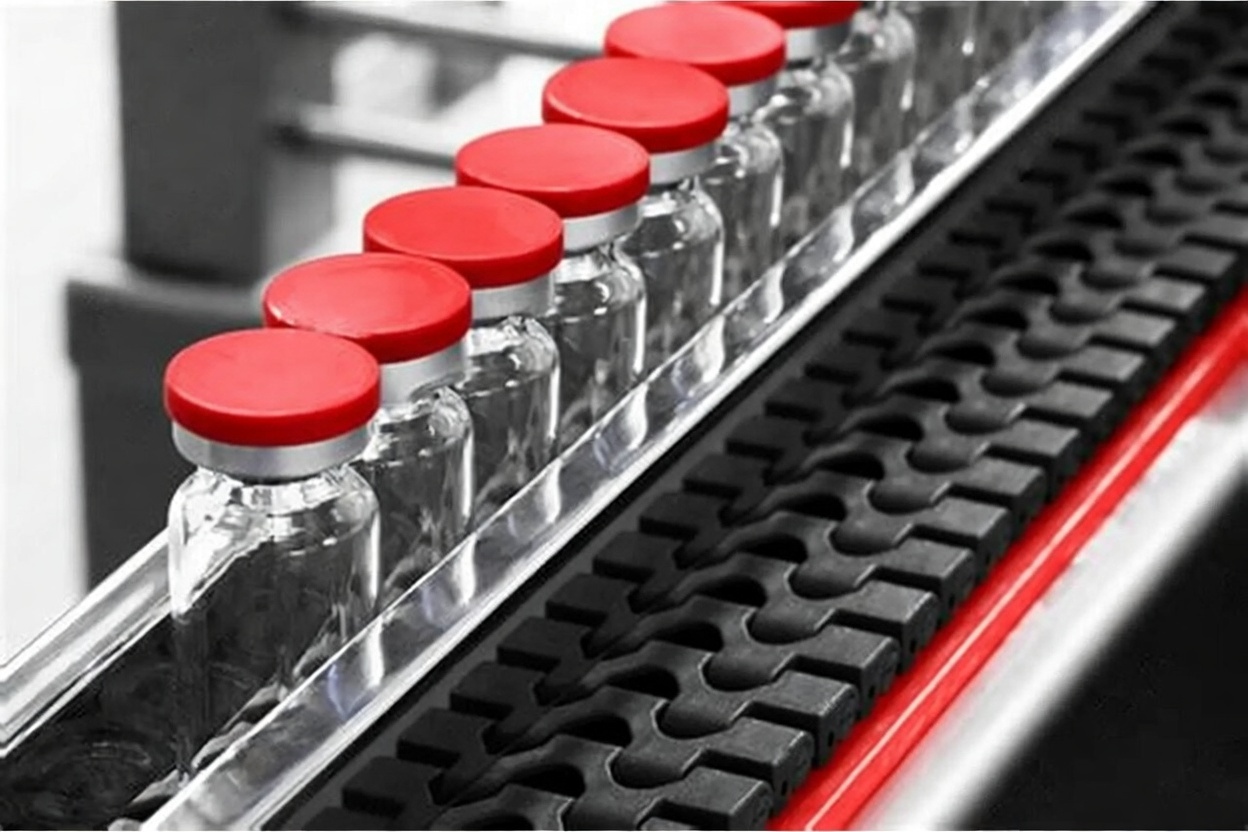 Plastic modular belt conveyor on a chemical drum filling and packaging line — Ever Power, UK supply
Why Chemical Packaging Lines Cannot Compromise on Belt Material
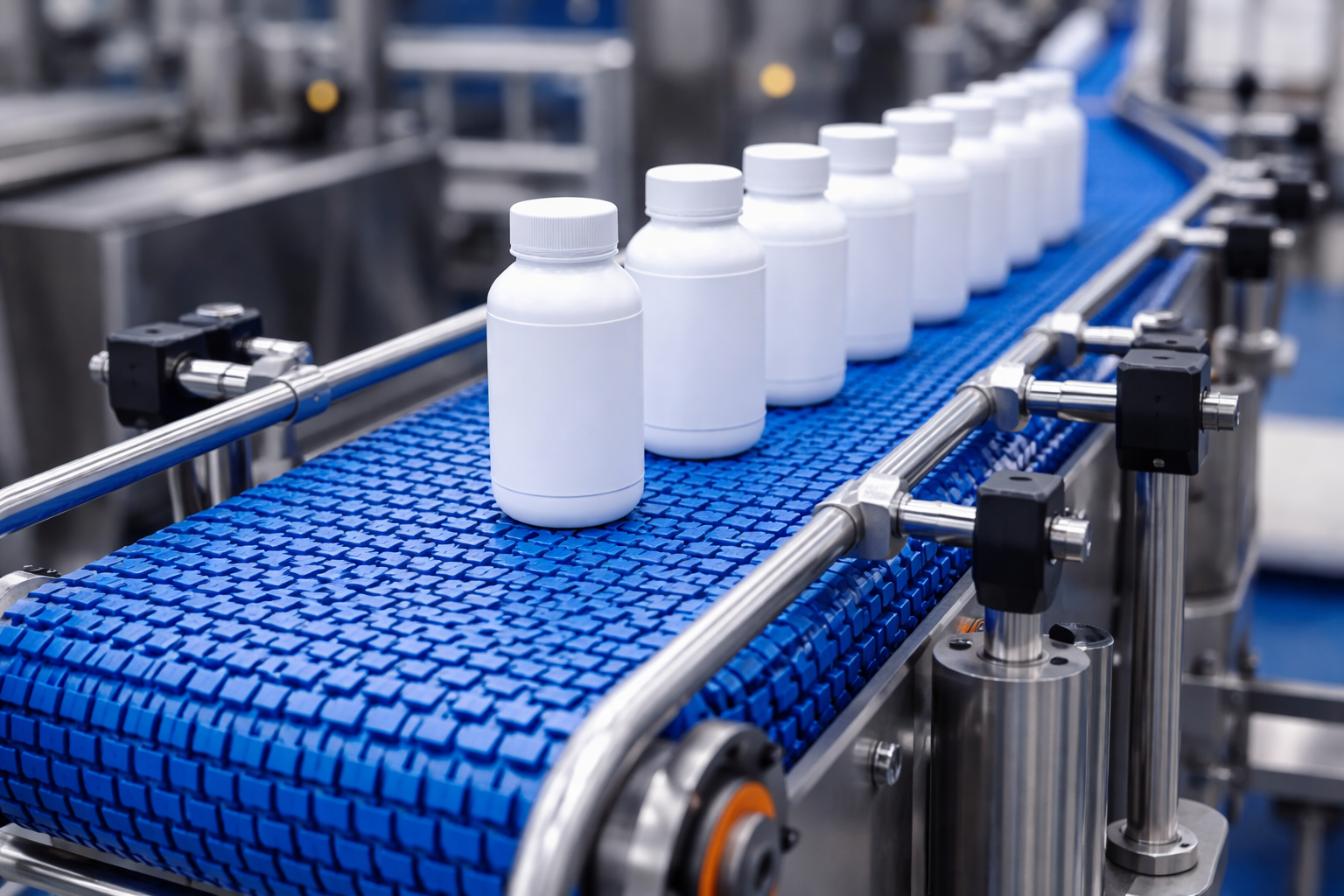 The chemical packaging sector in the United Kingdom is governed by a web of regulations — COSHH, REACH, ATEX Directive 2014/34/EU, and sector-specific guidance from the Health and Safety Executive — all of which place direct obligations on the conveyor systems that move filled containers through production. Metal-link belts corrode rapidly when exposed to even dilute acids or alkalis. Rubber belts absorb solvents, swell, crack and shed particulate contamination. Standard PVC belts become brittle under UV sterilisation lamps and discolour when contacted by bleach. None of these failure modes is acceptable in a packaging environment where a spilled batch or a contaminated product can trigger a product recall, an HSE investigation, and substantial reputational damage.
Plastic modular belt systems, by contrast, are manufactured from chemically inert polymers — principally acetal (POM), polypropylene (PP), polyethylene (PE), and nylon (PA6) — that resist the full pH range from strong acids to concentrated alkalis. Their open-hinge construction allows washdown water and chemical residues to drain freely, eliminating the pooling that breeds microbial contamination and accelerates metal fatigue. The interlocking module design means a single damaged segment can be replaced in under ten minutes without removing the entire belt from the conveyor frame, reducing scheduled maintenance windows and keeping production running.
Engineering Principles: How Plastic Modular Belts Actually Work
▶ Interlocking Module Architecture
Each plastic module features precision-moulded hinge rods that connect laterally across the belt width. Drive sprockets engage the hinge rod pockets directly, transmitting torque without the tension spikes that destroy fabric belts. The result is a positive-drive conveyor that maintains registration accuracy to within ±1 mm — critical for cap-tightening and label-apply stations on chemical filling lines.
▶ Polymer Selection Logic
Acetal (POM) modules deliver exceptional stiffness and dimensional stability in dry chemical environments. Polypropylene resists both strong acids and alkalis, making it the standard choice for bleach, caustic soda and phosphoric acid lines. Polyethylene offers outstanding impact resistance for heavy drum handling. Nylon grades with oil impregnation self-lubricate hinge joints, cutting maintenance intervals dramatically in high-throughput lines.
▶ Open-Hinge Drainage
The open-hinge geometry means that liquid spills, cleaning agents and condensate fall through the belt rather than pooling on its upper surface. This eliminates the warm, damp micro-environments beneath traditional rubber belts that harbour bacteria, fungi and chemical residues — a compliance benefit that resonates directly with UK factory inspectors reviewing COSHH risk assessments.
Τεχνικές Προδιαγραφές & Παράμετροι Απόδοσης
| Παράμετρος | PP Grade | POM Grade | PE Grade |
|---|---|---|---|
| Belt pitch (mm) | 12.7 / 25.4 / 38.1 | 12.7 / 25.4 | 25.4 / 38.1 |
| Max working temp (°C) | +100 | +90 | +80 |
| Min working temp (°C) | -10 | -40 | -30 |
| Chemical resistance (pH) | 1 – 14 | 5 – 13 | 2 – 14 |
| Max belt width (mm) | up to 1,200 | up to 1,000 | up to 1,200 |
| Max load (kg/m²) | 200 | 280 | 250 |
| Drive speed (m/min) | up to 60 | up to 80 | up to 55 |
| ATEX suitability | ESD grade available | ESD grade available | ESD grade available |
| Colour options | White, Blue, Grey | White, Natural | White, Black |
Six High-Value Application Scenarios on Chemical Packaging Lines
⚠
1. Drum & Bottle Filling Stations
Filling stations are splash zones. The plastic modular belt running beneath nozzle heads must tolerate repeated direct chemical contact without swelling, delaminating or losing dimensional stability. PP flat-top belts with closed-hinge construction are the dominant choice here, offering both spill containment and easy decontamination between product changeovers — a major benefit on multiproduct lines packing different hazardous chemicals on the same shift.
📌
2. Cap-Tightening & Sealing Conveyors
Rotary cap-tightening heads apply significant downward torque to containers. The conveyor beneath must hold the container perfectly still during engagement — any vibration or lateral drift causes cross-threading and product leaks. Modular belts with low-friction flat tops and precisely controlled conveyor tension deliver the stability these stations demand, especially when handling round HDPE containers that are prone to spinning if the belt surface tension is not correctly balanced.
📜
3. Label Application & Print-and-Apply
Hazardous substance labelling under CLP Regulation (EC) No 1272/2008 is legally mandatory in the United Kingdom. Label-apply machines require steady, consistent container presentation — a plastic modular belt with a matt non-reflective surface prevents sensor false-triggers, while the precise sprocket pitch ensures consistent container spacing regardless of line speed, keeping print heads firing at exactly the right moment.
📦
4. Checkweigher & Inspection Stations
Dynamic checkweighers and X-ray inspection units sit directly in the production stream and require extremely consistent belt tension to prevent vibration interference with load cell readings. Modular belts manufactured to tight module-to-module weight tolerances produce far less dynamic imbalance than rubber or fabric belts, translating directly into tighter weight-reading variance and fewer false rejects — a statistic that justifies their premium cost within the first operating quarter for any line running at 120+ containers per minute.
📈
5. Accumulation & Buffering Tables
When a downstream packing machine falls behind, chemical containers back up. A zero-pressure accumulation table built with low-friction plastic modular belt prevents the column pressure that crushes lightweight HDPE and PET containers — a common and costly defect on busy UK chemical lines that has been virtually eliminated since the sector moved away from metal roller conveyors to modular polymer belt accumulation systems.
🏢
6. End-of-Line Case Packing & Pallet Dispatch
Heavy PE-grade plastic modular belts rated to 250 kg/m² handle full drums, shrink-wrapped multipack trays and secondary cardboard cases at the end of chemical packaging lines. Their side-flexing variants negotiate tight radius turns between filling halls and dispatch bays without the risk of the belt walking or tracking off-centre — a persistent headache with steel chain conveyors in the same role.
Why British Chemical Manufacturers Specify Plastic Modular Belts
✅
Full Chemical Inertness
PP and PE grades resist the complete range of industrial chemicals, from concentrated bleach and sulphuric acid to aromatic solvents and hydraulic fluids.
✅
Δυνατότητα επισκευής σε επίπεδο ενότητας
Replace only the damaged module in under 10 minutes — no belt re-tensioning, no conveyor disassembly. Annual maintenance labour drops by 60–70% versus steel-link systems.
✅
ATEX & ESD Compliance
Electrostatic-dissipative grades safely handle flammable solvent packaging in Zone 1 and Zone 2 ATEX classified areas — a non-negotiable requirement in UK petrochemical and solvent packing facilities.
✅
10+ Year Service Life
Documented service lives of 10–15 years on UK chemical lines running two or three shifts per day, representing dramatically lower whole-life conveyor cost than any alternative belt technology.
✅
Washdown Ready
Open-hinge or flush-grid designs tolerate high-pressure hot-water washdown at 80°C, meeting GMP standards and facilitating the rapid product changeovers demanded by multiproduct chemical packaging sites.
✅
Custom Widths & Profiles
Manufactured to customer-specified widths from 150 mm to 1,200 mm, with raised-rib, flat-top, grid, side-flexing and radius belt configurations available to suit any production layout.
Customer Success: Household Chemicals Manufacturer, West Midlands, UK
Client: A mid-sized household cleaning products manufacturer operating three high-speed filling lines in Walsall, West Midlands. The client produces bleach, multi-surface sprays and industrial degreasers, running approximately 250 SKUs across two 12-hour shifts.
Challenge: The existing rubber conveyor belts were failing on average every 14 months due to bleach degradation and solvent swelling. Unplanned stoppages averaged 6.5 hours per month across all three lines. The cost of belt replacement, maintenance labour, and lost production was running at over £85,000 per year. Additionally, the rubber belts could not pass the COSHH risk assessment review conducted by the site’s environmental health officer, who flagged rubber particulate contamination risk on the product contact conveyor beneath the filling heads.
Solution: Ever Power supplied PP flat-top plastic modular belts across all three lines — 25.4 mm pitch, 900 mm wide, with ESD module inserts at the solvent-line filling station. The conveyor frames were retrofitted with stainless-steel wearstrips compatible with the new belt specification. Commissioning was completed over a single scheduled weekend shutdown per line, with no production shift sacrificed.
Results after 24 months: Zero unplanned belt stoppages. COSHH review passed without conditions. Maintenance labour on conveyor systems reduced by 68%. The site engineering manager reports that only two individual modules have been replaced across all three lines in two years of operation. Total verified saving over 24 months: £142,000 against original annual cost baseline.
Τι λένε οι πελάτες μας
★★★★★
“We had chronic belt failures on our bleach line for three years. Ever Power’s polypropylene modular belt has run for 26 months without a single unplanned stop. It is simply the most reliable conveyor change we have ever made.”
— James P., Engineering Manager, Household Chemicals, Walsall, UK
★★★★★
“Our agrochemical drum line was going through two belt sets a year at £12,000 each. The PE modular belt from Ever Power has now been in service for 18 months carrying 25 kg drums with zero issues. The cost saving has been enormous and the belt looks like new.”
— Sarah M., Production Director, Agrochemicals, East Anglia, UK
★★★★★
“The ESD plastic modular belt on our solvent packaging line passed our ATEX Zone 1 inspection without any modifications. The technical support from Ever Power during specification was outstanding — they understood exactly what we needed and delivered it on time.”
— David R., Health & Safety Officer, Industrial Solvents, Cheshire, UK
Ever Power: Custom Plastic Modular Belt Manufacturing for UK Industry
Ever Power operates a dedicated manufacturing and customisation facility producing πλαστική αρθρωτή ζώνη solutions built precisely to each client’s line geometry, chemical environment, load profile and regulatory context. Unlike catalogue-only suppliers, Ever Power’s application engineers work directly with UK production and engineering teams from initial belt selection through to commissioning and in-service optimisation — a process that eliminates the specification errors responsible for the majority of premature belt failures on chemical packaging lines.
Custom capabilities include: non-standard module widths and pitches, proprietary surface textures for enhanced or reduced friction, colour-coded modules for contamination control programmes, integral guide tabs for low-friction side tracking, sprocket-compatible driven variants for positive-drive applications, and full conformance documentation packages for ATEX, COSHH and ISO 9001 audits. Prototype lead times start from 10 working days. Volume production is backed by a 12-month performance warranty covering material and manufacturing defects under the agreed service conditions.
Serving Chemical Packaging Operations Across England, Scotland & Wales
 The United Kingdom has a substantial and diverse chemical manufacturing and packaging sector, concentrated in industrial corridors including the Humber Chemical Focus, the Teesside chemical complex, the North West Chemical Industries cluster around Cheshire and Merseyside, the South Wales chemical processing belt, and the East Midlands industrial heartland. These regions collectively operate hundreds of packaging lines handling everything from domestic cleaning agents to agricultural chemicals, water treatment reagents, automotive fluids and pharmaceutical-grade industrial solvents.
Ever Power plastic modular belt systems are currently active across all of these regions, supplied to chemical packaging operations ranging from single-line independent packers to multi-site contract packaging groups. UK delivery on standard PP and PE grades is typically available within 5–7 working days from confirmed order, with express 3-day delivery available for emergency replacement requirements. All products are supplied with full documentation supporting UK REACH compliance and are compatible with UK-market COSHH assessment templates.
🏳
Cheshire & Merseyside
🏳
Teesside & Humberside
🏳
West Midlands
🏳
South Wales
🏳
East Anglia
🏳
Scotland (Central Belt)
Συχνές ερωτήσεις
Ready to Upgrade Your Chemical Packaging Line?
Talk to an Ever Power plastic modular belt application engineer about your specific line, chemical environment and production targets. Free technical consultation. Fast UK quotation.
📩 Contact Ever Power — [email protected]
επεξεργασία από gzl