
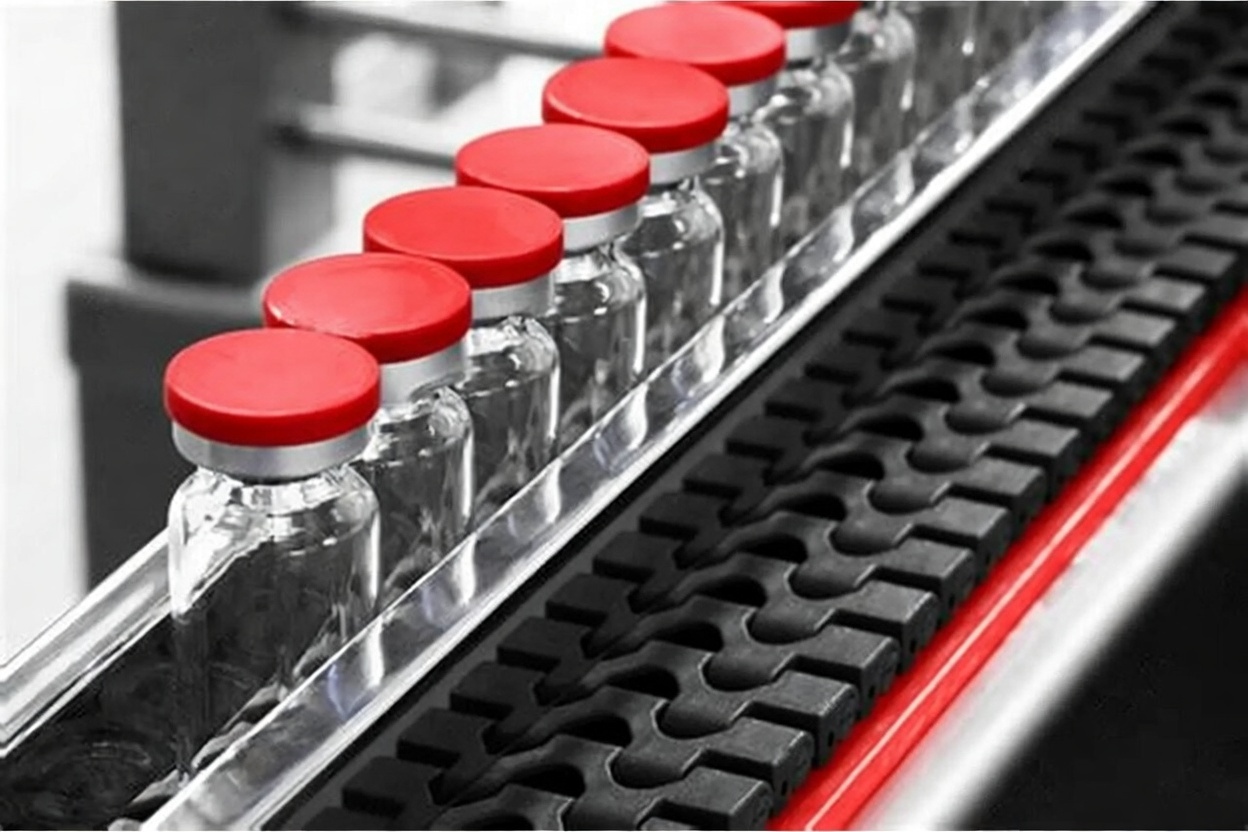
 Walk through any chemical packaging facility in the UK — from a detergent filling plant in Teesside to a pharmaceutical excipient packaging operation in Cheshire — and the conveyor system running beneath the containers tells a story. A well-specified plastic modular belt is not simply a moving surface; it is an engineered interface between your product integrity, your line speed, and your regulatory obligations. When that belt is optimised for the chemical environment it operates in, throughput climbs, maintenance windows shrink, and the facility’s compliance record becomes a competitive advantage rather than a liability. This article draws on over 18 years of hands-on plastic modular belt deployment inside chemical packaging environments across Britain and continental Europe, offering a genuinely useful engineering framework rather than a generic product pitch.
Chemical packaging lines place demands on conveyor infrastructure that most food or logistics applications simply do not generate. Corrosive splash zones, aggressive washdown chemistries, temperature excursions during hot-fill operations, and the need for zero-contamination transfer all converge on the belt module at once. A plastic modular belt — particularly one manufactured from polypropylene, acetal (POM), or polyethylene — addresses these pressures systematically, provided the belt pattern, pitch, and surface finish are selected with the actual process in mind rather than from a catalogue default. Choosing the wrong plastic modular belt for a sulphuric acid drum-sealing line, for instance, can mean belt degradation within three months, unplanned downtime, and a costly re-specification. The engineering decisions explored below are designed to prevent exactly that outcome.
How Plastic Modular Belts Actually Work in Chemical Environments
Modular Link Architecture
Each belt is constructed from individual interlocking plastic modules threaded onto transverse rods. This architecture allows a single damaged module to be replaced in minutes without removing the entire belt from the frame — a critical advantage when a chemical packaging line runs on tight shift patterns and cannot afford multi-hour strip-down maintenance windows.
Material Selection for Chemical Resistance
Polypropylene (PP) modules offer excellent resistance to acids, alkalis, and most industrial solvents, making them the default specification for many chemical packaging applications. Acetal (POM) provides superior dimensional stability and is preferred where tight tolerances are required — for example, in precision container-positioning before capping. UHMW polyethylene is selected when abrasion from container bases or granular product residue is a primary concern.
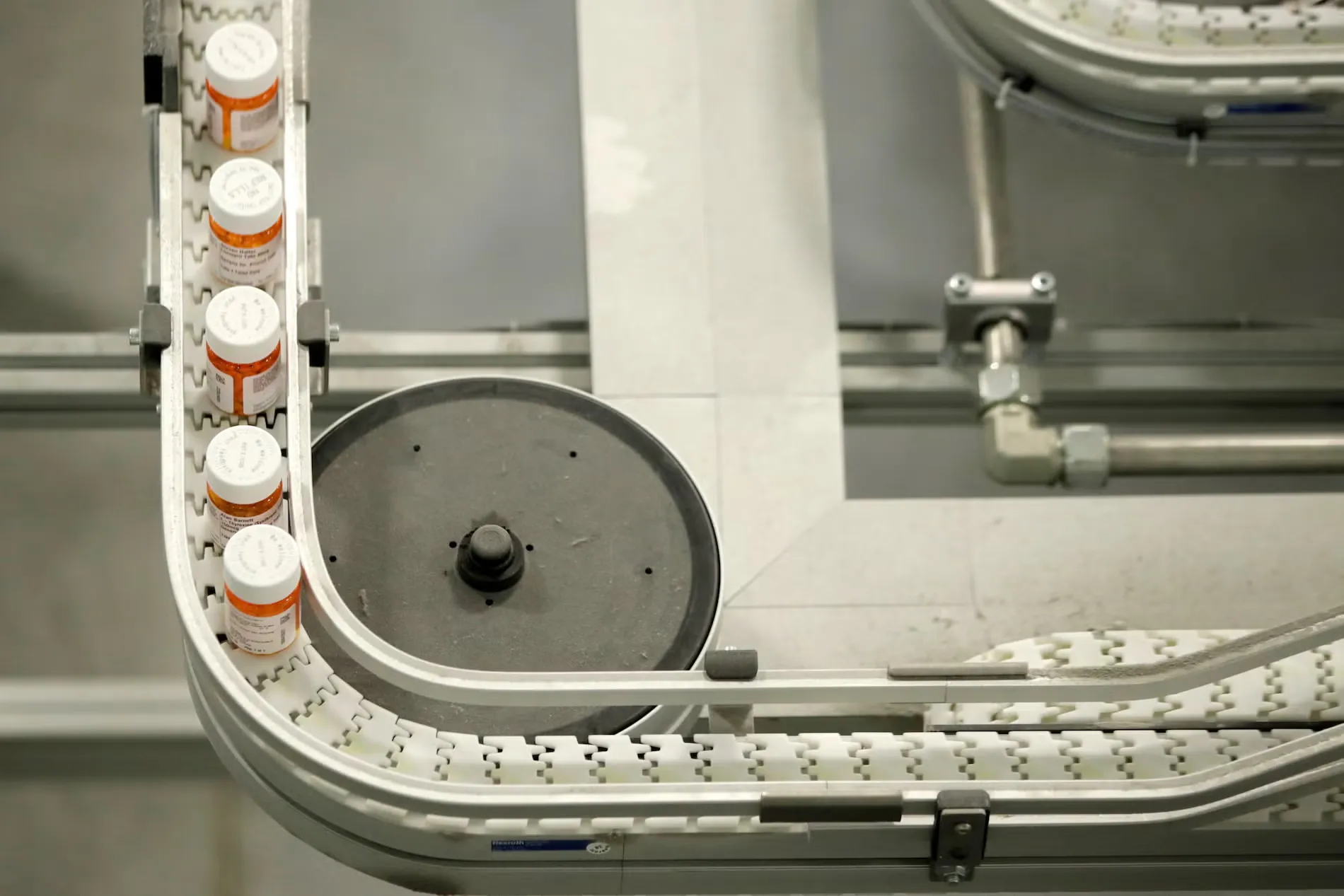 The belt operates on a drive-and-return loop. Sprockets engage the module rods at defined pitch intervals, converting shaft torque into linear belt motion. In chemical packaging lines, the sprocket interface is particularly important: if pitch tolerances are loose, pulsing or slippage occurs, which causes containers to topple or misalign at the filler, capper, or labeller. A precision-manufactured plastic modular belt, matched to equally precise sprockets, eliminates this pulsing entirely. Our engineering team has documented belt speed consistency improvements of up to 3.8% simply by upgrading from off-specification commodity belts to matched-pitch plastic modular belt assemblies.
Temperature performance is another axis that chemical packaging engineers must resolve at specification stage. Polypropylene plastic modular belt modules retain their mechanical properties from approximately -10°C up to 110°C, covering the vast majority of chemical packaging scenarios. Hot-fill applications — where containers are filled with heated product above 80°C — may warrant a glass-fibre reinforced PP module or a shift to POM, both of which maintain belt geometry under thermal load and prevent the sagging that would disrupt fill accuracy.
Technical & Performance Parameters
| Παράμετρος | PP Standard | PP Glass-Filled | Ακετάλη (POM) | UHMW-PE |
|---|---|---|---|---|
| Operating Temp Range | -10°C to 110°C | -10°C to 130°C | -40°C to 140°C | -50°C to 80°C |
| Επιλογές βήματος ζώνης | 25.4 / 38.1 / 50.8 mm | 25,4 / 38,1 χιλιοστά | 25,4 / 50,8 χιλιοστά | 38.1 / 50.8 mm |
| Μέγιστο πλάτος ζώνης | Up to 3,600 mm | Up to 3,000 mm | Έως 2.400 mm | Up to 3,000 mm |
| Χημική αντοχή | Excellent (acid/alkali) | Εξοχος | Good (limited strong acid) | Εξοχος |
| Belt Speed (max) | 60 m/min | 55 m/min | 70 m/min | 45 m/min |
| Max Load (kg/m²) | 200 kg/m² | 280 kg/m² | 300 kg/m² | 240 kg/m² |
| Surface Finish | Flat / Raised-rib / Anti-slip | Flat / Raised-rib | Flat / Smooth | Flat / Textured |
| FDA / EU Food Contact | Διαθέσιμος | Select grades | Διαθέσιμος | Διαθέσιμος |
Why Plant Engineers in the UK Specify Plastic Modular Belt Over Alternatives
The decision to install a plastic modular belt on a chemical packaging line is rarely made in isolation. Plant engineers and procurement managers at British chemical manufacturers weigh belt cost against anticipated maintenance frequency, downtime exposure, wash-down time per shift, and the risk of a non-conformance finding during a regulatory audit. The case for plastic modular belt systems holds up strongly across every one of those evaluation criteria, provided specification is done correctly from the outset.
Ταχεία αντικατάσταση μονάδας
Replace a damaged section in under 10 minutes on a live conveyor frame without specialist tooling. Rubber and PVC belt repairs typically require hours of strip-down, splicing, and recuring — time that chemical packaging lines cannot afford in high-volume production windows.
Corrosion-Proof Construction
There are no metal components in the conveying surface. The entire plastic modular belt structure — modules, rods, and in some configurations the flights — is polymer-based. Acid splash, chlorinated washdown chemicals, and high-humidity environments that destroy carbon steel belt frames have no degradation pathway into the belt itself.
Dimensional Precision at Speed
Because plastic modular belt modules are injection-moulded to tight dimensional tolerances, container positioning repeatability is consistently achievable at belt speeds of 40–60 m/min. This matters enormously on chemical filling lines where container misalignment at the filler head wastes product, creates spillage, and triggers a CIP cycle — all of which carry real cost.
Configurable for Inclines & Curves
Plastic modular belt systems navigate inclines up to 35° and radius turns as tight as 600 mm, enabling compact line layouts that minimise the facility footprint — a genuine advantage in urban industrial estates across the UK Midlands and North West where floor space commands a premium and expansion is constrained.
COSHH & HSE Compliance Ready
Open-structure plastic modular belt designs allow complete wash-through during CIP cycles, with no dead-legs where chemical residue can accumulate and create cross-contamination or hazardous substance exposure risks that would compromise a COSHH assessment under UK Health and Safety Executive guidelines.
Extended Service Life
In typical chemical packaging environments, a well-specified PP plastic modular belt achieves 4–7 years of service life before full replacement is warranted. Rubber belts in the same environment often fail in under 18 months due to chemical attack. The cost-of-ownership mathematics strongly favours modular belt investment, particularly when total labour and downtime costs are included in the calculation.
Application Scenarios Across UK Chemical Packaging Lines
Plastic modular belt systems do not operate in a single zone of the chemical packaging line — they are present at multiple critical transfer and accumulation points, each with its own performance requirement. Understanding which belt type and surface pattern is appropriate for each station is one of the defining skills of a chemical conveyor engineer.
Custom Manufacturing Capability — Built for UK Chemical Industry Specifications
Standard catalogue plastic modular belt products cover the majority of chemical packaging scenarios, but chemical industry applications — particularly those involving specialist chemical formulations, unusual container geometries, or process-specific belt speeds — frequently require bespoke engineering. Our factory’s custom plastic modular belt design and manufacturing service directly addresses this need, with design-to-delivery lead times of 10–21 working days for custom belt configurations.
Custom Widths
Belt widths from 100 mm to 3,600 mm, specified to your frame drawing
Material Blending
PP, POM, UHMW, anti-static and FDA-grade options on single frame
Bespoke Flights & Cleats
Custom flight heights and profiles for incline or metering applications
Chemical Compatibility Testing
Pre-delivery immersion tests with customer-specified process chemicals
Our engineering team works directly with the production manager, maintenance lead, and procurement team at your UK facility to produce a plastic modular belt specification document that captures belt material, surface profile, pitch, rod material, width tolerance, and any required accessory features. This document becomes the reorder reference, ensuring that replacement belt sections match the original specification precisely — a detail that becomes critically important when a section fails during a night shift and the maintenance engineer needs to install a replacement without an engineer on-site.
Customer Success: Chemical Packaging Line Transformation
NorthChem Industrial Ltd — Replacing Legacy PVC Belts on a High-Throughput Caustic Soda Line
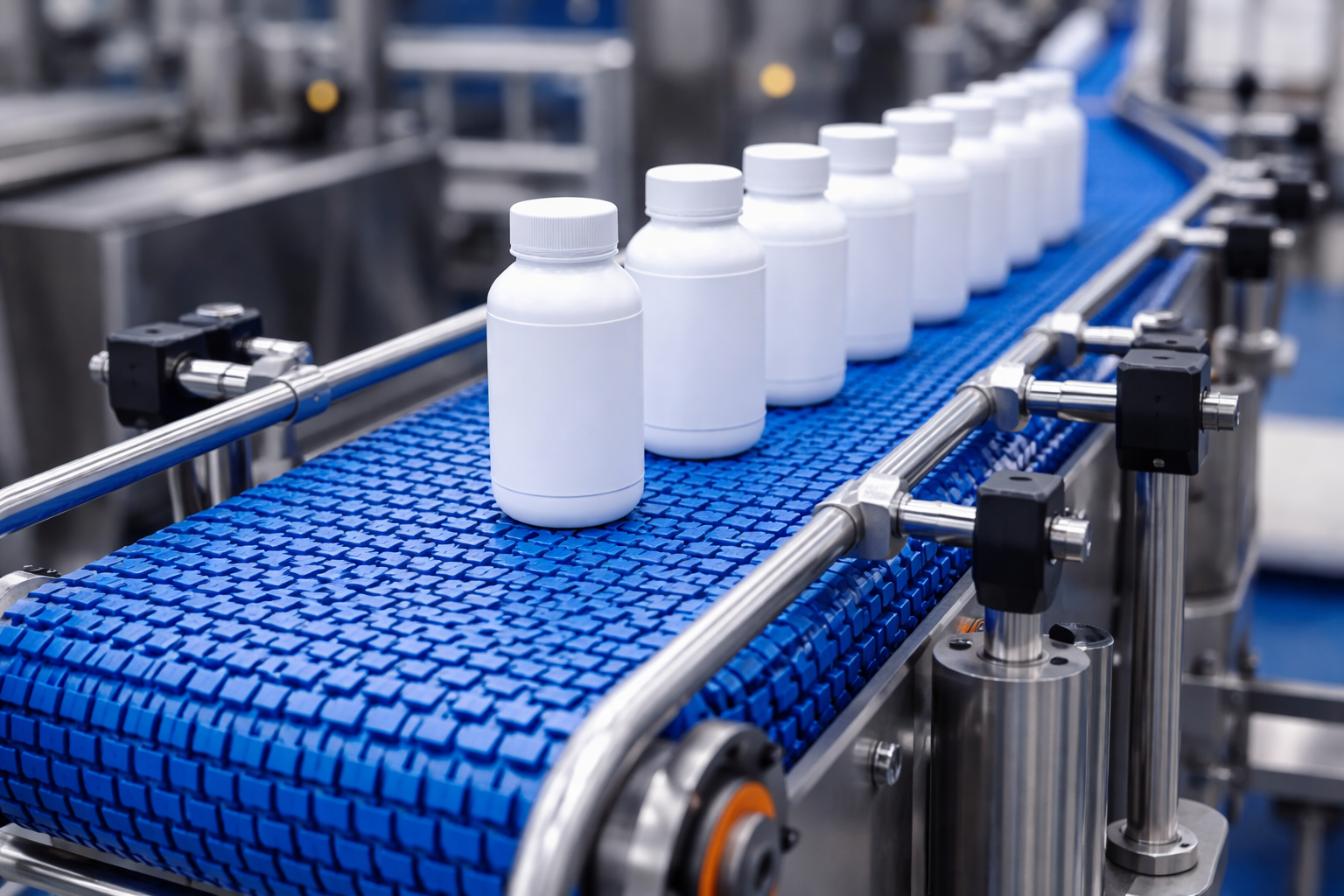 NorthChem Industrial Ltd operate a 24/7 production facility in Hartlepool packaging caustic soda solution (sodium hydroxide at 30% and 50% concentration) into 1-litre, 5-litre, and 25-litre HDPE containers. Their original PVC belt conveyor installation was exhibiting accelerating failure — belt surfaces were blistering and delaminating within 8 months of installation due to caustic splash, and the facility was carrying three belt replacement cycles per year at a combined cost (parts plus labour) exceeding £28,000 annually. Unplanned stoppages were occurring at a rate of approximately 2.3 per month, each requiring 90–120 minutes for belt repair or temporary section bridging.
Following a site survey and process chemistry analysis, our engineering team specified a 38.1 mm pitch polypropylene plastic modular belt with raised-rib surface finish across the five conveyor sections in the filling and capping zone. Rod material was upgraded to polypropylene rather than stainless steel to eliminate the corrosion pathway at the rod-module interface. A flat-top POM plastic modular belt section was installed at the labeller infeed, where container positioning accuracy was critical for label registration on their cylindrical 5-litre containers.
Following commissioning, the facility ran for 26 months without a belt-related stoppage. Annual belt-related maintenance expenditure dropped from £28,000 to under £4,200 — a saving of £23,800 per year. Throughput consistency improved as container spacing variance reduced, with the filler reporting a measurable decline in overfill events that had previously been compensating for container wobble. The site’s HSE compliance manager noted that the open-drain structure of the plastic modular belt reduced washdown time at each shift changeover by approximately 18 minutes — cumulatively over 100 hours per year of recovered production time.
What Chemical Packaging Engineers Say
We’d gone through four belt suppliers in three years trying to find something that could survive our hypochlorite packaging environment. The PP modular belt recommendation from this team was the first specification that actually addressed the root cause rather than just selling us a slightly more expensive version of what was already failing.
— D. Hargreaves
Maintenance Manager, Bleach Products Manufacturer, Leeds
The custom belt width and POM flat-top specification for our label zone made an immediate difference to our label rejection rate at the vision inspection camera. That single change reduced our label waste by over 30% in the first quarter after installation. The price-per-metre of the plastic modular belt was higher than what we’d been buying, but the total cost of ownership calculation wasn’t close.
— S. Patel
Production Director, Agricultural Chemical Packager, East Midlands
Shipping replacement modules to our Manchester facility within 48 hours of a belt failure call, with the correct pitch and width — that level of supply chain responsiveness is what keeps our production team trusting a supplier. Two years in, I’d recommend this plastic modular belt range to any UK chemical packaging site looking to reduce conveyor downtime cost.
— R. Thornton
Engineering Lead, Specialty Chemicals Packager, Greater Manchester
Serving Chemical Packaging Operations Across Great Britain
Britain’s chemical manufacturing and packaging sector is geographically dispersed — from the major chemical industrial clusters on Teesside, Humberside, and Merseyside, to the South East’s pharmaceutical and consumer chemical packaging facilities, and the growing number of contract packing businesses serving the cleaning products and agricultural chemicals markets across the Midlands and Yorkshire. Our plastic modular belt supply and engineering support service operates across all these regions, with the ability to deploy an applications engineer for site surveys at chemical packaging facilities in England, Scotland, and Wales.
UK chemical packaging businesses operating under COMAH (Control of Major Accident Hazards) regulations have specific material handling infrastructure requirements that go beyond what a standard conveyor catalogue addresses. Our plastic modular belt engineering team has direct experience working within COMAH-regulated facility environments, specifying belt systems that satisfy both production performance requirements and the additional safety documentation obligations that COMAH sites must maintain for the HSE. If your facility is processing or packaging hazardous chemicals in quantities above the COMAH threshold, please contact our engineering team before specifying conveyor belt infrastructure — the regulatory context shapes the correct technical specification.
Teesside & Yorkshire
Industrial chemical clusters
Merseyside & Cheshire
Petrochemical & pharma
East Midlands
Agricultural chemicals
South East & London
Consumer & specialty chemicals
Scotland & Wales
Process & contract packing
Συχνές ερωτήσεις
Common questions from UK chemical packaging plant managers, maintenance engineers, and procurement teams.
Ready to Upgrade Your Chemical Packaging Line?
Talk to our plastic modular belt engineers about your UK chemical packaging application. We deliver specification support, custom manufacturing, and supply-chain reliability that production teams across Britain depend on.
© Ever Power — Plastic Modular Belt Engineering Specialists · United Kingdom · edit by gzl