
What is a Plastic Modular Belt?
Modular plastic conveyor belts are an advanced solution for manufacturing and logistics, designed to improve operational efficiency and streamline production processes. Unlike traditional conveyor belts, which often have limitations in flexibility and maintenance, modular plastic conveyor belts offer numerous advantages, making them an indispensable tool in a variety of industrial applications. This article will delve into the complexities of modular plastic conveyor belts, explaining their structure, function, and the many benefits they bring to the production line.
Understanding the Composition of Plastic Modular Belts
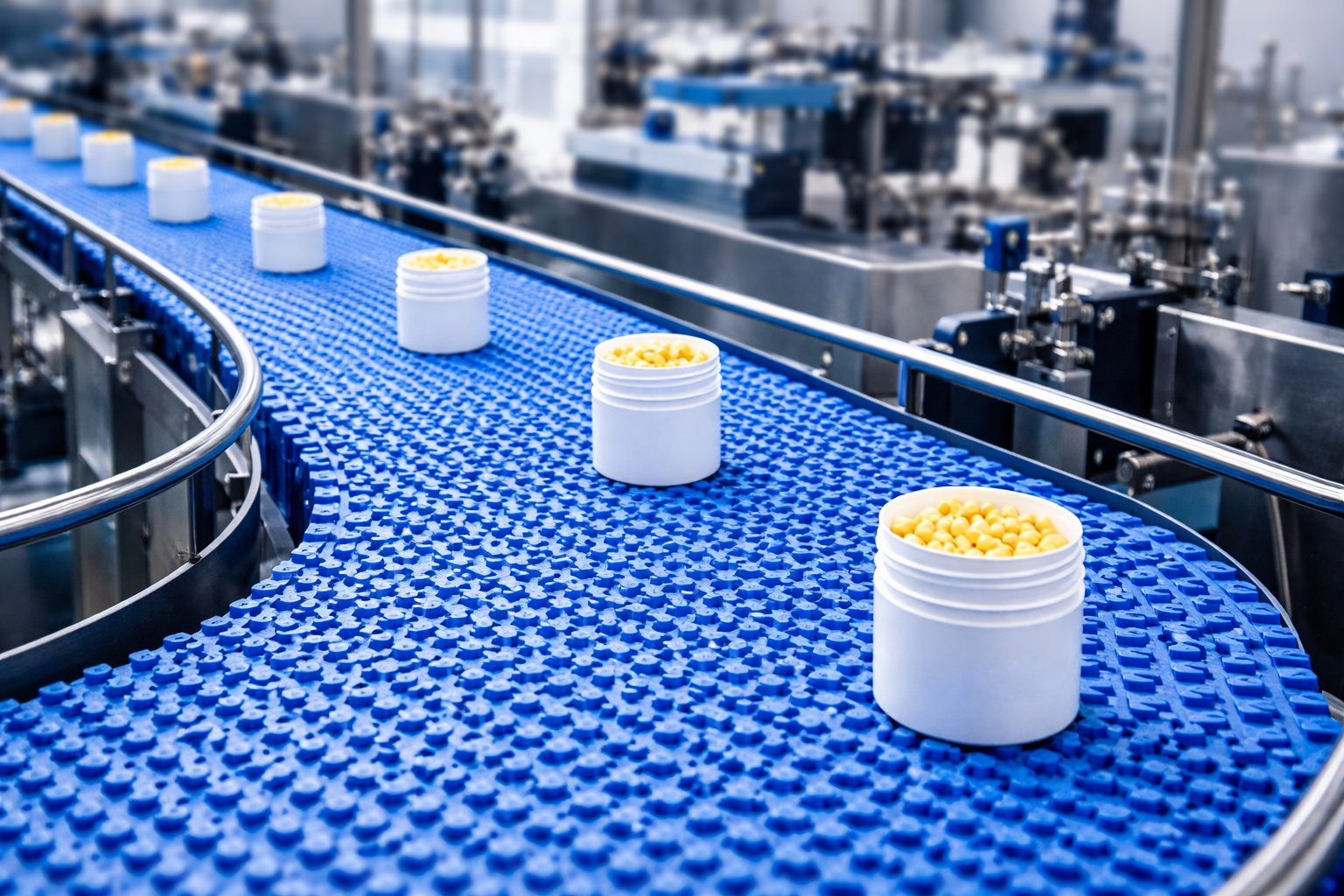
Plastic modular belts are constructed from interlocking modules made of various types of thermoplastics, with polyethylene (PE) and polypropylene (PP) being the most common materials. The modular design allows for customization, enabling manufacturers to create belts that meet specific operational requirements. Each module typically features an embedded pin system that facilitates seamless connections, enhancing belt stability and durability.
The Versatility of Material Choices
One of the defining characteristics of plastic modular belts is the range of materials available. High-density polyethylene (HDPE) offers excellent resistance to chemicals and abrasion, making it suitable for environments with harsh substances. Polypropylene, on the other hand, boasts a higher heat tolerance, ideal for applications involving hot products. The choice of material directly influences the belt’s performance, lifespan, and maintenance needs.
The Mechanics of Operation
At its core, a plastic modular belt operates on a straightforward principle: it transports products along a predefined path while ensuring minimal friction and wear. The interlocking design not only provides structural integrity but also allows for easy curvature, enabling the belt to navigate tight spaces and complex layouts. This characteristic is particularly advantageous in environments where space optimization is crucial.
Modular Design for Enhanced Flexibility
The modular nature of these belts grants a significant degree of flexibility. Unlike conventional belts, which may require complete replacement upon damage, plastic modular belts can be repaired or modified by replacing individual modules. This feature drastically reduces downtime and maintenance costs, allowing for smoother operations and improved productivity.
Applications Across Industries
Plastic modular belts find utility in a myriad of industries, from food processing to automotive manufacturing. Their adaptability is a vital asset, enabling them to cater to various applications such as product accumulation, sorting, and packaging. In the food industry, for instance, these belts are designed to meet stringent hygiene standards, ensuring safe transport of food products while minimizing the risk of contamination.
Food Processing: Safety and Hygiene
In food processing facilities, the importance of hygiene cannot be overstated. Plastic modular belts are designed to be easily cleaned, with smooth surfaces that prevent bacteria buildup. Additionally, many variants are constructed from materials that are FDA-approved for food contact, further ensuring compliance with health regulations.
Automotive Manufacturing: Precision and Durability
The automotive industry demands high precision and reliability. Plastic modular belts facilitate the seamless movement of heavy components, such as engines and chassis, through various stages of assembly. Their strength and stability under load make them ideal for demanding applications, thereby improving the overall efficiency of manufacturing lines.
Advantages Over Traditional Conveyor Systems
When juxtaposed with traditional conveyor systems, plastic modular belts present a multitude of advantages. The most notable is their superior resistance to wear and tear. Traditional belts often suffer from fraying and stretching, leading to costly replacements and extensive downtime. In contrast, plastic modular belts maintain their integrity over time, thanks to their robust construction.
Reduced Maintenance and Downtime
The ease of maintenance associated with plastic modular belts is another significant benefit. In many cases, cleaning and servicing can be performed without dismantling the entire conveyor system. This not only saves time but also contributes to a safer workplace by minimizing the risk of accidents during maintenance activities.
Enhanced Operational Efficiency
Operational efficiency is paramount in any manufacturing environment. Plastic modular belts allow for smoother transitions between different processes, which is critical in high-speed production lines. Their ability to handle a diverse range of products, including those with irregular shapes or varying weights, further enhances their utility, making them a favored choice among manufacturers.
Customization and Design Innovations
Today’s manufacturers are increasingly leaning towards bespoke solutions tailored to their specific operational needs. Plastic modular belts lend themselves well to customization, with options for varying widths, lengths, and designs. This flexibility enables manufacturers to optimize their processes, ensuring that the belt aligns perfectly with their production goals.
Innovative Features and Add-ons
Advanced features such as belt tracking systems, side guides, and integrated sensors can be incorporated into plastic modular belts, further enhancing their functionality. These innovations provide real-time feedback on the belt’s operation, allowing for proactive maintenance and ensuring that potential issues are addressed before they escalate into significant problems.
Environmental Considerations
In an era where sustainability is becoming increasingly vital, plastic modular belts offer environmentally friendly solutions. Many manufacturers are now producing these belts using recycled materials, thus reducing the carbon footprint associated with their production. Furthermore, the energy-efficient design contributes to lower operational costs, aligning with the broader goals of sustainability in manufacturing.
Recyclability and Lifecycle Management
The recyclability of plastic modular belts is another aspect worth considering. At the end of their lifecycle, these belts can be processed and repurposed, mitigating waste and promoting a circular economy. This aspect resonates well with businesses aiming to enhance their green credentials while maintaining operational efficiency.
Future Trends in Plastic Modular Belt Technology
As technology continues to evolve, so too does the potential for advancements in plastic modular belt design and functionality. Innovations in materials science may lead to the development of belts that are even lighter, stronger, and more resistant to extreme conditions. Additionally, the integration of smart technology could see the emergence of belts that can autonomously adjust to operational demands, further enhancing productivity.
Automation and Smart Manufacturing
The rise of automation in manufacturing lines is prompting a shift in how plastic modular belts are utilized. As factories become increasingly automated, the demand for belts that can seamlessly integrate with robotic systems is on the rise. This interplay between automated processes and modular belt technology is set to redefine efficiency standards in production environments.
Choosing the Right Plastic Modular Belt for Your Needs
Selecting the appropriate plastic modular belt for a specific application requires careful consideration of various factors. These include the type of products being transported, the operating environment, and the specific requirements of the manufacturing process. Engaging with experienced suppliers can provide valuable insights into the best options available, ensuring that the chosen belt aligns with operational goals.
Consultation and Expert Guidance
We encourage manufacturers to collaborate with industry experts who can provide tailored advice based on a comprehensive analysis of their production lines. Understanding the unique challenges and requirements of their manufacturing processes makes selecting the right modular plastic conveyor belts easier—belts that not only meet current needs but also adapt to future demands.
In conclusion, modular plastic conveyor belts represent a revolutionary advancement in manufacturing technology. Their versatility, durability, and efficiency make them a cornerstone of modern production lines. As industries continue to evolve, the application and innovation of modular plastic conveyor belts will expand. Adopting this technology can significantly improve efficiency, reduce costs, and enhance sustainability, thereby helping manufacturers succeed in an increasingly competitive market environment.
Enhancing Production Efficiency with Plastic Modular Belts in Manufacturing Lines
Introduction to Plastic Modular Belts
Plastic modular belts are increasingly becoming a staple in manufacturing environments due to their robust design and versatility. These belts are constructed from interlocking plastic modules, which allows them to be customized to fit a range of applications. Their adaptability has revolutionized how products are transported within facilities, allowing for a seamless integration of multiple processes.
The Need for Enhanced Production Efficiency
Manufacturers are constantly striving to improve operational efficiency while reducing costs. Traditional conveyor systems often suffer from limitations, such as misalignment, wear and tear, and inflexibility in design. These challenges can lead to unplanned downtime, increased maintenance costs, and ultimately a decline in productivity. Transitioning to plastic modular belts can address these issues effectively.
Case Study: ABC Electronics Manufacturing Plant
Background
ABC Electronics, a mid-sized manufacturer specializing in consumer electronics, faced significant challenges in its assembly line. The existing conveyor system, composed of metal belts, was prone to frequent jams, requiring regular maintenance and resulting in production delays. The management team identified a need for a more reliable and efficient transport solution.
Advantages of Plastic Modular Belts
Flexibility and Customization
One of the standout features of plastic modular belts is their flexibility. Manufacturers can design belt systems that cater specifically to their unique operational needs. For example, in ABC Electronics, the ability to create curves and inclines in the belt system facilitated smoother transitions between different stages of assembly.
Reduced Maintenance and Downtime
The modular nature of these belts means that if a section becomes damaged, only that section needs to be replaced, rather than the entire belt. This minimizes downtime significantly and reduces the cost associated with repairs. ABC Electronics saw a drastic drop in maintenance costs due to the durable nature of the plastic material used in the modular design.
Improved Safety
With smoother operation and fewer mechanical failures, the risk of worker injuries was substantially reduced. The ergonomic design of the plastic modular belts allows for safer manual handling, creating a more secure environment for employees.
Future Prospects and Innovations in Plastic Modular Belts
The evolution of modular plastic conveyor belts continues, with manufacturers constantly innovating to meet new challenges. Future directions may include integrating smart technologies, such as sensors that monitor conveyor belt performance in real time. This data helps identify potential problems before they escalate into serious issues, further improving production efficiency.
The adoption of modular plastic conveyor belts has proven to be a transformative move for ABC Electronics. It not only solved immediate operational challenges but also laid the foundation for future growth and efficiency improvements. As manufacturing continues to evolve, the application of advanced materials and technologies will play a crucial role in building more efficient, flexible, and safer production environments.
Enhancing Production Efficiency with Plastic Modular Belts in Manufacturing Lines
Introduction to Plastic Modular Belts
Plastic modular belts are increasingly becoming a staple in manufacturing environments due to their robust design and versatility. These belts are constructed from interlocking plastic modules, which allows them to be customized to fit a range of applications. Their adaptability has revolutionized how products are transported within facilities, allowing for a seamless integration of multiple processes.
The Need for Enhanced Production Efficiency
Manufacturers are constantly striving to improve operational efficiency while reducing costs. Traditional conveyor systems often suffer from limitations, such as misalignment, wear and tear, and inflexibility in design. These challenges can lead to unplanned downtime, increased maintenance costs, and ultimately a decline in productivity. Transitioning to plastic modular belts can address these issues effectively.
Case Study: ABC Electronics Manufacturing Plant
Background
ABC Electronics, a mid-sized manufacturer specializing in consumer electronics, faced significant challenges in its assembly line. The existing conveyor system, composed of metal belts, was prone to frequent jams, requiring regular maintenance and resulting in production delays. The management team identified a need for a more reliable and efficient transport solution.
Advantages of Plastic Modular Belts
Flexibility and Customization
One of the standout features of plastic modular belts is their flexibility. Manufacturers can design belt systems that cater specifically to their unique operational needs. For example, in ABC Electronics, the ability to create curves and inclines in the belt system facilitated smoother transitions between different stages of assembly.
Reduced Maintenance and Downtime
The modular nature of these belts means that if a section becomes damaged, only that section needs to be replaced, rather than the entire belt. This minimizes downtime significantly and reduces the cost associated with repairs. ABC Electronics saw a drastic drop in maintenance costs due to the durable nature of the plastic material used in the modular design.
Improved Safety
With smoother operation and fewer mechanical failures, the risk of worker injuries was substantially reduced. The ergonomic design of the plastic modular belts allows for safer manual handling, creating a more secure environment for employees.
Future Prospects and Innovations in Plastic Modular Belts
The evolution of modular plastic conveyor belts continues, with manufacturers constantly innovating to meet new challenges. Future directions may include integrating smart technologies, such as sensors that monitor conveyor belt performance in real time. This data helps identify potential problems before they escalate into serious issues, further improving production efficiency.
The adoption of modular plastic conveyor belts has proven to be a transformative move for ABC Electronics. It not only solved immediate operational challenges but also laid the foundation for future growth and efficiency improvements. As manufacturing continues to evolve, the application of advanced materials and technologies will play a crucial role in building more efficient, flexible, and safer production environments.
Enhancing Production Efficiency with Plastic Modular Belts in Manufacturing Lines
Introduction to Plastic Modular Belts
Plastic modular belts are increasingly becoming a staple in manufacturing environments due to their robust design and versatility. These belts are constructed from interlocking plastic modules, which allows them to be customized to fit a range of applications. Their adaptability has revolutionized how products are transported within facilities, allowing for a seamless integration of multiple processes.
The Need for Enhanced Production Efficiency
Manufacturers are constantly striving to improve operational efficiency while reducing costs. Traditional conveyor systems often suffer from limitations, such as misalignment, wear and tear, and inflexibility in design. These challenges can lead to unplanned downtime, increased maintenance costs, and ultimately a decline in productivity. Transitioning to plastic modular belts can address these issues effectively.
Case Study: ABC Electronics Manufacturing Plant
Background
ABC Electronics, a mid-sized manufacturer specializing in consumer electronics, faced significant challenges in its assembly line. The existing conveyor system, composed of metal belts, was prone to frequent jams, requiring regular maintenance and resulting in production delays. The management team identified a need for a more reliable and efficient transport solution.
Advantages of Plastic Modular Belts
Flexibility and Customization
One of the standout features of plastic modular belts is their flexibility. Manufacturers can design belt systems that cater specifically to their unique operational needs. For example, in ABC Electronics, the ability to create curves and inclines in the belt system facilitated smoother transitions between different stages of assembly.
Reduced Maintenance and Downtime
The modular nature of these belts means that if a section becomes damaged, only that section needs to be replaced, rather than the entire belt. This minimizes downtime significantly and reduces the cost associated with repairs. ABC Electronics saw a drastic drop in maintenance costs due to the durable nature of the plastic material used in the modular design.
Improved Safety
With smoother operation and fewer mechanical failures, the risk of worker injuries was substantially reduced. The ergonomic design of the plastic modular belts allows for safer manual handling, creating a more secure environment for employees.
Future Prospects and Innovations in Plastic Modular Belts
The evolution of modular plastic conveyor belts continues, with manufacturers constantly innovating to meet new challenges. Future directions may include integrating smart technologies, such as sensors that monitor conveyor belt performance in real time. This data helps identify potential problems before they escalate into serious issues, further improving production efficiency.
The adoption of modular plastic conveyor belts has proven to be a transformative move for ABC Electronics. It not only solved immediate operational challenges but also laid the foundation for future growth and efficiency improvements. As manufacturing continues to evolve, the application of advanced materials and technologies will play a crucial role in building more efficient, flexible, and safer production environments.
Case Study: Transformation of a Food Processing Facility with Plastic Modular Belts
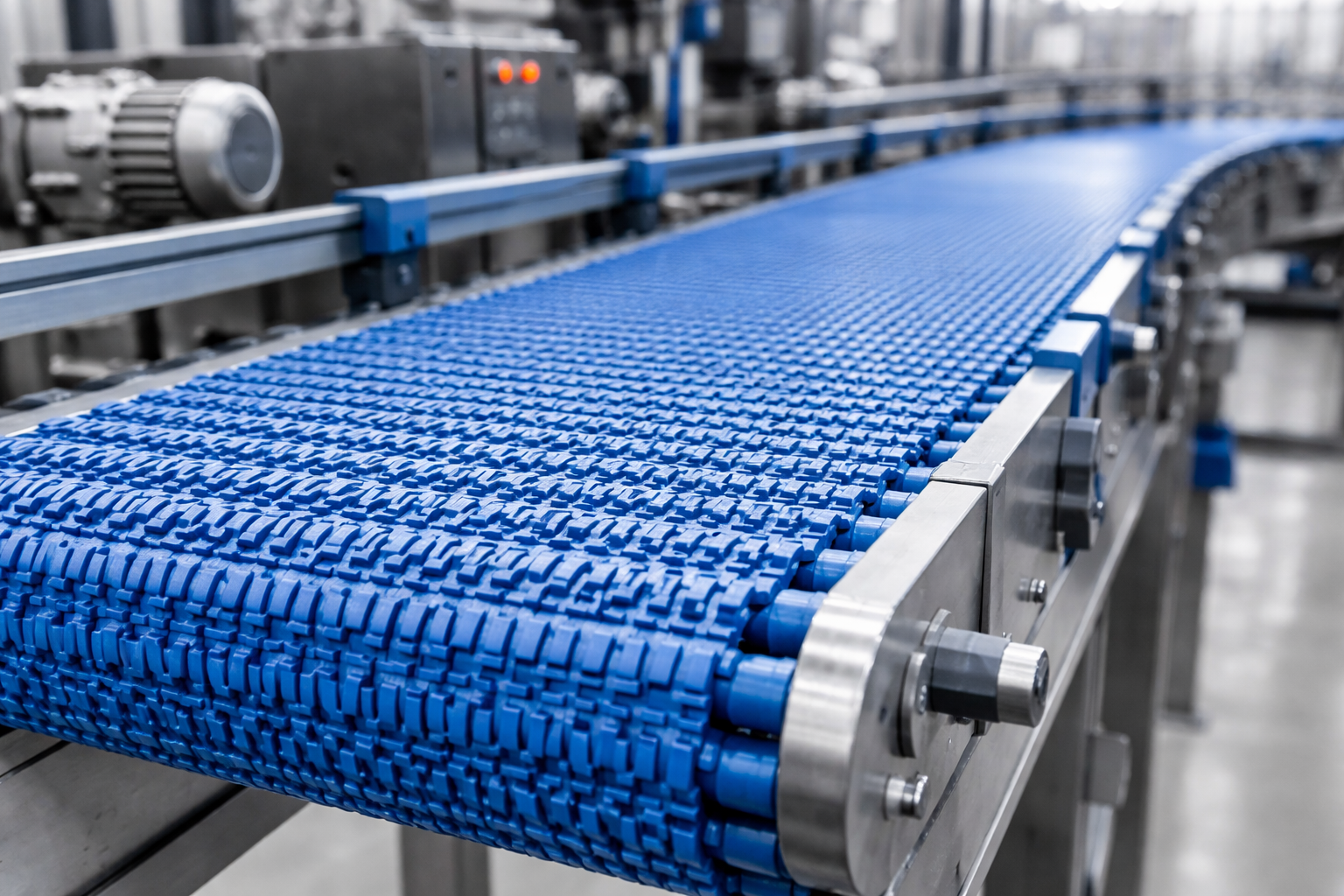
In the competitive landscape of food processing, operational efficiency and adherence to hygiene standards are paramount. A leading food processing facility specializing in the production of packaged snacks faced significant challenges with its existing conveyor system. The outdated conveyor belts were not only prone to frequent breakdowns but also failed to meet the rigorous hygiene requirements of the food industry. This case study explores the facility’s transition to plastic modular belts, highlighting the benefits realized through this strategic upgrade.
Initial Challenges and Limitations
The facility’s original conveyor system consisted of traditional fabric belts. These belts exhibited several deficiencies, including:
- High maintenance costs due to wear and tear.
- Limited flexibility in transporting products of varying shapes and sizes.
- Difficulty in cleaning, leading to concerns over hygiene compliance.
- Frequent downtimes, disrupting production schedules.
Prior to the installation of plastic modular belts, the facility’s operational metrics revealed:
- Average downtime of 15 hours per month due to conveyor malfunctions.
- Increased labor costs spent on maintenance and cleaning.
- Suboptimal product flow causing bottlenecks in packaging.
Research and Selection Process
To address these challenges, the management team initiated a comprehensive evaluation of available conveyor technologies. This involved:
- Conducting market research to identify advanced conveyor systems.
- Consulting industry experts to understand the benefits of plastic modular belts.
- Analyzing case studies from similar facilities that transitioned to plastic modular belts.
The insights gained pointed towards the superior performance and adaptability of, prompting the decision to pursue this technology for a trial installation.
Decision Factors
Several key factors influenced the decision to adopt plastic modular belts:
- Improved hygiene standards through easy-to-clean surfaces.
- Modular design allowing for quick repairs and modifications.
- Exceptional durability, minimizing the frequency of replacements.
- Customization options to cater to specific operational needs.
Installation and Implementation
The implementation of plastic modular belts was conducted over a two-week period, during which the following steps were taken:
- Removal of the existing fabric conveyor system.
- Assessment of the facility layout to optimize the new system design.
- Installation of new plastic modular belts, designed to accommodate the specific dimensions and operational flow of the plant.
- Training sessions for staff on the new system’s maintenance and operational procedures.
Prior to the installation, the management set performance benchmarks to measure the effectiveness of the new conveyor system against the old one. Key metrics included:
- Reduction in maintenance hours.
- Improvement in product flow rate.
- Enhanced cleaning processes to ensure compliance with health standards.
Post-Installation Performance Analysis
After the successful installation of plastic modular belts, the facility began to analyze performance outcomes. The results were striking:
- Downtime decreased to an average of 2 hours per month, representing an 87% reduction.
- Labor costs associated with maintenance dropped significantly, with staff now able to focus on more productive tasks.
- The product flow rate improved by 30%, reducing bottlenecks in packaging and increasing throughput.
Moreover, the hygiene compliance metrics showed substantial improvement. Cleaning times were halved due to the smooth surfaces and modular design of the belts, allowing staff to efficiently maintain cleanliness standards. The management reported no instances of contamination during routine inspections post-installation.
Long-Term Benefits and Sustainability
The switch to modular plastic conveyor belts not only improved operational efficiency but also aligned with the factory’s sustainability goals. These belts, made from recyclable materials, help reduce environmental impact. The factory also implemented a recycling program for old conveyor belt materials, further demonstrating its commitment to sustainability.
Furthermore, the flexibility of modular plastic conveyor belts allows for future modifications as the factory’s product line expands, ensuring this investment continues to create value as production needs change. The factory also explored the possibility of integrating real-time monitoring capabilities such as sensors, which will further optimize operations and prevent potential problems from escalating.
This food processing plant case study fully demonstrates the transformative potential of modular plastic conveyor belts in improving productivity, hygiene, and sustainability. By overcoming the limitations of traditional conveyor systems, the factory not only improved operational efficiency but also established its leading position in food safety compliance. The successful installation of modular plastic conveyor belts sets a benchmark for continuous innovation and transformation in the industry, heralding a new era of manufacturing excellence.
edit by gzl