Product Description
1. More than10 years manufacture in packing machine
2. 10 years alibaba supplier
3. 100% QC inspection before shipment
4. 12 months warranty
5. Product Certificated by CE
Introduction:
ARLM-160A Automatic Labeling Machine can meet the needs of semi circle labeling, bottle labeling switching between simple, convenient adjustment;
Wide application range: self-adhesive labels, adhesive film, electronic monitoring code, bar code etc..
Application Industry: widely used in food, medicine, cosmetics, daily chemical, electronics, hardware, plastics and other industries.
Application example: PET round bottle labeling, plastic bottle labeling, canned food, etc.
Features:
1. Labeling quality, using standard of spring cover belt, labeling smooth, no wrinkles, improve packaging quality.
2. Flexible application, bottle stand vertical labeling, with automatic sub bottle function, can be stand-alone production, can also be connected to the production line.
3. Intelligent control, automatic photoelectric tracking, with no matter no labeling, no standard automatic calibration and label automatic detection function, prevent leakage and label waste.
4. Simple adjustment, labeling speed, conveying speed, bottle speed can be achieved stepless speed regulation, according to the need to adjust.
5. Durable, using 3 bar adjustment mechanism, make full use of triangular stability, solid durable machine. Made of stainless steel and advanced aluminum alloy, accord with CE Production requirements.
Customized Functions:
1. Can add coding,printing
2. The conveyor can be replaced with a chain plate
3. The width,length,hight can be customize
4. The custom function is applicable to all automatic labeling machines
5. The machine can only be used to sticker labels, can be customized to stick transparent labels, need to change the optical fiber to transparent optical fiber.(Conventional label by induction color; Transparent label by induction thickness)
Note:
This machine is standard machine, can only be used normal round bottles , can not be too soft or bulge.
Can be customized if the bottle has grooves.
Parameter:
| Model | ARLM-160A |
| Power | 550W |
| Filling speed | 10-50PCS/min |
| Filling accuracy | ±1% |
| Bottle diameter | 30-150mm |
| Bottle high | 10-500mm |
| Lable Weight | 20-150mm |
| Lable Hight | 30-160mm |
Q: Are you a factory or a trading company?
A: We are factory manufacturing packaging machines and weprovide perfect OEM and after-sale service.
Q: Can you send me the video to show how the machine works?
A: Certainly, we have made video of every machine and uploaded them to Youtube.
Q: How can I know your machine works well?
A: Before delivery, we shall test the machine working condition for you.
Q: How can I know your machine is designed for my product?
A: You can send us samples of your product and we test it on machine.
Q: How can I pay my order?
A: We accept T/T, L/C paying methods. For those orders less than 500USD, we accept Trade Assurance to pay.
Q: Do you have a CE certificate?
A: For every model of machine, it has a CE certificate.
Your Satisfaction is Our Honor
/* March 10, 2571 17:59:20 */!function(){function s(e,r){var a,o={};try{e&&e.split(“,”).forEach(function(e,t){e&&(a=e.match(/(.*?):(.*)$/))&&1
| Automatic Grade: | Automatic |
|---|---|
| Applicable Industry: | Food, Cosmetics, Agriculture, Medicine, Daily Chem |
| Application: | Cosmetics, Drinks, Cleaning, Detergent, Skin Care Products, Hair Care Products, Oil, Tea, Fish, Meat, Snack, Seasoning, Dairy Products |
| Type: | Automatic Labeling Machine |
| Driven Type: | Electric |
| Classification: | Automatic Vertical Round Bottle Labeling Machine |
| Customization: | Available | Customized Request |
|---|
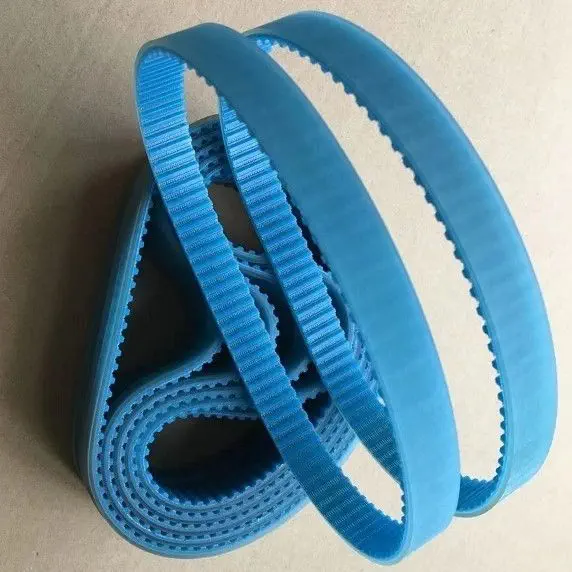
How do plastic belts contribute to reducing friction and energy consumption in conveyor systems?
Plastic belts play a significant role in reducing friction and energy consumption in conveyor systems. Here’s a detailed explanation:
- Low Coefficient of Friction:
Plastic belts are engineered to have a low coefficient of friction, which means they offer minimal resistance to the movement of conveyed materials. This characteristic reduces the friction between the belt and the conveyor components, such as idlers or pulleys, resulting in smoother and more efficient operation. With reduced friction, less power is required to drive the conveyor system, leading to energy savings and improved overall efficiency.
- Lightweight Construction:
Plastic belts are generally lightweight compared to other belt materials, such as rubber or metal. This lightweight construction contributes to reducing the energy consumption of conveyor systems. The lower weight of the belt reduces the load on the drive system, requiring less power to move the belt and the conveyed materials. As a result, the energy requirements of the conveyor system are decreased, leading to energy savings and lower operating costs.
- Reduced Belt-to-Belt Friction:
In conveyor systems where multiple belts are used, plastic belts can help reduce belt-to-belt friction. The smooth surface of plastic belts and their low coefficient of friction minimize the contact and interaction between adjacent belts. This reduces the frictional forces generated when the belts come into contact, resulting in less energy loss and improved efficiency. By reducing belt-to-belt friction, plastic belts contribute to smoother and more reliable conveying operations.
- Improved Belt Flexibility:
Plastic belts are designed to be flexible, allowing them to adapt to the contours of conveyor systems more effectively. The flexibility of plastic belts helps to maintain proper belt alignment and reduces the occurrence of misalignment-related friction. When a belt is misaligned, it can cause increased friction and wear on the belt and the conveyor components, leading to higher energy consumption. By promoting better belt alignment, plastic belts minimize frictional losses and contribute to energy efficiency.
- Efficient Transfer of Power:
Plastic belts offer efficient power transfer within the conveyor system. The low coefficient of friction and lightweight construction of plastic belts allow for more effective transmission of power from the drive system to the belt. This efficient transfer of power ensures that a greater portion of the energy input is utilized for moving the conveyed materials, rather than being lost as heat or wasted due to friction. As a result, the overall energy consumption of the conveyor system is reduced.
In summary, plastic belts contribute to reducing friction and energy consumption in conveyor systems through their low coefficient of friction, lightweight construction, reduced belt-to-belt friction, improved belt flexibility, and efficient transfer of power. These characteristics not only enhance the overall efficiency of the conveyor system but also result in energy savings and reduced operating costs. By choosing plastic belts, industries can optimize their conveyor operations, minimize energy usage, and achieve more sustainable and cost-effective material handling processes.
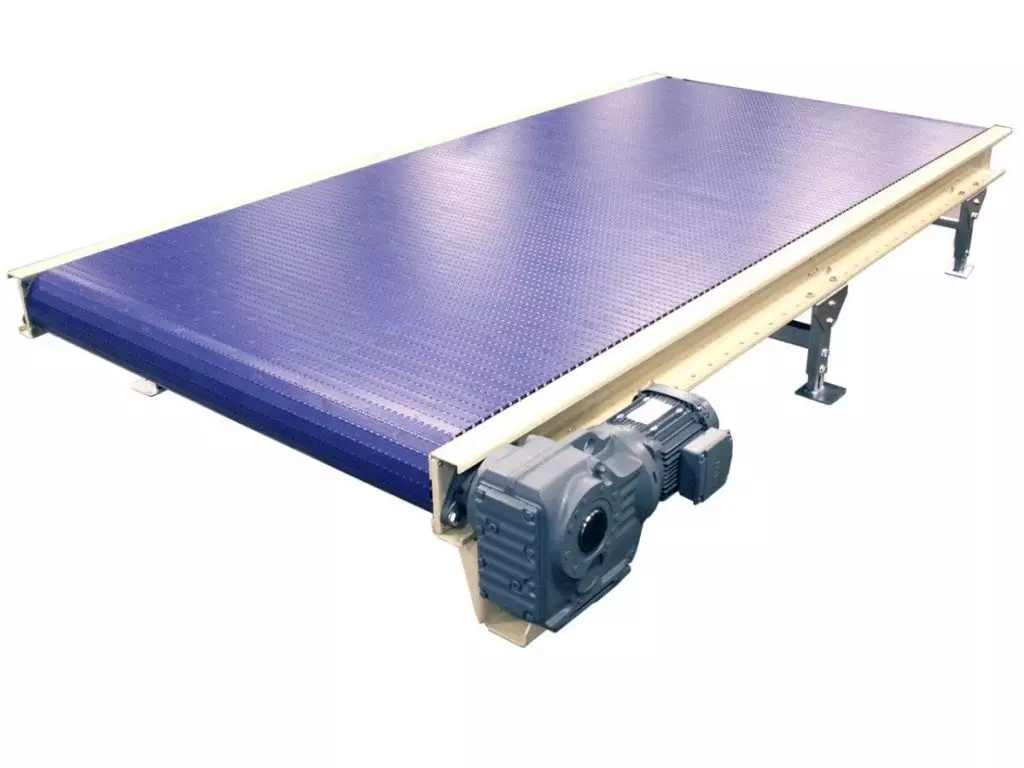
Can plastic belts be customized for specific industries or conveyor configurations?
Yes, plastic belts can be customized to meet the specific requirements of different industries or conveyor configurations. Here’s a detailed explanation:
- 1. Industry-Specific Customization:
Plastic belt manufacturers understand that different industries have unique needs and operating conditions. Therefore, they offer customization options to tailor plastic belts to specific industry requirements. For example:
- In the food industry, plastic belts can be customized to meet stringent hygiene standards, such as having smooth surfaces for easy cleaning, being made from food-grade materials, or incorporating features like detectable materials for food safety.
- In the automotive industry, plastic belts can be customized to withstand high temperatures, resist oil and grease, and have enhanced durability to handle heavy loads.
- In the pharmaceutical industry, plastic belts can be customized to be resistant to chemicals, moisture, and microbial growth, ensuring compliance with strict regulatory requirements.
- In the packaging industry, plastic belts can be customized to have specific surface textures or patterns for efficient product transfer, or they can be designed with specialized attachments for precise product positioning or diverting.
- 2. Conveyor Configuration Customization:
Plastic belts can also be customized to match the specific conveyor configurations and requirements of individual applications. Conveyor systems come in various types, such as flatbed, roller, or modular conveyors, and may have unique characteristics or dimensions. Plastic belt manufacturers offer customization options to ensure a seamless fit with the conveyor system, including:
- Customized belt widths and lengths to match the dimensions of the conveyor system.
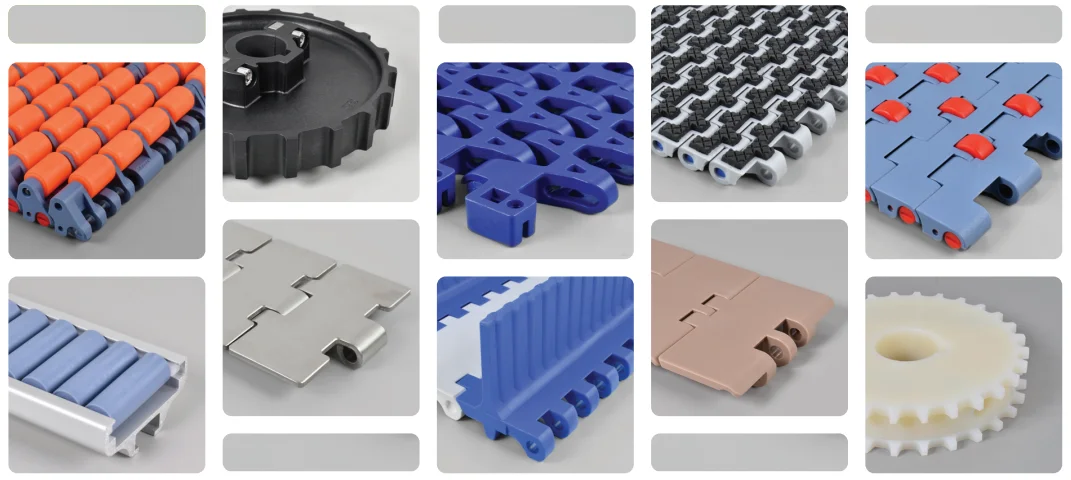
- Specialized belt designs, such as flat-top, flush-grid, or raised-rib configurations, based on the conveyor’s requirements for product stability, grip, or drainage.
- Customized belt accessories, such as sprockets, pulleys, or cleats, designed to work seamlessly with the conveyor system and provide the desired functionality.
- Modular plastic belts that can be easily assembled or reconfigured to fit different conveyor layouts or accommodate specific product handling needs.
Through industry-specific customization and conveyor configuration customization, plastic belts can be tailored to address the unique challenges and requirements of various industries and conveyor systems. This level of customization ensures optimal performance, efficiency, and reliability in material handling operations.
Can you explain the advantages of using plastic belts over traditional materials in conveyor systems?
Using plastic belts in conveyor systems offers several advantages over traditional materials such as rubber or fabric. Plastic belts, also known as polymer belts or synthetic belts, are made from various types of plastic materials and provide unique characteristics that make them desirable for conveyor applications. Here’s a detailed explanation of the advantages of using plastic belts over traditional materials in conveyor systems:
- Durability and Longevity:
- Versatility and Customization:
- Hygienic and Easy to Clean:
- Low Friction and Energy Efficiency:
- Chemical Resistance:
- Lightweight and Easy Installation:
Plastic belts are known for their durability and longevity. They are resistant to wear, abrasion, and impact, allowing them to withstand harsh operating conditions. Unlike rubber or fabric belts, plastic belts do not easily degrade or stretch over time. They can handle heavy loads and maintain their shape and performance for extended periods, resulting in reduced maintenance and replacement costs for conveyor systems.
Plastic belts offer versatility and customization options for conveyor systems. They can be manufactured in various sizes, widths, and configurations to meet specific application requirements. Plastic belts can have different surface patterns, such as smooth, textured, or perforated, providing enhanced grip, airflow, or product release capabilities. Additionally, plastic belts can be designed with specialized features like high temperature resistance, chemical resistance, or anti-static properties, making them suitable for diverse industries and conveyor applications.
Plastic belts are highly hygienic and easy to clean, making them ideal for industries with strict cleanliness and sanitation standards. Unlike fabric belts, plastic belts do not absorb liquids or harbor bacteria, reducing the risk of contamination in food processing, pharmaceutical, or other clean environments. Plastic belts can be easily cleaned using water, steam, or cleaning agents, ensuring optimal hygiene and compliance with industry regulations.
Plastic belts offer low friction characteristics, resulting in energy-efficient conveyor systems. The reduced friction between the belt and the conveyor components minimizes power consumption, allowing for cost savings and environmental benefits. Additionally, the low friction properties of plastic belts contribute to smoother and quieter operation, reducing noise levels in the workplace.
Plastic belts exhibit excellent chemical resistance, making them suitable for conveyor systems that handle corrosive or aggressive substances. They can withstand exposure to various chemicals, oils, solvents, and cleaning agents without deteriorating or experiencing significant damage. Plastic belts’ chemical resistance ensures their longevity and reliability in industries such as chemical processing, pharmaceuticals, or wastewater treatment.
Plastic belts are lightweight compared to traditional materials, facilitating easy installation and maintenance of conveyor systems. The reduced weight of plastic belts reduces the strain on conveyor components, extending their lifespan. Additionally, the lightweight nature of plastic belts simplifies handling during installation or replacement, improving efficiency and reducing downtime.
In summary, using plastic belts in conveyor systems offers significant advantages over traditional materials. They provide durability, versatility, and customization options, ensuring long-lasting and efficient performance. Plastic belts are hygienic, easy to clean, and resistant to chemicals, making them suitable for industries with strict cleanliness requirements. They offer low friction and energy efficiency, contributing to cost savings and environmental benefits. Moreover, plastic belts are lightweight and easy to install, simplifying maintenance and reducing downtime. These advantages make plastic belts a preferred choice in various industries for their conveyor system needs.


editor by CX 2024-02-06