✉ Get a Free Quote — [email protected]
Response within 24 hours · UK & Global B2B Enquiries Welcome
The pharmaceutical manufacturing sector in the United Kingdom operates under some of the most rigorous hygiene, traceability, and contamination-control standards in the world. Whether a facility is producing oral solid dosage forms — tablets, hard gelatin capsules, softgels, or blister packs — the conveying system connecting each processing stage carries enormous responsibility. A single failure in belt hygiene or mechanical integrity can halt an entire production batch, trigger a costly MHRA audit, or worse, compromise patient safety.
Over nearly two decades of hands-on application engineering in the plastic modular belt industry — working alongside production managers, validation engineers, and quality assurance teams from facilities in Manchester, Leeds, Cambridge, and the wider UK — I have seen precisely how belt selection transforms pharmaceutical solid dosage conveying lines. The right plastic modular belt does not merely move product from point A to point B. It becomes an integrated part of the facility’s GMP architecture, supporting clean-in-place protocols, personnel safety, and regulatory documentation requirements simultaneously. This guide draws on that depth of field experience, covering material science, hydrodynamic cleanability, system integration, and real-world performance data from the UK pharmaceutical sector.
Why Plastic Modular Belts Outperform Traditional Options in Pharma Solid Dosage Lines
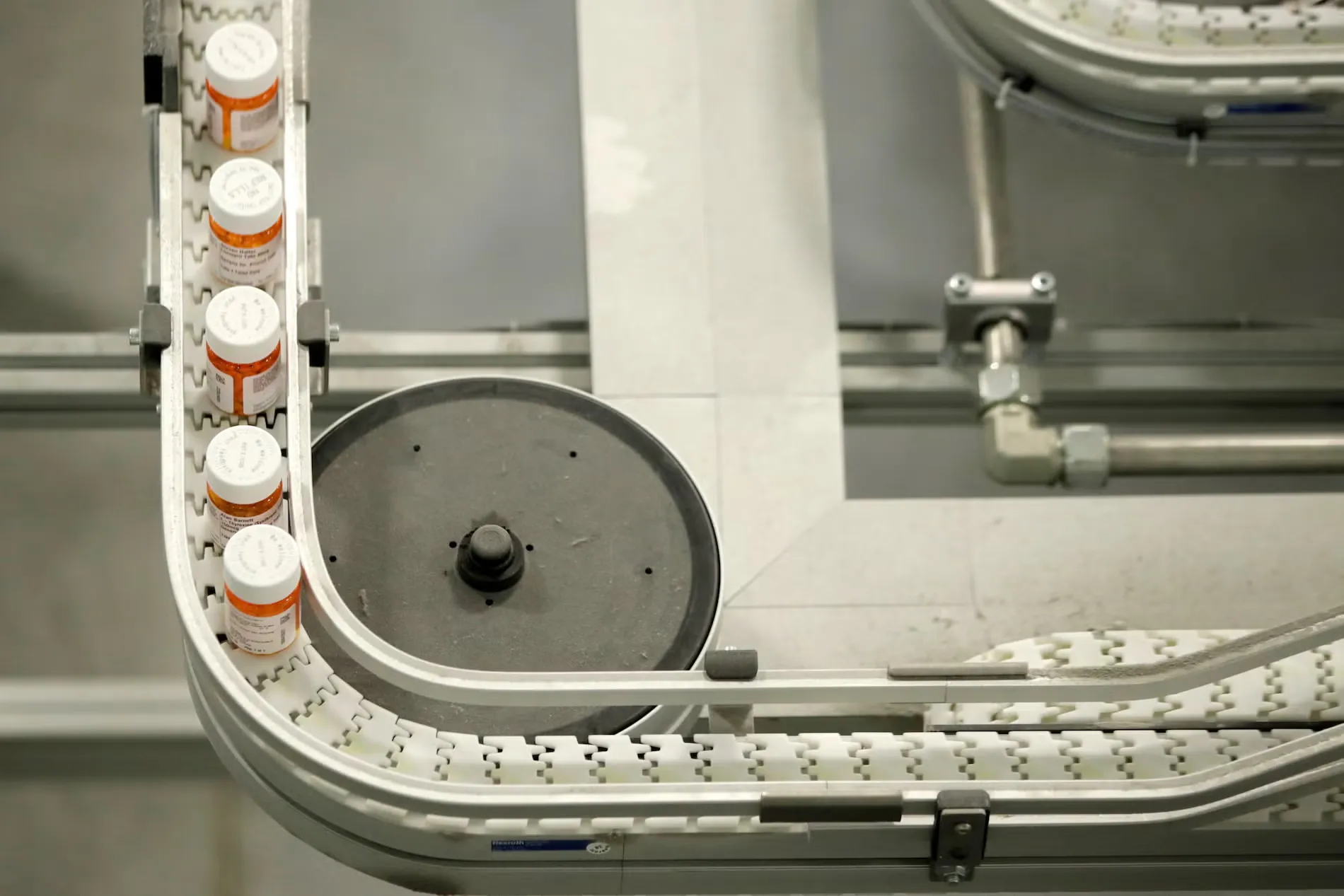
Traditional flat rubber belts and stainless steel slat chains served the pharmaceutical industry adequately during an era when production speeds were lower and regulatory scrutiny was less granular. Today’s UK pharmaceutical environments, driven by MHRA enforcement and the strict requirements of PIC/S GMP guidance, demand conveying surfaces that can be validated, documented, and repeatedly cleaned to a microbiologically acceptable standard without structural degradation. Plastic modular belts — constructed from interlocking polypropylene, acetal (POM), or polyethylene modules — answer every one of these requirements in ways that no fabric belt or metallic chain can.
The modular construction itself is a fundamental advantage. When a single module chips, cracks, or shows surface wear, maintenance personnel replace only that segment — no full belt shutdown, no extended downtime window, no waiting for specialist refit teams. In a commercial-scale tablet compression suite running three shifts, this distinction between a 12-minute module swap and a 4-hour full belt replacement translates directly into OEE percentage points and annual revenue.
Beyond maintainability, the open-grid geometry of most pharmaceutical-grade plastic modular belts allows wash water, cleaning agents, and sanitising solutions to pass through the belt surface and reach the undercarriage without dismantling the conveyor frame. This is not a cosmetic benefit — it is the architectural basis on which CIP and SIP validation protocols are built. For a UK pharmaceutical site preparing for MHRA inspection, a documented and validated CIP cycle on a plastic modular belt conveyor provides substantive evidence that cannot be offered by a solid rubber surface belt that traps moisture and biofilm in hidden folds.
Core Product Advantages
FDA & EU Compliant Materials
All belt modules are manufactured from food-grade and pharmaceutical-grade polymers — PP, POM, UHMW-PE — certified to FDA 21 CFR, EU 10/2011, and RoHS standards. Zero risk of leachable chemical migration into product streams.
IP69K Washdown Rated
High-pressure steam and chemical washdown cycles up to 80°C cause zero structural degradation. The open-grid hinge design eliminates biofilm harbourage points — a critical requirement for penicillin and beta-lactam containment areas across UK pharmaceutical sites.
Tool-Free Modular Replacement
Individual modules click in and out without specialist tooling. A trained technician can replace a worn or damaged module segment in under 15 minutes, keeping production uptime above 98.5% even in high-throughput solid dosage facilities running 24/7.
Full Traceability & Documentation
Every belt shipment includes material certificates, polymer lot numbers, and compliance declarations — supporting DQ/IQ/OQ/PQ validation documentation packages required for MHRA-regulated facilities throughout England, Scotland, and Wales.
Antistatic & Metal-Detectable Variants
Antistatic belt grades dissipate surface charge during tablet coating and film-coating operations, preventing dust explosion risk. Metal-detectable grades with blue or detectable black colouring satisfy HACCP and foreign body contamination control programmes.
Custom Width & Configuration
Belt widths from 100 mm to 1,200 mm, curved sections, incline angles, side guards, and lane-divider attachments all available to order. Our engineering team designs bespoke conveying solutions specifically matched to your OSD line layout and throughput targets.
Material Science, Belt Construction, and Operating Principles
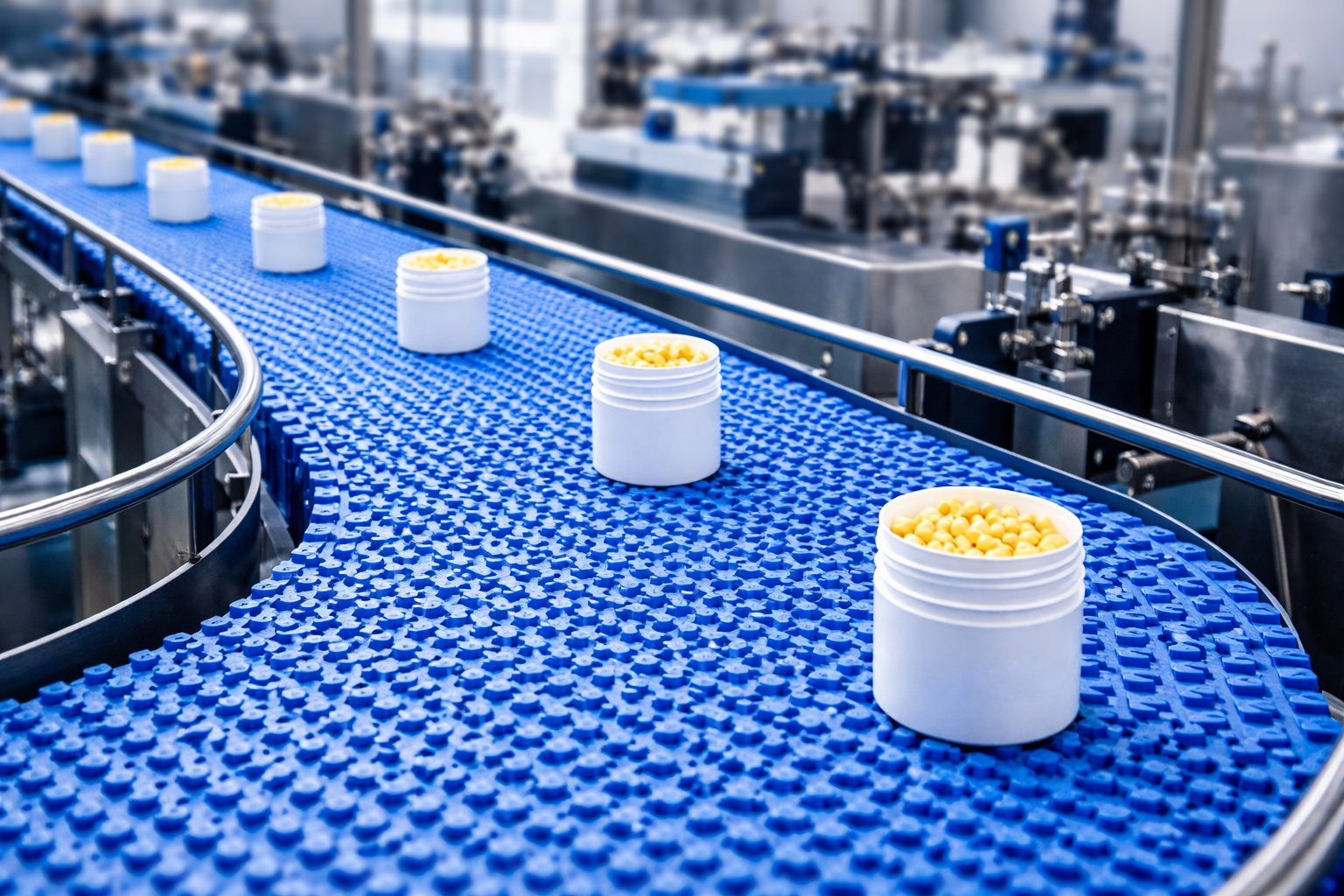 The structural logic of a plastic modular belt is elegantly simple: individual injection-moulded modules, typically 25 mm to 100 mm in pitch width, are hinged together using smooth-bore connecting rods fabricated from the same base polymer or a compatible stainless steel alloy. The resulting belt surface combines the flexibility of a conventional conveyor belt with the dimensional stability and replaceability of rigid machine components. For pharmaceutical solid dosage lines, this construction resolves a fundamental tension between hygiene and mechanical robustness that has challenged engineers for decades.
Polypropylene (PP) modules are selected for applications requiring broad chemical compatibility — handling aggressive CIP chemicals such as sodium hypochlorite, peracetic acid, or caustic soda wash solutions without surface chalking or embrittlement. Acetal (POM) offers superior dimensional stability and a lower coefficient of friction, making it ideal for the accumulation tables and blister pack transfer conveyors where smooth product glide is paramount. UHMW-polyethylene grades deliver maximum abrasion resistance for tablet inspection lines where product volume and impact load are both elevated. The specific grade selected for your pharmaceutical solid dosage production line depends on a structured application review — line speed, product weight, cleaning regime, operating temperature, and regulatory classification all feed into the specification.
The hinge rod geometry deserves specific engineering attention in pharmaceutical contexts. Round-bore hinges with smooth internal surfaces, rather than traditional lug-style connections, eliminate the micro-cavities where cleaning solution residue and tablet dust can accumulate between shifts. This design feature, while appearing minor in catalogue drawings, has measurable impact on swab test results during environmental monitoring programmes — the bedrock of contamination control validation at any MHRA-licensed UK manufacturing site.
Technical Performance Parameters
MD = Metal Detectable grade. All parameters based on standard operating conditions. Custom grades available on request.
Application Scenarios in Pharmaceutical Solid Dosage Manufacturing
The pharmaceutical solid dosage production line is not a single conveyor — it is a sequence of interconnected conveying stages, each with distinct product handling requirements, environmental classifications, and cleaning protocols. Understanding where the plastic modular belt adds the greatest value across these stages is central to building a technically sound and commercially justifiable specification.
The immediate discharge zone from rotary tablet presses generates high volumes of tablet dust and API particulate. An antistatic flat-top plastic modular belt here prevents static charge accumulation while supporting the pneumatic or gravity collection of broken tablet debris without belt surface contamination risk.
The transition of tablets from compression to coating drum requires gentle, low-abrasion belt surfaces that do not chip tablet edges or generate particulate. Low-friction POM modular belts with closed flat-top surfaces are the industry preference, controlling tablet orientation and single-layer spread for uniform coating distribution.
Automated camera-based tablet inspection systems — standard in UK OSD manufacturing since the early 2010s — demand belt surfaces with consistent surface reflectance and minimal background noise. White flat-top modular belts provide the optical baseline that machine vision algorithms require for reliable defect detection and batch documentation.
Downstream of the blister sealing machine, sealed PVC/Alu blister packs transition to cartoning lines. The plastic modular belt must support flat, stable transfer without PVC surface scratching. Flat-top, low-friction belts with tight module spacing prevent pack tipping and serialisation scan failures on GS1-compliant track-and-trace lines.
HDPE tablet bottles on filling and capping conveyors require stable, upright bottle transport at speeds up to 600 bottles per minute. Wide flat-top plastic modular belts with friction-enhanced top surfaces and guide rail compatibility eliminate bottle tip-over events that trigger automatic line stops and OEE losses.
Hard gelatin and HPMC capsules exiting filling machines are fragile and sensitive to impact. Open-grid plastic modular belts in capsule sorting zones allow fine API powder fallthrough to collection trays — eliminating product contamination across capsule batches and simplifying cleaning validation between campaigns.
Customer Success: How a UK Generic Pharma Manufacturer Cut Cleaning Downtime by 40%
🏭 Generic OSD Manufacturer
⚗️ 12 active API campaigns / year
The Challenge
A mid-sized generic pharmaceutical manufacturer in Yorkshire was operating a 6-line solid dosage production facility producing both non-beta-lactam and beta-lactam tablets. Their existing PVC flat belt conveyors required full belt removal, immersion cleaning, and drying between product campaigns — a process consuming 6–8 hours of downtime per changeover per line, across all six production lines simultaneously.
The Solution
Following a detailed application audit, the facility converted all 6 lines to pharmaceutical-grade PP open-grid plastic modular belts, selected for their CIP-in-place capability and validated cleanability at the 10 µg/cm² surface residue threshold required by their cross-contamination cleaning protocol. Metal-detectable blue modules were specified on beta-lactam lines.
The Results
What Our Clients Say
“The switch to plastic modular belts was one of the best engineering decisions we made in the past five years. Our MHRA inspector specifically commented positively on the cleanability design during our last inspection — that’s worth its weight in gold for us.”
“We’d been using rubber belts on our blister pack transfer lines for over a decade and assumed changing would be expensive and disruptive. The modular belt conversion was actually completed over a single weekend shutdown. Belt tracking accuracy improved immediately and we’ve had zero serialisation failures since installation.”
“As a contract manufacturing organisation supplying multiple pharmaceutical brands, belt traceability and material documentation are non-negotiable. The compliance certificate package provided with each belt order simplified our IQ documentation process significantly and cut our validation engineer’s workload considerably.”
Custom Engineering & Manufacturing Capability
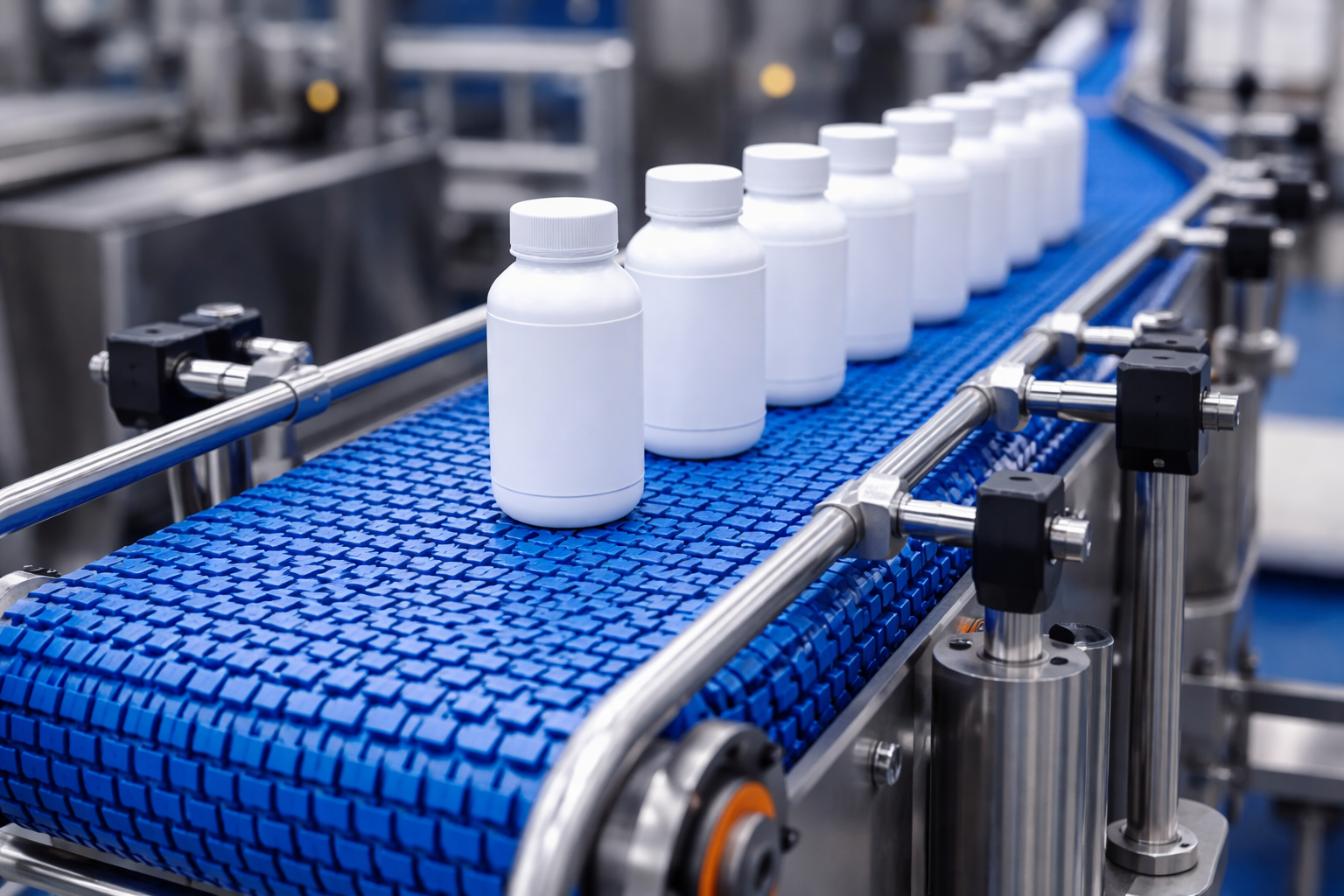 Standard catalogue belt specifications cover the majority of pharmaceutical solid dosage conveying applications. However, the most technically demanding production environments — multi-product containment facilities, potent compound handling areas, OEB 4/5 containment suites, and specialised capsule or tablet inspection lines — consistently require belts engineered to specific performance targets rather than off-the-shelf solutions. Our manufacturing facility maintains a dedicated product customisation programme supported by a team of application engineers with direct experience in UK and European pharmaceutical GMP environments.
Custom product development services include: bespoke module geometry for specialist product handling requirements; proprietary colour-coding programmes for multi-API facilities; integrated side wall designs for inclined tablet transfer without guide rails; customer-specified hinge rod materials including titanium grades for highest-cleanliness environments; and prototype batch production for validation purposes prior to full-scale procurement. Our minimum order quantity for custom-specification belts is significantly lower than industry norms, making bespoke solutions commercially accessible even for single-line applications within UK pharmaceutical facilities. Lead times for custom belt production are typically 10–18 working days from drawing approval, with full material certification and quality documentation supplied as standard.
Submit your line specifications, throughput requirements, and cleaning protocol details. Our application engineering team responds within 24 hours with a technical recommendation and indicative pricing for your UK pharmaceutical facility.
Serving UK Pharmaceutical Manufacturers — From Yorkshire to the Thames Valley
The United Kingdom hosts one of the world’s most concentrated pharmaceutical manufacturing ecosystems, spanning clusters in the North West around Manchester and Liverpool, the Yorkshire corridor from Leeds to Hull, the Midlands life sciences corridor, the East of England bioscience hub around Cambridge and Norwich, and the Thames Valley pharmaceutical belt west of London. Each of these regions operates under MHRA oversight and, increasingly, PSUR and GMP alignment frameworks that are diverging post-Brexit toward a UK-specific regulatory profile with shared foundations in ICH Q7, Q8, and Q10 guidelines.
For plastic modular belt procurement serving these facilities, UK pharmaceutical manufacturers consistently cite three priorities: rapid delivery to maintain production continuity, technical support capable of addressing MHRA validation documentation requirements, and competitive pricing for both initial system specification and ongoing spare parts supply. Our distribution and engineering support network is structured to meet all three requirements — offering next-day delivery of standard belt widths to mainland UK addresses, remote technical support from experienced application engineers, and volume pricing frameworks that reward long-term partnership rather than transactional purchasing. Whether you operate a single-product speciality site in Cambridge or a multi-product, multi-building manufacturing campus in Manchester, the right plastic modular belt specification is available through a single, technically focused supply contact.
Frequently Asked Questions
Specify Your Pharmaceutical Solid Dosage Conveying Belt Today
Industry-leading plastic modular belts for UK pharmaceutical manufacturers. GMP documentation, next-day delivery, and full application engineering support.
Get a Quote — [email protected]
edit by gzl