 The chemical packaging industry in the United Kingdom operates under some of the most demanding conditions imaginable — corrosive atmospheres, aggressive cleaning protocols, strict HSE regulations, and zero tolerance for contamination. When production managers at chemical plants from Teesside to Cheshire review their conveyor systems, the plastic modular belt has emerged as the definitive answer to a long list of operational headaches that traditional steel mesh or rubber belts simply cannot solve.
Unlike rubber belts that degrade rapidly when exposed to solvents, acids, or alkaline washdown agents, and unlike metal mesh belts that corrode and harbour bacteria in their crevices, a properly specified plastic modular belt offers a modular, hygienic, and chemically resistant conveying surface that can be tailored precisely to the throughput and safety demands of your packaging line. This guide explores the engineering case for modular plastic belting in chemical packaging environments, drawing on over 18 years of field application experience across the UK and Europe.
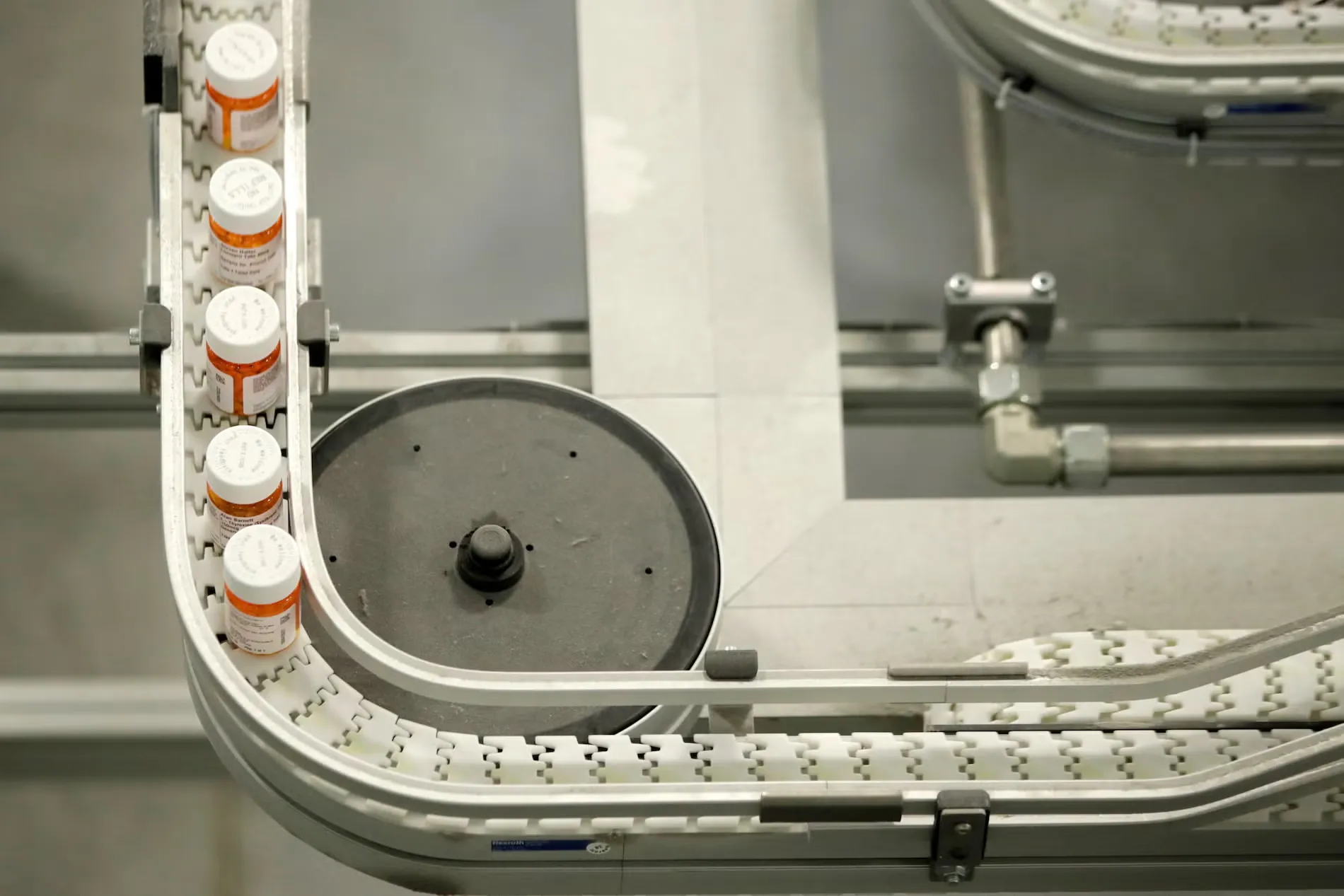
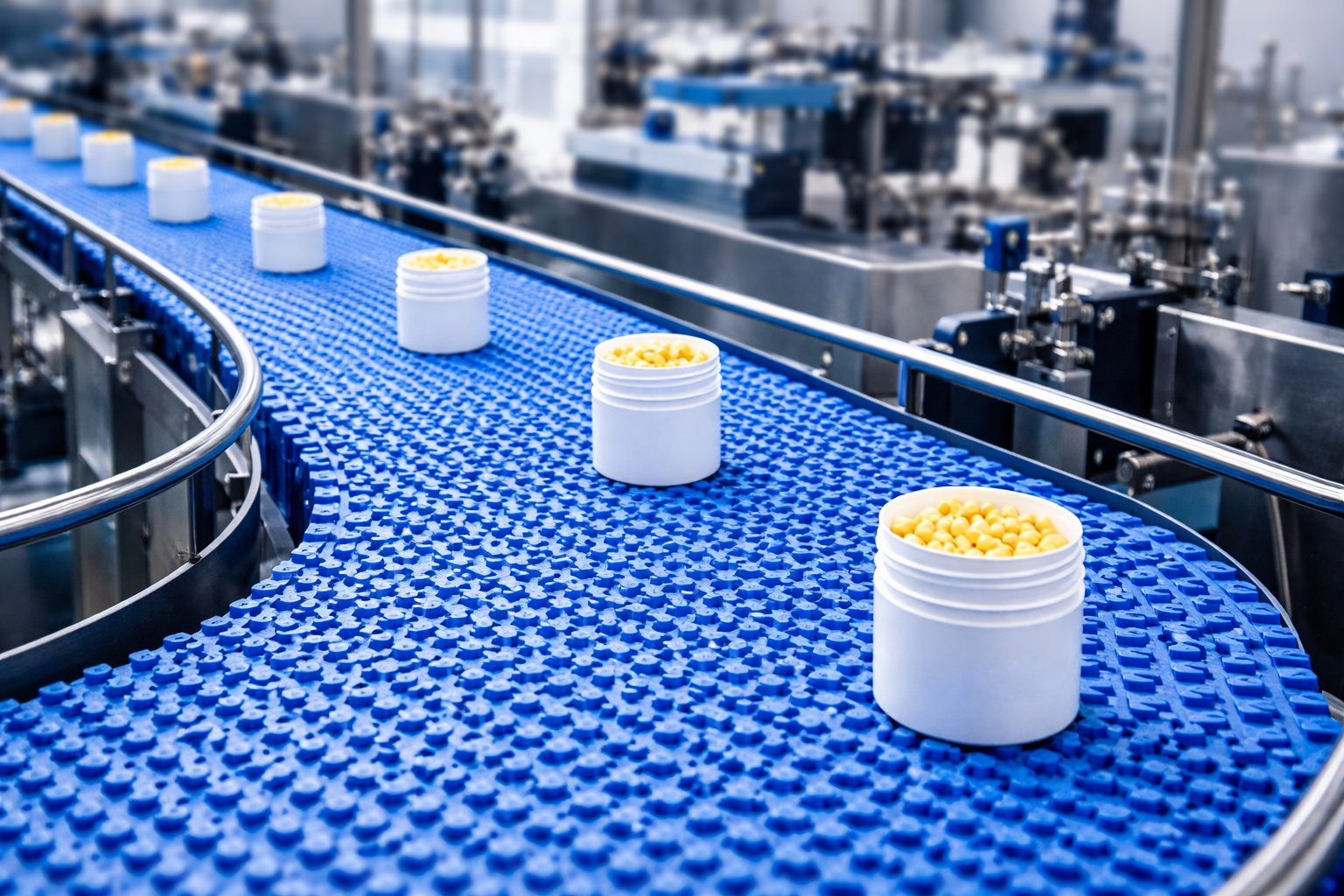
Plastic modular belt installed on a chemical drum filling and packaging conveyor line
What Is a Plastic Modular Belt and Why Does It Matter in Chemical Packaging?
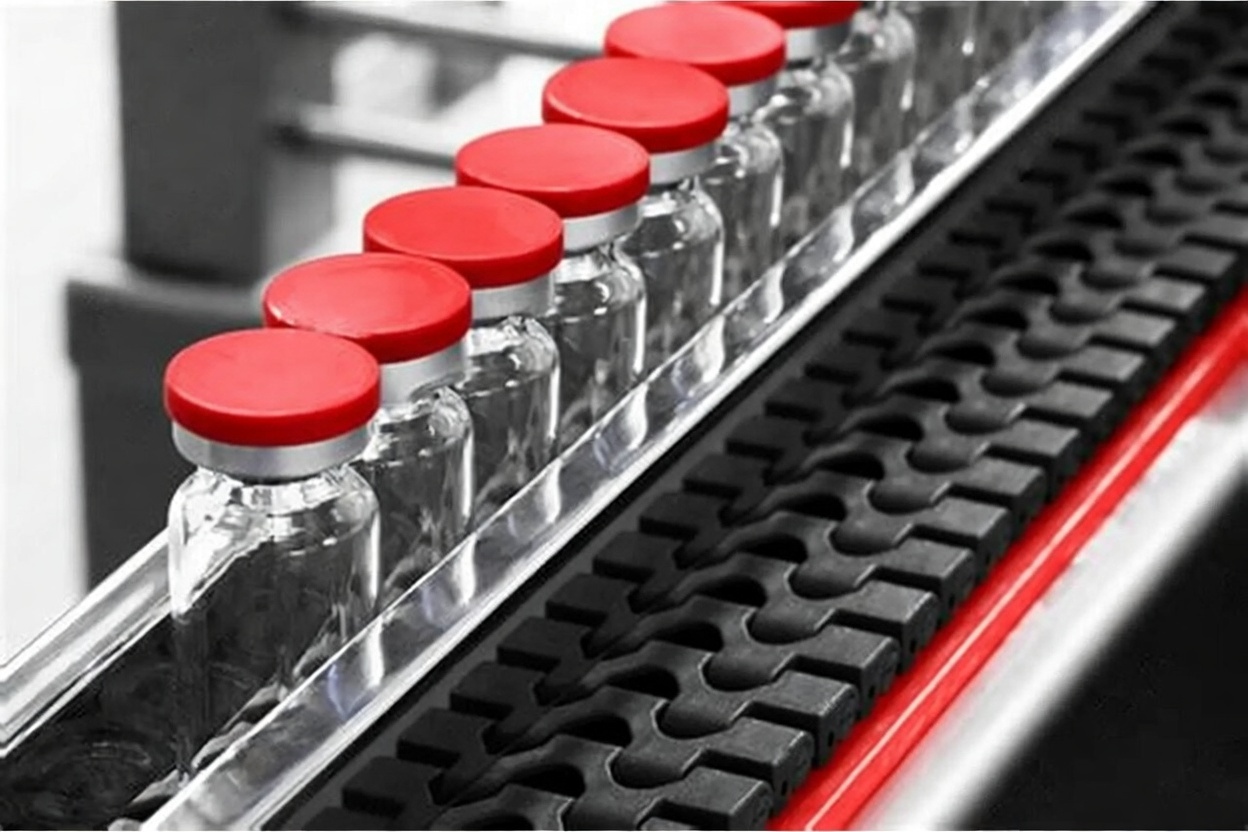 A plastic modular belt is a conveyor belt constructed from interlocking thermoplastic modules — typically manufactured from polypropylene (PP), polyethylene (PE), polyacetal (POM), or nylon — linked together with transverse rods to form a continuous, flexible conveying surface. Unlike a monolithic rubber belt, each individual module can be replaced in minutes without removing the entire belt from the conveyor frame. In a chemical packaging line where downtime translates directly to lost production and potential safety incidents, this maintainability is not a minor feature — it is a fundamental operational advantage.
The chemical packaging sector in the UK covers an enormously diverse range of products: industrial cleaning agents, agrochemicals, pharmaceutical intermediates, paint and coating raw materials, adhesives, and specialty solvents. Each of these product categories presents unique challenges for the conveying equipment. A plastic modular belt that is correctly specified for the chemical environment — the right polymer grade, the right surface pattern, the right colour coding for product traceability — will outperform alternative conveying solutions on every meaningful metric: service life, cleanability, regulatory compliance, and total cost of ownership.
What makes the modular approach particularly valuable in UK chemical manufacturing is the sector’s increasing adoption of ATEX-rated equipment zones, COSHH compliance requirements, and the need for systems that can be validated under ISO 22000 or GMP guidelines for crossover pharmaceutical-chemical operations. A plastic modular belt, when manufactured from approved materials with certified polymer documentation, slots naturally into these compliance frameworks in a way that uncoated steel alternatives cannot.
Technical Specifications & Material Performance Parameters
The following table outlines the key technical parameters for plastic modular belts used in chemical packaging applications. Material selection is critical — polypropylene offers excellent chemical resistance at a cost-effective price point, while polyacetal (POM) delivers superior dimensional stability and low moisture absorption for precision conveying.
How Plastic Modular Belt Technology Works on a Chemical Packaging Line
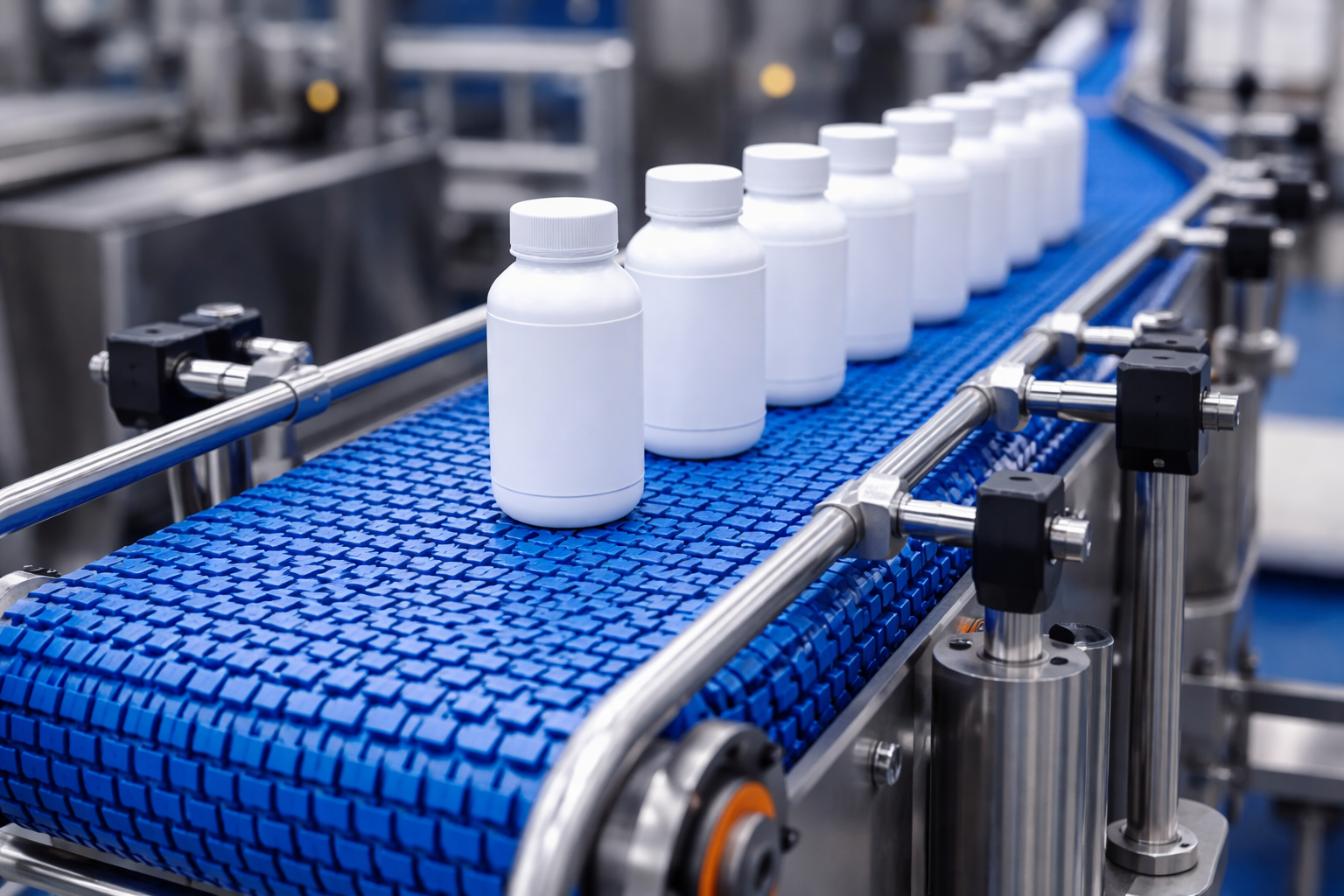 The operating principle of a plastic modular belt is deceptively straightforward, yet the engineering behind each module is sophisticated. Individual plastic modules — typically rectangular in plan view and designed with a series of hinge loops on their leading and trailing edges — are assembled by threading stainless steel or plastic rods through the aligned hinge loops of adjacent rows. The resulting belt resembles a chain in cross-section but presents a flat, continuous, and highly customisable conveying surface in plan view.
On a chemical packaging line, this belt travels across a sprocket-driven conveyor frame, supported by wear strips or a solid pan depending on the load and the need for product drainage. For drum filling stations where liquid spillage is common, an open-grid plastic modular belt allows spilled product to drain away from the conveying surface immediately, preventing pooling around containers and dramatically reducing the slip hazard for operators. For labelling and inspection stations, a flush-grid or flat-top plastic modular belt provides a stable, vibration-free surface that ensures accurate label placement and reliable barcode scanning.
The modular construction means that when a single module is damaged — for example, cracked by a dropped steel drum — a trained operative can replace that one module in under five minutes using a simple rod-removal tool, without removing the belt from the conveyor or stopping adjacent lines. In high-throughput UK chemical packaging facilities where a single conveyor may handle 400 to 600 units per hour, this local repairability translates to a direct saving of several thousand pounds per avoided unplanned stoppage event.
Why Chemical Packaging Plants Across the UK Are Switching to Plastic Modular Belts
Unmatched Chemical Resistance
Polypropylene and UHMWPE grades resist virtually the entire spectrum of industrial chemicals encountered in UK chemical packaging — from concentrated sulphuric acid to sodium hydroxide, from acetone to chlorinated solvents. Belt manufacturers provide chemical resistance charts with immersion test data for third-party validation.
Modular Repairability
Single-module replacement in minutes rather than full belt replacement in hours. Chemical plants typically carry a small stock of replacement modules — costing a few pounds each — eliminating the need to hold entire spare belts. The lifetime cost reduction against rubber or PVC belts typically exceeds 40% over a five-year maintenance cycle.
Regulatory Compliance Built In
FDA, EC 1935/2004, EC 10/2011, REACH, and RoHS-compliant material grades are available with full documentation packages. For UK chemical manufacturers operating under COMAH regulations or exporting to EU markets post-Brexit, having fully certified belt materials with traceable polymer documentation is a compliance necessity, not a selling point.
Precision Customisation
Belt pitch, width, surface pattern, open area percentage, sidewall height, lane dividers, and colour coding can all be configured to the specific requirements of each conveyor station. This level of customisation allows chemical packaging engineers to specify a belt that is optimised for each application — not a compromise that partially fits several.
Beyond these headline advantages, chemical packaging plant managers frequently cite the low noise characteristics of plastic modular belts compared to metal mesh alternatives as an important factor, particularly where new UK workplace noise regulations require areas to remain below 80 dB(A) action values. The smooth engagement of thermoplastic modules with sprocket teeth generates significantly less mechanical noise than the rattle of metal links, contributing to better working environments in busy packaging halls across Yorkshire, the Midlands, and the South East.
Customer Success: Real Results from UK & European Chemical Packaging Operations
Three case studies drawn from our project portfolio illustrate the measurable impact of specifying the correct plastic modular belt for chemical packaging applications.
From 14 Belt Replacements Per Year to Zero: A North East England Chemical Packaging Turnaround
A mid-sized industrial cleaning products manufacturer on Teesside was experiencing fourteen rubber belt replacements per year across their bleach and caustic soda packaging line, at a combined cost of approximately £38,000 in parts and labour. The alkaline filling environment was destroying the rubber compound in under four months per belt. Following a site assessment, we specified a polypropylene flat-top plastic modular belt with 25.4 mm pitch and a 15% open drainage area for the filling zone, with a closed-surface section through the labelling and capping stations.
Eighteen months after installation, the maintenance log showed zero belt replacements — only three individual modules replaced following accidental drum contact. The annualised maintenance saving against the previous rubber belt programme was calculated at £34,200, giving a full payback on the plastic modular belt system investment in under seven months. The plant engineering manager noted that the consistent belt surface also improved their automatic labelling uptime from 91% to 98.3%.
“We had tried two different rubber belt suppliers and a coated steel mesh option before switching to the plastic modular belt. Nothing else even came close to the performance we needed in a caustic environment. The modular belt paid for itself before we even noticed it was there — because we stopped having to think about belt changes.”
— Plant Engineering Manager, Industrial Cleaning Products Manufacturer, Teesside, UK
“We run an agrochemical blending and packaging facility in Cheshire. The antistatic PP plastic modular belt specified for our solvent-based product line has been running for two years without a single maintenance intervention. ATEX compliance documentation was comprehensive and accepted by our insurance assessors first time.”
Operations Director, Agrochemical Manufacturer, Cheshire, UK
“Our Belgian paint pigment packaging line had persistent problems with metal mesh belt corrosion in the acid washing section. The switch to UHMWPE plastic modular belts solved the corrosion issue entirely. The supplier’s technical team handled the conveyor frame modification, belt tensioning setup, and sprocket replacement — a genuinely complete service.”
Maintenance Manager, Specialty Coatings Manufacturer, Antwerp, Belgium
“We specified a side-flexing plastic modular belt for a curved accumulation conveyor in our IBC washing and refilling facility in Yorkshire. The belt navigates a 90-degree curve at full load without any lateral tracking issues. Lead time from order to delivery was 12 working days, which was critical for our planned maintenance window.”
Projects Engineer, Chemical Container Services Company, Yorkshire, UK
Our Manufacturing & Customisation Capability
Every chemical packaging line is different. That is why we do not sell off-the-shelf belts — we engineer solutions around your specific process, container, chemical, and regulatory requirements.
Belt Width Range
100 – 3,600 mm
Custom widths fabricated to drawing
Available Pitches
12.7 / 25.4 / 38.1 mm
Including flat, grip-top, and open-grid surface patterns
Lead Time (Standard)
7 – 15 Working Days
Express 5-day service available for critical maintenance orders
Certifications Provided
FDA / EC / REACH
Full polymer traceability documentation on every order
Our engineering team works directly with UK chemical packaging plant managers, conveyor OEMs, and process engineers to develop belt specifications that are right-first-time. We carry out no-obligation conveyor assessments, produce 3D belt layout drawings for client approval, and offer on-site installation support across England, Scotland, and Wales. For multi-site pharmaceutical-chemical manufacturers, we provide a standardised belt specification document that simplifies procurement across all sites and ensures consistency in maintenance procedures. Our in-house testing laboratory validates chemical resistance, mechanical strength, and dimensional accuracy on every production batch — so when a plastic modular belt leaves our facility to a chemical plant in Birmingham, Bristol, or Aberdeen, it comes with a technical data package that satisfies the most demanding quality management systems.
Serving the UK Chemical Industry: From Teesside to the South Coast
 The United Kingdom has one of Europe’s most significant chemical manufacturing sectors, contributing over £15 billion annually to national GDP and employing more than 500,000 people directly and indirectly. Major chemical and chemical packaging clusters are concentrated in the Tees Valley and North East England (home to the UK’s largest chemical complex), the Humber Estuary, the North West (particularly Cheshire and Merseyside), the Thames Estuary, and the West Midlands. Each of these regions has a large and diverse population of chemical packaging operations, from small contract packagers handling specialty industrial chemicals to large-scale multinationals operating multi-line drum and IBC filling halls.
Across all of these locations, we supply plastic modular belt systems to chemical packaging facilities that range from three-person maintenance teams managing legacy conveyor equipment to large engineering departments specifying new conveyor lines for greenfield capital projects. Our logistics network ensures next-working-day delivery of standard replacement modules to anywhere on the UK mainland, which is particularly valued by Teesside and Humber chemical plants where unplanned conveyor downtime can cascade into wider plant shutdown scenarios.
For UK chemical companies navigating the post-Brexit regulatory landscape — where REACH UK now applies separately from EU REACH, and where CE marking has been replaced by UKCA marking for conveyor components — our compliance documentation team ensures that every plastic modular belt order is supplied with the appropriate UK and EU regulatory documentation. This dual compliance capability is particularly valuable for chemical manufacturers who export finished goods to EU markets and need their production equipment to satisfy both UK HSE standards and EU machinery directive requirements simultaneously.
Frequently Asked Questions
Answers to the most common questions from UK chemical packaging engineers and procurement managers.
Ready to Upgrade Your Chemical Packaging Conveyor?
Tell us your conveyor dimensions, chemical environment, and production requirements. Our engineering team will specify the right plastic modular belt solution and provide a detailed quotation within 24 hours.
Get a Quote: [email protected]
Serving chemical packaging operations across England, Scotland, Wales & Northern Ireland | Delivery across the UK mainland
© Ever Power | Plastic Modular Belt Specialists | edit by gzl