|
📍 Serving Automotive Plants across England, Scotland & Wales
|
Updated: June 2025
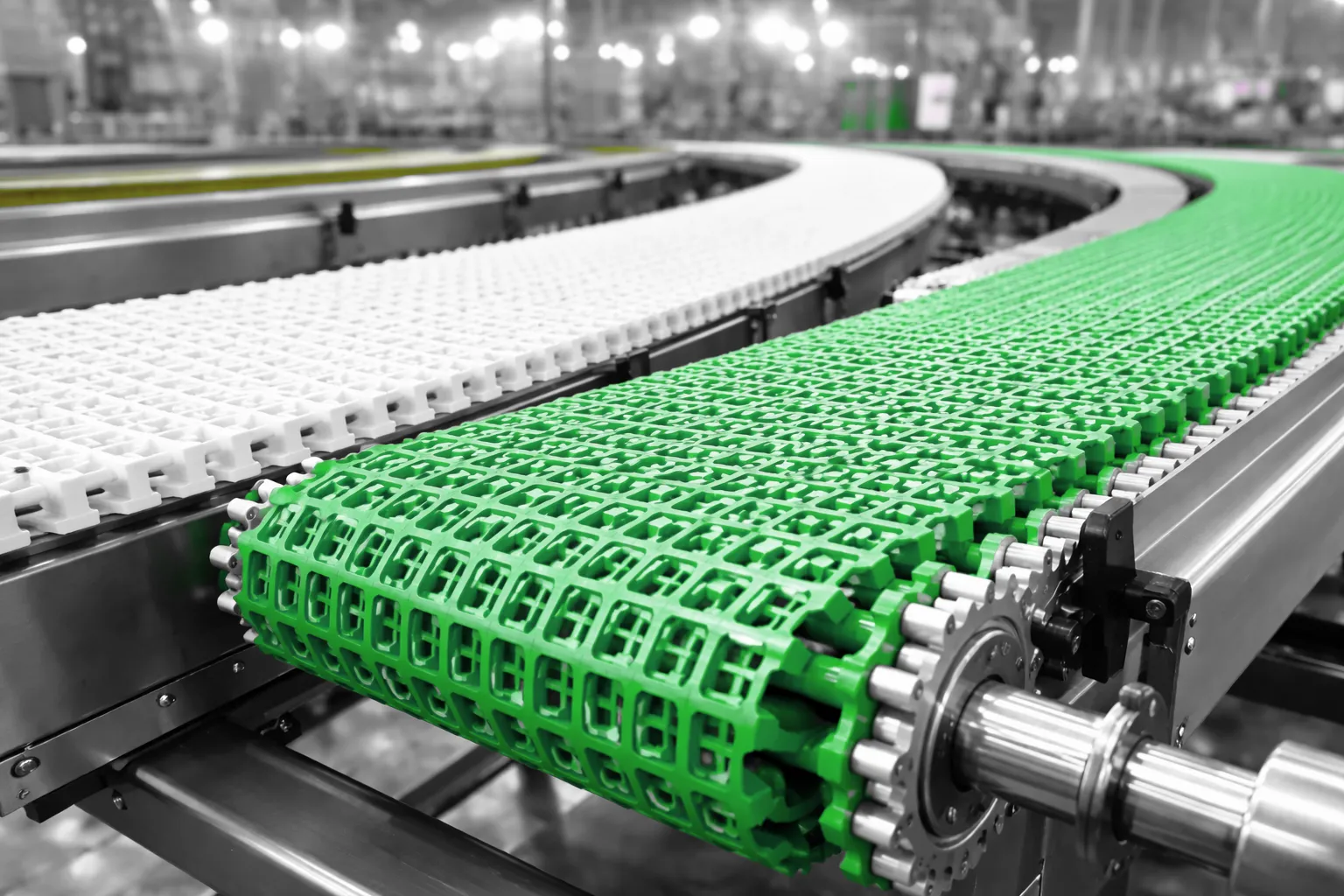 Automotive paint shops represent one of the most chemically aggressive, thermally challenging, and contamination-sensitive environments in modern manufacturing. A single particle of rust, grease, or metal debris landing on a freshly primed panel can result in a costly paint defect, rework cycle, or customer warranty claim. That is why facilities from Coventry to Glasgow have begun specifying plastic modular belt conveyor systems as the preferred transport solution for body-in-white carriers, painted door panels, bumper fascias, and hood assemblies moving through pre-treatment tunnels, spray booths, and curing ovens.
Unlike traditional steel chain or flat rubber belts, a well-engineered plastic modular belt offers an extraordinary combination of chemical inertness, dimensional stability, and hygienic open-grid drainage — all within a modular architecture that allows on-site repair or reconfiguration without specialist tools. Over eighteen years of working with paint line engineers across the UK and Europe, I have seen how the right belt specification can cut downtime, reduce contamination incidents, and slash annual maintenance costs by a measurable margin. This article covers everything you need to know before selecting a plastic modular belt for your automotive paint shop conveyor line.
Ever Power plastic modular belt installed on an automotive paint shop conveyor line — engineered for chemical resistance and zero contamination.
Why Automotive Paint Shops Demand a Specialised Plastic Modular Belt
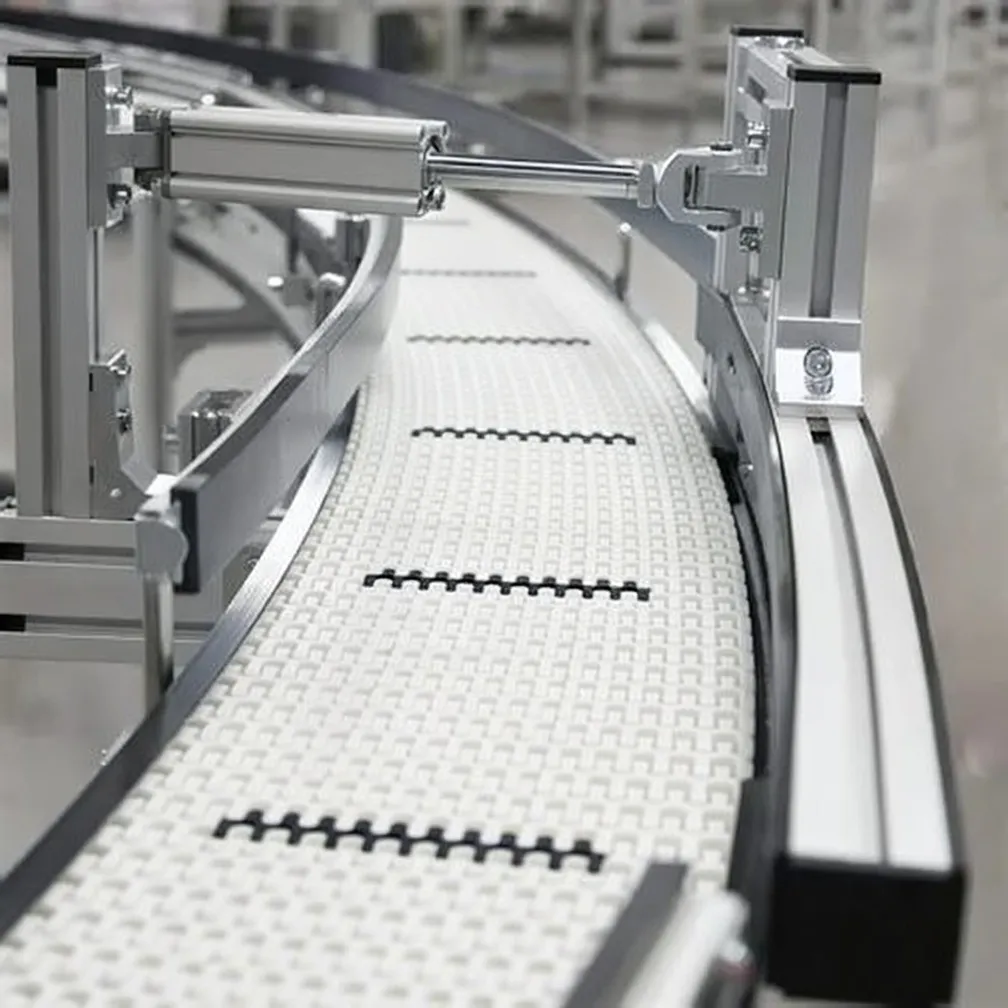 Paint shop conveyor lines operate across a cascade of process zones — phosphating and degreasing tanks, electro-coat (e-coat) immersion baths, sealer application stations, base coat and clear coat spray booths, and high-temperature curing ovens that routinely reach 180–220 °C. Every zone imposes a different mechanical and chemical demand. Steel chain links corrode rapidly in phosphating chemicals, generating ferrous contamination that ruins paint adhesion. Rubber flat belts absorb solvents and swell, causing misalignment and belt wander. PVC belts soften and creep under oven temperatures.
A purpose-built plastic modular belt, manufactured from engineering-grade polypropylene (PP), acetal (POM), or high-temperature nylon (PA), sidesteps all of these failure modes. The interlocking modular pitch design — typically 25.4 mm or 50.8 mm pitch — distributes load evenly, prevents sagging between support rails, and allows precise tracking even on curved or inclined sections of the paint line. Open-hinge and flush-grid belt variants allow chemical wash-down fluids and spray booth mist to drain freely, maintaining a clean belt surface at all times.
Oven-Grade Heat Resistance
High-temp nylon and PEEK-reinforced modular belts sustain continuous operation at up to 220 °C inside powder coat and e-coat curing ovens without deformation or lubricant carbonisation.
Chemical Inertness
Polypropylene and acetal grades resist phosphoric acid, zinc phosphate, alkaline degreasers, cathodic e-coat bath electrolytes, and solvent-based paint chemistries — materials that destroy conventional chain in months.
Tool-Free Modular Repair
Individual belt modules can be snapped out and replaced in minutes without removing the entire belt from the frame. This keeps planned maintenance windows short and unplanned stoppages rare — critical in a 24/7 automotive paint operation.
Technical Performance Parameters
The table below summarises key performance data for Ever Power plastic modular belt grades most commonly specified for automotive paint shop conveyor lines in the UK. All figures are nominal; exact specifications depend on belt pitch, width, and application temperature.
Zone-by-Zone Application Scenarios Along the Paint Shop Line
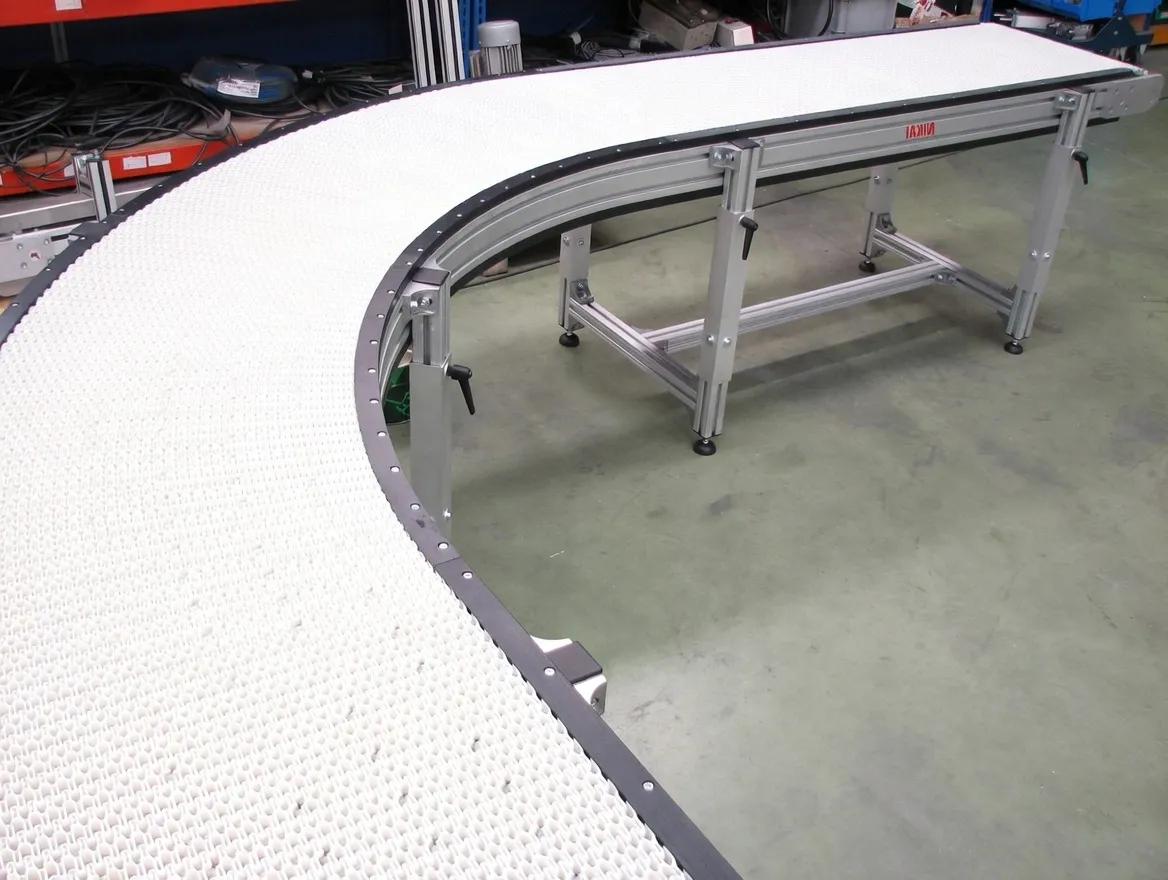 A modern automotive paint shop is not a single homogeneous environment — it is a sequence of distinct process zones, each of which places different demands on the conveyor belt material. Mapping the right plastic modular belt grade and surface pattern to each zone is the core of good conveyor engineering, and it is precisely where eighteen years of fieldwork pays dividends. Below is a zone-by-zone breakdown of how modular belt specifications translate into real performance gains.
Materials, Construction Principles & How the Belt Actually Works
A plastic modular belt is not a single extruded ribbon — it is a precision assembly of individually moulded thermoplastic modules linked by stainless steel or thermoplastic hinge rods. Each module is injection-moulded to tight dimensional tolerances, ensuring consistent pitch engagement with the drive sprocket and uniform load distribution across the full belt width. The modular architecture allows different surface patterns — flush grid, open grid, flat-top, raised rib, or roller-top — to be combined on the same belt run to address multiple process requirements without a belt change-out.
PP (Polypropylene)
Lightweight, highly chemical-resistant, cost-effective. Ideal for pre-treatment and wash-down zones. Available in food-grade and ESD-dissipative variants.
POM (Acetal / Delrin)
Excellent stiffness, low friction, superior dimensional stability. The standard choice for painted panel transfer conveyors and inspection lines requiring positional accuracy.
PA (Nylon) HT Grade
Glass-fibre or carbon-fibre reinforced nylon withstands continuous oven temperatures up to 220 °C. Retains mechanical properties through thousands of thermal cycles.
Stainless Hinge Rods
304 or 316L stainless steel hinge pins resist corrosion in chemical zones while maintaining precise pitch alignment. Replaceable without belt disassembly in most configurations.
Real-World Success: UK Automotive Tier 1 Supplier Case Study
Based on a project completed for a plastic bumper fascia manufacturer in the West Midlands, England.
Challenge
A West Midlands Tier 1 automotive bumper supplier was experiencing an average of 2.3 paint defect incidents per shift attributable to conveyor contamination — primarily lubricant deposits from ageing link chain and ferrous particulate from corroded chain links entering the base coat spray booth. Annual rework cost from paint defects alone exceeded £180,000. The existing steel chain also required weekly lubrication, consuming approximately 8 hours of technician time and generating hazardous waste for disposal.
Solution
Ever Power supplied a complete 47-metre run of 50.8 mm pitch acetal (POM) flat-top plastic modular belt, 600 mm wide, with integrated side guard modules to prevent bumper edge contact with frame components. The high-temperature nylon grade was specified for the 60-metre oven section, rated at 185 °C continuous. All hinge rods were 316L stainless steel for corrosion resistance in the phosphate pre-treatment zone. Our engineering team conducted an on-site survey and provided CAD-level belt layout drawings before manufacture to confirm compatibility with the existing drive and return roller configuration.
Results (12 months post-installation)
94%
Reduction in conveyor-related paint defect incidents
£160k
Annual saving in rework and labour costs
Zero
Belt lubrication events per year (dry running)
8 min
Average module replacement time (down from 4 hrs for chain)
What Our Customers Say
“We replaced our entire phosphating zone chain with Ever Power’s open-grid PP belt and the difference was immediate. No more brown contamination streaks on panels coming out of the pre-treatment tunnel. The belt has been running 14 months without a single module replacement.”
— Plant Engineer, automotive body panel manufacturer
📍 Sunderland, North East England
“The high-temperature nylon belt for our curing oven has been an absolute revelation. We were changing the old steel chain every eight months due to heat-related fatigue. This plastic modular belt is heading into its second year and looks brand new. The ROI calculation was straightforward.”
— Maintenance Manager, bumper & trim coatings facility
📍 West Midlands, England
“Ever Power’s engineering team came on-site, measured everything, and delivered a drop-in replacement belt that fit our existing frame perfectly. The lead time was 12 working days — impressive for a custom width. Highly recommend them to any UK paint shop looking to reduce downtime and contamination.”
— Production Director, Tier 1 door panel coater
📍 Derby, East Midlands, England
Ever Power: Custom Belt Engineering for British Automotive Facilities
No two automotive paint lines are identical. Belt width, pitch, surface pattern, module colour, hinge rod material, side guard height, and edge profile are all variables that must be matched to your specific conveyor frame, panel dimensions, and process chemistry. Ever Power operates a dedicated custom belt engineering service, supporting UK customers from initial enquiry through final installation. Our manufacturing facility maintains mould tooling for over 120 belt module variants across five polymer families, with the capability to produce bespoke mould tooling for non-standard applications within agreed lead times.
For automotive paint shop customers in England, Scotland, and Wales, we offer CAD-based belt layout design as a standard part of the quoting process — not an add-on. Our engineers will review your current conveyor drawings, identify potential tracking or tension issues, and recommend the most cost-effective belt specification before you commit to an order. We hold buffer stock of the most popular PP and POM module types for same-week dispatch, and can arrange emergency on-site support through our network of UK service partners when production continuity is at stake.
🏭 Custom Mould Tooling
Bespoke module designs for non-standard widths or surface profiles
📐 CAD Belt Layout Design
Full compatibility check with your existing conveyor frame before manufacture
📦 UK Buffer Stock
PP & POM modules available for same-week dispatch to UK locations
🔬 Material Certification
Full RoHS & REACH documentation supplied with every order
Plastic Modular Belt vs. Steel Chain: A Direct Comparison for Paint Shop Use
Frequently Asked Questions
What is the best plastic modular belt material for a high-temperature curing oven in a UK automotive paint shop?
For continuous oven temperatures between 160–220 °C, glass-fibre reinforced high-temperature nylon (PA) is the industry-standard choice. It maintains structural integrity through thousands of thermal cycles without deformation or lubricant carbonisation, which eliminates the contamination risk associated with steel chain lubrication inside paint curing ovens. Ever Power’s HT nylon grade has been validated on live automotive oven conveyors across England for over four years.
How much does a plastic modular belt for an automotive paint shop conveyor line cost in the UK, and what affects the price?
Pricing depends on belt width, pitch, polymer grade, surface pattern, and total run length. Standard PP open-grid belts start from approximately £18–£35 per metre per 100 mm of width. High-temperature nylon grades carry a price premium due to material and moulding costs. The best way to get an accurate figure is to contact Ever Power directly at [email protected] with your line dimensions and process temperatures.
Which plastic modular belt surface pattern should I specify for the spray booth section of my paint shop conveyor?
A smooth flat-top acetal (POM) belt is the recommended choice for spray booth sections. The non-porous, flush surface minimises exposed hinge volume, cutting particulate generation to near zero. It also prevents overspray absorption, which is a common failure mode with rubber belts — absorbed solvents outgas during the next heat cycle and contaminate fresh paint coatings on the panel surface above.
Where can I find a reliable plastic modular belt supplier that offers custom widths and delivers to automotive factories across England and Wales?
Ever Power serves automotive manufacturing facilities across the whole of the UK, including the West Midlands, North East England, East Midlands, South Wales, and Scotland. We offer custom widths, non-standard pitches, and bespoke surface patterns with full CAD support. Buffer stock is maintained for rapid dispatch, and our application engineers can arrange site visits for larger projects. Reach us at [email protected].
How do I know if my existing paint shop conveyor frame is compatible with a plastic modular belt replacement?
Compatibility is determined by drive sprocket pitch (must align with belt pitch), return roller diameter, frame width tolerance, and whether the existing slider bed material is smooth enough for low-friction belt running. Ever Power offers a complimentary compatibility assessment — either on-site or from your existing conveyor drawings — as a standard part of every quotation. This ensures a true drop-in replacement without costly modifications to the conveyor structure.
When is the right time to replace steel chain with a plastic modular belt on a car body paint line to maximise return on investment?
The ideal conversion window is during a scheduled plant shutdown or annual maintenance overhaul. Converting on a running line risks unplanned downtime. Most UK automotive customers recover the investment within 12–18 months through eliminated lubrication costs, reduced rework from contamination defects, and significantly longer belt service life compared to steel chain in chemically aggressive paint shop environments.
Ready to Eliminate Contamination and Downtime on Your Paint Shop Conveyor?
Talk to an Ever Power applications engineer today. We serve automotive manufacturers across England, Scotland, and Wales with custom plastic modular belt solutions, rapid delivery, and on-site technical support.
[email protected] · Ever Power Industrial Conveyor Solutions · United Kingdom
© Ever Power · plastic-modular-belt.com · All technical data is nominal; confirm specifications with our engineering team before ordering. · edit by gzl