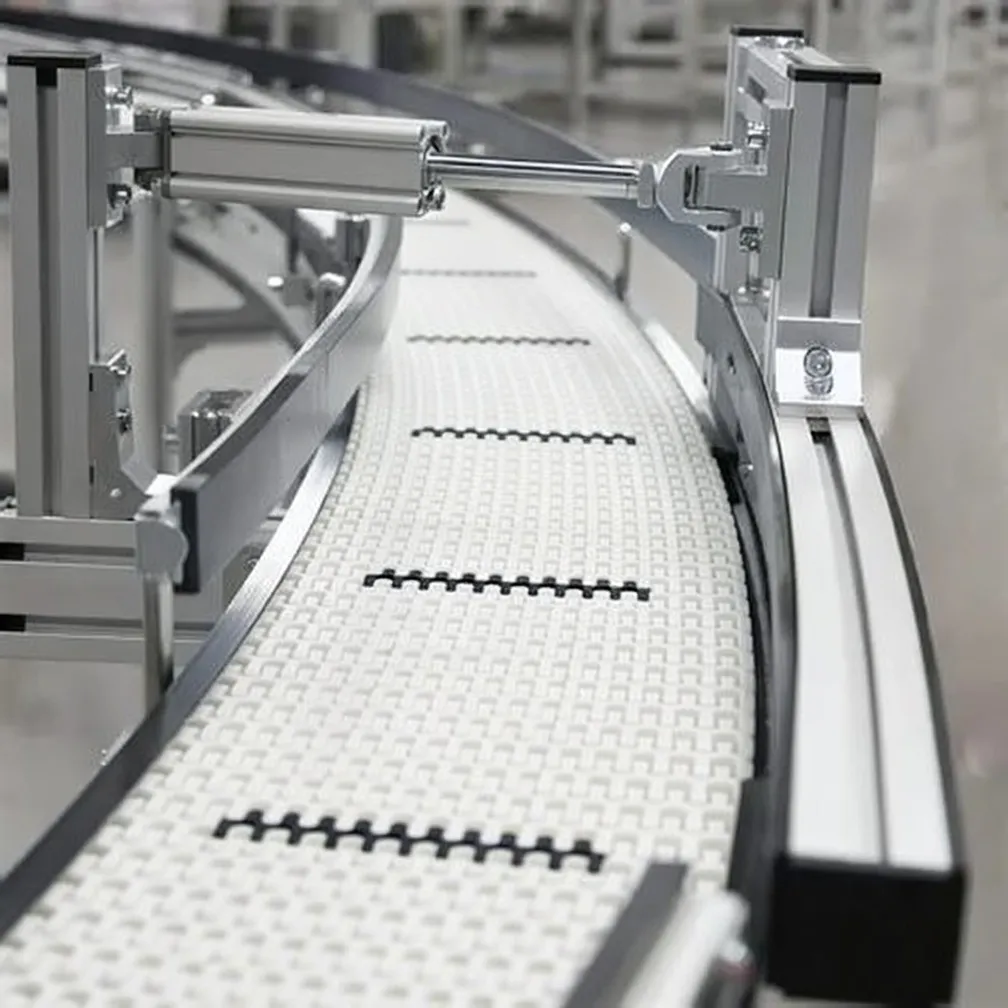
 Inside every automotive paint shop, the conveyor system is the unsung backbone of the entire production line. Whether transporting bare metal shells through phosphating tanks, moving body panels through electro-coat (e-coat) baths, or carrying fully primed bodies into the topcoat oven, the demands placed on any conveying surface are extraordinary. Temperature extremes, aggressive chemical exposure, dimensional precision, and near-zero tolerance for contamination all converge in this environment — and a conventional rubber or steel belt simply cannot meet these demands reliably. That is precisely why the plastic modular belt has become the preferred choice for automotive paint shop conveyor lines across manufacturing plants throughout the United Kingdom and globally.
Unlike monolithic belt materials that degrade when exposed to phosphoric acid, cataphoretic paint chemistry, or curing oven temperatures exceeding 200°C, a properly specified plastic modular belt maintains dimensional stability, surface integrity, and mechanical strength across the entire process chain. The interlocking module design means individual sections can be replaced without shutting down the entire line — a critical advantage in high-volume automotive production where every minute of downtime carries significant financial weight. With the right material selection, open-hinge geometry, and drive configuration, a plastic modular belt becomes more than just a transport surface; it becomes an active contributor to paint quality, production efficiency, and total cost of ownership.
Plastic Modular Belt — Automotive Paint Shop Conveyor Application
Recommended: 1200×600px, WebP format, alt=”plastic modular belt automotive paint shop conveyor UK”
Why Automotive Paint Shops Demand a Different Class of Conveyor Belt
Engineering Perspective · 18+ Years Application Experience
Oven Curing Zones (Up to 220°C)
Paint curing ovens expose conveyor surfaces to sustained high temperatures. Standard polymer belts warp or soften; specialist acetal or polypropylene plastic modular belt grades maintain structural integrity through repeated thermal cycles without dimensional creep.
Chemical Pre-treatment Lines
Phosphating, degreasing, and e-coat tanks deploy highly aggressive chemical baths. The plastic modular belt’s resistance to acids, alkalis, and solvent-based paint chemistries means no belt degradation, no contamination of the bath, and no metallic particulate that could compromise coating adhesion.
Zero-Contamination Requirement
Any foreign particle — metal filings, rubber dust, belt debris — that contacts a primed surface before topcoating creates a costly cosmetic defect. Plastic modular belts are engineered to generate no debris, no flaking, and no static discharge that could attract dust onto freshly primed panels.
Rapid In-Line Maintenance
In high-volume UK automotive plants running two or three shifts, maintenance windows are tight. The interlocking module structure of a plastic modular belt allows damaged sections to be swapped in minutes without tools or full belt removal — an advantage that dramatically reduces planned and unplanned downtime.
Dimensional Precision for Robotics
Modern paint shops use robot arms for seam sealing, underbody coating, and topcoat application. These robots require the vehicle body to be positioned with ±1mm repeatability. Plastic modular belt systems, when correctly tensioned and guided, deliver the tracking accuracy that robotic stations demand throughout the entire line.
Open-Hinge Drainage Design
Pre-treatment and rinse zones generate significant liquid runoff. Open-top plastic modular belt designs allow process fluids to drain freely through the belt, preventing pooling on the belt surface, reducing belt weight under load, and maintaining consistent bath concentrations in immersion-type pre-treatment systems.
Technical Parameters: Plastic Modular Belt for Paint Shop Applications
Material Selection · Performance Data · Operating Limits
Specifying the correct plastic modular belt for an automotive paint shop begins with understanding the operational envelope of each zone. A one-size-fits-all approach fails because the e-coat immersion zone, the curing oven, and the finished body transfer section each impose fundamentally different requirements on material, pitch, and surface texture. The table below consolidates the key parameters relevant to UK automotive paint shop conveyor engineering teams evaluating plastic modular belt options.
| Parameter | PP (Polypropylene) | POM (Acetal) | PVDF / Specialty |
|---|---|---|---|
| Operating Temp (Continuous) | -10°C to +120°C | -40°C to +100°C | Up to +150°C |
| Peak Temp (Short-term) | +130°C | +110°C | +220°C |
| Chemical Resistance (Acids) | Excellent | Good | Excellent |
| Chemical Resistance (Alkalis) | Excellent | Excellent | Excellent |
| Tensile Strength (Belt Width) | Up to 2,500 N/m | Up to 3,800 N/m | Up to 2,200 N/m |
| Module Pitch (Standard) | 25.4 / 38.1 mm | 25.4 / 50.8 mm | 38.1 mm |
| Belt Width Range (Custom) | 100 – 3,000 mm | 100 – 2,500 mm | 100 – 2,000 mm |
| Surface Options | Flat / Perforated / Grip-top | Flat / Low-friction | Flat / Open-mesh |
| Typical Paint Shop Zone | Pre-treatment / E-coat | Transfer / Assembly | Curing Oven |
| FDA / RoHS Compliance | Available | Available | Available |
Zone-by-Zone Application: Where Plastic Modular Belt Excels in the Paint Shop
Process Engineering · Line Integration · Material Compatibility
An automotive paint shop is not a single environment; it is a sequence of distinct process zones, each with its own temperature profile, chemical exposure, and throughput requirement. Understanding which plastic modular belt specification suits which zone is fundamental to long-term line reliability. Over eighteen years of application work in this sector, the following zone breakdown has proven consistently accurate across UK, European, and global automotive facilities.
Body Wash & Pre-Degrease
Alkaline detergent sprays and high-pressure rinses strip manufacturing oils and stamping lubricants from the bare metal body. The plastic modular belt here must tolerate surfactant concentrations up to 5% w/v, temperatures up to 65°C, and continuous water immersion. Open-hinge polypropylene modules with 35–45% open area are the standard specification, allowing full drainage while supporting the body’s weight across the conveyor span.
Belt Spec: PP open-top, 38.1mm pitch, flush-grid surface
Phosphating & Conversion Coating
Zinc or iron phosphate baths create the conversion layer that ensures paint adhesion. Phosphoric acid concentrations of 10–25 g/L, combined with accelerators such as sodium nitrite, demand full acid resistance from the conveyor belt. A standard rubber or steel belt will corrode or leach ions into the bath, disrupting the coating chemistry and triggering quality defects. PP plastic modular belt maintains chemical neutrality throughout, with no measurable ion contribution to the bath composition over the full belt service life.
Belt Spec: PP acid-grade, 25.4mm pitch, full-open hinge
Electro-Coat (E-Coat / Cataphoresis)
In the e-coat tank, the vehicle body is fully submerged and electrochemically coated with a primer layer at 250–450V DC. The conveyor belt operates entirely underwater in a paint emulsion bath at 28–32°C. Any metallic component of a conventional belt would disrupt the electrical field and compromise coating uniformity. Non-conductive plastic modular belt materials — polypropylene being the industry standard — are electrically transparent to the cataphoretic process, ensuring uniform primer deposition across all body surfaces, including internal cavities.
Belt Spec: PP non-conductive, 38.1mm pitch, submersible grade
E-Coat Curing Oven (175–190°C)
After leaving the e-coat tank, the primed body passes through a curing oven to crosslink the primer coating. At temperatures of 175–190°C sustained over 20–30 minutes, standard PP begins to soften. This zone demands either high-temperature PP grades (heat-stabilised formulations) or PVDF-based plastic modular belt configurations. Our high-temp grades retain full mechanical strength and belt geometry through continuous thermal cycling without warping, elongating, or releasing any volatile compounds that could affect the newly cured primer surface.
Belt Spec: HT-PP or PVDF, heat-stabilised, 38.1mm pitch
Sealing, Underbody & Topcoat Zone
After primer curing, the body moves through seam-sealing robots, underbody PVC application, and finally the topcoat spray booths. Here the plastic modular belt serves primarily as a precision transfer conveyor. Surface texture becomes critical — a belt with exposed gripping features or protrusions risks contact marks on the finished paint surface. Flat-top or low-profile acetal (POM) modules are the preferred specification in these post-primer zones, offering smooth, non-marking contact with zero abrasion risk on the cured primer or topcoat surface.
Belt Spec: POM flat-top, 25.4mm pitch, low-friction surface
Topcoat Oven & Final Quality Control
The final curing oven — typically 140–160°C for waterborne topcoats or up to 200°C for solventborne systems — represents the last thermal challenge before the vehicle body reaches the quality inspection station. At this stage, the plastic modular belt must not only withstand the temperature but must exit the oven without belt sag, camber distortion, or any surface marking. Post-oven quality inspection requires perfect belt geometry to maintain body position under the optical inspection systems that check for surface defects under raking light conditions.
Belt Spec: HT-PP stabilised, flat-top, precision-tracked
Customer Success: Real-World Plastic Modular Belt Implementation
Case Study · UK Tier 1 Automotive Supplier · Paint Shop Retrofit
West Midlands, UK
Tier 1 Automotive Supplier
Paint Shop Retrofit 2023
Replacing Steel Slat Conveyors with Plastic Modular Belt Across 340m of Paint Line
A well-established Tier 1 bumper and exterior trim component manufacturer operating from a 45,000 m² facility in the West Midlands had been running steel slat conveyors through their paint shop since the early 2000s. By 2022, corrosion from the phosphating zone had reduced maintenance intervals to every six weeks, and rust particulate from deteriorating slats was causing primer adhesion failures at a rate of approximately 1.8% of throughput — a figure that translated directly into costly rework and customer hold notifications to the OEM assembly plant they supplied.
Following a line audit, our engineering team specified a complete conversion to PP open-top plastic modular belt in the pre-treatment and e-coat zones, transitioning to HT-PP heat-stabilised modules through both curing ovens, and POM flat-top specification for the topcoat and inspection sections. The entire 340-metre line conversion was completed over three planned shutdown weekends, with no disruption to the production schedule in between.
What Our Customers Say
We’d battled rust contamination in our e-coat bath for years. After switching to plastic modular belt across the pre-treatment zone, we haven’t had a single bath contamination incident. The chemistry is cleaner, the coating adhesion is measurably better, and the belt itself has required almost no attention over fourteen months of continuous running.
The modular design was the deciding factor for us. Our oven conveyor spans 80 metres, and the ability to change out individual damaged modules during a shift change rather than pulling the whole belt has transformed our maintenance planning. Downtime in the curing zone used to be a major risk; now it is genuinely manageable. The quote process was also straightforward and the delivery lead time was competitive.
We supply OEM parts to three UK assembly plants, so finish quality isn’t optional — it’s contractual. The plastic modular belt retrofit across our topcoat zone eliminated the contact marks we were getting from the old rubber-faced slats. First-time pass rates through quality inspection went from 96.4% to 99.1% within two months of the conversion. That’s the kind of result that pays for itself very quickly when you’re running production volumes we deal with.
Manufacturing Capability & Custom Engineering
Ever Power · Plastic Modular Belt · Bespoke Solutions
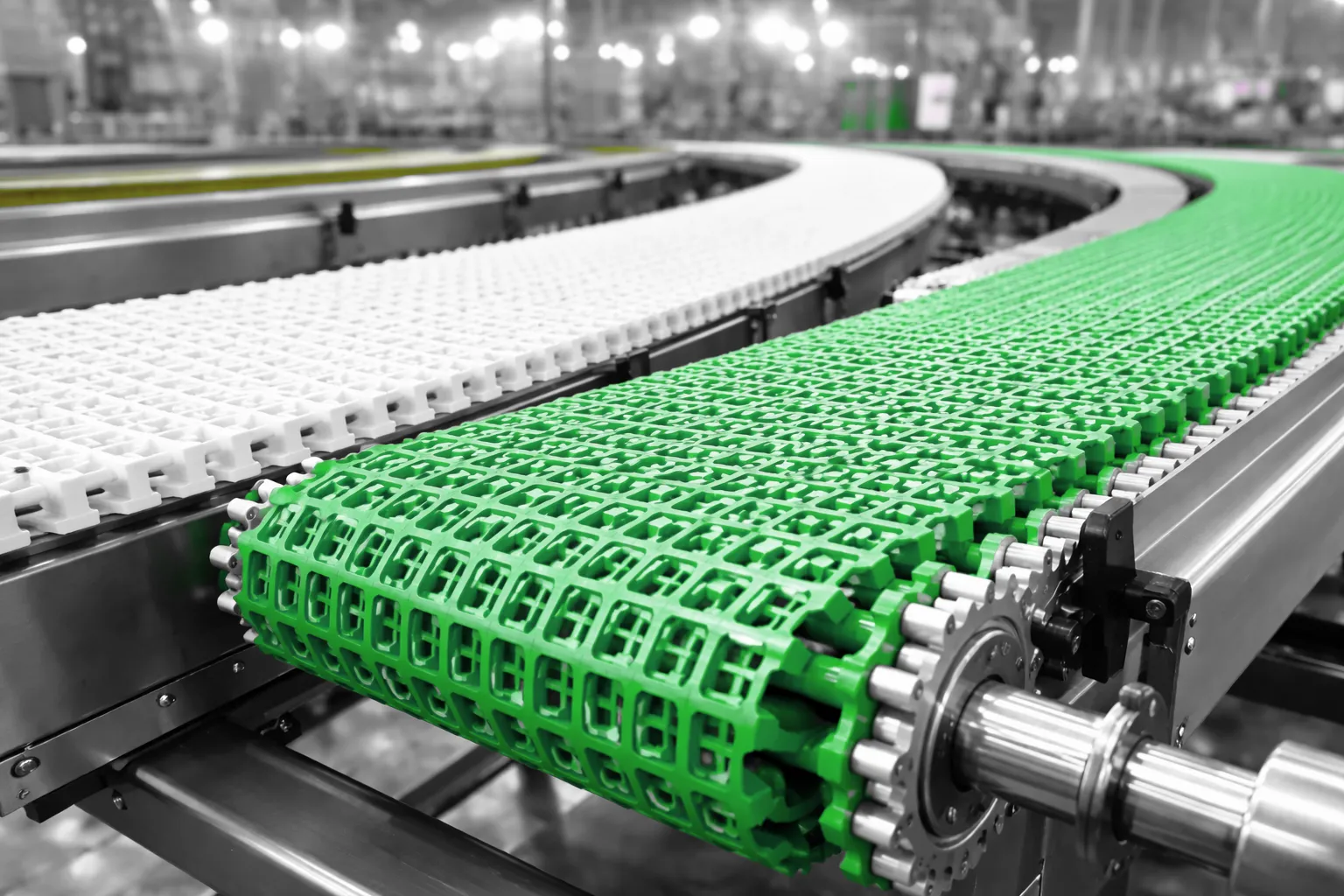 At Ever Power, our plastic modular belt manufacturing and customisation capability goes well beyond standard catalogue widths and pitches. We understand that automotive paint shop conveyor lines are rarely standard — line widths, elevation changes, drive system integration, and process-specific surface requirements all create customisation challenges that off-the-shelf products cannot address. Our in-house engineering team provides full bespoke specification development, from initial process audit and belt selection through to mechanical design review, factory acceptance testing, and on-site commissioning support across the United Kingdom.
Custom services include: belt widths from 100mm to 3,000mm in any increment; non-standard module pitch development; integrated lane dividers and side guides; custom surface textures and grip profiles; anti-static and ESD-dissipative grades; colour-coded modules for zone identification; and urgency manufacturing with reduced lead times for breakdown replacement supply. For UK customers operating within the automotive supply chain, we offer consignment stock arrangements and dedicated account management with technical support.
Custom Belt Width
Any width 100–3,000mm, any pitch, any material grade — manufactured to your exact conveyor frame specification.
Material Qualification
We provide material certificates, chemical compatibility data sheets, and thermal test reports with every order for your quality documentation.
UK Fast-Track Delivery
Standard orders dispatched within 5–10 working days. Breakdown emergency supply available with 48-hour manufacturing priority for UK accounts.
On-Site Technical Support
Our application engineers are available to visit UK facilities for line audits, installation support, and conveyor system optimisation consultations.
Advantages of Plastic Modular Belt over Alternative Conveyor Systems
Comparative Analysis · Steel Slat · Rubber Belt · Chain Systems
Engineers evaluating conveyor technology for automotive paint shop applications typically compare plastic modular belt against steel slat conveyors, rubber belts, and overhead chain systems. Each alternative carries limitations that become apparent in paint shop conditions. The plastic modular belt’s combination of chemical inertness, modular repairability, non-conductivity, and surface flexibility addresses every major failure mode of the alternatives in a single platform.
| Property | Plastic Modular Belt | Steel Slat | Rubber Belt | Overhead Chain |
|---|---|---|---|---|
| Chemical Resistance (Acids/Alkalis) | ✔ Excellent | ✘ Poor (corrodes) | ~ Limited | ~ Moderate |
| High-Temp Capability (to 220°C) | ✔ Yes (specialty grades) | ✔ Yes | ✘ No (<80°C) | ✔ Yes |
| Zero Metal Contamination | ✔ Yes | ✘ High risk | ✔ Yes | ✘ Lubricant drip risk |
| Module-Level Repair (no full belt change) | ✔ Yes | ✘ No | ✘ No | ~ Partial |
| Electrical Non-Conductivity (E-coat zone) | ✔ Yes | ✘ Conductive | ✔ Yes | ✘ Conductive |
| Surface Marking Risk (topcoat zone) | ✔ Minimal (flat-top) | ✘ High (edge marking) | ~ Moderate | ~ N/A (overhead) |
| Total 5-Year Maintenance Cost (relative) | Low | Very High | Medium | Medium-High |
Frequently Asked Questions
Automotive Paint Shop · Plastic Modular Belt · UK Buyers
Ready to Specify the Right Plastic Modular Belt for Your Paint Shop?
Our application engineers are ready to help UK automotive suppliers and manufacturers select, specify, and source the correct plastic modular belt for every zone of your paint shop conveyor line. Get in touch for a no-obligation technical consultation and competitive quote.
© Ever Power · Plastic Modular Belt Specialists · United Kingdom · [email protected]
edit by gzl