Plastic Modular Belt · Automotive Industry · UK Applications
How Plastic Modular Belts Revolutionise Automotive Assembly Line Conveyor Systems
In modern vehicle manufacturing, every second on the line translates directly into cost. Plastic modular belts have become the engineering backbone of automotive assembly conveyor systems across the UK and Europe — delivering precision, reliability, and unmatched hygiene compliance where traditional flat belts simply cannot compete.
Custom OEM Solutions
UK & EU Supply Ready
✉ Get a Quote — [email protected]
Response within 24 hours · Custom designs welcome · UK stock available
Why Automotive Assembly Lines Are Switching to Plastic Modular Belts
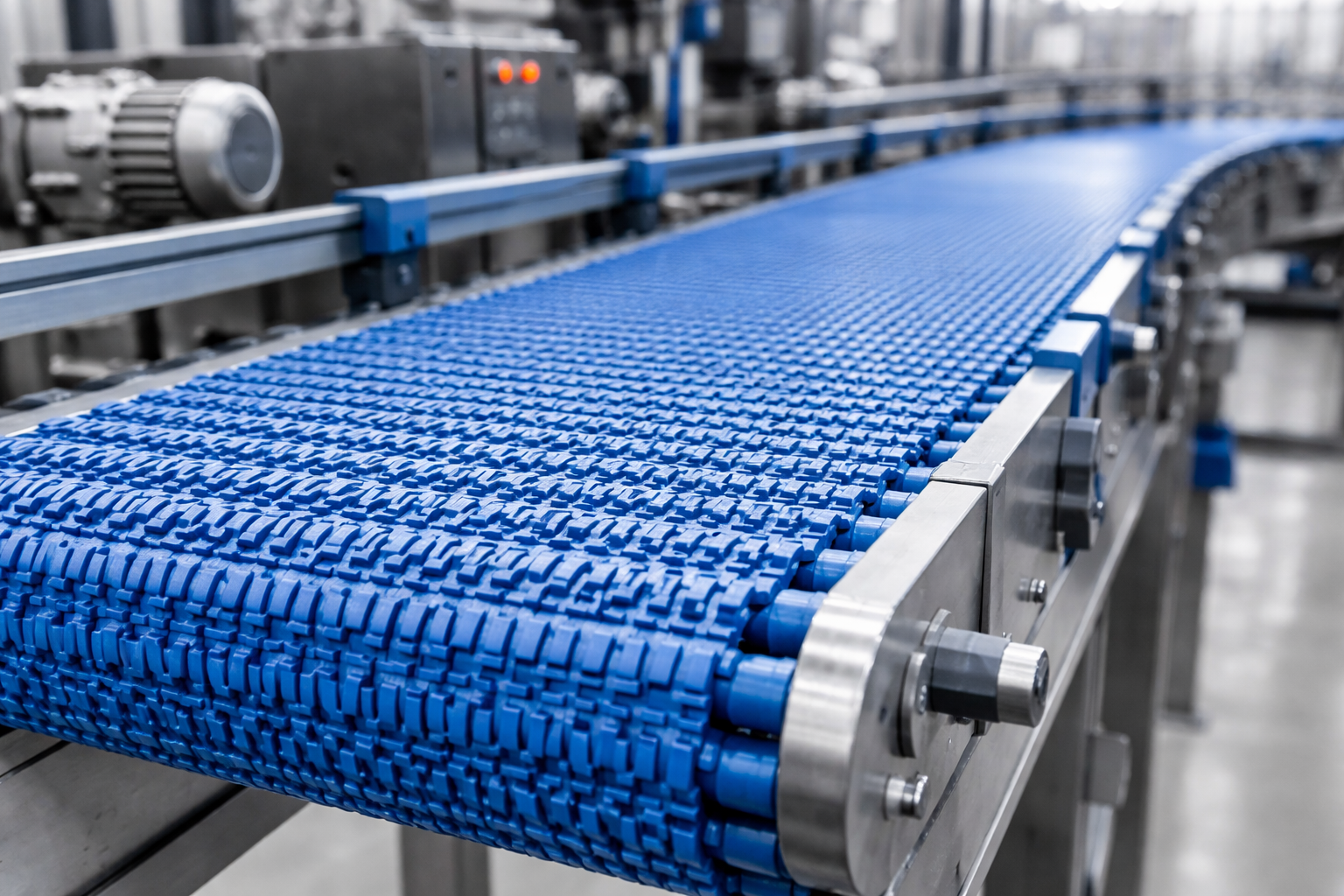 The automotive sector demands conveyor solutions that do far more than simply move parts from station A to station B. At facilities across Birmingham, Coventry, Sunderland, and Derby — where some of Britain’s most iconic vehicle brands are assembled — production engineers have progressively moved away from legacy rubber and steel-link conveying towards plastic modular belt technology. The reasons are grounded in engineering physics, lifecycle economics, and the growing demand for smarter, safer factory floors.
A plastic modular belt is constructed from interlocking thermoplastic modules — typically fabricated in polypropylene (PP), acetal (POM), polyethylene (PE), or nylon (PA) — that link together to form a continuous, flexible surface capable of carrying vehicle subassemblies, body panels, engine components, and trim parts with exceptional stability. Unlike a single-piece flat belt, the modular design allows individual sections to be replaced without taking the entire conveyor offline, a critical advantage in high-throughput environments where downtime is measured in thousands of pounds per hour.
What truly distinguishes the plastic modular belt in automotive applications is its adaptability. Assembly lines in modern car plants are rarely straight — they incorporate curves, inclines, accumulation zones, and transfer points where belt geometry matters enormously. The segmented construction of plastic modular belts allows engineers to specify belt width, module pitch, surface texture, and side-guard configurations precisely matched to the task. A transfer deck moving front bumper fascias needs a very different belt surface profile than a zone carrying painted door panels susceptible to scuffing.
Technical Specifications & Performance Parameters
The table below outlines the core technical parameters of the plastic modular belt series most commonly deployed in automotive assembly conveyor systems. These figures represent standard production grades; Ever Power’s engineering team can modify all key parameters to meet bespoke OEM requirements.
| Parameter | Standard Range | Custom / OEM Option |
|---|---|---|
| Belt Width | 100 mm – 1,200 mm | Up to 2,400 mm+ (multi-strand) |
| Module Pitch | 12.7 mm / 25.4 mm / 38.1 mm | Non-standard pitch available |
| Material Options | PP, POM (Acetal), PE, PA (Nylon) | PVDF, UHMWPE, anti-static compounds |
| Operating Temperature | -20°C to +90°C (PP/PE) | Up to +220°C (specialty grades) |
| Belt Speed | 0.05 m/s – 2.5 m/s | Synchronised multi-zone control |
| Tensile Strength | Up to 1,200 N / rod (POM grade) | Heavy-duty rod pins available |
| Surface Options | Flat, flush grid, raised rib, roller top | Rubber insert, magnetic, cleated |
| Minimum Turn Radius | 250 mm (side-flexing design) | Tight-radius spiral configurations |
| Colour Coding | White, blue, grey, black | Full custom colour (RAL reference) |
| Approvals & Standards | FDA, EU 10/2011, RoHS | ATEX, ESD, customer spec |
Material Science Behind the Belt: Why Polymer Engineering Matters on the Assembly Line
Polypropylene (PP)
The workhorse of automotive trim and interior component lines. PP modules offer excellent chemical resistance against cleaning agents, lubricants, and stamping fluids routinely encountered on the shop floor. Their lightweight nature reduces sprocket and drive motor loads, cutting energy consumption across an entire production facility over the course of a year — a material consideration for UK plants operating under ambitious carbon reduction commitments.
Acetal / POM
Where high tensile load is the primary concern — powertrain assembly, engine block transfer, and heavy chassis component handling — acetal (polyoxymethylene) is the material of choice. POM modular belts withstand tensile forces significantly higher than PP equivalents and exhibit low moisture absorption, maintaining dimensional stability even when exposed to coolant mist and wash-down operations. The self-lubricating surface properties of POM also reduce drive power requirements by minimising friction against return-side wear strips.
Anti-Static & ESD Grades
Electronic control unit (ECU) assembly, battery management system (BMS) production for electric vehicles, and semiconductor-sensitive sensor manufacturing require electrostatic discharge protection that standard PP or POM cannot provide. Anti-static and fully ESD-dissipative plastic modular belts incorporate conductive carbon additives within the polymer matrix, providing a continuous discharge pathway that protects sensitive components from charge build-up throughout the conveying process — a growing requirement as the UK transitions to EV-focused assembly.
Specific Application Zones in Automotive Assembly Conveyor Systems
The automotive assembly process is not a single conveying challenge — it is dozens of distinct material handling problems stacked sequentially along a line that can stretch for several kilometres. Plastic modular belt technology addresses each zone with a specific engineering response, and understanding this zone-by-zone logic is essential for procurement engineers, plant managers, and conveyor system integrators working in UK vehicle manufacturing facilities.
Body-in-White (BIW) Transfer
Vehicle body shells move through welding, sealing, and prime coat stations on heavy-duty plastic modular belts rated for loads exceeding 500 kg per metre. The open-grid belt surface allows welding fume and overspray to fall through, maintaining a cleaner work environment and reducing fire hazard accumulation on the belt itself.
Paint Shop Conveying
High-temperature zones in paint curing ovens — routinely operating between 80°C and 160°C — require specialist belt grades. Heat-stabilised PP or reinforced nylon plastic modular belts maintain their dimensional stability and tensile properties throughout thousands of thermal cycles, outperforming standard rubber belts that harden, crack, and deposit debris on freshly painted surfaces.
Final Assembly Trim Lines
Interior trim components — dashboard clusters, door cards, headliners — are particularly scratch-sensitive. Roller-top plastic modular belts, which elevate the product on small integrated rollers, dramatically reduce surface contact and allow parts to be manually repositioned by operators without dragging, preventing cosmetic damage that would otherwise generate warranty claims downstream.
EV Battery Pack Assembly
The rapid shift to electric vehicle production across UK plants — from Nissan’s Sunderland gigafactory investment to Jaguar Land Rover’s conversion strategy — has created urgent demand for ESD-safe plastic modular belt conveyor solutions. Cell stacking, module assembly, and pack integration all require static-controlled environments that only specialist belt grades can reliably provide.
Tyre & Wheel Assembly
Wheel and tyre sub-assembly conveyor systems benefit enormously from cleated or raised-rib plastic modular belt designs that prevent round components from rolling out of position during incline transport. Adjustable side guards and custom lane-dividing attachments can be factory-installed at the module level, eliminating the need for separate guide rail fabrication.
Logistics & Sequencing Buffers
Modern JIT (just-in-time) automotive logistics requires accumulation conveyors that can hold parts in precise sequence without pressuring them. Low-friction plastic modular belts with accumulation zones allow parts to queue gently while upstream processes complete, then release in controlled bursts — a functionality that rigid metal chain simply cannot match without complex and costly engineering additions.
Key Advantages of Plastic Modular Belts Over Conventional Conveyor Solutions
Module-Level Repairability
Damaged sections are swapped in minutes on the shop floor without specialist tools. Mean time to repair (MTTR) drops by up to 85% compared to full-length rubber belt replacement — a critical metric for automotive plants running three-shift operations.
Chemical & Wash-Down Resistance
Automotive manufacturing involves aggressive cleaning regimens, cutting fluids, and painting solvents. Thermoplastic belt materials resist swelling, delamination, and surface degradation that would compromise rubber or fabric belt integrity within months of operational exposure.
Precision Load Distribution
The rigid polymer module structure distributes point loads evenly across the belt width, preventing localised deformation under heavy components such as engine blocks or fully assembled subframes — a load distribution characteristic that flexible rubber belts fundamentally cannot replicate under dynamic conditions.
Noise Reduction
Modern plastic modular belt designs incorporate noise-dampening features at the module joints and sprocket engagement points. Assembly line ambient noise is a growing focus for UK Health & Safety compliance (Control of Noise at Work Regulations 2005), and belt selection now plays a direct role in managing occupational exposure limits for line workers.
Side-Flexing & Tight Curves
Side-flexing plastic modular belt designs navigate horizontal curves down to 250 mm radius, eliminating the need for costly transfer plates and dead zones in tight plant layouts. UK automotive facilities, many operating within constrained factory footprints in older industrial estates, gain significantly from this layout flexibility.
Lower Total Cost of Ownership
When evaluated across a 5–10 year lifecycle — factoring in reduced spare parts inventory, lower lubrication costs (many grades are self-lubricating), faster maintenance windows, and reduced energy draw — plastic modular belt systems deliver measurable TCO advantages over legacy steel chain or traditional rubber belt alternatives in automotive assembly environments.
Customer Success: UK Automotive Tier-1 Supplier Conveyor Upgrade
🌟 Case Study: Midlands Powertrain Component Manufacturer, UK
A Tier-1 automotive supplier operating two plants near Coventry — producing precision-machined transmission housings for a major European OEM — was experiencing chronic conveyor downtime on their cylinder block transfer line. Their existing steel slat conveyor system required weekly lubrication and suffered two to three major breakdowns per quarter, each costing an estimated £12,000–£18,000 in lost production time and maintenance labour. Contamination from chain lubricants was also triggering part-rejection events that compromised their IATF 16949 quality audit standing.
After a detailed application review with Ever Power’s engineering team, a heavy-duty POM plastic modular belt system was specified for the primary transfer line, with PP modules on the lighter sub-assembly feeds. The installation — completed during a planned summer maintenance window — required zero structural modifications to the existing conveyor frame, as the plastic modular belt system was engineered to match the original sprocket centres and drive configuration.
Twelve months post-installation: zero unplanned stoppages attributable to the belt system, lubrication costs eliminated entirely on the converted lines, and part contamination rejections from conveyor sources dropped to zero. The plant’s engineering manager documented a full payback on the belt investment within 14 months, with projected savings continuing to accumulate across the remaining belt service life.
❝
We trialled three different plastic modular belt suppliers before committing to Ever Power. The combination of technical documentation quality, willingness to customise module pitch for our specific sprocket geometry, and the responsiveness of their team made the decision straightforward. Our line hasn’t had a belt-related stoppage in over a year.
— Plant Engineering Manager, Tier-1 Supplier, West Midlands, UK
❝
What impressed us most was the anti-static belt grade for our EV battery module assembly. Ever Power supplied full ESD test certification with each batch — that traceability mattered enormously for our quality records. The belt has performed consistently across 18 months of three-shift production without a single static event on the line.
— Process Engineer, EV Battery Assembly Facility, Sunderland, UK
❝
We were initially concerned about sourcing plastic modular belts from outside the UK, but the logistics have been seamless — lead times, documentation for HMRC import purposes, and the quality of the technical support from Ever Power’s team have all exceeded our expectations. We’ve since standardised their belt across four conveyor lines in our Derby facility.
— Maintenance & Reliability Manager, Assembly Plant, Derby, UK
Ever Power: Precision Manufacturing & Custom Plastic Modular Belt Solutions
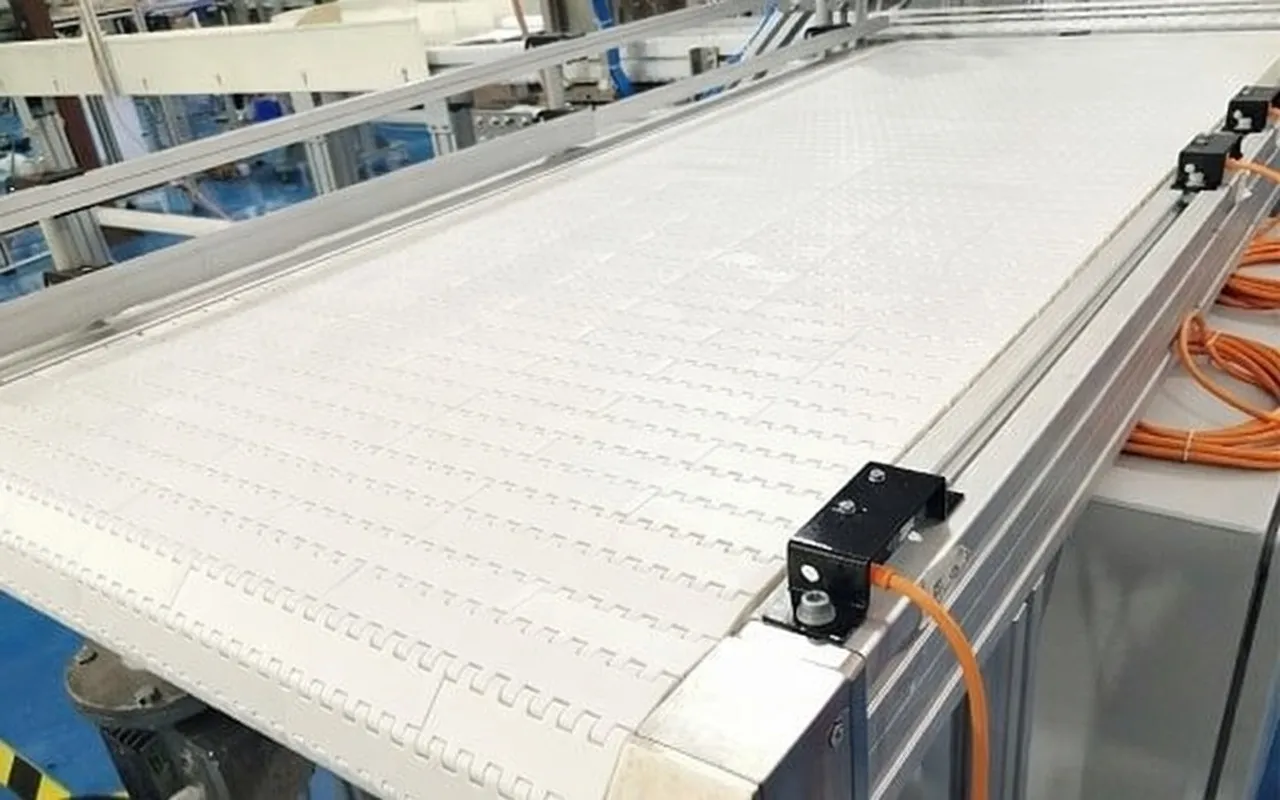 Ever Power operates a vertically integrated production facility equipped with precision injection moulding presses, automated assembly lines for module interlinking, and a dedicated quality laboratory where every belt batch undergoes dimensional verification, tensile testing, and — for functional grades — chemical resistance and ESD performance testing before shipment. This manufacturing infrastructure is what allows Ever Power to confidently offer fully custom plastic modular belt solutions rather than simply distributing standard catalogue products.
The customisation capability extends to every dimension of the product. UK automotive customers have specified belts with non-standard module pitches matched to legacy sprocket tooling, colour-coded module combinations for visual zone identification on the assembly line, integrated side-wall heights tailored to part geometry, and surface profiles engineered to hold specific components in precise orientation during conveying. Where OEM specifications require full dimensional drawings and PPAP-style documentation, Ever Power’s engineering team provides complete technical packages aligned to automotive quality system requirements.
For UK conveyor system integrators and in-house maintenance teams, Ever Power also offers belt consulting services — reviewing existing conveyor layouts, recommending optimal belt grades for each application zone, and calculating drive requirements for proposed belt widths and load profiles. The goal is not to supply a belt in isolation, but to become the long-term technical partner for the customer’s conveyor infrastructure across the full lifecycle of their manufacturing operation.
📧 Get a Custom Quote — [email protected]
Custom designs · Technical consultation · UK delivery · OEM documentation available
Serving UK Automotive Manufacturing: From the Midlands to the North East
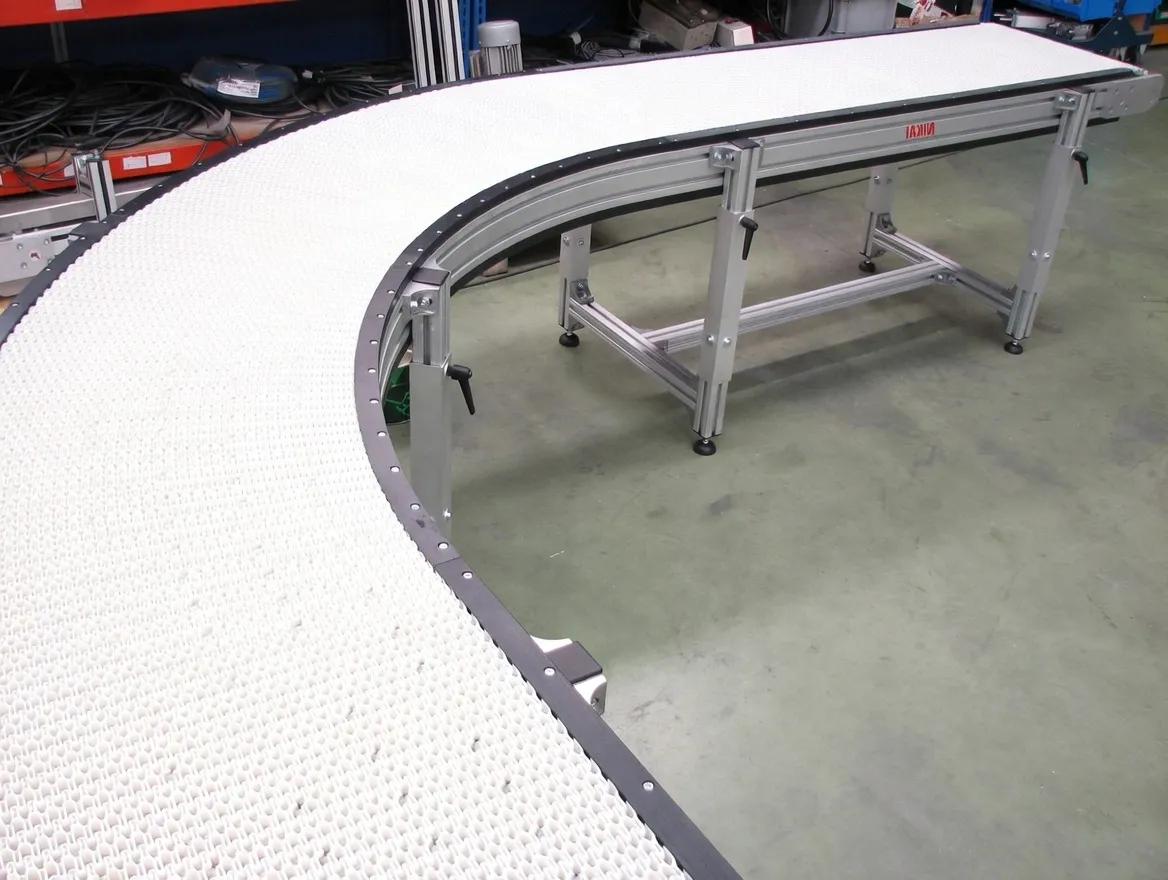 Britain’s automotive manufacturing sector — spanning landmark facilities in Coventry, Birmingham, Solihull, Sunderland, Derby, Halewood on Merseyside, and Ellesmere Port — represents one of the most demanding and technically sophisticated environments for conveyor belt technology in the world. These plants operate around the clock, impose rigorous supplier qualification processes, and hold their supply chains to strict delivery and documentation standards. Ever Power supplies plastic modular belts to UK-based automotive OEM suppliers, conveyor system integrators, and maintenance contractors who require a technically credible partner capable of responding quickly to application queries and expediting belt deliveries when production demands it.
For procurement teams at UK automotive manufacturers evaluating plastic modular belt suppliers, Ever Power’s approach combines the technical depth of an engineering specialist — 18 years of application experience across vehicle assembly, powertrain manufacturing, paint shop operations, and EV battery production — with the commercial flexibility of a manufacturer that controls its own production process from raw material through to finished belt assembly. This is not a reseller arrangement; it is direct manufacturer supply, with all the pricing, traceability, and customisation advantages that entails.
Whether you are specifying a new plastic modular belt conveyor system from scratch at a greenfield UK automotive site, retrofitting an existing line to improve performance and reduce maintenance costs, or sourcing replacement belt modules to clear a breakdown situation, Ever Power’s team is equipped to assist at every stage — from initial specification through to commissioning support and long-term supply agreements.
Frequently Asked Questions
What is the best plastic modular belt material for automotive assembly line conveyor applications in the UK where chemical wash-down is required daily?
For UK automotive assembly operations running daily wash-down programmes with alkaline or solvent-based cleaning agents, polypropylene (PP) and acetal (POM) plastic modular belts are the two primary candidates. PP offers outstanding chemical resistance across a broad pH range and is the lighter, lower-cost option suited to trim and logistics lines. POM is preferred for heavier powertrain component handling where tensile load is the dominant factor and dimensional stability under thermal cycling is critical. In both cases, the plastic modular belt material significantly outperforms rubber or fabric belt alternatives in chemical exposure environments.
How much does it cost to replace a plastic modular belt section on a running automotive production line in the West Midlands, and how quickly can a replacement be sourced from a UK supplier?
The module-level replacement model is one of the key economic advantages of plastic modular belt systems — unlike a full-length rubber belt, only the damaged modules and connecting rods need to be swapped, which typically requires 20–40 minutes of technician time rather than a multi-hour belt change. Replacement module costs vary by grade, pitch, and width, but the per-module price is modest compared to the production cost of unplanned downtime. For UK automotive facilities, Ever Power maintains stock of the most commonly specified standard modules and can advise on stocking recommendations to ensure plant maintenance teams have immediate access to replacement parts without waiting for international shipping.
Which plastic modular belt surface type should I specify for conveying painted car door panels on a final assembly trim line without causing surface scratches?
For painted or Class-A finish automotive components such as door panels, bumper fascias, and body-colour trim pieces, a roller-top plastic modular belt is the strongly recommended specification. The integrated rollers — moulded directly into each module — elevate the component clear of the main belt surface, dramatically reducing contact area and enabling easy repositioning by assembly operators without dragging the painted surface across the belt. In zones where parts are stationary for extended periods — such as operator work stations — the roller surface ensures zero scuff accumulation even under prolonged contact. Soft rubber insert module grades are also available for particularly sensitive Class-A surfaces.
Where can I find a plastic modular belt supplier in the UK that offers custom ESD-safe conveyor belts for electric vehicle battery assembly production lines?
ESD-safe plastic modular belt grades for EV battery assembly are a specialist product that relatively few suppliers can provide with certified performance documentation. Ever Power manufactures anti-static and fully ESD-dissipative plastic modular belts with surface resistivity values engineered to meet IEC 61340-4-1 and ANSI/ESD S20.20 requirements, and supplies full ESD test certification with each production batch. For UK automotive manufacturers — particularly those expanding EV battery cell-to-pack assembly capacity at facilities in the North East, Midlands, and South Wales — Ever Power can be contacted directly at [email protected] to discuss specifications, lead times, and pricing for ESD belt grades.
How do I get a quote for a custom-width plastic modular belt for an automotive conveyor upgrade project at a Tier-1 supplier facility in the UK?
The quickest route to a plastic modular belt quote for a UK automotive application is to email Ever Power’s technical sales team at [email protected] with the following information: required belt width (mm), module pitch preference or existing sprocket pitch, material grade requirement (PP, POM, or specialist grade), belt length or conveyor centre distance, expected load per metre, and any specific surface or side-guard requirements. For retrofit projects, photos of the existing conveyor setup are extremely helpful. Ever Power typically provides a preliminary quotation with technical recommendations within 24 hours of receiving application details. Custom tooling for non-standard configurations is available with standard lead times discussed at the quotation stage.
When should a plastic modular belt be specified instead of a traditional steel slat conveyor for heavy automotive powertrain components?
Steel slat conveyors historically dominated heavy powertrain applications — engine blocks, gearbox housings, axle assemblies — but plastic modular belt technology in heavy-duty POM grades has closed the performance gap considerably. The tipping point for specifying plastic modular belt over steel slat typically comes when three or more of the following conditions apply: contamination from steel contact or lubricant carryover is causing quality or cleanliness problems; maintenance downtime for chain lubrication and re-tensioning is becoming operationally significant; the production layout requires curves or direction changes that steel slat systems handle poorly; wash-down corrosion is degrading the steel conveyor faster than expected; or the facility is undergoing a noise reduction programme under HSE guidance. In these scenarios, the switch to plastic modular belt systems consistently delivers measurable improvements in uptime, maintenance cost, and product quality.
Ever Power · Plastic Modular Belt Manufacturer
Ready to optimise your automotive conveyor system?
Plastic modular belt supply · Custom engineering · UK automotive sector · B2B enquiries welcome
edit by gzl