
Ever Power · Industrial Conveyor Solutions · United Kingdom
Plastic Modular Belt for Snack & Crisp Processing Lines: The Complete Engineering Guide for UK Food Manufacturers
How forward-thinking snack producers across Britain are replacing legacy steel and rubber conveyors with high-performance plastic modular belts — cutting downtime, meeting BRCGS standards, and driving measurable ROI.
FDA & EU Compliant
Custom UK Supply
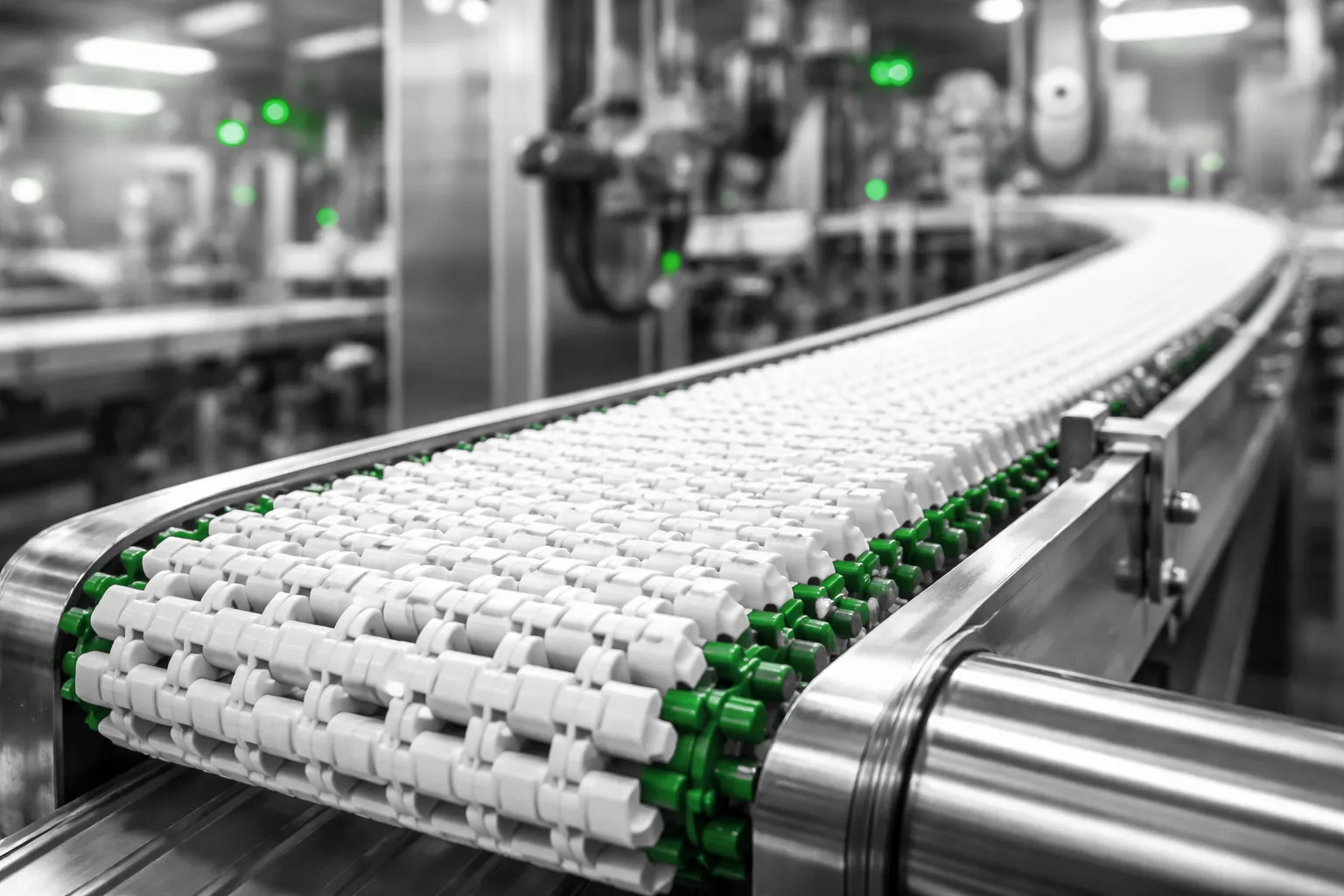 Walk into any modern crisp or snack production facility in the UK — from a mid-sized artisan manufacturer in the West Midlands to a large-scale operation in Yorkshire — and you will find one engineering challenge that never goes away: how to move fragile, oily, seasoned, or heat-treated products through complex multi-stage lines without breakage, contamination, or excessive downtime. The answer, increasingly, lies in the plastic modular belt. Unlike monolithic rubber or wire mesh conveyors, a plastic modular belt is built from individual interlocking polypropylene or acetal modules that can be configured, repaired, and adapted with remarkable speed. In snack food processing — where seasoning dust, frying oils, crumb deposits, and rapid temperature changes are daily realities — this modularity is not a nice-to-have; it is a genuine operational advantage that directly affects yield, hygiene scores, and labour costs.
Over nearly two decades of working with conveyor systems across the food processing sector, the pattern is consistent: facilities that upgrade to the right plastic modular belt specification see measurable gains within the first production quarter. This guide examines why, drawing on real-world application data, material science, and the specific demands of UK snack food regulations.
Ever Power plastic modular belt installed on a multi-tier snack seasoning and cooling conveyor system
What Is a Plastic Modular Belt and Why Does It Matter in Snack Processing?
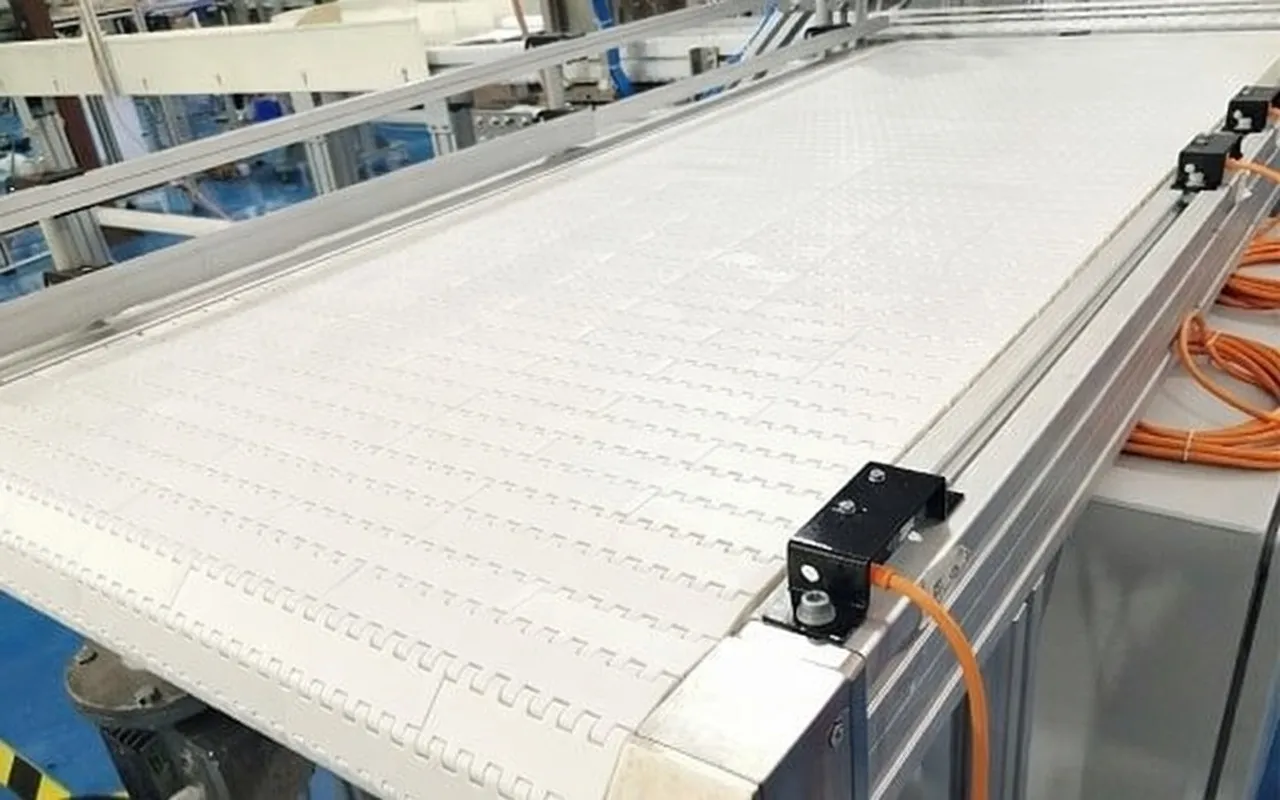 A plastic modular belt is a conveyor belt constructed from a grid of small, interlocking thermoplastic modules — typically made from polypropylene (PP), acetal (POM), or polyethylene (PE) — that are connected by hinge rods running across the belt width. The open or closed surface pattern can be precisely engineered to suit the product being carried. In snack food applications, the belt surface is critical: too closed, and frying oil pools; too open, and small seasoning particles fall through and create fire hazards beneath the line. The plastic modular belt solves this by allowing engineers to select exactly the right percentage of open area — anywhere from 0% solid to over 55% open grid — for each specific stage of the process.
What truly sets the plastic modular belt apart in high-throughput snack lines is its repairability. A single damaged module can be replaced in minutes without removing the entire belt from the conveyor frame, which eliminates the lengthy shutdowns that plagued older rubber or steel conveyor designs. For a UK crisp plant running three eight-hour shifts, even a 20-minute reduction in unplanned downtime per week translates to thousands of pounds recovered annually. This single characteristic — rapid in-field repairability — is why so many UK food manufacturers are actively specifying plastic modular belt systems in new builds and refurbishment projects.
Materials, Construction & Operating Principles
Polypropylene (PP)
The workhorse material for most ambient and warm-zone snack conveying applications. PP modules offer excellent chemical resistance to the seasoning salts, vinegar-based flavourings, and mild cleaning agents common in UK crisp production. Operating temperature range: -10°C to +100°C continuous. PP is also the most cost-effective option for high-volume, long-belt installations where total belt mass is a procurement consideration.
Acetal (POM)
Where dimensional stability and precision tracking matter most — such as on high-speed chip inspection lines and automated portion-packing conveyors — acetal modules deliver superior stiffness and a lower coefficient of friction against the carry-side wear strips. POM’s inherent lubricity reduces drive power requirements and extends the service life of sprockets by 30–40% compared to PP in demanding applications.
High-Temp Acetal & UHMWPE
Continuous-fry and oven-bake snack lines — producing baked crackers, pretzels, and pork scratchings — demand belt materials that can withstand temperatures from 120°C to 180°C intermittently. High-temperature acetal variants and UHMWPE compounds maintain structural integrity through these thermal cycles without the deformation or odour transfer that disqualifies many standard polymers from direct food-contact use.
Metal-Detectable & X-Ray Visible Grades
UK retailers increasingly mandate BRCGS AA certification, and any belt fragment reaching the product stream must be detectable by inline metal detectors or X-ray inspection systems. Metal-detectable PP and POM grades incorporate proprietary compounds that create a clear signal at fragment sizes as small as 3mm, satisfying retailer COP requirements and protecting your BRCGS audit score without adding weight or compromising belt flexibility.
Technical Performance Parameters
The following parameters represent typical performance envelopes for Ever Power plastic modular belt series used across snack food processing in the United Kingdom. These figures are drawn from field-verified installation data, not laboratory ideals, and are the numbers your engineering team should use when sizing drive motors, calculating belt pull, and specifying frame dimensions.
| Parameter | PP Series | POM Series | HT Acetal | MD Grade |
|---|---|---|---|---|
| Continuous Temp. (°C) | -10 to +100 | -40 to +90 | up to +180 | -10 to +100 |
| Max Belt Width (mm) | 3,600 | 3,000 | 2,400 | 3,600 |
| Open Area Range (%) | 0 – 55 | 0 – 50 | 8 – 38 | 0 – 52 |
| Pitch Options (mm) | 12.7 / 25.4 / 38.1 | 12.7 / 25.4 | 25.4 / 38.1 | 12.7 / 25.4 / 38.1 |
| Max Line Load (kg/m²) | up to 120 | up to 140 | up to 100 | up to 120 |
| Max Belt Speed (m/min) | 60 | 75 | 45 | 60 |
| Certifications | FDA / EU 10/2011 | FDA / EU 10/2011 | FDA / EU 10/2011 | FDA / BRCGS COP |
| Fragment Detectability | Standard | Standard | Standard | 3mm @ 50kHz |
Application Stages in a UK Snack Food Processing Line
How the plastic modular belt serves every critical zone from raw ingredient intake to finished pack
① Raw Material Intake & Washing
Open-grid plastic modular belt conveyors allow wash water to drain freely from incoming potato or vegetable stock while the robust hinge construction withstands the abrasive soil and debris common at receiving stations. Stainless hinge rods are standard at this stage.
② Slicing & Pre-Drying
After slicing, delicate crisp blanks need gentle, low-impact transfer to pre-dryers. A flush-grid plastic modular belt with a 25% open area keeps product flat and prevents edge chipping — a common cause of yield loss that can reach 1.5–3% on older rubber-belt systems running above 40m/min.
③ Continuous Frying Zone
In batch and continuous fryers operating at 165–180°C, high-temperature acetal plastic modular belt variants provide the thermal stability required without deforming under sustained oil immersion. The open structure allows oil circulation around each chip slice, ensuring even cooking colour — directly reducing the proportion of mis-coloured product rejected at optical sorting.
④ Seasoning Drum Transfer
After frying, product is transferred at high speed into rotating seasoning drums. The plastic modular belt at the drum infeed must handle impact loading without surface cracking, and the return side must shed seasoning powder cleanly to prevent belt-to-pulley binding — a design advantage over flat rubber belts where powder compaction under the belt is a recurring maintenance issue.
⑤ Cooling Conveyors
Spiral or flat cooling conveyors require long belt lengths. The plastic modular belt’s ability to be repaired in-place — rather than replaced as a continuous unit — keeps spare-part inventory and belt replacement costs manageable at this high-attrition stage. PP grade performs excellently here given the return to ambient temperatures.
⑥ Metal Detection & X-Ray Inspection
Metal-detectable grade plastic modular belt modules are specified at inline metal detectors and X-ray systems to comply with major UK retailer codes of practice. Every Tesco, Sainsbury’s, ASDA, and Morrisons supplier protocol now expects documented belt fragment detectability as part of the HACCP plan — this grade delivers that assurance directly.
Why UK Snack Producers Choose Ever Power Plastic Modular Belt
Modular Repairability
Replace individual modules in under 5 minutes. No belt removal, no full replacement, no waiting for bespoke lengths to be manufactured. Downtime cost reduced by an average of 60% versus traditional belt designs in field-documented UK snack line installations.
Hygienic Design
Smooth module surfaces with defined radii at all corners eliminate harborage points for Listeria, Salmonella, and mould. CIP (Clean-in-Place) compatible at 80°C wash temperatures, with optional snap-out side guards to expose full belt width during washdown — a key audit point for BRCGS AA-graded facilities.
Configurable Geometry
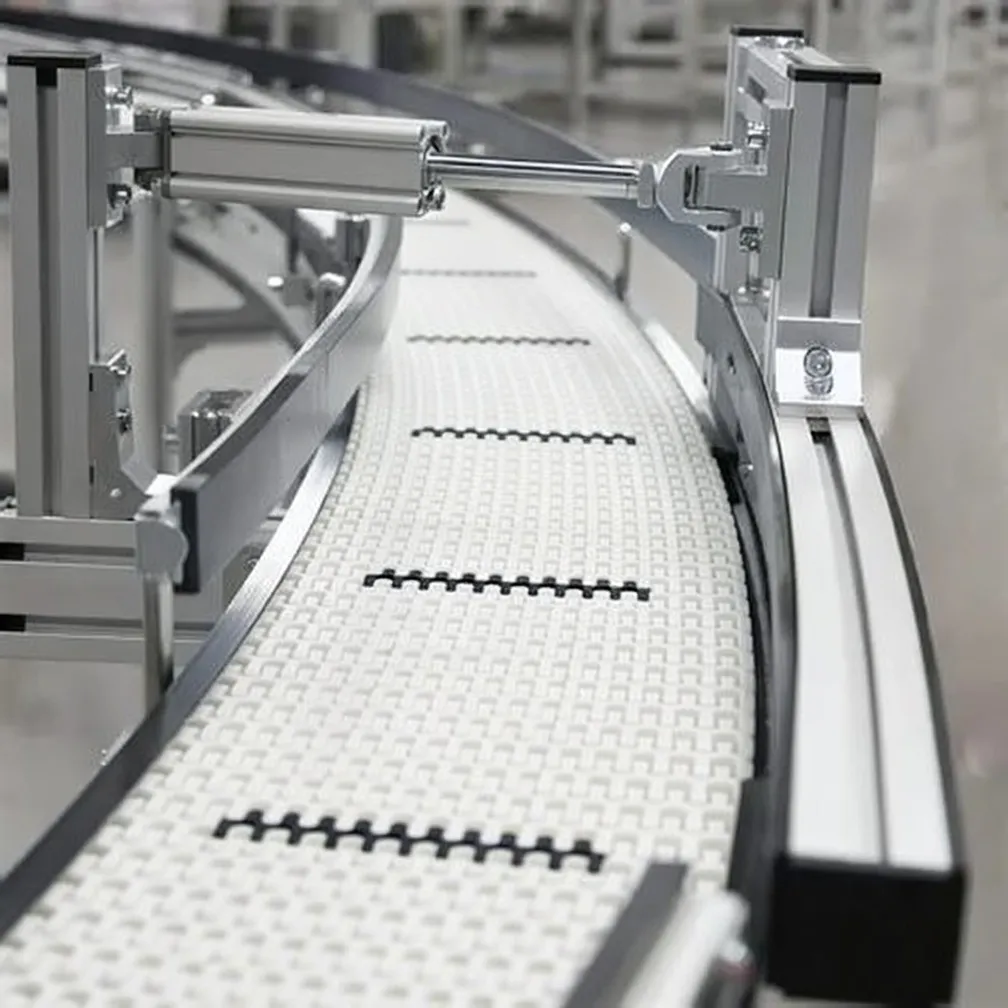
Straight runs, inclined sections, curves, and horizontal turns can all be served with the same plastic modular belt platform. Radius configurations from 500mm enable tight-radius transfers that reduce floor space consumption in compact UK production halls where square footage costs are significant.
Lower Total Cost of Ownership
When procurement teams account for the full five-year cycle — including spare belt inventory, labour for replacement, drive-component wear, and food-safety audit exposure from non-detectable belt materials — plastic modular belt systems consistently deliver a lower TCO than comparable rubber, wire mesh, or stainless steel mesh alternatives for snack processing duties.
Customer Success Story
West Midlands, UK — Snack Food
Meridian Snack Foods Ltd — Reducing Line Downtime by 67% Across a 14-Zone Crisp Production Line
 Meridian Snack Foods, a mid-sized crisp and potato snack manufacturer based in Wolverhampton, was experiencing chronic belt-related downtime across their three production lines, each spanning 14 conveying zones from raw potato intake to seasoned pack-off. Their legacy rubber belts on the frying and seasoning transfer sections were failing approximately every 6–8 weeks, requiring full belt removal and a specialist belt joiner — a process that consumed 4–6 hours of production time per incident, at an estimated cost of £3,200–£4,800 per event in lost throughput and labour.
Following a joint engineering review with Ever Power, the frying zone, seasoning transfer, and cooling conveyor sections were retrofitted with high-temperature acetal and PP plastic modular belt systems across all three lines. The metaldetectable grade was installed at all six inline inspection points. The retrofits were completed during scheduled maintenance windows, with no special tooling and no frame modifications.
What Our Customers Say
“We had been losing roughly a shift and a half every month to belt failures on our fry line. Since switching to Ever Power’s plastic modular belt system, the maintenance team are spending that time on planned preventive work instead of emergency repairs. The ROI case effectively wrote itself.”
— Operations Director, Snack Food Manufacturer, Yorkshire, UK
“Our BRCGS auditor specifically noted the metal-detectable belt modules as best practice in our conveyor hazard analysis. That recognition during a major retailer-driven audit was genuinely valuable — it is something we would never have achieved with our previous stainless steel mesh system.”
— Quality Assurance Manager, Crisp Producer, East Midlands, UK
“We process pork scratchings at temperatures that simply destroyed our previous belts within weeks. Ever Power’s high-temperature acetal plastic modular belt has now run for over 11 months on our primary fry transfer with only two module replacements — both done by our own team in minutes. That performance transformed what we thought was possible from a conveyor belt.”
— Engineering Manager, Pork Snack Producer, Greater Manchester, UK
Custom Manufacturing & Product Development Capability
No two snack production lines are identical — belt widths, hinge rod specifications, side-guard profiles, surface textures, module colours, and material grades all need to match the exact engineering requirements of the application. Ever Power’s manufacturing facility operates a fully integrated injection moulding and belt assembly operation with a dedicated new-product development team, enabling us to take a customer specification from drawing to production-quality sample in as little as three weeks. This capability is particularly valuable for UK food manufacturers developing new product lines or retrofitting legacy equipment where standard catalogue dimensions do not match the existing conveyor frame.
Our product customisation services cover non-standard pitches, bespoke surface patterns (including branded embossed surfaces for premium snack products), mixed-material constructions within a single belt, custom colour-coding for hygiene zone identification, and unique side-guard profiles for containment-critical applications. For UK clients requiring third-party material certification for retailer audits or FSA inspections, we provide full material traceability documentation as standard with every order, including EC regulation 10/2011 migration test reports and FDA compliance letters.
Serving Snack Food Manufacturers Across the United Kingdom
The UK snack food sector — including crisps, extruded snacks, popcorn, pork products, and baked crackers — represents one of the most demanding environments for conveyor belt technology in European food manufacturing. With major production hubs concentrated in the West Midlands, Yorkshire, Lancashire, the East Midlands, and Scotland, facilities face the dual pressure of meeting the world’s most rigorous retailer audit requirements (including BRCGS, SQF, and individual retailer COPs) while keeping operating costs competitive against mainland European producers. Plastic modular belt systems from Ever Power are specified by engineering consultants and maintenance managers throughout these regions, and our growing UK stockholding programme means standard module sizes and grades are available for next-day despatch to most UK postcodes.
For UK operations that have recently achieved or are targeting BRCGS AA status, we offer a complimentary belt audit service, conducted remotely or on-site by our application engineering team, which provides a documented assessment of belt condition, compliance risk, and upgrade recommendations — at no cost and with no obligation. This service is particularly valued by quality managers preparing for scheduled retailer-driven audits where conveyor belt documentation is increasingly scrutinised.
Frequently Asked Questions
Common questions from UK food processing engineers and procurement teams
Ready to Upgrade Your Snack Line?
Talk to an Ever Power application engineer about your specific UK snack processing requirements. We offer free specification reviews and competitive custom quotations.
📧 Get a Quote — [email protected]
Ever Power Plastic Modular Belt · United Kingdom Enquiries · edit by gzl