
 Plastic Modular Belt for Beverage Bottle and Can Filling Conveyor Lines: The Complete Application Guide for UK Manufacturers
Walk into any beverage filling facility in the UK — whether it’s a craft beer brewery in Yorkshire, a soft-drink plant in the Midlands, or a mineral water bottling line in Scotland — and the conveyor belt running beneath those bottles and cans is doing far more engineering work than it might appear. The plastic modular belt used on beverage bottle and can filling conveyor lines must simultaneously handle wet surfaces, chemical washdowns, temperature variation, and the relentless mechanical load of thousands of containers per hour, all without contaminating the product or grinding operations to a halt.
Over my eighteen years of application engineering in conveyor system design, I have specified, installed, and troubleshot plastic modular belts across dozens of UK and European beverage sites. The decisions made at the specification stage — material grade, hinge pin material, belt pitch, surface texture, and drive configuration — determine whether a line runs cleanly for five years or suffers chronic breakdowns within the first production season. This guide walks through everything a UK beverage manufacturer or conveyor system integrator needs to understand about applying plastic modular belts in filling and packaging environments, including real performance data, material comparison tables, and a documented customer success case from within the UK food and beverage sector.
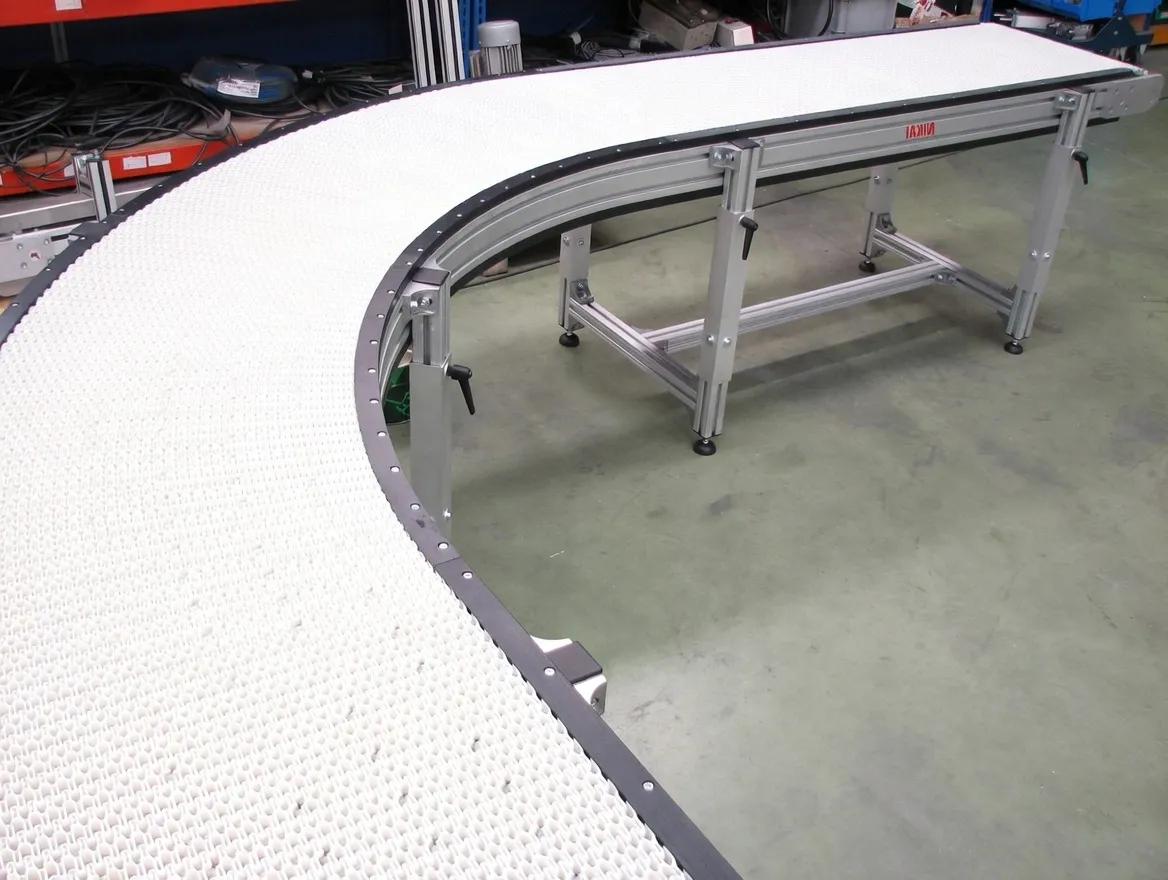
Ever Power plastic modular belts installed on a high-speed beverage can filling conveyor — rated for continuous washdown operation.
📧 Get a Free Quote from Ever Power
Reply within 24 hours · Custom specifications welcome · UK & EU delivery
What Makes Beverage Filling Lines Uniquely Demanding for Conveyor Belts
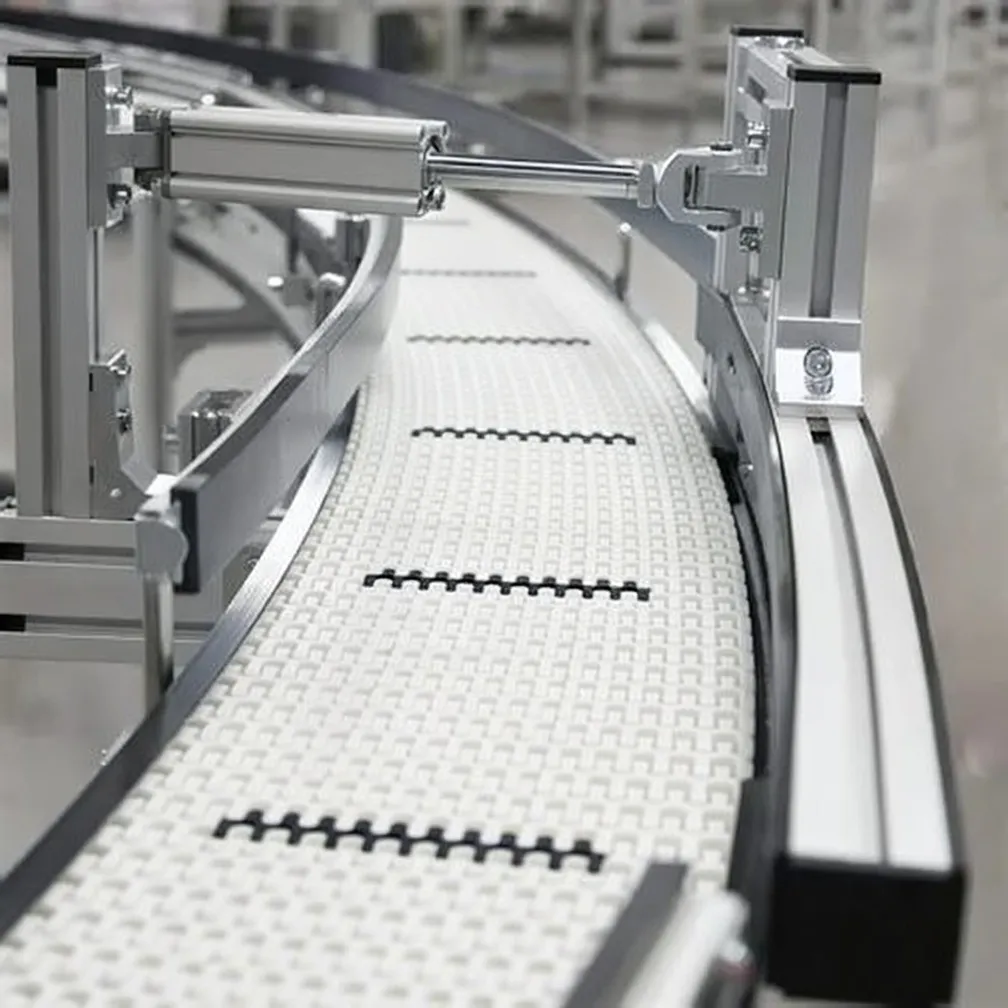
A beverage bottle and can filling conveyor line is not a simple transport system. It is a dynamic production environment where the plastic modular belt endures conditions that would accelerate wear on any inferior product. The filling zone alone subjects the belt surface to a constant spray of liquid — carbonated soft drinks, beer, juice, water — that renders the belt wet for the entire production shift. The CIP (Clean-In-Place) regime then adds hot caustic wash solutions, typically between 60°C and 80°C, followed by acidic rinse cycles. A plastic modular belt that is not rated for this chemical exposure will degrade at the module-to-module hinge points, leading to premature cracking, staining, and eventual belt separation mid-run.
Beyond chemistry, the physical load profile on beverage filling lines is severe. A standard 500ml PET bottle weighs around 500g filled, and a high-speed filling line may place 200–400 bottles per minute on a single lane. Multiply that across multi-lane configurations and the cumulative belt load becomes substantial, particularly at transfer points and accumulation tables where bottles may briefly stack up. The plastic modular belt must distribute this load evenly, maintain dimensional stability across its full width, and resist the edge-loading forces that occur when bottles tip or jam against the lane guides.
UK beverage manufacturers also operate under strict BRC and BRCGS food safety standards, which govern belt surface texture (to prevent bacterial harbourage), material traceability, and the use of metal-detectable or FDA-compliant polymer grades. A plastic modular belt specified for UK beverage production must therefore meet both mechanical performance criteria and food safety compliance requirements simultaneously — and must come with documentation that satisfies third-party auditors.
Material Grades, Construction Principles and How a Plastic Modular Belt Actually Works
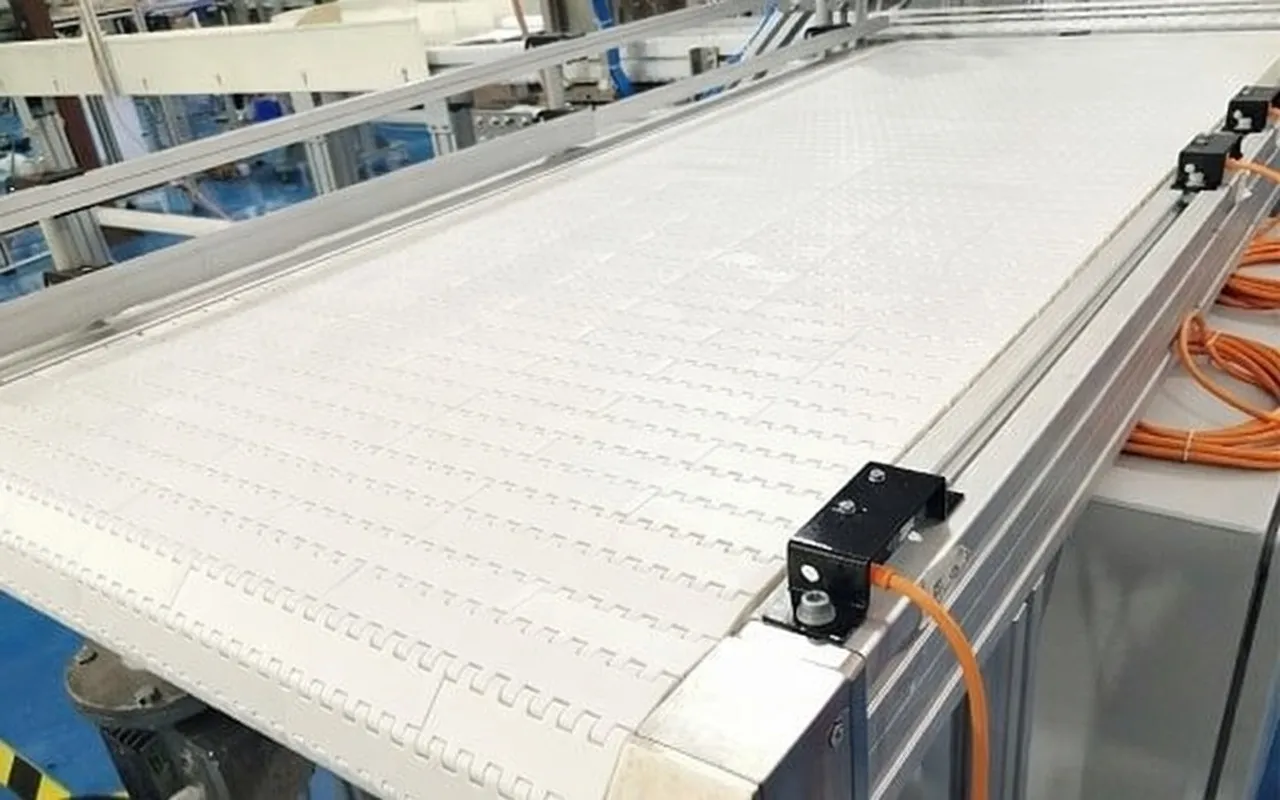 A plastic modular belt is constructed from individual injection-moulded polymer modules that interlock at regular pitch intervals using stainless steel or acetal hinge rods. This modular construction is the key engineering advantage over traditional flat-woven PVC or rubber belts: individual modules can be replaced without removing the entire belt from the conveyor frame, reducing planned maintenance windows significantly. In high-throughput beverage plants where every hour of downtime has a calculable cost, this maintenance advantage alone justifies the higher initial investment compared to conventional belts.
The polymer base material determines the belt’s resistance to the specific chemical and thermal conditions of the filling environment. Polypropylene (PP) is the most widely used grade for ambient-temperature beverage conveyors, offering excellent resistance to weak acids, alkalis, and the surfactants used in CIP detergents. For higher-temperature washdown scenarios or when processing hot-fill products (juice lines, for example), polyethylene (PE) or acetal (POM) grades are specified. Acetal provides superior dimensional stability and a lower coefficient of friction, which is valuable on accumulation surfaces where bottles need to slide freely without tipping.
Hinge rods merit equal attention. On filling lines, austenitic stainless steel (316L grade) rods are specified as standard to resist the chloride content found in both the product liquid and the CIP chemicals. Acetal rods are an alternative on lines where metal detection is critical, eliminating any risk of a false positive detection event halting the line. At Ever Power, our technical team routinely advises UK customers on the optimal hinge rod specification based on their specific CIP chemistry and metal detection protocol — a conversation that can save thousands of pounds in process interruption costs annually.
Technical Performance Specifications — Ever Power Plastic Modular Belt (Beverage Series)
Where Plastic Modular Belts Are Used Along a Beverage Filling Line
Filler Infeed & Outfeed
Immediately upstream and downstream of the filler carousel, the belt must handle wet, freshly-filled containers at high cadence. A flat-top polypropylene plastic modular belt with minimal surface texture prevents bottle tipping while allowing liquid runoff through the lane guides.
Pasteuriser Tunnel Conveyors
Nylon-grade plastic modular belts withstand the sustained 60–80°C water spray environment of pasteuriser tunnels, where PVC belts would stretch and rubber belts crack. The interlocked module design prevents belt sag under the high thermal load.
Labelling & Coding
Precision-pitch plastic modular belts maintain accurate container positioning beneath label applicators and inkjet coders, where even a 3mm positional error creates label skew or missed date codes. Rigid module dimensions ensure consistent belt tracking across the full line width.
Vision Inspection Zones
Flush-grid or open-area plastic modular belts allow underbelly camera inspection of glass bottles and cans without shadows or belt obstruction. The high open area supports both upward lighting and drainage in a single design.
Accumulation & Buffer Tables
Low-friction acetal plastic modular belts on accumulation tables allow filled containers to queue without tipping or becoming pressurised against each other. This protects both the product and the container — particularly critical for thin-walled PET bottles and carbonated beverages.
Case Packing & Palletising Infeed
Heavy-duty 38.1mm pitch plastic modular belts manage the high cumulative loads at the downstream end of the line, where multi-pack groups are assembled and transferred to robotic or manual case packers. The wider pitch distributes load more effectively across the frame.
Each of these belt positions has a distinct optimal specification, and one of the most common engineering mistakes I encounter on new UK beverage installations is applying a single generic plastic modular belt specification across all conveyor positions on the line. A flush-grid belt ideal for inspection zones will underperform on a heavy accumulation table; a heavy-duty wide-pitch belt will cause positional inaccuracies at the labeller. Correct belt-to-position matching is the foundation of a reliable line.
Why Beverage Producers Across the UK Choose Plastic Modular Belt Over Traditional Options
The shift from traditional PVC flat belts and rubber conveyor belts to plastic modular belts on beverage filling lines has accelerated significantly across the UK over the past decade, driven by measurable operational improvements that plant engineers can quantify in their maintenance budgets. The advantages extend well beyond the obvious benefit of modular repairability.
✅
Hygienic Open Structure
Module-to-module gaps allow CIP wash solutions to drain fully, eliminating the liquid traps that promote bacterial growth on solid-surface belts. Passes BRC hygiene audits with documented evidence.
✅
Rapid In-Situ Module Replacement
A single damaged module is swapped out in under 10 minutes with basic tools, compared to the full belt change required on a flat belt. Reduces unplanned downtime cost by up to 70% per incident.
✅
Dimensional Stability Under Load
Rigid polymer modules do not stretch or elongate under tension as PVC belts do. Belt pitch remains constant across the working life, preserving the accuracy of downstream automation.
✅
Chemical Resistance by Design
Polypropylene and acetal module grades are inherently resistant to the caustic and acidic CIP solutions used in UK beverage facilities, unlike rubber belts which degrade rapidly under repeated chemical exposure.
✅
Customisable Surface & Width
Plastic modular belts can be specified in any width without a minimum order penalty, with surface variants including flat-top, knob-top, flush-grid, and side-flexing configurations to match each conveyor position’s exact requirement.
✅
Long Service Life & TCO
A well-specified plastic modular belt in a beverage filling application typically achieves 5–8 years of service life, compared to 12–18 months for conventional PVC belts, reducing total cost of ownership considerably over a typical UK beverage line’s capital life.
Customer Success: Midlands Soft Drinks Manufacturer Reduces Belt Downtime by 68%
Case Study | United Kingdom | Carbonated Soft Drinks | High-Speed PET Bottle Filling
A regional carbonated soft drink producer based in the East Midlands, producing approximately 12 million bottles per year across three filling lines, was experiencing chronic conveyor belt failures during summer peak production. The two-year-old flat PVC belts on their filler outfeed and accumulation conveyors were suffering accelerating surface cracking under the combination of CIP thermal cycling and continuous exposure to the high-sugar liquid spillage from their filling carousel. The site maintenance team was replacing a full belt section every 6–8 weeks at peak, with each change requiring a 4-hour line shutdown — a direct loss of 80,000+ bottles of production capacity per event.
Ever Power’s application engineering team conducted a site survey in March 2023, reviewing the conveyor frame specifications, CIP chemistry documentation, and the site’s BRC audit requirements. The recommendation was to retrofit Ever Power’s PP flat-top plastic modular belt (25.4mm pitch, 316L stainless hinge rod) on the filler outfeed positions, and acetal flush-grid plastic modular belt on all three accumulation tables. The conversion project was completed across two planned weekend maintenance windows, with no additional structural modifications to the existing conveyor frames required — a critical commercial advantage for the customer’s capital budget.
By September 2023, six months into operation, the plant engineering manager reported zero unplanned belt-related line stoppages. The single minor maintenance event in that period was the replacement of two individual modules damaged by a foreign object — a job completed during a scheduled break by one maintenance technician in 12 minutes. The site’s annual belt maintenance cost dropped by 68%, and the improved liquid drainage on the accumulation tables eliminated a recurring bacterial count issue that had previously required additional manual cleaning intervention after every production shift.
💬 What UK Beverage Operations Teams Say
⭐⭐⭐⭐⭐
“We’d tried two other belt suppliers before Ever Power. The modular belt design completely changed how we approach maintenance planning. We haven’t had an emergency belt call-out in fourteen months. For a site running six days a week, that’s transformational.”
— Plant Engineering Manager
Carbonated Soft Drink Manufacturer, East Midlands, UK
⭐⭐⭐⭐⭐
“The acetal belts on our accumulation tables have been running for two years without any attention. The BRC auditor specifically commented on the improved drainage and hygiene standard compared to our previous setup. That audit outcome alone justified the investment.”
— Head of Technical Operations
Mineral Water Bottling Facility, South East England, UK
⭐⭐⭐⭐⭐
“What impressed me most was the pre-sales engineering support. They reviewed our full line layout and CIP chemistry before quoting. That level of technical depth from a belt supplier was new to us. The belts themselves have performed exactly as specified — no surprises, no failures.”
— Production Line Manager
Craft Beer Packaging Line, Yorkshire, UK
Ever Power Manufacturing & Custom Belt Design Capability
Ever Power operates a vertically integrated production facility for plastic modular belt manufacturing, covering injection moulding tooling, module production, and belt assembly under ISO-certified quality systems. Our manufacturing capability is not limited to catalogue products: the engineering team regularly develops application-specific plastic modular belt configurations for UK beverage customers whose production lines fall outside standard dimensional parameters — including unusually narrow conveyor widths, non-standard pitches required by legacy OEM equipment, or specialist surface textures designed for particular container geometries such as lightweight sleek cans or wide-base sauce bottles.
Our custom plastic modular belt service covers complete dimensional specification, material selection consultation, prototype manufacture and load-testing before bulk production, and full traceability documentation for BRC and food safety compliance. Lead times for custom configurations are typically 3–5 weeks from approved drawing, with standard catalogue belts held in UK-accessible warehousing for rapid dispatch. UK beverage manufacturers working to tight capital approval timescales can request a preliminary technical quotation without commitment — our application engineers will review your line drawings, operating conditions, and compliance requirements before proposing a specification, at no cost.
📧 Request a Custom Belt Quotation
[email protected] · Custom specs, OEM replacements, UK delivery
Frequently Asked Questions About Plastic Modular Belts for Beverage Filling Lines in the UK
What is the best type of plastic modular belt to use on a high-speed carbonated soft drink bottle filling conveyor line in the UK?
For a high-speed CSD filling application in the UK, a polypropylene flat-top plastic modular belt with a 25.4mm pitch and 316L stainless hinge rod is the most widely specified configuration. The PP material grade handles the CIP washdown chemistry reliably, while the flat-top surface provides the stable, controlled slide that prevents 500ml and 2-litre PET bottles from tipping at cadences above 300 bottles per minute. If your filling carousel is producing a high volume of liquid spillage, an open-area percentage of 8–12% helps manage drainage without creating unstable support beneath the bottle base. Always confirm the belt is EC 1935/2004 certified for food contact and verify material traceability documentation for BRC audit compliance.
How much does a replacement plastic modular belt for a beverage filling conveyor cost in the UK, and what is the typical payback period compared to PVC belts?
Pricing for plastic modular belts varies by width, pitch, material grade, and order volume. As a general guide for UK beverage applications, a standard PP flat-top modular belt in a common width such as 300–600mm will typically cost 2.5–4x more per metre than an equivalent PVC flat belt. The payback period, however, is generally achieved within 12–18 months when accounting for the extended service life (5–8 years vs 12–18 months for PVC), elimination of full-belt replacement labour costs, and the reduction in unplanned downtime incidents. For an accurate price for your specific conveyor dimensions and line conditions, contact Ever Power at [email protected] for a no-obligation technical quotation.
Which plastic modular belt material grade is most suitable for a pasteuriser tunnel conveyor in a UK beer or juice bottling plant?
Pasteuriser tunnel conveyors demand a material grade rated for sustained operation at 60–80°C in a continuously wet environment. Nylon (PA6 or PA66) plastic modular belts are the industry-standard choice for this zone, offering a continuous service temperature above 100°C combined with good resistance to the warm water and cleaning agents used in tunnel pasteuriser operations. Polypropylene will begin to soften and deform at the upper end of pasteuriser temperature ranges, so it is not recommended for this specific zone. Ensure the hinge rod specification is also reviewed — 316L stainless is preferred in the presence of any chloride-containing wash solutions.
Where can I find a reliable supplier of plastic modular belts for food and beverage conveyor systems in England and Scotland?
Ever Power supplies plastic modular belts to food and beverage manufacturers across England, Scotland, Wales, and Northern Ireland, with UK-accessible stock for standard configurations and a custom manufacturing service for non-standard applications. UK beverage producers benefit from Ever Power’s application engineering support, which includes pre-specification line audits and compliance documentation packages suitable for BRC and BRCGS audits. Enquiries can be submitted directly to [email protected] with conveyor dimensions and application details to receive a detailed technical proposal.
How do I know if my existing conveyor frame is compatible with a plastic modular belt conversion from a PVC flat belt?
In the majority of cases, standard UK conveyor frames designed for flat PVC belts can be retrofitted with a plastic modular belt without structural modification, provided the drive sprocket pitch matches the belt pitch and the return path radius is sufficient for the module geometry. Ever Power’s engineering team can assess your frame specifications remotely using a simple dimensional datasheet, confirming compatibility before any commitment is made. Common adaptation requirements include sprocket replacement (low cost) and occasionally a minor adjustment to the return guide positions. Submit your frame drawings or dimensions to [email protected] for a free compatibility assessment.
When should a beverage manufacturer in the UK consider specifying a metal-detectable plastic modular belt for their filling line?
Metal-detectable plastic modular belt grades should be considered whenever the conveyor passes through or adjacent to an in-line metal detection checkpoint on a HACCP-controlled food safety plan. If standard stainless hinge rods or metal-containing modules are not detected by the installed metal detector sensitivity threshold, a belt failure that results in fragment migration could pass undetected into the product stream. Metal-detectable blue PP or acetal module grades with specifically formulated compound additives resolve this risk and are increasingly specified by UK retailers’ code of practice requirements for own-label beverage production. Confirm your metal detector’s sensitivity specification when ordering to ensure the belt grade is compatible with your detection threshold.
Serving UK Beverage Manufacturers
Plastic Modular Belt Supply & Technical Support Across England, Scotland, Wales & Northern Ireland
From Yorkshire craft breweries to large-scale Midlands filling plants, Ever Power’s plastic modular belt application engineers work directly with UK production and maintenance teams to specify the right belt for each conveyor position. Custom widths, food-safe material grades, full compliance documentation, and fast UK delivery.
This article is written by a senior application engineer with 18+ years of experience in plastic modular belt system design for the global beverage industry. Technical data reflects typical performance ranges; actual specifications may vary by application. All belt grades referenced are available with EC 1935/2004 and FDA food contact compliance certificates. | edit by gzl